Select Category


AI Summary
5 key insights · 1 expert tipChoosing kitchen cabinet doors involves more than picking a colour or finish. Explore eight popular door styles, compare inset and overlay configurations, and understand how materials, edge sealing and surface finishes affect durability and maintenance. This guide also covers colour combinations, design ideas for different kitchen styles and practical tips for choosing cabinet doors that work for your space and budget.
KEY INSIGHTS
- Choose cabinet door profiles that complement your kitchen’s design and cleaning requirements.
- Consider moisture-resistant materials and properly sealed edges, particularly around sinks and wet zones.
- Understand the differences between inset, full overlay and partial overlay doors before finalising your cabinetry.
- Compare matte, glossy, woodgrain and textured finishes for appearance and everyday maintenance.
- Test cabinet colour samples against your countertop, backsplash and kitchen lighting before making a final decision.
 DESIGNCAFE EXPERT TIP
By our design team
Sailee Mangesh Sawant, DesignCafe, Mumbai, suggests, “Before approving your kitchen quote, ask for the board specification, shutter thickness, edge-banding thickness and adhesive type in writing. This helps you compare quotations accurately instead of judging them by the visible finish alone.”
From sleek slab fronts to classic Shaker panels, discover cabinet door styles that suit your kitchen, your taste and your everyday cooking routine.
A beautiful modular kitchen is easy to admire. Keeping it that way when you cook every day is the real challenge. Grease splashes, stubborn fingerprints and moisture can make cabinet doors difficult to maintain. That’s why most modular kitchen cabinet doors can’t sustain long-term use, even when they look perfect in a showroom.
Choosing the right types of kitchen cabinet doors means looking beyond colours and finishes. Design, core material, edge sealing, and installation often determine how your kitchen looks and performs over time. Here’s what to consider before finalising your cabinet doors.

Types Of Kitchen Cabinet Doors: 8 Popular Styles Explained
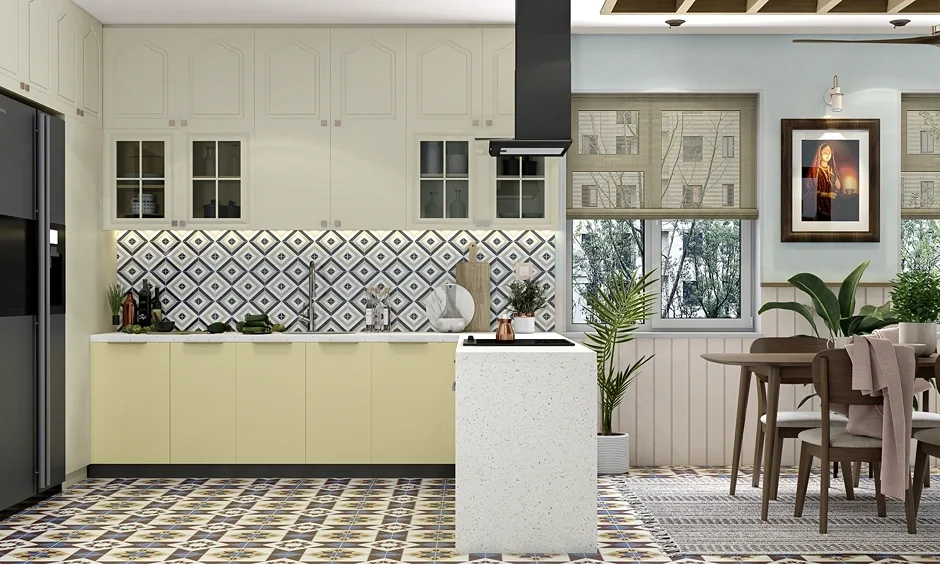
Cabinet doors vary in their panel construction, surface detailing and overall appearance. Some have decorative frames, while others feature smooth, uninterrupted surfaces.
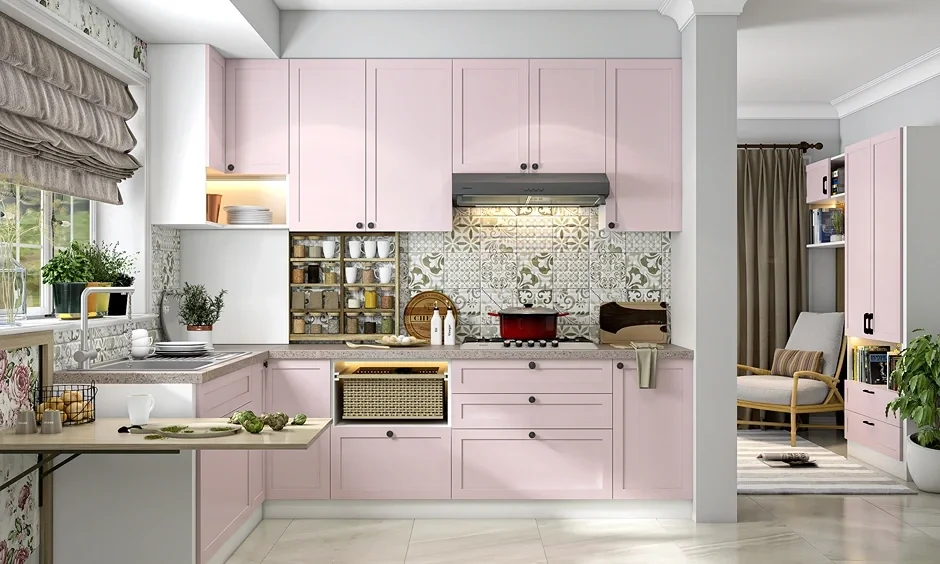
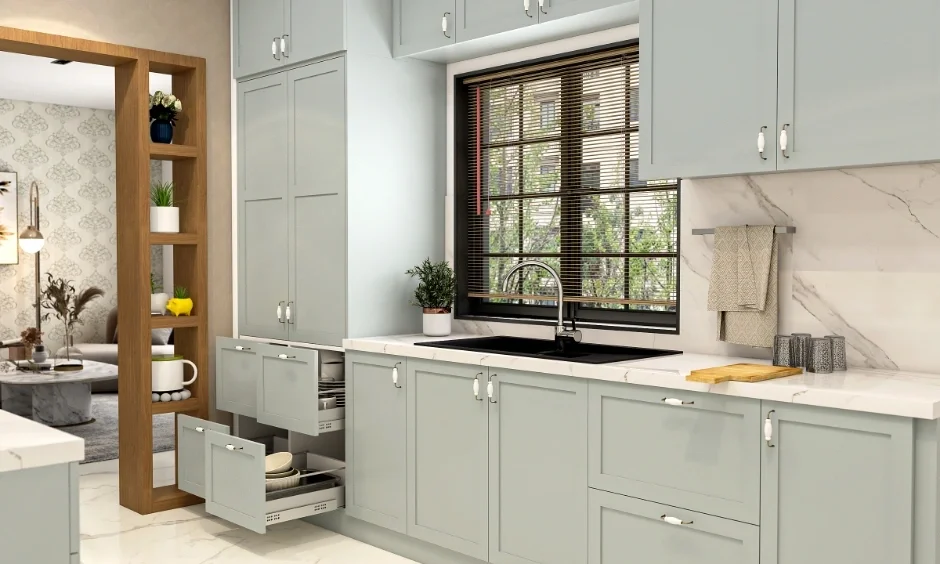
1. Shaker Kitchen Cabinet Doors
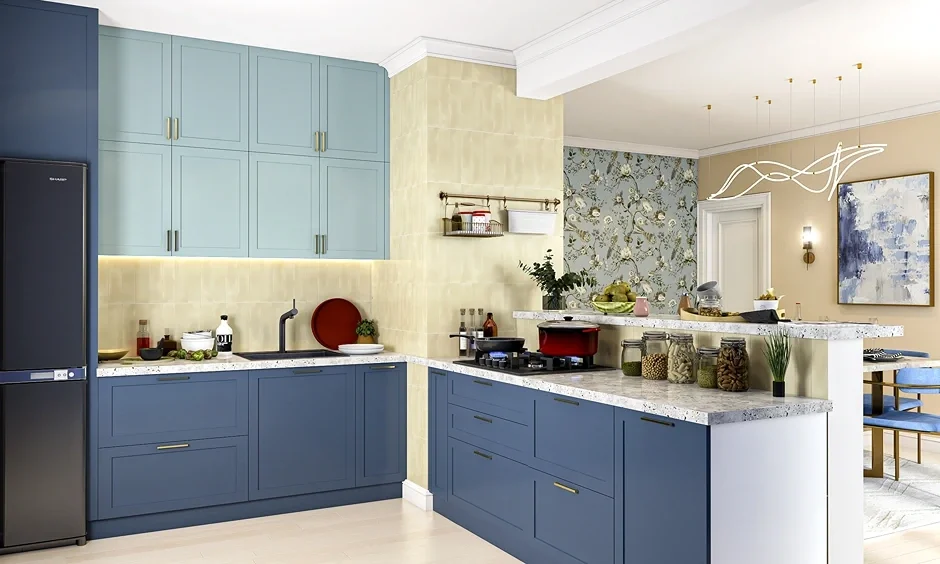
These cabinet doors feature a flat centre panel surrounded by a simple frame. They suit farmhouse, transitional and contemporary kitchens. Slim frames offer classic detailing without making compact kitchens look visually heavy.
2. Slab Kitchen Cabinet Doors
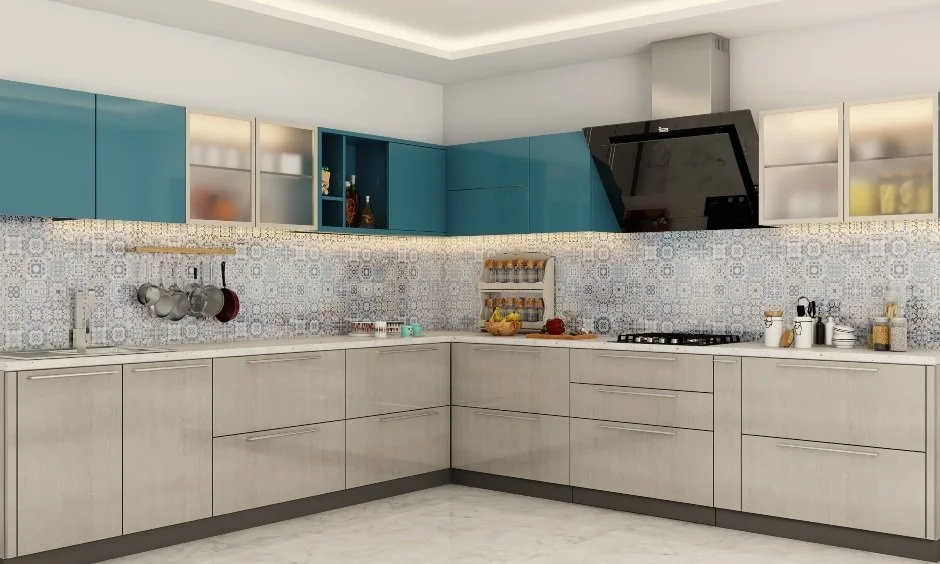
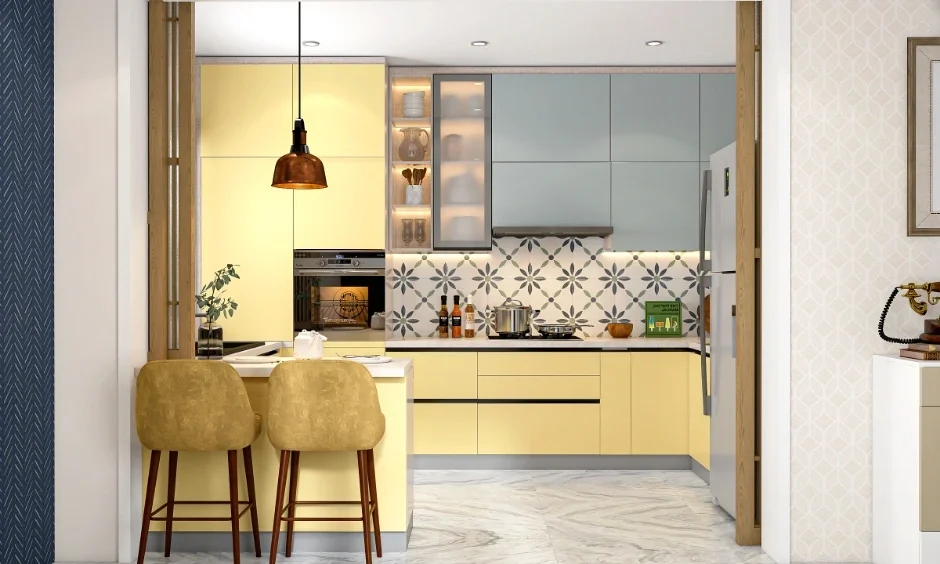
Slab kitchen doors have a flat surface with no decorative details. They work well with handleless designs. Though they are easy to clean, glossy finishes can show fingerprints more easily.
3. Raised Panel Cabinet Doors
These doors have a centre panel that projects outward from the surrounding frame. Their decorative detailing suits traditional kitchens, but the grooves and edges require more attention during cleaning.
4. Flat Panel Cabinet Doors
These cabinet doors have a plain surface without raised decorations. They suit kitchens with simple surfaces and consistent cabinet lines.
5. Glass Kitchen Cabinet Doors
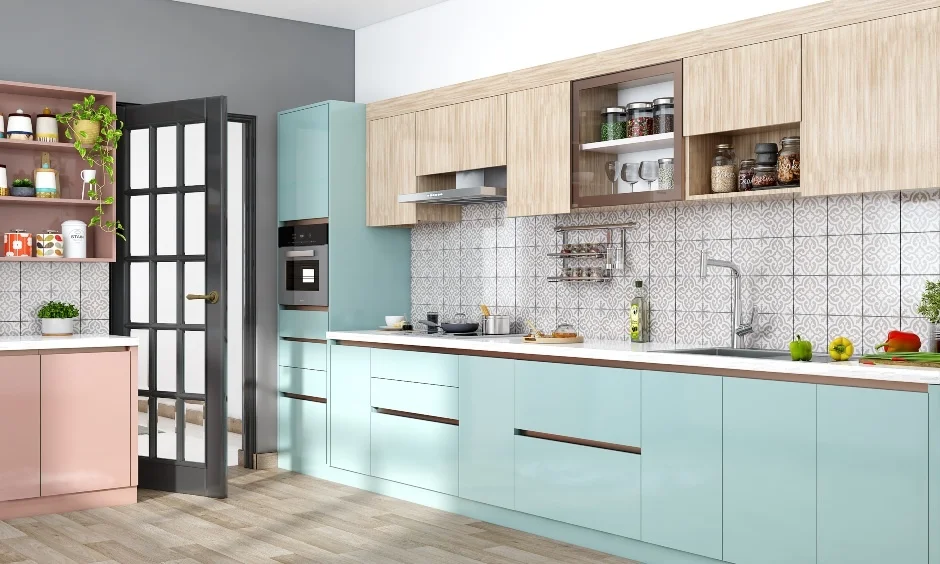
Glass kitchen doors have clear, frosted or textured glass. Clear glass displays crockery, while frosted glass conceals its contents. Use them selectively in overhead cabinets, as visible shelves require regular organisation and cleaning.
6. Recessed Panel Cabinet Doors
Recessed panel cabinet doors have a centre panel that sits below the surrounding frame. They provide subtle detailing without the projecting profile of raised panels. This makes them suitable for classic and contemporary interiors.
7. Louvred Cabinet Doors
Louvred doors feature angled horizontal slats for a distinctive look. They suit coastal and cottage-style kitchens. But grease and dust accumulate between the slats. This makes them a little difficult to clean.
8. Beadboard Cabinet Doors
These cabinet doors feature narrow vertical lines that add texture. They suit farmhouse and cottage-style kitchens. Yet dust and grease can collect in the grooves, making cleaning a chore.
Kitchen Cabinet Door Styles Based On Installation Types
Installation affects how cabinet doors fit against the frame. It also determines the gaps between doors, their overall look, and the space needed to open them easily.
1. Inset Cabinet Doors: Inset cabinet doors fit inside the cabinet frame, leaving the frame visible. They give cabinets a neat, furniture-like look. This requires a precise fit. Solid wood doors may also need adjustments when humidity causes the wood to expand or shrink.
2. Full Overlay Cabinet Doors: Full overlay cabinet doors cover most of the cabinet frame for a continuous surface. Yet, accurate hinge adjustment is essential for even gaps between doors.
3. Partial Overlay Cabinet Doors: Partial overlay doors cover only part of the cabinet frame, leaving the edges visible. This gives the cabinets a traditional look.
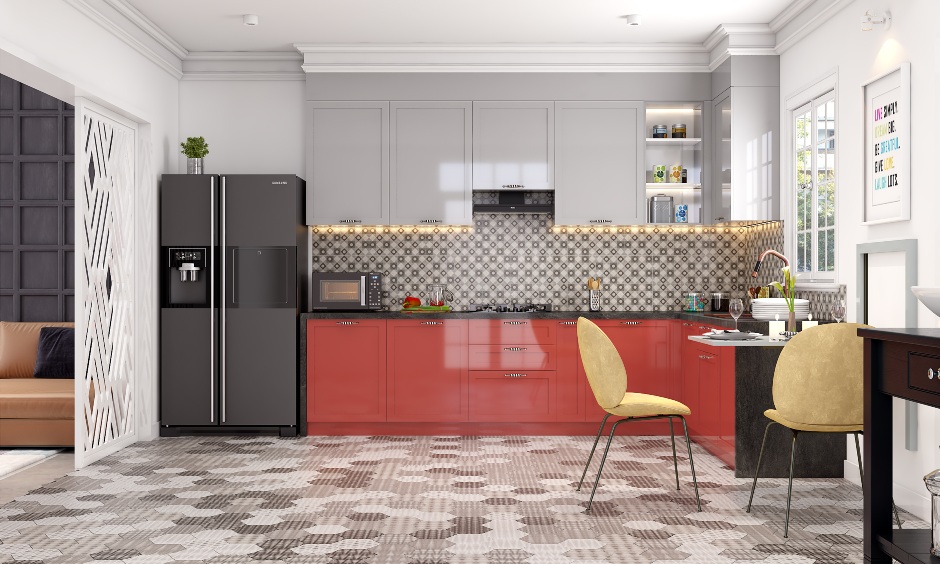
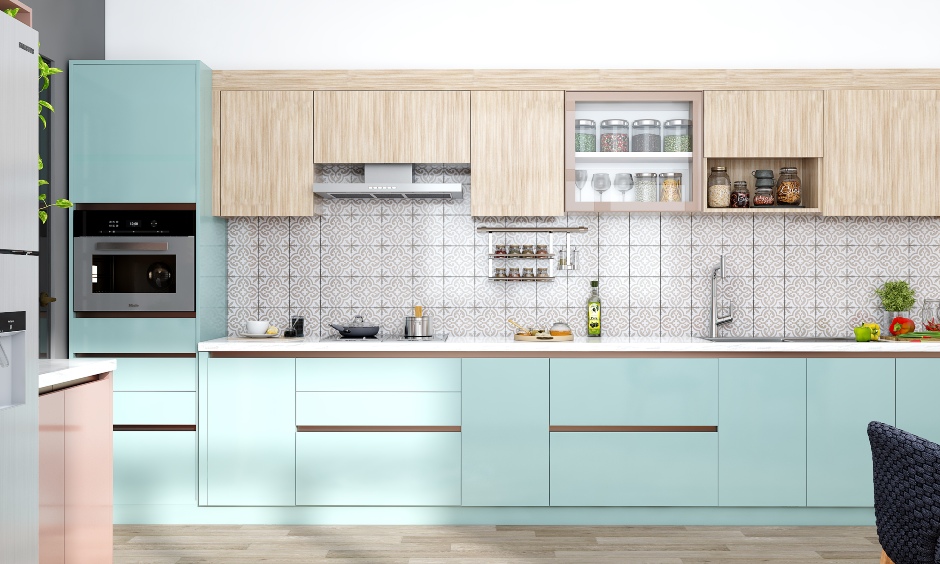
Swipe Through These Show-Stopping Modular Kitchen Interior Ideas


Which Kitchen Cabinet Door Materials Are Best For Your Kitchen?
The core material affects the door’s strength, moisture tolerance and compatibility with different finishes. In Indian kitchens, the material specification and edge treatment deserve as much attention as the visible surface.
1. Solid Wood Cabinet Doors: Solid wood offers natural grain and can be refinished. However, it can expand or contract with humidity changes and needs suitable sealing.
2. MDF Cabinet Doors: Medium-density fibreboard (MDF) has a smooth surface suited to painted and moulded doors. It is best used where the product specification suits the application, with particular care taken to seal exposed edges.
3. Plywood Cabinet Doors: Plywood is made by joining thin layers of wood for durability. For kitchen cabinets exposed to moisture, choose BWP-grade plywood that meets IS 710 standards. To prevent water damage, seal the edges.
4. HDHMR Cabinet Doors: High-density high-moisture-resistance (HDHMR) board offers a dense, uniform surface for routed and finished shutters. Look for a specified density of at least 800 kg/m³, along with the manufacturer’s moisture-resistance rating. HDHMR is moisture-resistant, not automatically waterproof. Hence, it should not be treated as interchangeable with BWP plywood in areas exposed to standing water.
5. Laminate Cabinet Doors: Laminate comes in many colours and textures and is easy to clean. Edge-banding helps protect the exposed edges of cabinet doors from moisture and damage. PUR adhesive or laser edge-banding can provide better edge sealing when applied correctly.
6. Acrylic Cabinet Doors: Acrylic gives kitchen cabinets a smooth, glossy finish, which suits modern kitchens. It is often applied as a 1.5–2 mm layer over an 18 mm base board. However, thickness may vary by product.
Matte, Glossy, Woodgrain And Textured Kitchen Cabinet Door Finishes
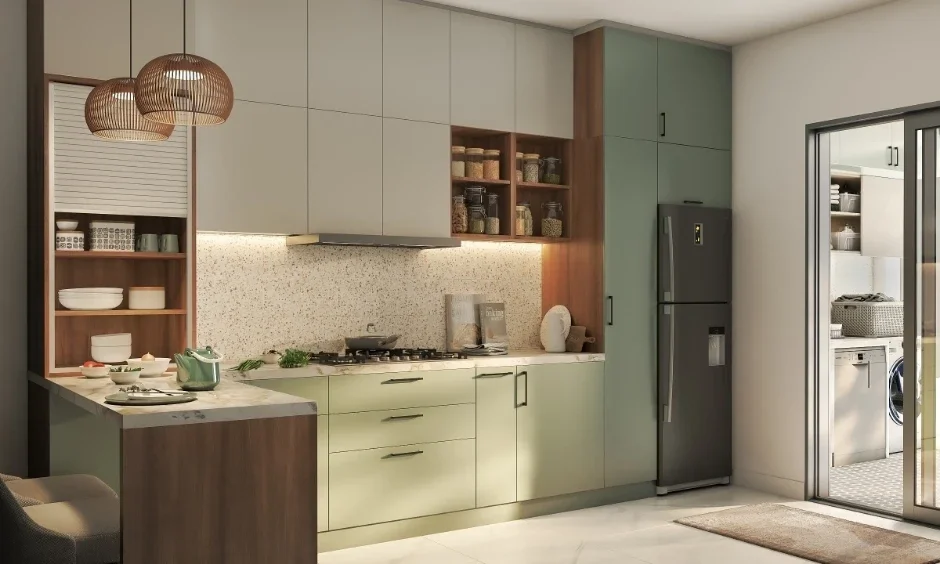
The finish affects how your cabinet doors look and how easy they are to clean. Consider how often you cook and choose a finish that matches your kitchen’s overall look.
1. Matte Kitchen Cabinet Finishes: Matte finishes have less shine and give cabinets a subtle look. They may hide fingerprints better than glossy finishes, but oily marks can still show.
2. Glossy Kitchen Cabinet Finishes: Glossy finishes reflect light and can brighten darker kitchens. However, fingerprints, water spots and surface imperfections may be more noticeable.
3. Woodgrain Finishes: Woodgrain laminates and veneers introduce a natural-looking texture. Laminates offer consistent patterns, while real wood veneer has more variation and needs appropriate care.
4. Textured Cabinet Finishes: Textured finishes add depth through grain or subtle ridges. We would recommend choosing simpler textures near cooking areas, where the residue can accumulate.
Kitchen Cabinet Door Colour Ideas For Every Kitchen Style
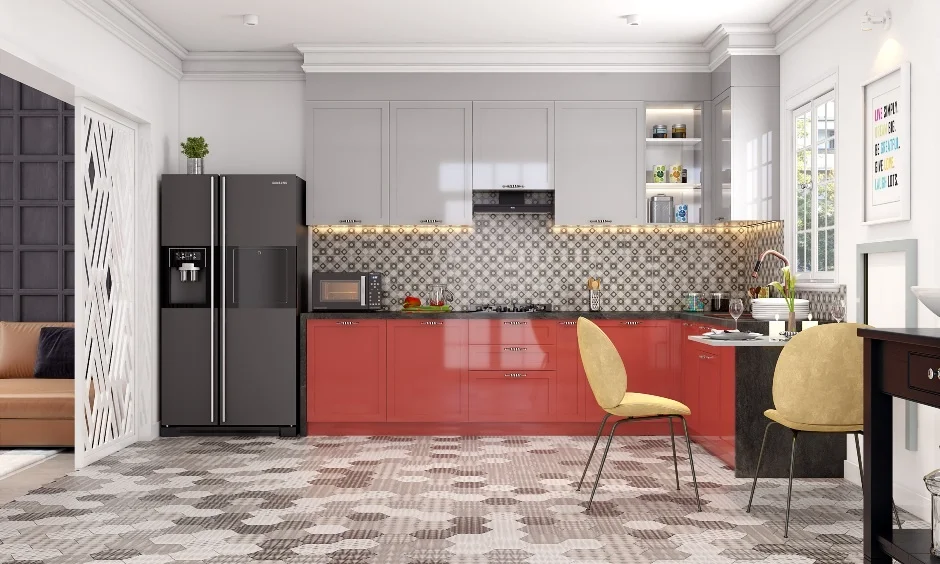
Cabinet colours should complement the countertop, flooring and backsplash. Test samples under your kitchen’s actual lighting before getting a shade.
1. White and Neutral Cabinet Doors: White, beige and soft grey pair well with stone countertops and varied backsplash designs. They offer flexibility but may need frequent cleaning around handles.
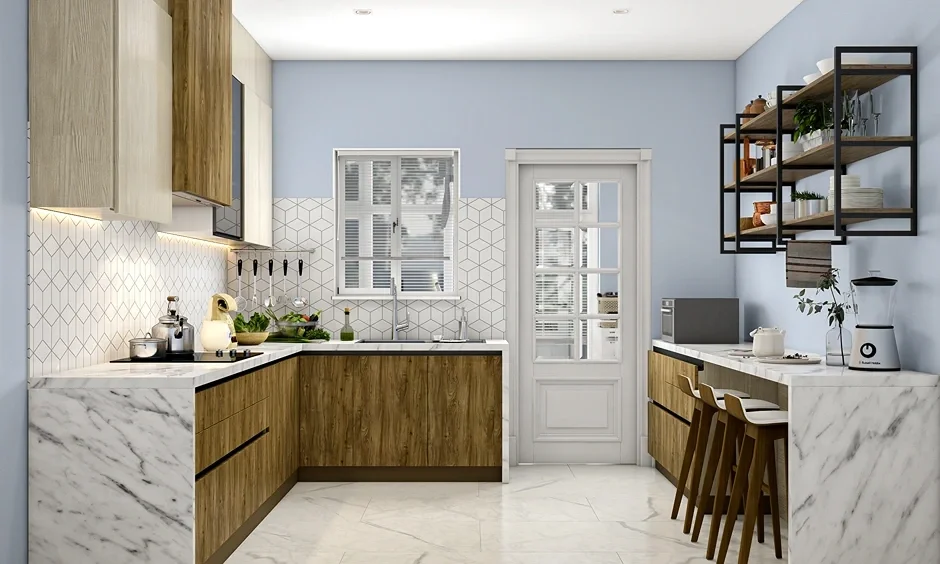
2. Wood and Natural Tones: Oak, walnut and other wood-inspired tones add warmth. Pair them with simpler countertops to prevent competing patterns.
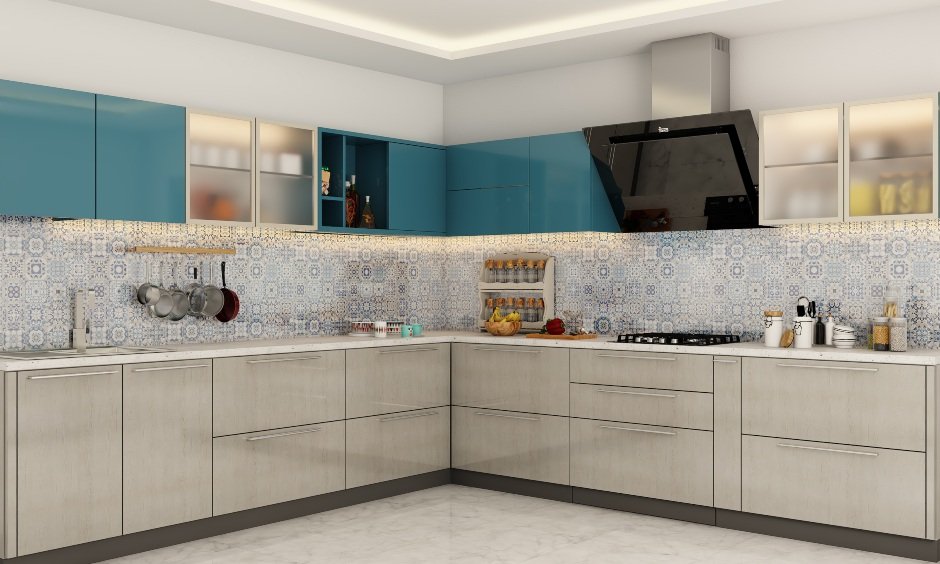
3. Dark Kitchen Cabinet Colours: Navy, charcoal and deep green create contrast against lighter countertops. Adequate lighting helps maintain visual balance, while the finish determines how visible fingerprints will be.
4. Two-Tone Kitchen Cabinet Doors: Combine complementary colours to distinguish upper and lower cabinets. For example, pair lighter overhead doors with darker base units for contrast.
Kitchen Cabinet Door Design Ideas For Modern, Traditional And Small Kitchens
The best kitchen cabinet door styles depend on your interior theme and how much detail your kitchen can handle.
1. Modern Kitchen Cabinet Door Ideas: Choose slab doors, slim pulls and matte finishes for clean lines. A contrasting backsplash adds detail without decorative cabinet profiles.
2. Contemporary Kitchen Cabinet Door Ideas: Pair Shaker doors with modern hardware or combine woodgrain and solid-colour finishes for a balance of classic and current design.
3. Traditional Kitchen Cabinet Door Ideas: Raised-panel or beadboard doors pair well with classic hardware. Keep decorative details consistent across the cabinets.
4. Minimalist Kitchen Cabinet Door Ideas: Use flat-front doors, integrated handles and a limited colour palette. Fewer surface details also simplify routine cleaning.
5. Small Kitchen Cabinet Door Ideas: Choose simple profiles and use glass doors selectively on overhead units. Too many contrasting colours or deep grooves can make a compact kitchen feel visually busy.

How To Choose the Best Kitchen Cabinet Door Style For Your Home?
The right choice should suit your layout, daily routine and budget, rather than just the appearance of a reference image.
1. Consider Your Kitchen Layout: Check door swings near walkways, appliances and corners. In compact kitchens, opening clearance and handle placement matter as much as appearance.
2. Match the Door Style to Your Interior Theme: Choose simple cabinet door designs for a modern look and detailed panels for a traditional style. Make sure the doors match your countertop, backsplash and handles.
3. Consider Maintenance and Cleaning: Generally, kitchen cabinets tend to collect grease and food splashes during cooking. That is why it’s essential to choose a design that is easy to clean. Consider slab, flat panel, and matte-finish cabinet doors for long-term use.
4. Materials and Finishes: We would suggest materials that can handle moisture and daily use. Also, check how the edges are sealed, as this helps prevent damage over time.
5. Consider Your Budget: Include the cost of cabinet doors, finishes, hinges, handles and installation. Custom designs and special finishes may cost more than standard laminate doors.
Kitchen Cabinet Door Styles Compared: Features And Maintenance
Here are a few styles to compare for your kitchen. While doing so, keep in mind the material and finish. These factors affect cleaning and durability.
| Cabinet door style | Look | Best for | Maintenance |
| Shaker | Classic, framed | Transitional kitchens | Moderate |
| Slab | Clean, flat | Modern kitchens | Easy |
| Raised panel | Decorative | Traditional kitchens | Moderate |
| Glass | Open, display-focused | Selected overhead units | Frequent cleaning |
| Louvered | Slatted, textured | Cottage or coastal themes | More effort |
Transform Your Kitchen with the Right Cabinet Doors
The most ideal types of kitchen cabinet doors should complement your interiors, suit your layout and withstand everyday use. Slab doors may work well in a busy kitchen, while framed or glass-fronted designs introduce detail where needed. The core material and edge sealing are equally important, especially near sinks and other moisture-prone areas.
If you are planning a modular kitchen, our experts can help you compare layouts, materials, finishes and storage options.
Book a free consultation with us.
FAQs
1. What are the different types of kitchen cabinet doors?
Common options include Shaker, slab, raised panel, flat panel, recessed panel, glass, louvered and beadboard doors. Inset and overlay describe how doors fit against the cabinet frame.
2. Which kitchen cabinet door style is most popular?
Slab and Shaker doors are widely used because they suit different interior styles. Choose according to your kitchen’s design and maintenance needs.
3. Which kitchen cabinet door material is easiest to maintain?
Laminate is a practical, low-maintenance option for many kitchens. Smooth surfaces are generally easier to clean than deeply grooved designs.
4. What are the best materials for kitchen cabinet doors?
Solid wood, MDF, plywood, HDHMR and laminate-faced boards suit different requirements. Compare moisture exposure, finish compatibility, construction quality and budget.
5. What finishes are available for kitchen cabinet doors?
Common options include matte, gloss, woodgrain and textured finishes. Paint, veneer, laminate and acrylic offer different appearances depending on the material.
6. How do I choose the right kitchen cabinet door style?
Consider your layout, interior theme, cleaning routine, material quality and budget. Compare physical samples with your countertop and backsplash before deciding.