Select Category


AI Summary
4 key insights · 1 expert tipHandleless kitchen cabinets open without visible handles. Gola channels, J-pull grooves, or push mechanisms create the grip instead. They give Indian kitchens a clean, uninterrupted look. Choose a mechanism that fits your cooking habits. Gola handles oily hands better than push-to-open. Expect to pay around 10-20% more than a handled kitchen. This guide explains how each system works, what it costs and how it holds up over time.
KEY INSIGHTS
- Pick your opening mechanism before you pick your finish.
- Choose Gola profiles if you cook Indian food every day.
- Budget 10 to 20 per cent above a handled kitchen.
- Check the hardware brand, not just the shutter.
 DESIGNCAFE EXPERT TIP
By our design team
Ashika T S, Interior Designer, DesignCafe, Coimbatore, suggests, “Open and shut a push-to-open sample fifty times in the showroom. If it starts sticking there, it will stick at home too.”
Want that showroom-clean kitchen look? It starts with losing the handles.
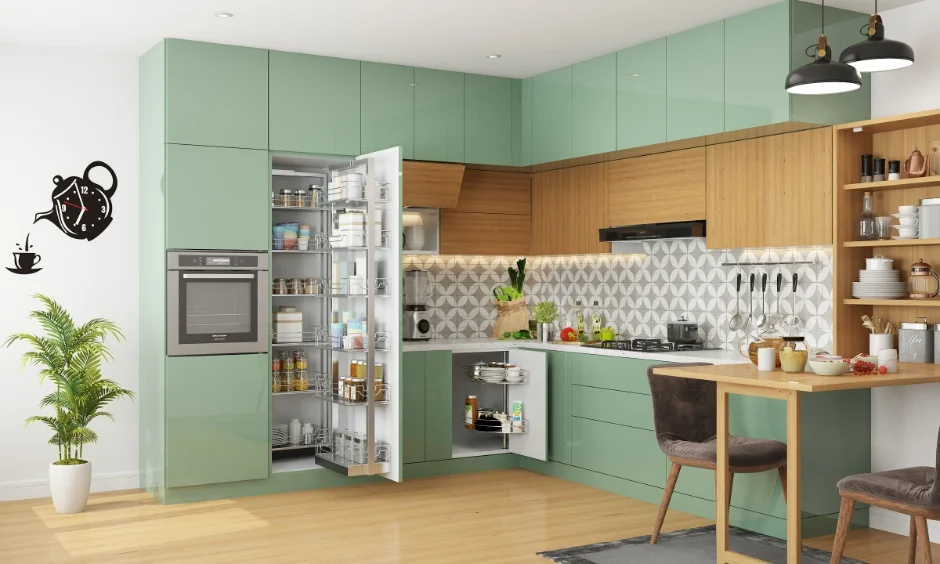
Choosing the right cabinet for Indian kitchens is a serious business. In a space where oil and mustard splatters from tadka, wet hands open drawers and masala dust settles into corners, every cabinet detail gets tested daily.
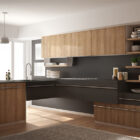
This is where handleless design comes in handy. It works with those habits, not against them. Handleless kitchen cabinets can make an Indian kitchen look cleaner without adding more visual clutter. But good looks are only half the story. This guide covers the most practical handleless kitchen cabinet designs, how they work, their pros and cons, and what to consider before choosing one.

What Are Handleless Kitchen Cabinets?
A handleless cabinet has no knob or bar fixed to the front. You open it by gripping a shaped edge, sliding your fingers into a recess, or pressing the shutter. That is the key difference between truly handleless kitchen cabinet doors and cabinets with concealed handles.
A concealed handle is still a separate piece, even when it is tucked out of sight. A handleless system builds the grip into the cabinet itself. This difference matters in an Indian kitchen. Oil, masala and food residue can settle around small fittings and edges. With fewer separate parts, grime has fewer places to collect.
How Do Handleless Kitchen Cabinets Work?
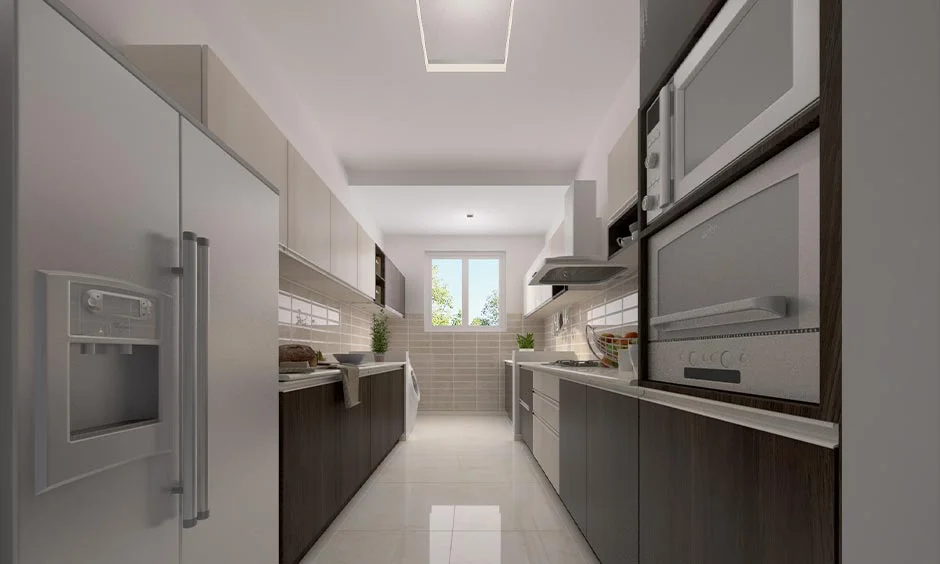
Four systems are common in handleless kitchen cabinet doors. Three create a grip along the shutter. One relies on a spring-loaded mechanism.
Gola Profile Kitchen Cabinets: An aluminium channel runs between the cabinet shutters, slightly behind the front edge. You slide your fingers into the channel to pull. It is easy to use when your hands are wet, oily or covered in atta. The trade-off? The channel needs regular cleaning, especially around the hob.
J-Pull Kitchen Cabinets: The top or side edge of the shutter has a J-shaped profile. This creates a built-in grip without adding a separate handle or aluminium channel. It gives the kitchen a clean look and reduces the number of parts to clean.
Push-to-Open Cabinets: A spring-loaded catch sits behind the shutter. Press the front, and the door pops open by roughly 30mm.
The result is a completely flat front with no visible grip. However, you need to press the right spot, which can take some getting used to. Frequent use can also make fingerprints more noticeable on the shutter.
Handleless Kitchen Cabinets With Soft-Close Hinges: Soft-close hinges control the final few centimetres as the shutter closes. They pair with most handleless systems. They prevent cabinet doors from slamming and increase the shutters’ life. For a busy Indian kitchen, that distinction matters.
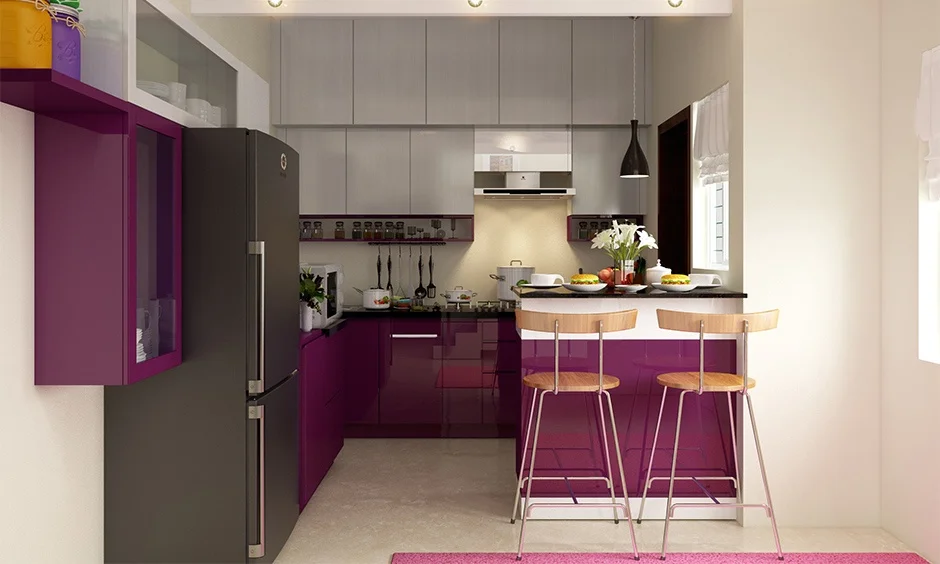
What Are the Different Types of Handleless Kitchen Cabinets?
| Type | How it works | Best suited for |
|---|---|---|
| Gola profile | Recessed aluminium channel between cabinets | Modern kitchens with daily Indian cooking |
| J-pull | Grip routed into the shutter edge | Minimalist kitchens |
| Push-to-open | Sprung catch behind the shutter | Tall units and islands |
| Recessed grip | Groove cut into the door face | Contemporary kitchens |
Pro Tip: If you are not sure which to choose, use Gola on base units and push-to-open on tall units.
Modern & Premium Modular Kitchen Interior Design Ideas

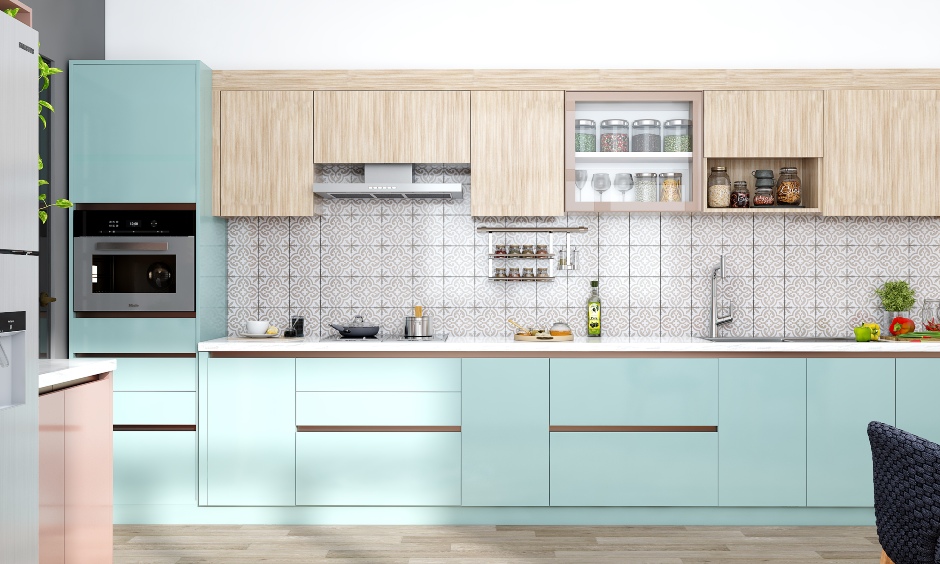
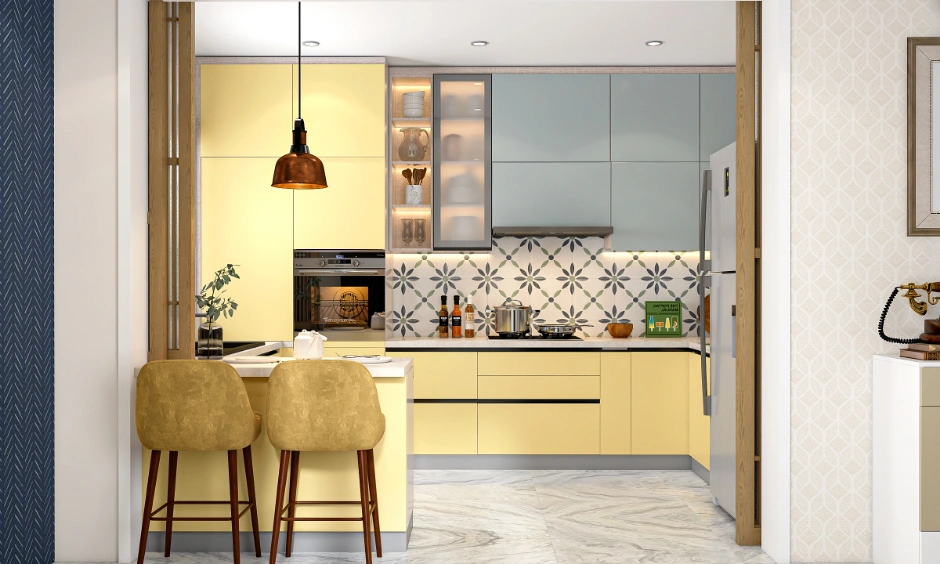
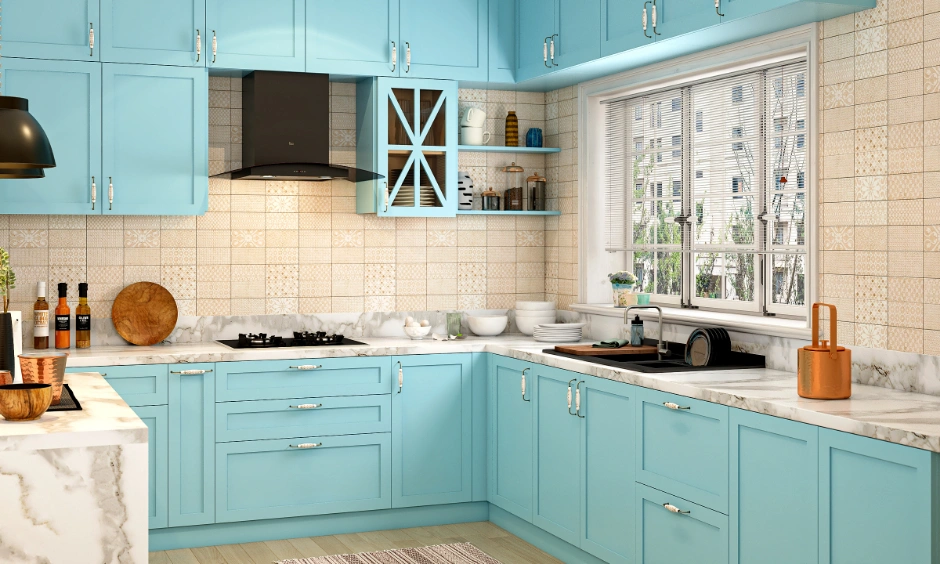
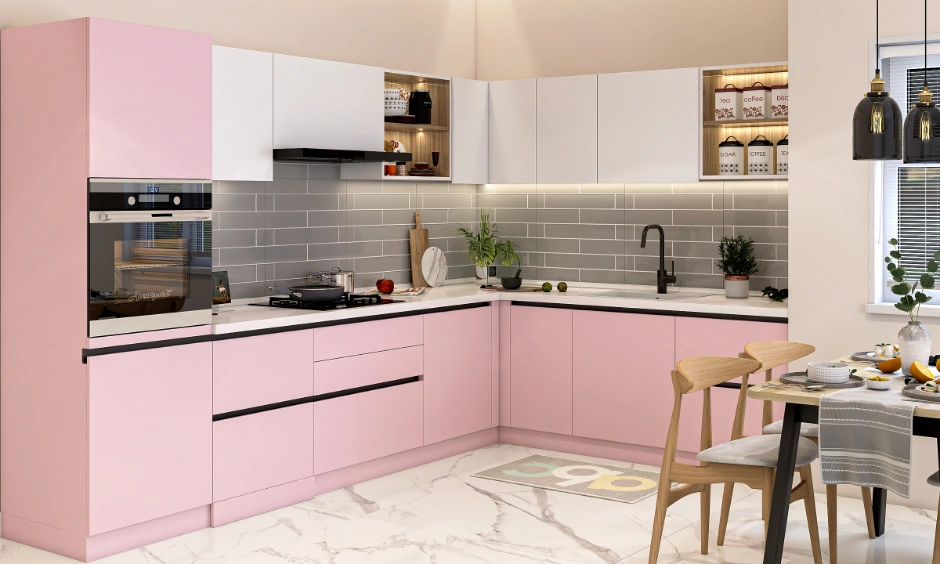
What Are the Benefits of Handleless Kitchen Designs?
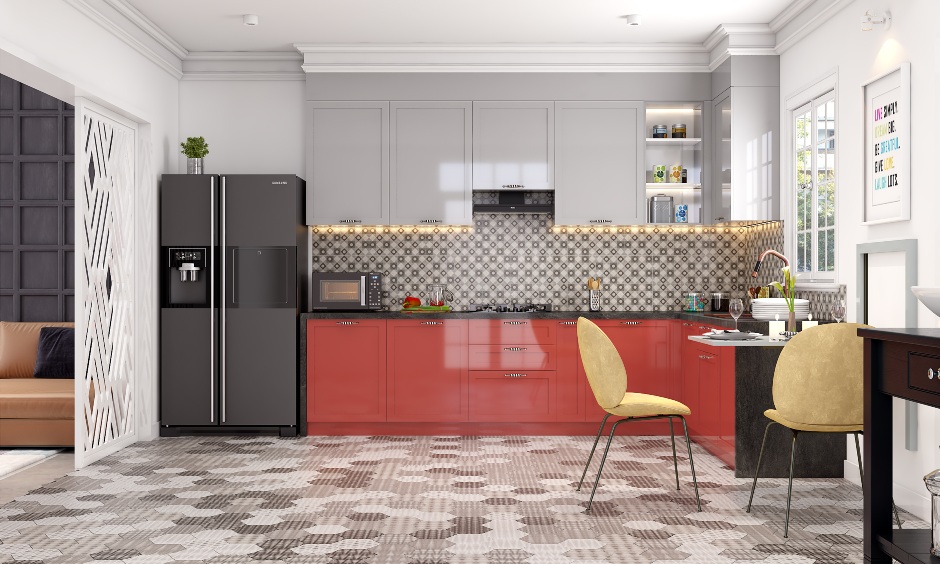
- Clean, minimalist look: Creates one uninterrupted cabinet surface with no visible handles.
- Makes small kitchens feel bigger: Nothing projects into narrow walkways, making galley kitchens feel more open.
- Easier to clean: No handle joints where oil, turmeric and grease tend to collect.
- Less visual clutter: Fewer finishes compete for attention, especially alongside open shelves.
- Perfect for modern kitchens: Pairs naturally with flat-panel shutters and contemporary interiors.
- Safer for busy homes: No protruding handles to catch dupattas, school bags or bump into toddlers.
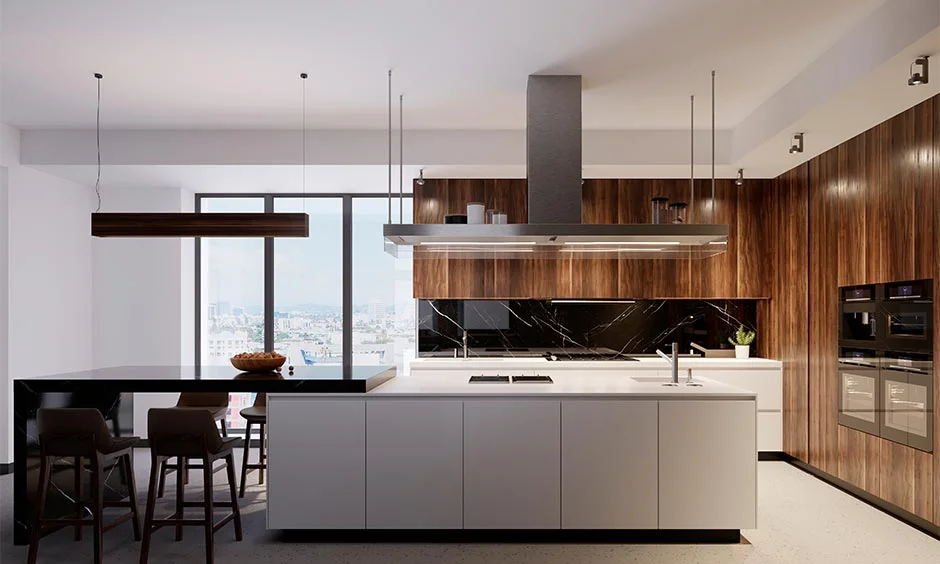
Are Handleless Kitchen Cabinets Practical for Indian Homes?
Yes, with one condition: choose a mechanism that fits how you actually cook, since Indian cooking is oil-intensive.
A Gola channel handles this well because you pull the shutter from inside a recessed profile. Your fingers don’t touch the cabinet front. Push-to-open is less forgiving. Every opening leaves fingerprints and stains in the most visible parts.
Then there is frequency. In a busy Indian kitchen, base drawers open dozens of times a day. The mechanism needs to handle that routine. Humidity matters too. If a cabinet carcass sits near the sink, ask for BWP-grade plywood and proper edge sealing.
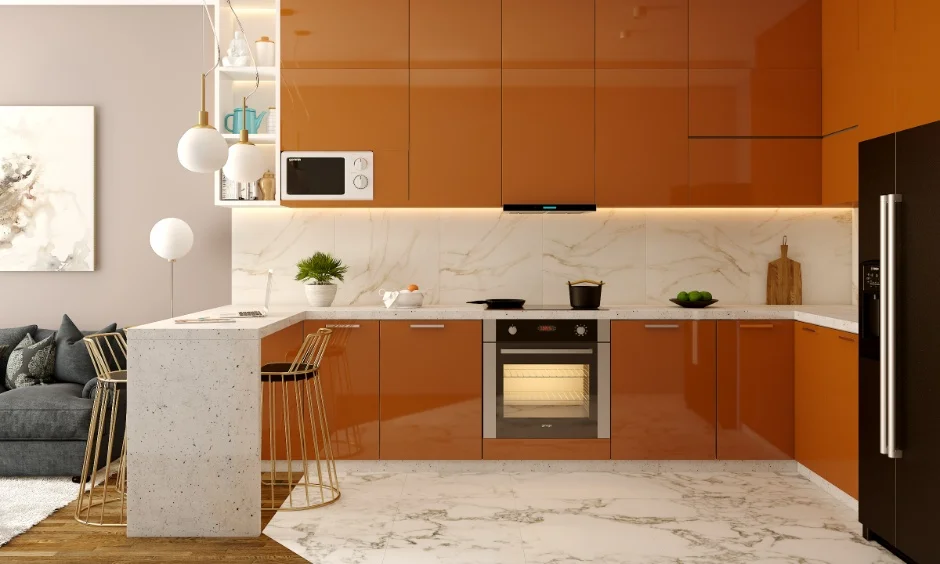
What Are The Best Handleless Kitchen Designs For Indian Homes?
| Kitchen layout | What works best |
| Handleless L-Shaped Kitchen | Continuous Gola profile |
| Handleless Parallel Kitchen | Handleless shutters |
| Handleless U-Shaped Kitchen | Magic pull-outs for corner cabinets |
| Handleless Island Kitchen | Push-to-open |
| Handleless Kitchen for Small Spaces | Push-to-open (for kitchens under 60 sq. ft.) |
| Handleless Kitchen With Tall Units | Floor-to-ceiling shutters |
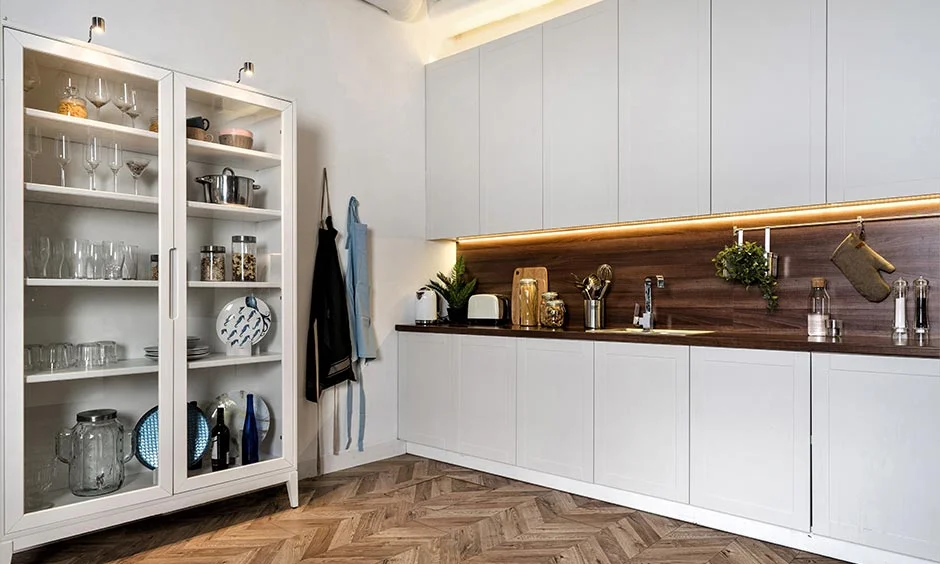
Handleless Kitchen Cabinet Door Styles and Finishes
- Matte hides fingerprints and is the safer choice for a family kitchen.
- Gloss bounces light around a dark room, but shows every smudge near a push-to-open shutter.
- Acrylic gives the deepest colour and cleans easily.
- Laminate costs less and takes knocks better.
- Veneer adds warmth in an all-white home.
- Neutral finishes keep the kitchen calm.
- Dark finishes need matte to stay practical.
- Two-tone ages best.
Handleless vs Traditional Kitchen Cabinets: Which Is Better?
| Feature | Handleless cabinets | Traditional cabinets |
|---|---|---|
| Appearance | Minimal and streamlined | More decorative |
| Handles | Integrated or hidden | Visible |
| Cleaning | Fewer protruding parts | Handle bases need cleaning |
| Style range | Modern and contemporary | Wider range of styles |
| Grip | Depends on the mechanism | Easy to grip, always |
| Cost | Higher, depending on hardware | Wider price range |
Are Handleless Kitchen Cabinets Easy To Maintain?
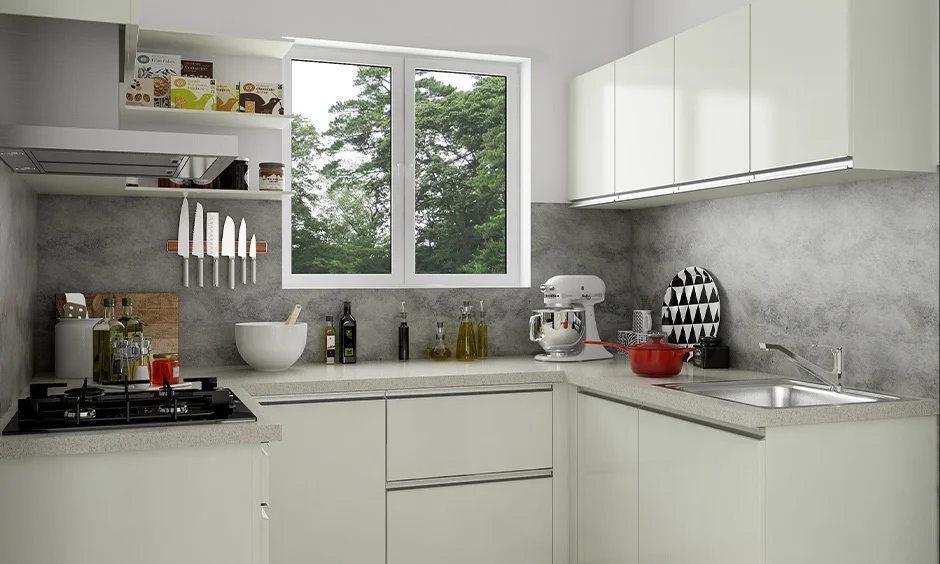
Mostly, yes. Flat fronts wipe clean quickly, but Gola channels need more attention.
- Gola: Clean the channel monthly with a cloth or old toothbrush.
- Push-to-open: Wipe around the press point regularly.
- Soft-close hinges: Check their alignment and movement once a year.
Are Handleless Kitchen Cabinets Durable?
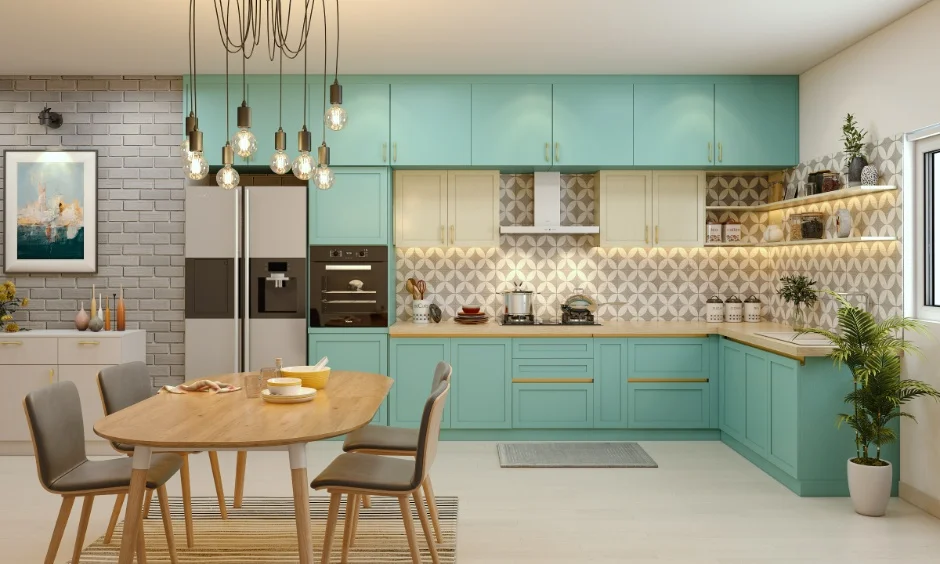
Durability depends on both the cabinet and its hardware.
- Choose good-quality plywood and professional installation.
- Ask for branded hinges and catches with a stated cycle rating.
- Gola has fewer moving parts than push-to-open systems.
- Push-to-open catches need replacement if their springs fail.
How Much Do Handleless Kitchen Cabinets Cost?
Handleless kitchens typically cost around 10-20% more than comparable kitchens with handles. Gola profiles add a running-foot cost, while push-to-open systems add a cost per catch. J-pull can cost less because the grip is routed into the shutter.
Kitchen size, finishes, tall units and accessories have a bigger impact on the final price.
Check out our modular kitchen cost calculator here.
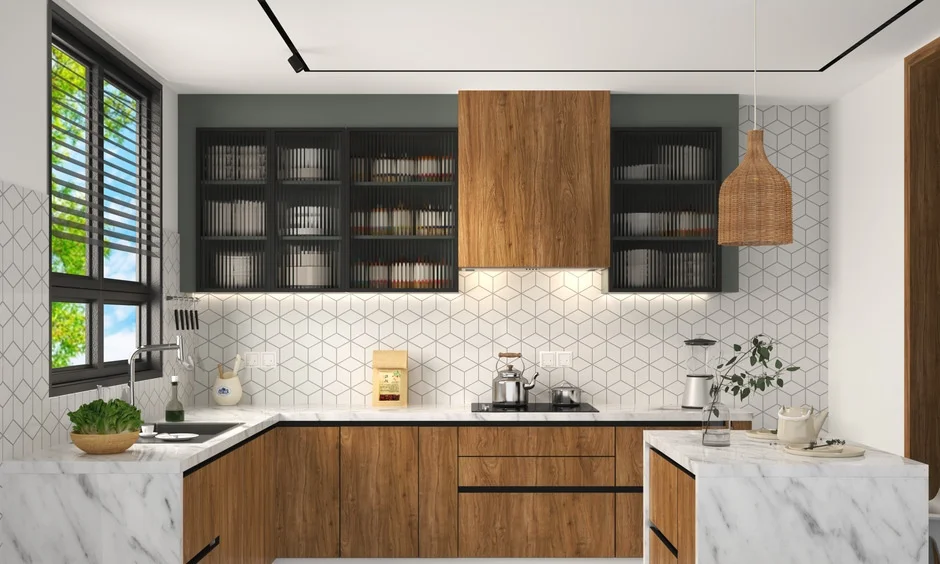
What Should You Consider Before Choosing A Handleless Kitchen?
- Choose the mechanism first. Your opening system affects everyday use.
- Check hardware quality. Ask for the cycle rating.
- Consider cooking habits. Frequent frying makes Gola worth considering.
- Think about cleaning. Be honest about whether you’ll brush the channel every month.
- Match the finish. Matte hides marks, and gloss works well in low-light rooms.
- Plan storage. Flat fronts make internal organisers more important.
- Budget for hardware: Don’t compromise on the mechanism.
Pros and Cons Of Handleless Kitchen Cabinets
| Pros | Cons |
|---|---|
| Clean, uninterrupted appearance | Some systems cost noticeably more |
| Suits modern homes | Gola profiles need regular cleaning |
| Less visual clutter in small kitchens | Push-to-open mechanisms can wear |
| Nothing projecting into walkways | Not everyone likes a handle-free door |
| Easy to wipe down | Mechanism choice is hard to change later |
Conclusion
A handleless kitchen is more than a styling decision. The mechanism decides how the modular kitchen feels every morning, long after the finish stops being new. Get that right, and the rest is simple.
Still weighing up layouts and finishes? Our blog section has detailed guides on kitchen materials, storage and costs.
And when you are ready to give your kitchen a makeover, book a free consultation with our designer to get an estimate.
FAQs
1. Are handleless kitchens suitable for Indian homes?
Yes. Choose the mechanism carefully. Gola works better with oily or wet hands.
2. What is the difference between Gola and J-pull?
Gola uses an aluminium channel. J-pull creates the grip on the shutter edge.
3. Are handleless kitchens more expensive?
Usually 10–20% more, depending on the mechanism and finish.
4. Do handleless cabinets use soft-close hinges?
Most do. Soft-close prevents shutters from slamming.
5. Are handleless cabinets durable?
Yes, with good hardware. Gola has fewer moving parts, while push-to-open may need more servicing.
6. Do handleless cabinets make kitchens look spacious?
Yes. The uninterrupted fronts create a cleaner, more open look.