 Select Category


AI Summary
4 key insights · 1 expert tipWooden mandir designs stay popular in Indian homes because wood does two things at once. It feels warm and traditional, and it can be cut to fit any corner of a flat. A good design comes down to four decisions. Your space, wall-mounted or floor-standing, how much storage you need, and which wood you can afford to maintain. Here are 15 designs, the wood to choose, and the Vastu points worth following.
KEY INSIGHTS
- Measure your corner before you fall in love with a design
- Choose wall-mounted units for flats under 1,000 square feet
- Pick teak for carving and plywood with veneer for budget builds
- Plan storage and lighting into the unit, not around it
 DESIGNCAFE EXPERT TIP
By our design team
Nivedita Thaker, Interior Designer, DesignCafe, Bengaluru, suggests, “Sit down in front of the spot first. Whatever height your eyes rest at, that is where the main deity shelf belongs.”
Want a pooja space that feels sacred and still suits your home? Start with these wooden mandir designs.
Wooden mandir designs remain relevant because they work across traditional and modern Indian homes.
Wood feels warm under a diya, takes carving and jaali work well, and can be personaliised for almost any corner. Most home mandirs, however, go wrong for practical reasons. They are either too large for the space or lack storage for everyday pooja essentials. A good mandir is therefore a space, storage and lighting decision before it becomes a design decision.
This guide covers wooden mandir designs, suitable materials, styling options and practical considerations.

Why Choose Wooden Mandir Designs For Your Home?
Wood works particularly well for pooja spaces because it combines warmth with flexibility.
- Looks inviting under diya light.
- Works with both traditional and modern interiors.
- Supports carving, jaali, polished, and painted finishes.
- Can be personalised to fit niches and corners.
- Allows storage and lighting to be built into the unit.
15 Wooden Mandir Designs For Home To Try In 2026
Choose the format first, then the style and finish.
1. Simple Wooden Mandir Design: A single shelf and back panel for compact or rented homes.
2. Traditional Wooden Pooja Mandir: Traditional wooden mandir designs feature carved pillars, a domed top and a raised platform for larger spaces.
3. Modern Mandir: Clean planes, simple edges and integrated lighting.
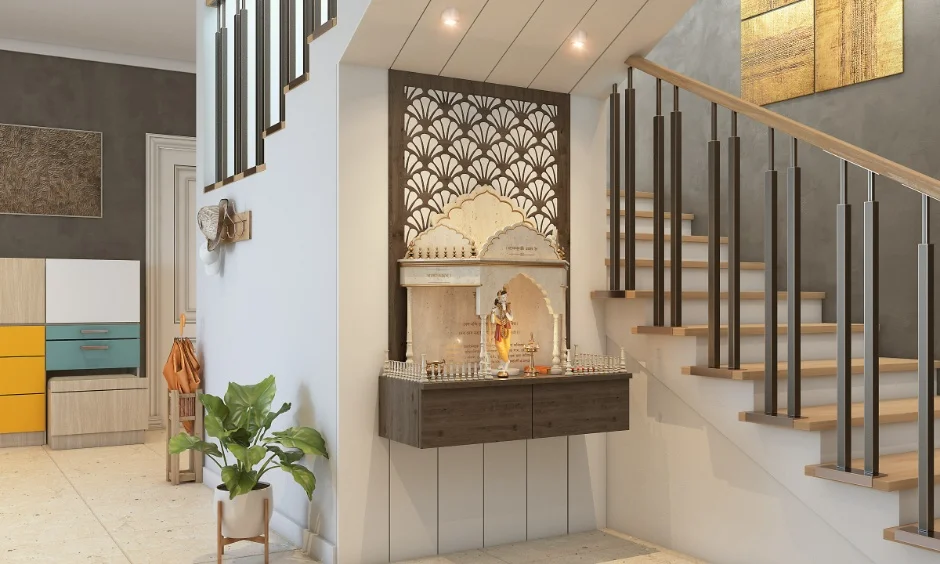
4. Wall-Mounted Mandir: Keeps the floor clear and suits compact flats.
5. Small Mandir: A compact pooja unit with a shelf and drawer for tight corners.
6. Wooden Mandir With LED Lights: Warm 2700K lighting tucked behind the top panel.
7. Mandir With Storage: Drawers keep lamps, wicks and accessories off the main shelf.
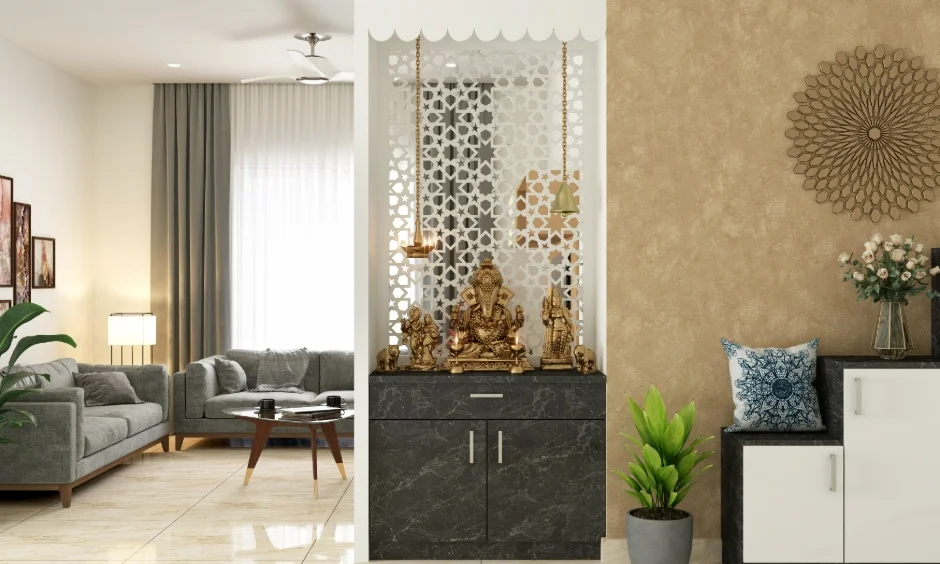
8. Mandir With Jaali Panels: Adds traditional detail while allowing light through.
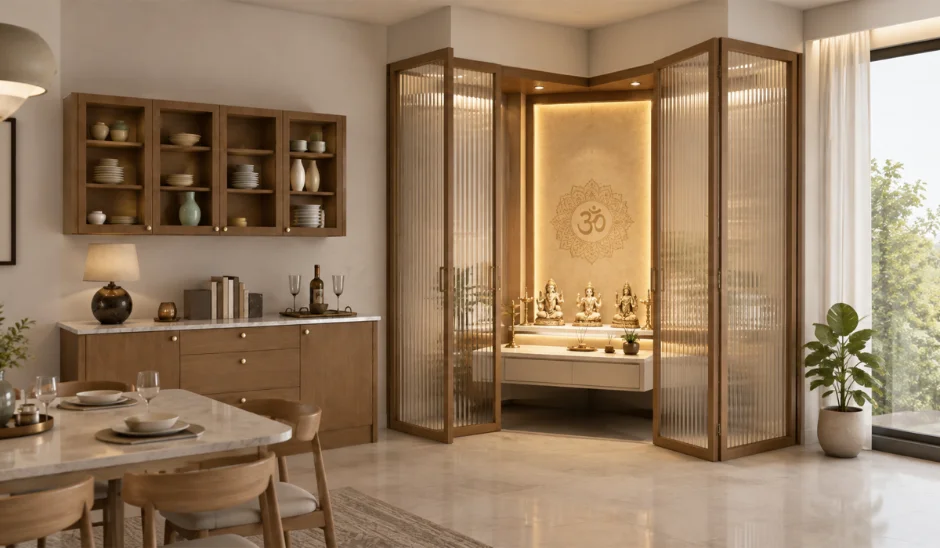
9. A Mandir With Carved Doors: Keeps the unit enclosed when not in use.
10. Wooden Mandir Gate Design: An arched gate creates a traditional temple-like entrance.
11. Glass Mandir: Protects idols and shelves from dust and ash.
12. Corner Mandir: Uses an otherwise wasted corner efficiently.
13. Floating Mandir: Concealed brackets keep the floor free for cleaning.
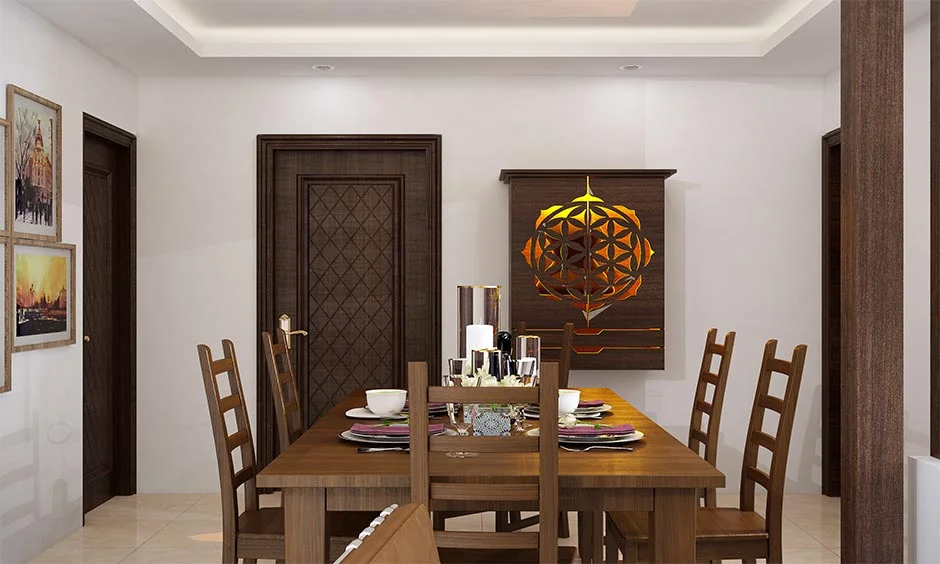
14. Wooden Mandir With Backlit Panel: Creates a focal point using a carved or jaali backdrop.
15. Mandir With Bell and Traditional Elements: Adds brass bells, kalash motifs and a diya ledge.
Wooden Pooja Mandir Designs Based On Interior Style
1. Traditional Wooden Pooja Mandir Designs: Think carved wood, temple-style pillars, jaali panels and deeper finishes. These designs need enough space for their details to stand out.
2. Modern Pooja Mandir Designs: Modern Pooja room designs use clean lines, neutral finishes, floating forms and integrated lighting. The design relies more on proportion than carving.
3. Simple Mandir Designs For Home: Keep detailing minimal and choose an easy-to-clean finish. This works especially well when the mandir shares space with everyday furniture.
Pro Tip: Match the mandir’s wood tone to your largest furniture piece rather than the flooring. It helps the unit feel integrated.
How To Choose The Right Wooden Mandir Design For Your Home?
Consider the Available Space
Measure:
- Width
- Depth
- Overall height
- Comfortable seated eye level
Choose The Right Wood And Finish: Matte finishes show less dust and glare than glossy finishes. For detailed carving, teak is a traditional choice. Plywood with veneer can offer a more budget-friendly alternative.
Decide Between Wall-Mounted And Floor-Standing Designs
- Wall-mounted: Saves floor space and simplifies cleaning.
- Floor-standing: Offers more storage and can support a larger mandir.
Plan Storage For Pooja Essentials: Count what you actually store before finalising the design. A drawer for wicks, oil, lamps and other essentials can keep the main shelf uncluttered.
Consider Lighting And Ventilation: Use warm, low-glare lighting around the deity shelf. Allow adequate ventilation for agarbatti and camphor rather than fully enclosing the unit.
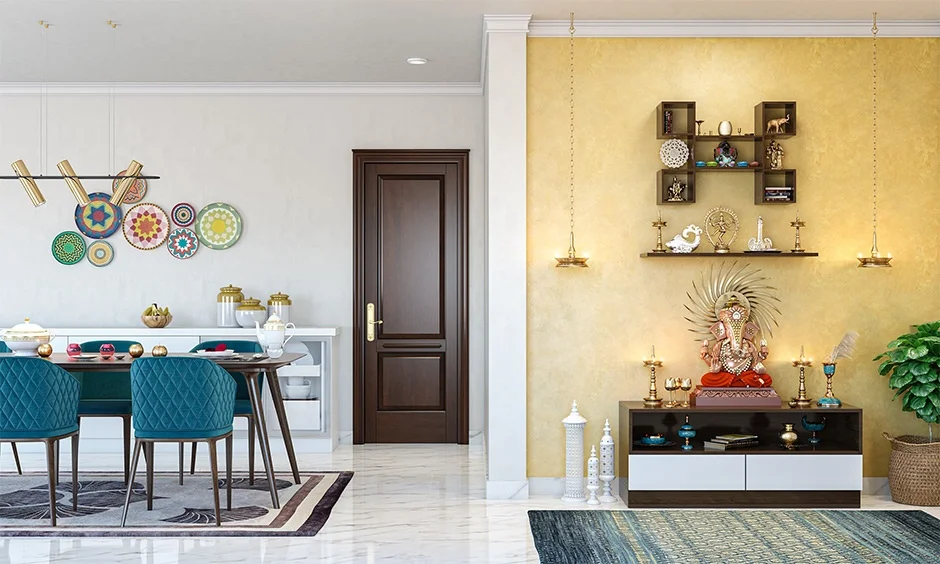
Wooden Mandir Design For Home With Price
| Type | Indicative price | What drives the cost |
| Simple wooden mandir | 8,000 to 15,000 | Size and finish |
| Wall-mounted mandir | 10,000 to 22,000 | Bracket quality and wall type |
| Mandir with storage | 20,000 to 45,000 | Number of drawers and hardware |
| Mandir with LED lighting | 25,000 to 60,000 | Wiring, driver and panel work |
| Custom carved mandir | 45,000 to 1,20,000 | Wood, carving hours and scale |
Premium Pooja Room Interior Design Ideas


Best Wood And Finishes For A Home Mandir
Teak Wood: Teak is excellent for carved mandirs. It handles humidity well and develops a richer finish with age, but costs more.
Plywood With Veneer Finish: A practical alternative. BWP plywood with teak veneer gives a similar look at a lower cost.
MDF For Budget-Friendly Designs: MDF works for flat, painted designs. Avoid it where the mandir may face moisture or high humidity.
Natural Wood vs Engineered Wood
- Natural wood: Better for carving and repairs.
- Engineered wood: More affordable and stable.
- Practical choice: BWP plywood with good-quality veneer.
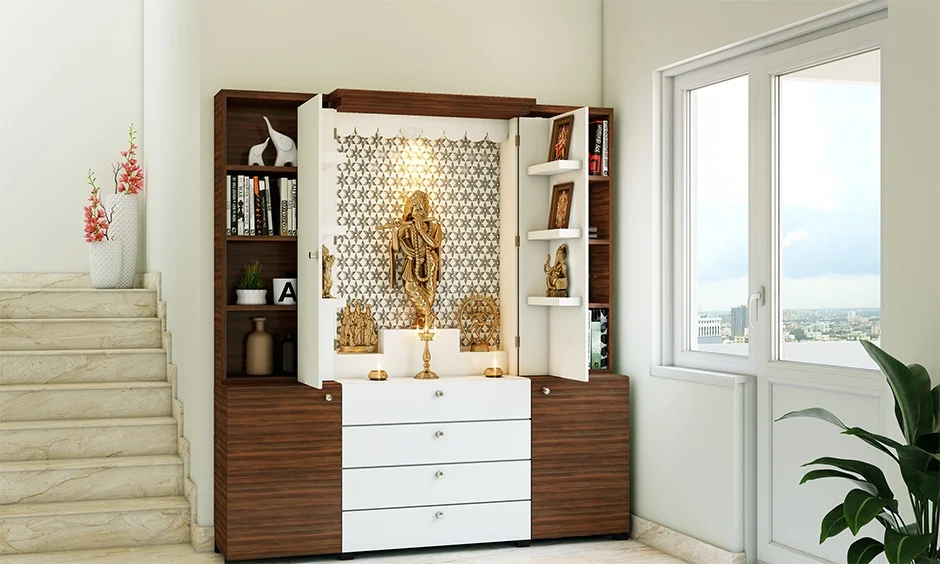
How To Maintain A Wooden Mandir At Home?
- Use a dry microfibre cloth twice a week.
- Remove agarbatti ash regularly.
- Keep the mandir away from damp walls during monsoon.
- Wipe spilt oil immediately.
- Clean jaali and carved door details carefully
- Use a soft, dry brush if your wooden mandir has jaali carvings.
- Keep the LED light accessible for easy replacement.
Pro Tip: Place a small brass or steel tray beneath the diya to protect the wood from oil and heat.
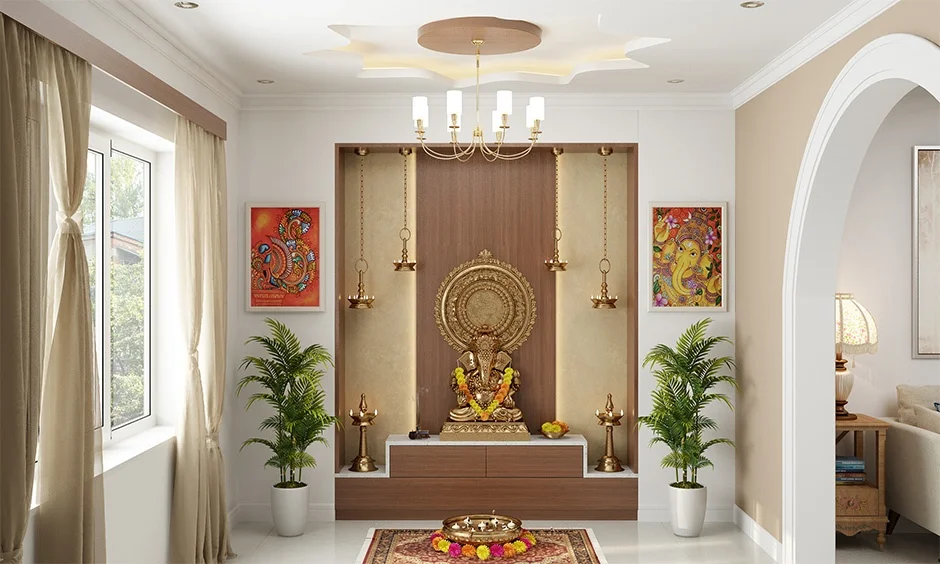
Vastu Tips For Wooden Mandir Designs
Vastu practices vary by tradition, but they are grounded in an architectural approach to light, orientation, and spatial harmony within the floor plan. If you follow them, consider these commonly recommended principles.
Choose The Right Direction: Traditional vastu commonly recommends the north-east for a mandir, with the worshipper facing east or north.
Keep The Pooja Space Clutter-Free: Clear old wicks, dried flowers, ash and used matchboxes regularly.
Consider Deity Height And Placement: Keep deities raised from the floor and positioned at a comfortable seated viewing height.
Choose Suitable Colours And Materials: Light wood, white, cream and pale yellow are commonly preferred in traditional vastu guidance. Avoid placing the mandir under a staircase or against a bathroom wall if those principles matter to your planning.
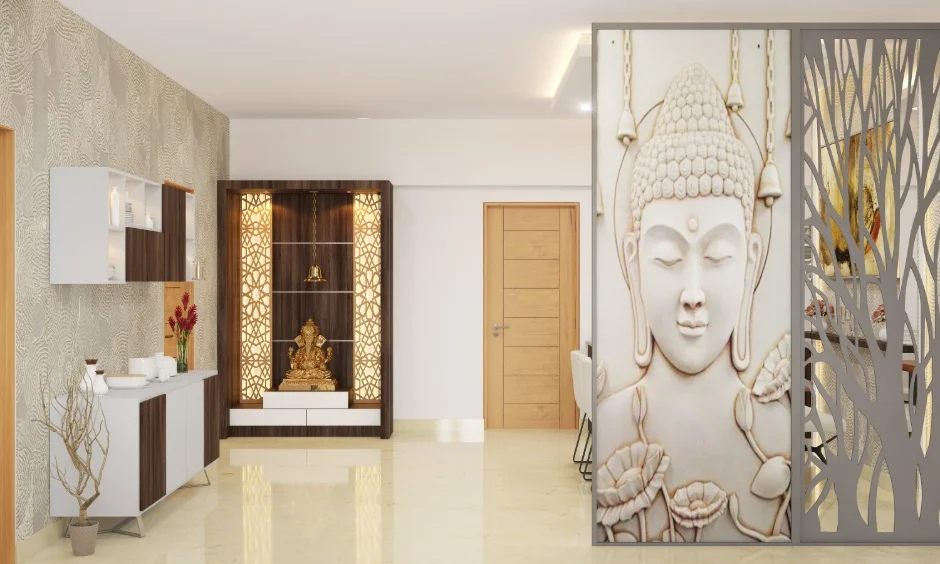
Conclusion
The right wooden mandir design suits your space, rituals and storage needs. Start with the format – wall-mounted for small flats, corner units for unused spaces, or floor-standing designs when space allows. Then choose the wood, finish, lighting and details. Good planning keeps the mandir functional, easy to maintain and visually connected to your home.
Planning the rest of your interiors? Explore our guides on pooja room layouts, storage and materials. For a mandir designed around your space, book a free consultation with a DesignCafe designer.

FAQs
1. What are the best wooden mandir designs for small homes?
Wall-mounted and corner designs save floor space while allowing basic storage.
2. Are wall-mounted wooden mandirs suitable for apartments?
Yes. Use strong wall anchors, especially if the mandir holds brass idols.
3. How much does a wooden mandir cost?
Simple units cost around ₹8,000–₹22,000. Carved teak designs start around ₹45,000.
4. What are the latest wooden mandir designs for 2026?
Floating units with backlit jaali panels, concealed storage and warm lighting are popular.
5. How can I design a simple wooden mandir?
Start with one shelf at seated eye level and a drawer below. Add warm LED lighting.
6. Can I add storage to a wooden mandir?
Yes. Drawers for wicks, cotton and lamps keep the main shelf uncluttered.










Nice post… Wooden pooja mandir’s design ideas are great. Pooja room should be unique and eye-catching for everyone. All ideas are best for applying at home. Also, kindly have a look at our website for more handmade wooden mandir designs.
How to design temple at home