Select Category


AI Summary
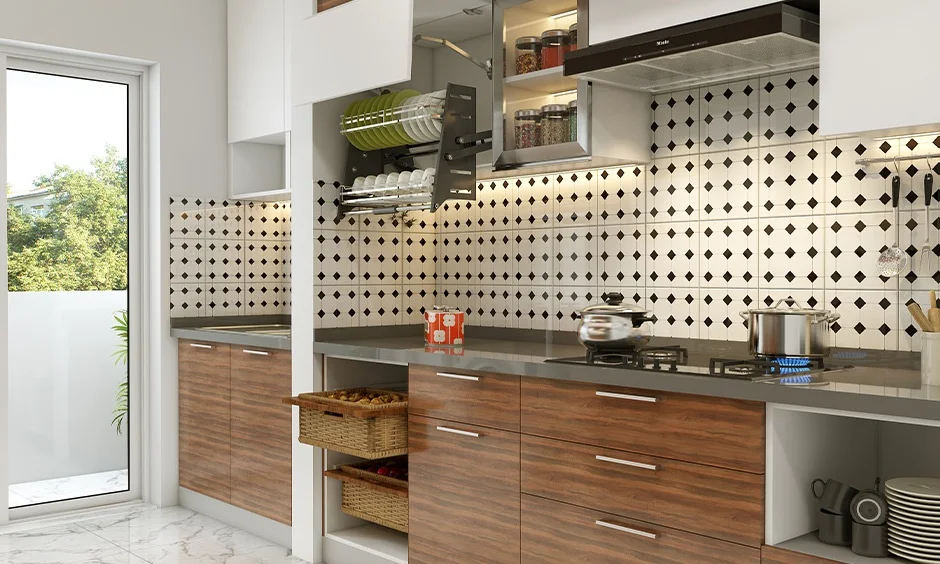
4 key insights · 1 expert tipKitchen wall cabinets mostly open in one of two ways: the door either swings out towards you or moves up and out of the way. Most Indian kitchens benefit from having a mix of both. A lift-up shutter earns its value in narrow kitchens by freeing up headroom, while a swinging door is easy to open and close without a stool. In this blog, we compare both options based on three key factors: ceiling clearance, cook’s reach, and shutter weight.
KEY INSIGHTS
- Measure your ceiling clearance before you fall for a lift-up shutter.
- Check that the shortest cook can reach the open shutter to close it.
- Keep hinged shutters above the hob, where heat and grease attack struts.
- Fit lift-up on two or three kitchen wall cabinets, not the whole run.
 DESIGNCAFE EXPERT TIP
By our design team
Priyanka Pudipeddi, Design Manager, DesignCafe, Vizag, suggests, “Stand at the counter and raise your arm. If your fingertips do not touch the open shutter comfortably, that cabinet stays hinged.”
Lift-up shutters look brilliant in a showroom. Here is how they behave in your kitchen.
Choosing kitchen wall cabinets seems simple until you think about it practically. In the showroom, a shutter glides up, stays neatly in place, and makes the mechanism look like value for money. Nobody demonstrates the part that matters: closing. Reaching up to pull it down, forty times a day, with wet hands, at 5’2” height is a pain you paid extra for. Lift-up shutters are a good choice in the right cabinet.
In this blog, we cover the four ways a shutter opens, the three measurements that determine it, and what fails over time.

The Four Ways Your Kitchen Wall Cabinets Can Open
| Mechanism | Vertical clearance needed | Typical width limit | Relative cost | Best position |
|---|---|---|---|---|
| Hinged | None above the cabinet | Up to 600mm per shutter | Lowest | Anywhere, including above the hob |
| Lift-up | 300 to 400mm above the cabinet | Up to 1200mm single shutter | Highest | Wide cabinets on the main work run |
| Bi-fold | 150 to 200mm above the cabinet | Up to 900mm | Middle | Under a low false ceiling |
| Flap-down | None above the cabinet | Up to 900mm | Middle | Above the fridge or chimney |
Three Measurements To Check Before Choosing Your Kitchen Wall Cabinets
Take these three numbers first. They’ll tell you what works before you worry about what looks good.
- Ceiling Height And False-Ceiling Clearance: A lift-up shutter opens upwards and stops roughly 300 to 400mm above the cabinet top. If your false ceiling drops 150mm, the shutter is likely to hit the ceiling. Measure the head clearance from the cabinet top to the finished ceiling.
- The Cook’s Reach And The Close Test: An open lift-up shutter sits at around 1.9 to 2.1m. Anyone under about 5’3” height will have to stretch or use a stool to bring it down every time. Do the test with the shortest person who cooks, not the tallest one.
- Cabinet Width And Shutter Weight: Gas struts are rated by weight, not by width. A glass or solid-panel shutter needs a higher-rated strut than a light laminate one.
Pro Tip: Get the shutter weight written into the quote alongside the strut rating. An under-rated strut sags within a year.
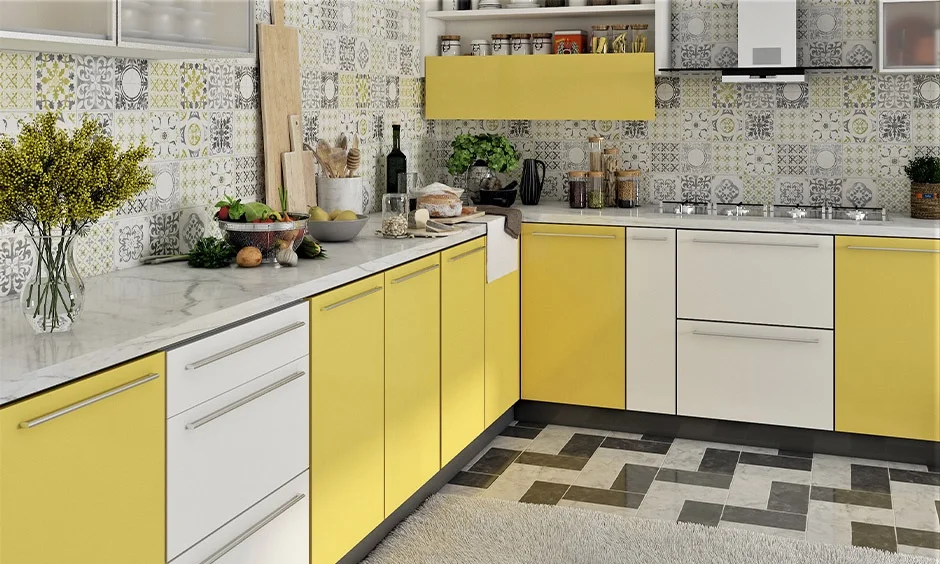
Where Lift-Up Overhead Kitchen Cabinets Genuinely Earn Their Cost?
Four situations make lift-up kitchen wall cabinets worth considering.
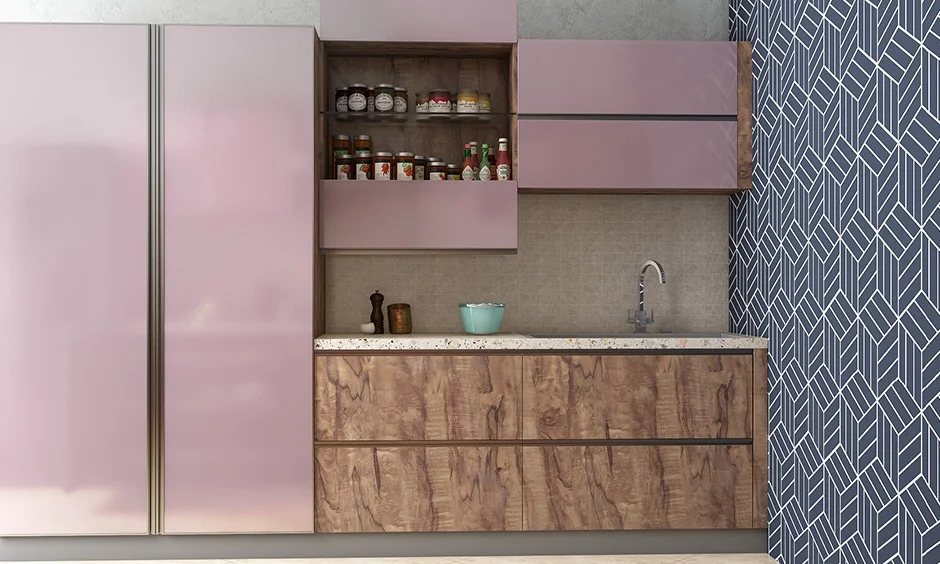
- Galley kitchen with narrow walkway: A hinged shutter eats into a narrow walkway when open, making it awkward for two people to pass.
- Long, uninterrupted cabinet: Lift-up shutters keep the front clear. So, no more getting banged on the head.
- Wide cabinets: A 1000mm-wide lift-up shutter gives you one clear opening instead of two hinged doors meeting in the middle.
- Handleless kitchens: Lift-up shutters are the best choice for handleless kitchens. They work neatly with push-open or profile systems, keeping the cabinet front clean and uninterrupted.
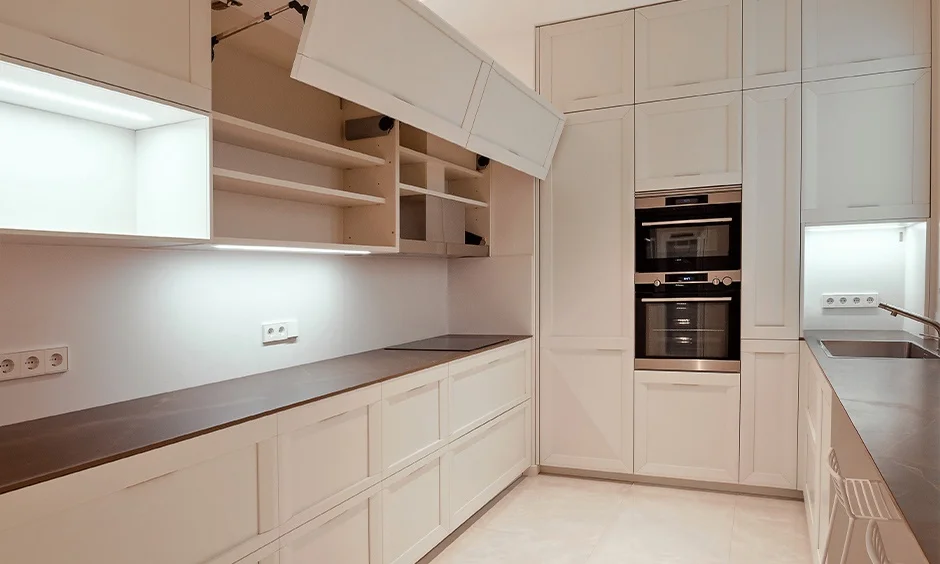
Where Is Lift-Up The Wrong Call For Wall-Mounted Kitchen Cabinets?
Some kitchen wall cabinets should never get lift-up.
- Above the hob: Heat-related damage and cooking grease settle on the piston rod, shortening its life.
- Under a low false ceiling: The lift-top shutter needs space to travel.
- A room with a loft: If your kitchen has a loft with a hinged shutter, a lift-up shutter blocks the loft door.
- The primary cook is short: This is the most ignored reason, and the most regretted one, too.
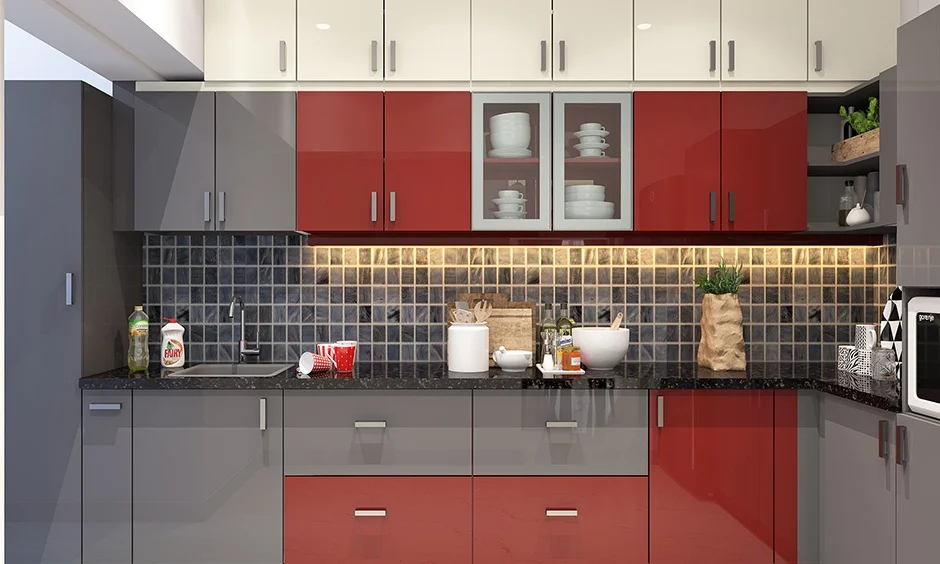
What Fails on Kitchen Cabinet Doors, and When?
Kitchen wall cabinets usually fail at the mechanism, not the box. Gas struts in lift-up shutters gradually lose pressure. These struts help the shutter open upward, hold it in place, and close smoothly instead of dropping. Good-quality ones last about 5-8 years, while cheaper ones often fail within 2 years.
Hinges are rated by opening cycles, with entry-level models tested to around 50,000 and premium ones to 100,000 or more.
Pro Tip: Buy one spare pair of struts with the kitchen and store them inside a tall unit.
Creative Modular Kitchen Interior Design Ideas
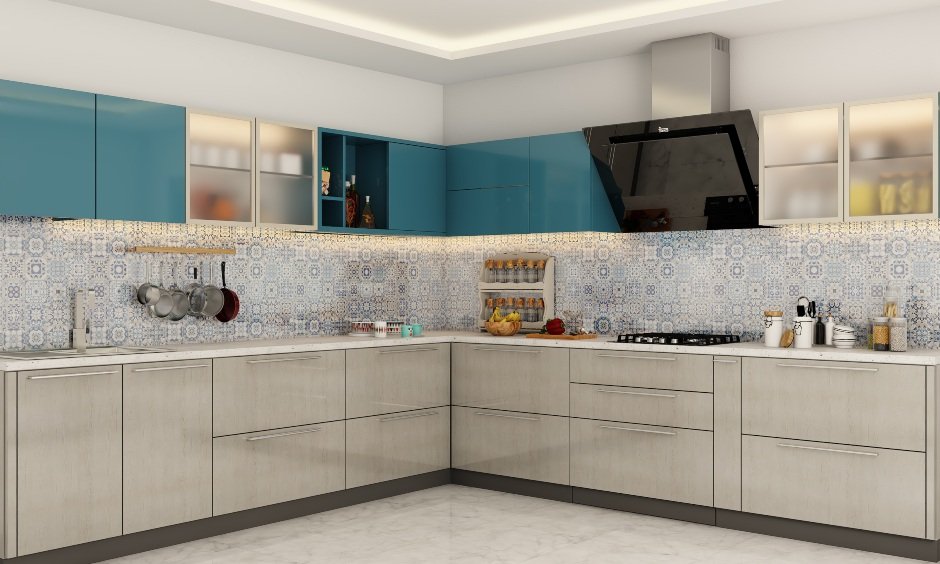


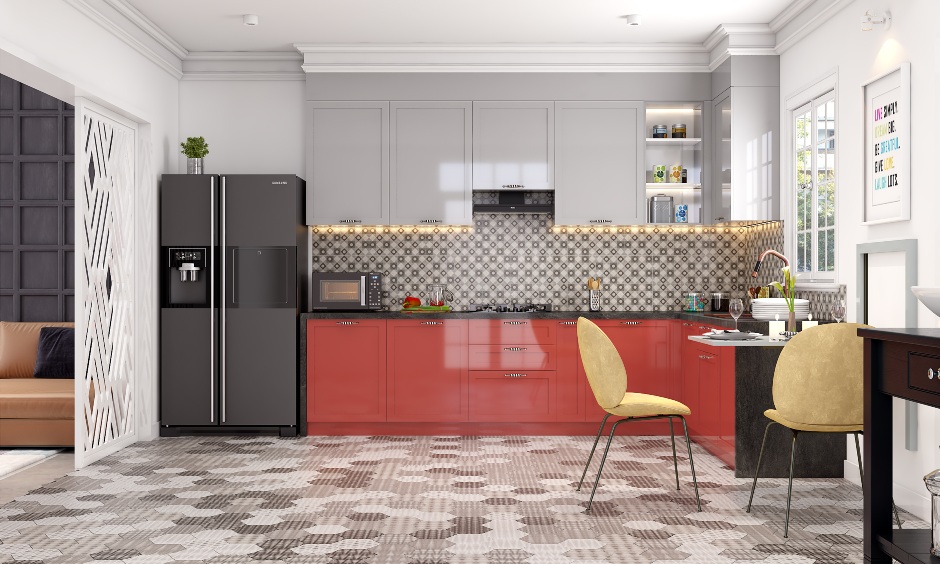
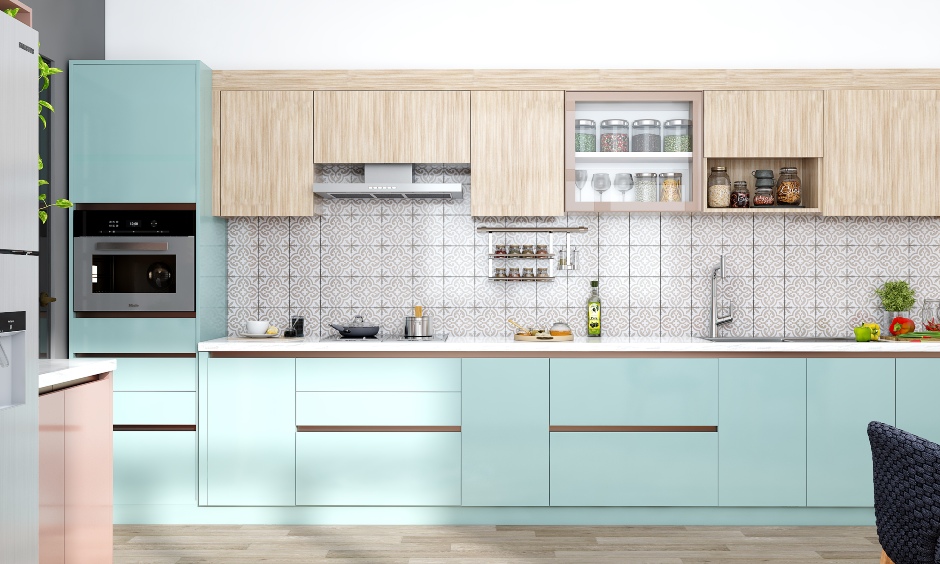
How Much Does The Mechanism Add To Kitchen Wall Cabinet Design Cost?
Kitchen wall cabinet prices depend on the mechanism you choose. For instance:
A pair of soft-close hinges costs a few hundred rupees, while a branded lift-up mechanism can cost a few thousand. The difference is manageable until you fit it across every cabinet. Use lift-up on 3 cabinets at most if you have a modest budget.
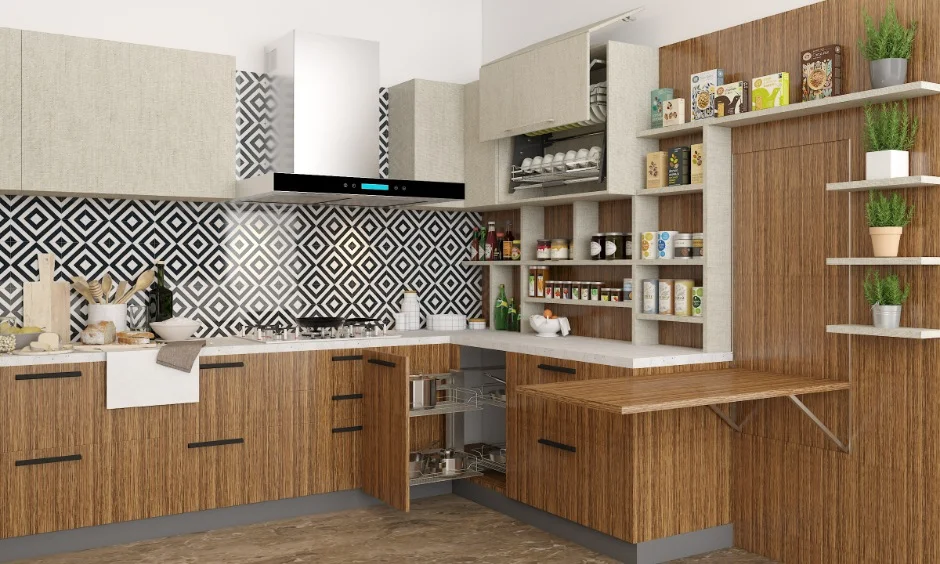
Why Does A Mix Of Kitchen Wall Cabinets Often Work Better?
Not every kitchen wall cabinet needs the same mechanism. Use lift-up where you open cabinets most often, and hinged shutters elsewhere.
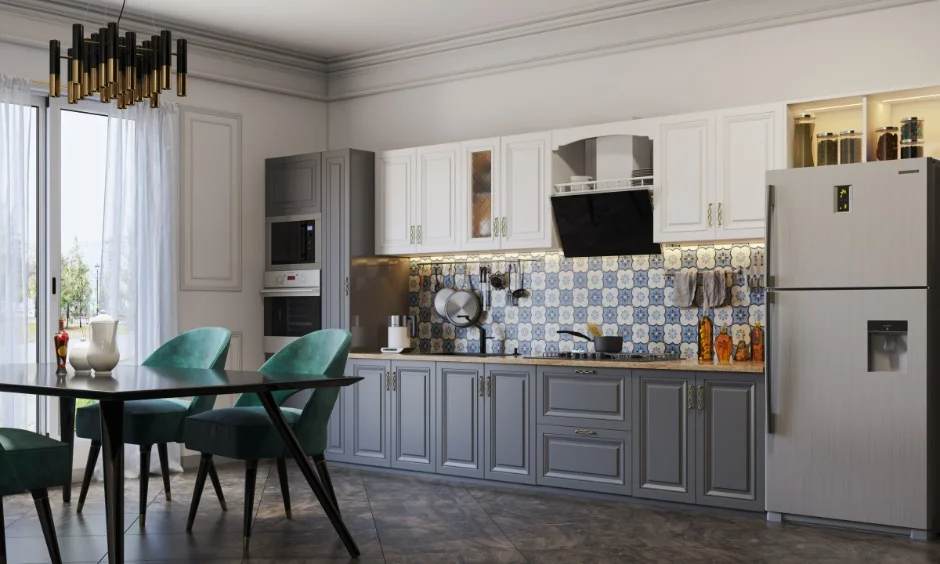
For example, use lift-up on two or three cabinets over the main work run. Keep hinged shutters above the hob and at less-used ends. A flap-down shutter works well above the fridge, while a bi-fold can help where the false ceiling limits clearance. A corner kitchen wall cabinet is usually best kept hinged.
Kitchen Cabinet Height: Standard Mounting Heights and Clearances
| Dimension | Typical Indian standard |
|---|---|
| Counter height | 850 to 900mm |
| Clearance above counter | 450 to 600mm |
| Wall cabinet bottom from floor | 1370 to 1500mm |
| Wall cabinet height | 600 to 900mm |
| Wall cabinet depth | 300 to 350mm |

How DesignCafe Specifies Kitchen Wall Cabinets?
At DesignCafe, we start with the practical details before the design takes shape. During the first site visit, we check ceiling clearance and the cook’s reach, then help you choose the right mechanism for each cabinet instead of using one system across the kitchen.
Every strut is specified by brand, model and weight rating on the drawing, so you know exactly what you’re paying for. Still deciding on your kitchen layout, finishes or storage? Explore our modular kitchen design guides.
Book a free consultation with a DesignCafe designer when you’re ready to get your kitchen designed properly.
FAQs
1. Is a lift-up mechanism worth it?
Yes, for two or three cabinets over the main work area. Across the whole kitchen, usually not.
2. Lift-up, bi-fold or parallel lift: what’s the difference?
Lift-up raises the shutter, bi-fold folds it in half, and parallel lift moves it upwards while staying flat.
3. Do lift-up doors stop staying open?
Eventually. The gas struts lose pressure, usually after five to eight years.
4. Can lift-up doors work under a false ceiling?
Yes, if there is enough clearance. If space is tight, consider bi-fold.
5. Are lift-up doors suitable for shorter users?
Not always. The open shutter can be difficult to reach.
6. Should you use lift-up doors above the hob?
It is better to avoid them. Heat and grease can shorten the mechanism’s life.
7. How much more do lift-up shutters cost?
A branded mechanism can cost a few thousand rupees per shutter, compared with a few hundred for hinges.
8. Which cabinets should use lift-up mechanisms?
Use them for wide, frequently used cabinets. Keep hinged shutters above the hob, in corners and on less-used cabinets.
9. Can a failed gas strut be replaced?
Yes, if the same model is still available. Finding older parts can be harder outside metro cities.
10. Does the kitchen warranty cover the mechanism?
Sometimes. The hardware brand may handle it instead, so confirm the warranty in writing.