Select Category


AI Summary
4 key insights · 1 expert tipA well-designed kids’ wardrobe should grow with your child. This guide covers practical wardrobe sizes, age-wise hanging heights, storage zones, safety features and durable materials. You’ll also find ideas for shared wardrobes, study-table combinations and flexible designs that can adapt as your child grows.
KEY INSIGHTS
- Set the hanging rod at your child’s shoulder height, not yours.
- Choose adjustable brackets and shelf pins so the inside can move.
- Anchor every wardrobe to the wall, without exception.
- Keep daily clothes low and seasonal storage in the loft.
 DESIGNCAFE EXPERT TIP
By our design team
Aditi Shetkar, Design Manager, DesignCafe, Pune, suggests, “Ask the child to hang one shirt during the site visit. Whatever height they manage without stretching is your rod height.”
Your child cannot reach the rod. That is why the floor is covered in clothes.
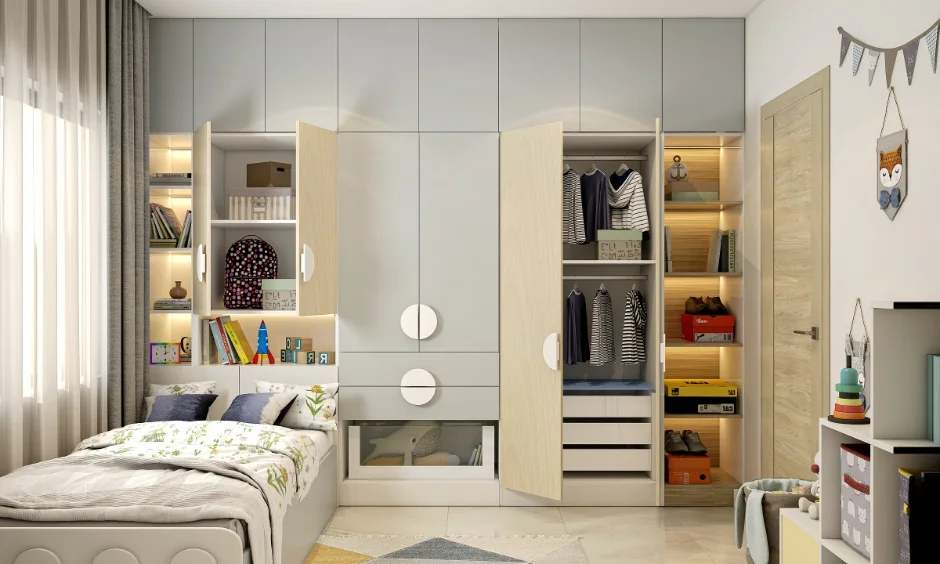
Kids’ wardrobe design works best when everything is within a child’s reach.
An adult-height wardrobe means clothes end up on the bed. Parents keep putting them away, while children never learn to do it themselves. That is not untidiness. It is a design problem.
One wardrobe carcass can grow with your child. Only the internal fittings need to change. This guide covers age-wise heights, useful storage zones, sizes and safety rules.

What Height Should A Kids’ Wardrobe Design Be?
| Age | Child height | Hanging rod | Top usable shelf | Drawer top |
|---|---|---|---|---|
| 3 to 5 | 95 to 110 cm | 850 to 950 mm | 1100 mm | 500 mm |
| 6 to 8 | 115 to 128 cm | 1000 to 1100 mm | 1300 mm | 600 mm |
| 9 to 11 | 133 to 145 cm | 1150 to 1300 mm | 1450 mm | 700 mm |
| 12 to 14 | 150 to 160 cm | 1350 to 1450 mm | 1600 mm | 800 mm |
| 15 and over | 160 cm and up | 1650 to 1800 mm | 1900 mm | 900 mm |
The rule is simple. A child can reach comfortably to shoulder height and struggles above eye level. The wardrobe box itself stays at the usual 2100mm with a loft above. Only the rod and shelves sit low.
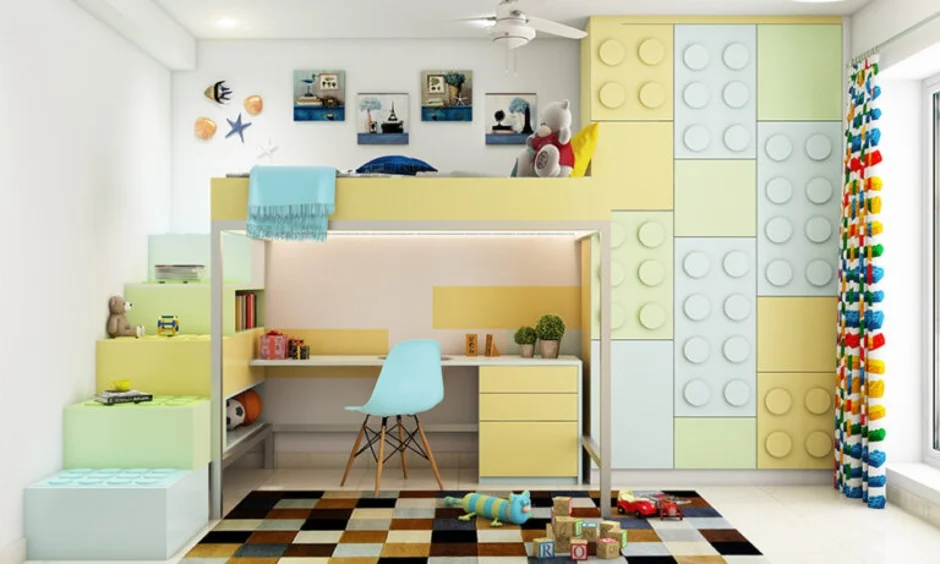
Kids’ Wardrobe Zones A Child Can Use
Split the wardrobe into three zones:
- Low: Up to 1200mm for daily clothes, shoes and drawers.
- Middle: Up to 1600mm for occasional items and books.
- Top: For seasonal clothes, luggage and outgrown items.
For younger children, make the low zone larger. Reduce it as they grow.
Pro Tip: Add an open cubby at knee height for bags and shoes. It helps keep the floor clear.
Wardrobe Interior Design Ideas Worth Scrolling For


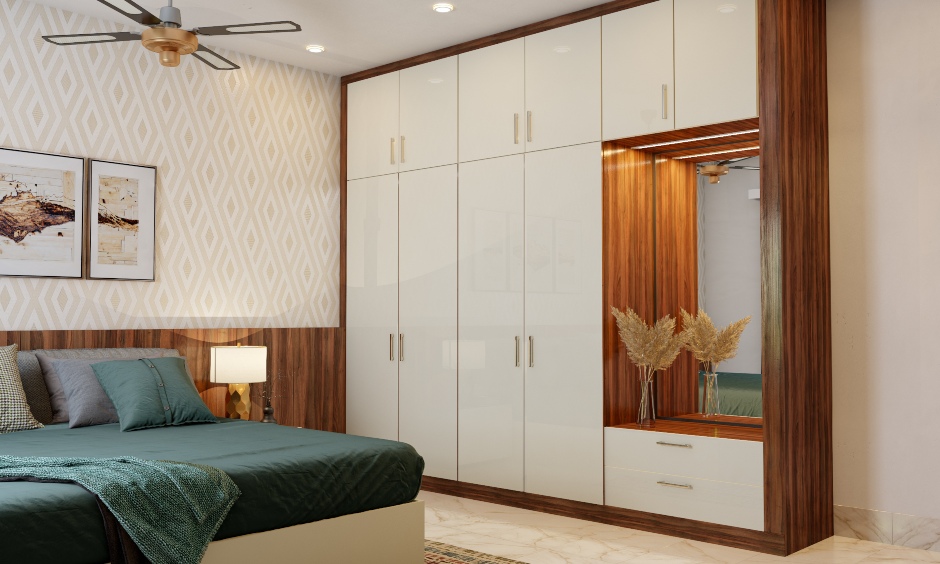
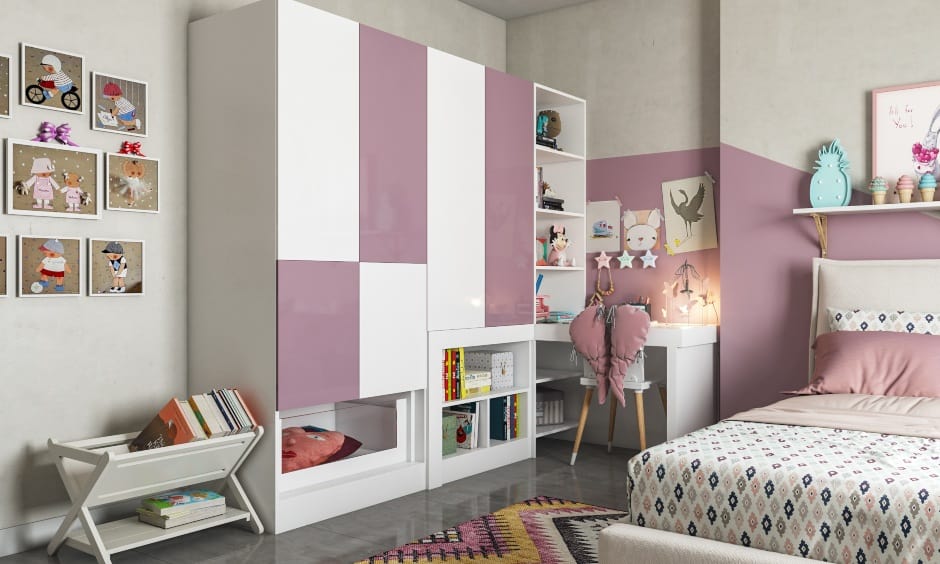

A Kids’ Wardrobe Idea That Grows With Them
Good kids’ wardrobe design lets the interiors change as your child grows.
Keep these fixed:
- Wardrobe carcass
- Shutters
- Wall anchoring
Make these adjustable:
- Hanging rods
- Shelves
- Loft storage
Toddler to 6 Years: Use low shelves and a short rod at about 900mm.
6 to 12 Years: Move the rod to around 1200mm. Add a second rod, a bag shelf and a sports-kit drawer.
12+ Years: Raise the rod to adult height. Remove the lower rod and add more hanging space.
Pro Tip: Get shelf-pin holes drilled across the full height during manufacturing.
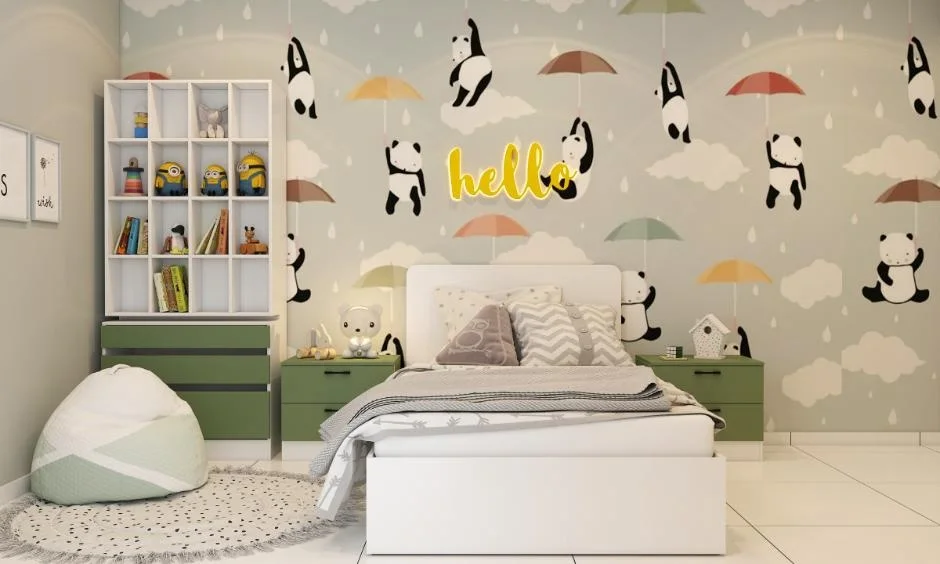
Kids Bedroom Wardrobe Sizes By Room And Door Count
| Configuration | Width | Suits | Hanging capacity |
|---|---|---|---|
| 2-door | 900 to 1200 mm | Rooms under 100 sq ft | One child, roughly 25 garments |
| 3-door | 1350 to 1800 mm | Rooms over 100 sq ft | One child with room to grow |
| 3-door shared | 1800 mm | Two children in one room | Two children, split vertically |
Kids’ wardrobe sizes depend on the room and should allow for growth. A 500mm depth works for young children and smaller clothes. This depth will cause standard adult hangers to sit at an angle as clothes grow. 500mm limits hanger width for adult jackets, whereas 600mm accommodates standard 45cm adult hangers seamlessly. Choose 600mm if the wardrobe needs to last into their teenage years. Sliding doors save space in compact rooms. Hinged doors are easier for children to open fully.
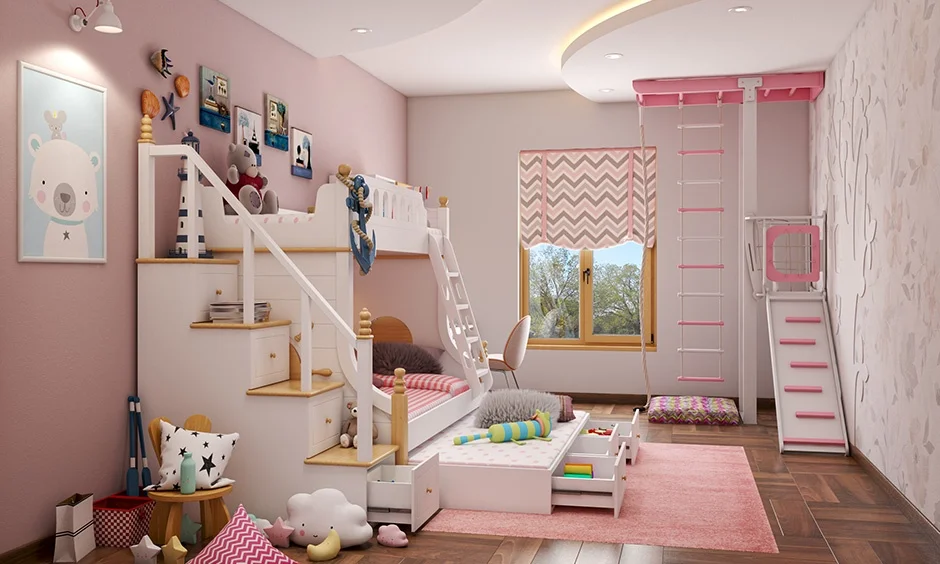
Safety Inside and Around a Kids’ Wardrobe
Safety matters in every children’s cupboard.
- Anchor the wardrobe securely to the wall.
- Use soft-close hinges and drawer runners.
- Round exposed edges to prevent injuries.
- Avoid low open shelves that can be turned into steps for climbing. Low cubbies on the floor/base are safe for shoes, whereas stepped mid-height open shelves create a ladder effect.
- For mirrors, use safety-backed glass and fix them inside the shutter.
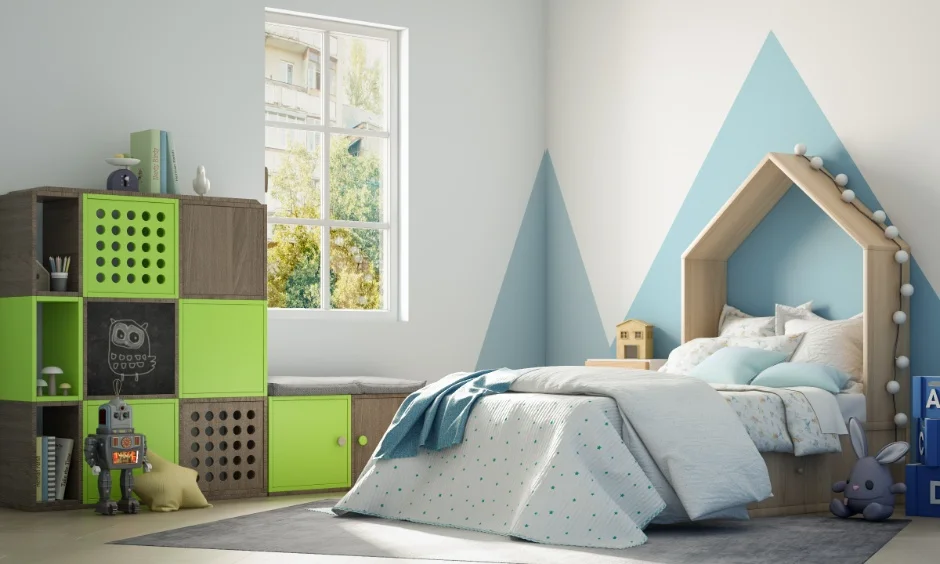
Materials And Finishes For Kids’ Wardrobes
Kids’ wardrobes need to handle daily wear and cleaning.
- Use BWR or BWP plywood for the carcass.
- Choose 1mm laminate for better durability.
- Matte finishes hide fingerprints and scuffs.
- Choose low-emission boards and adhesives for bedrooms.
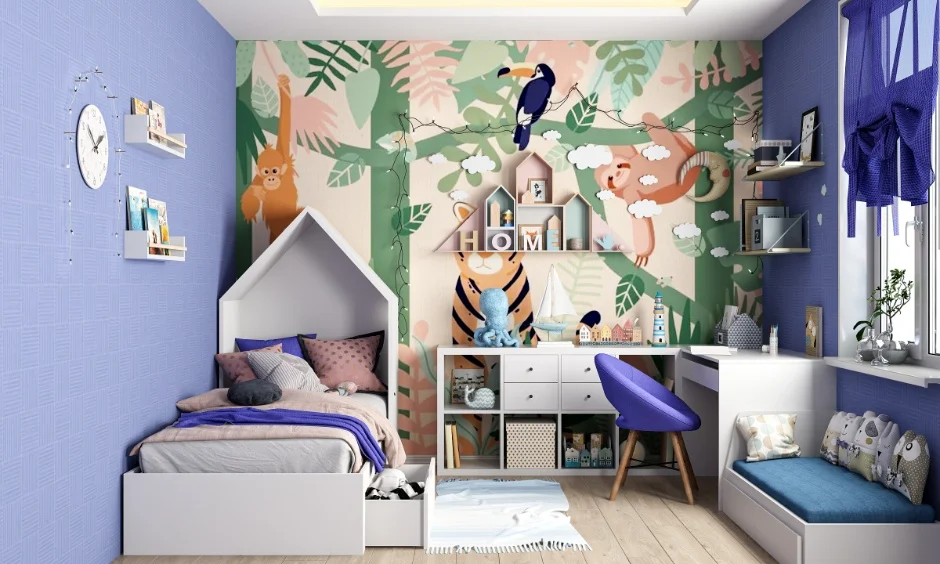
Kids’ Wardrobe Colours And Themes
Choose finishes that can grow with your child. Keep the wardrobe neutral and add personality through paint, decals, bedding or one replaceable accent shutter.
A cartoon-themed wardrobe may work at five but not at fifteen.
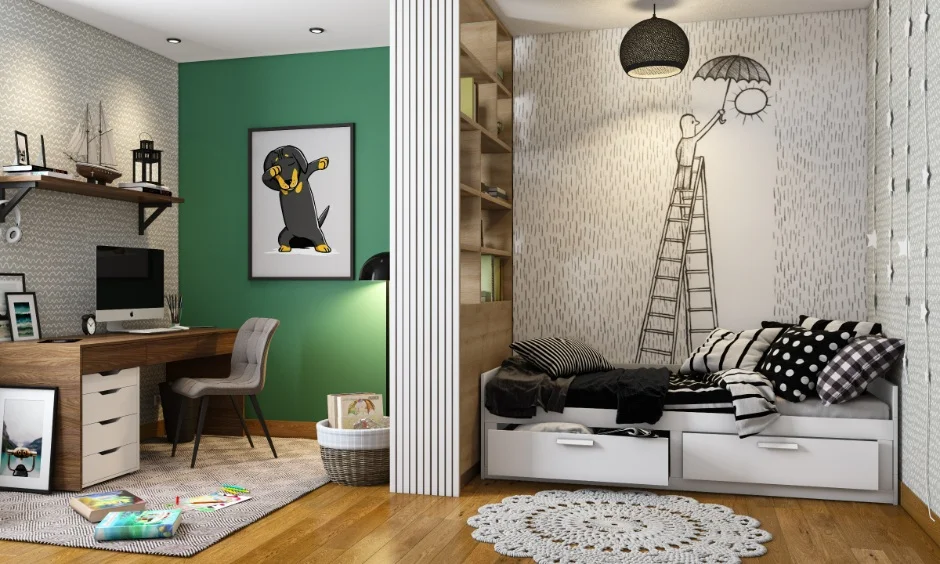
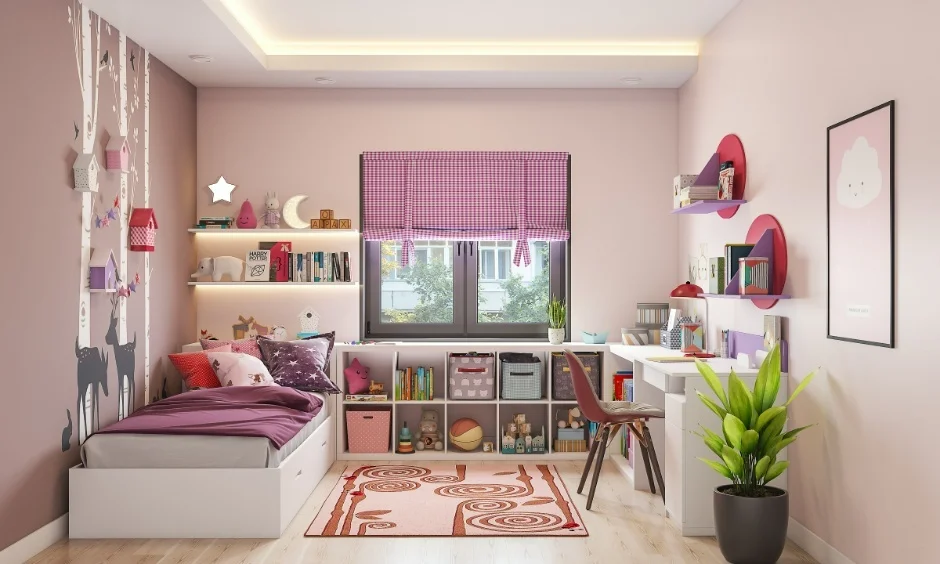
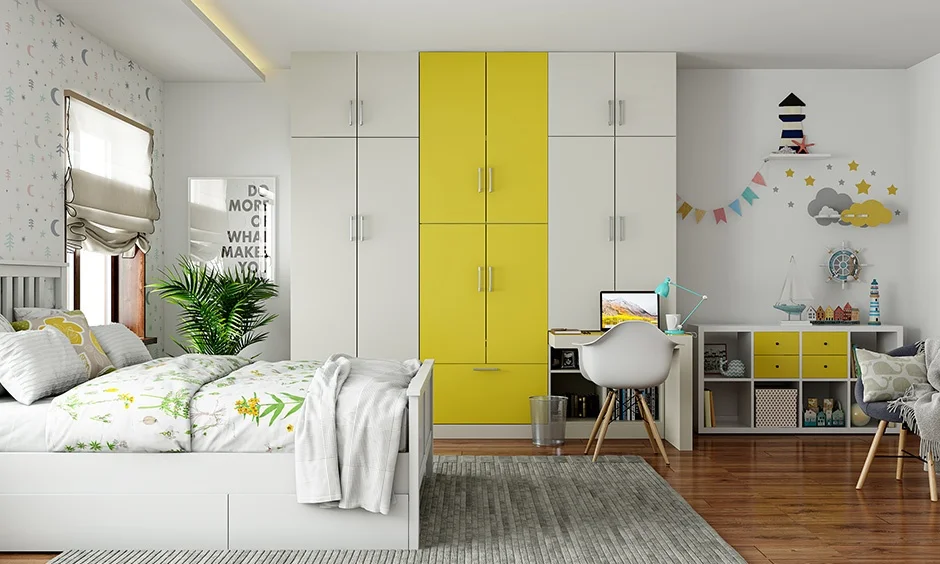
Kids’ Wardrobe With A Study Table
Combining the wardrobe and study table saves floor space.
Keep the desk around 600mm high for younger children and 750mm from about age 12. An adjustable-height desk can last longer. If you use a tall wardrobe, place it beside the desk, not above it.
Wardrobe For Two Children
For two children, divide the wardrobe vertically, not horizontally. Give each child their own full-height section with a rod, shelves and drawers.
Label each section and keep clothes separated by child. If their ages differ widely, set each rod to their height.
Conclusion
A good kids’ wardrobe should work for the room, the child and the years ahead. Keep daily storage within reach, make the interiors adjustable and prioritise safety from day one. Neutral finishes can also keep the wardrobe useful as tastes change.
For more inspiration for your kids’ wardrobe, explore our blog section.
When you want a wardrobe measured to your own child, visit a DesignCafe studio to plan your child’s space.

FAQs
1. What height should a kids’ wardrobe rod be?
Keep it around shoulder height: 900mm at age three, 1200mm at nine and adult height by 15.
2. What size wardrobe does a child’s room need?
A 2-door wardrobe suits most rooms under 100 sq ft. Larger rooms can take a 3-door unit.
3. How do I design a wardrobe that grows with my child?
Keep the carcass fixed and make the interiors adjustable. Use movable rod brackets and full-height shelf pins.
4. Should a kids’ wardrobe have drawers or shelves?
Use open shelves under six. Add drawers from around seven for socks and sportswear.
5. When can a child use a full-height wardrobe?
Around 15, when they reach roughly 160cm. Until then, an adult should handle the top section.
6. How do I make a kids’ wardrobe safe?
Anchor it to the wall, use soft-close hardware, round sharp edges and avoid low climbable shelves.
7. How can two children share one wardrobe?
Split it vertically into two full-height sections. Give each child their own door, rod and drawers.
8. Which material is best for a kids’ wardrobe?
BWR or BWP plywood with 1mm matte laminate is durable and easy to clean.
9. Should a kids’ wardrobe have a mirror?
Yes, from around eight. Fix it inside a shutter and use safety-backed glass.
10. Is a wardrobe with a study table practical?
Yes. Combining them saves floor space and keeps a small room organised.