Select Category


AI Summary
5 key insights · 1 expert tipWooden study table designs in 2026 are increasingly being planned as part of the room's architecture rather than as standalone furniture pieces. From wall-mounted desks in compact apartments to larger workstations with integrated shelving, the right design depends on room size, storage requirements, circulation clearances, and material selection. This guide explores different study table layouts, compares different wood options, highlights current design trends, and explains how to choose a table that supports both daily use and long-term durability.
KEY INSIGHTS
- Choose your study table based on room size, not just style.
- Leave 90–100 cm behind the chair for comfortable movement.
- Engineered wood suits modern apartments; teak offers longer durability.
- Built-in storage helps keep workspaces organised and clutter-free.
- The best study tables are built into the room’s primary layout.
 DESIGNCAFE EXPERT TIP
By our design team
DESIGNCAFE EXPERT TIP
By our design team
Anusha, Design Manager, DesignCafe Experience Centre, HSR Layout, Bengaluru, suggests, "For engineered wood study tables, support planning becomes increasingly important as the desk length grows. Once a workstation extends beyond roughly 120 cm, concentrated loads such as dual-monitor arms, desktop printers, or integrated shelving can place additional stress on unsupported spans. Introducing intermediate supports or concealed reinforcement during fabrication helps maintain stability."
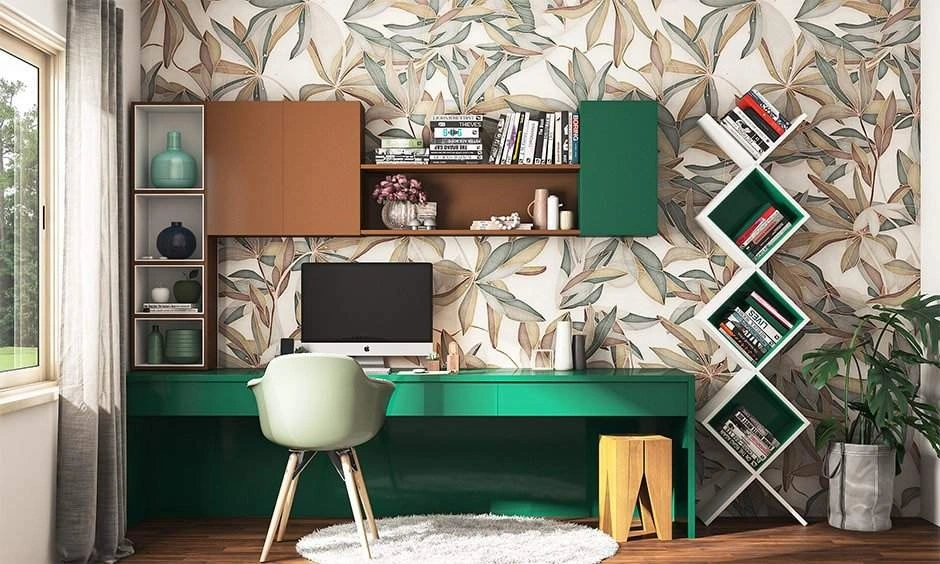
Add extra functionality to your home office setup with stylish wooden study table designs.
A well-planned study table design does more than hold a laptop. It considers room size, circulation, storage, material performance, and long-term comfort to create a workspace that feels naturally integrated into the home.
The success of a desk design depends on more than its dimensions. A desk that works well in a compact apartment may feel undersized in a larger room, while an oversized workstation can quickly overwhelm a limited floor plan.
This is why wooden study table designs are increasingly evaluated through the lens of layout planning rather than furniture selection alone. From wall-mounted desks and foldable workstations to storage-integrated study systems, the most effective solutions respond to both the proportions of the room and the routines they are expected to support.

Types Of Wooden Study Table Designs For Different Requirements
A study table’s layout should be driven by routine rather than appearance. The surface area required for a student’s notebooks differs significantly from the footprint needed for a dual-monitor workstation, integrated storage, or daily professional use. Understanding these spatial requirements is often the first step in choosing the right study table design.
Here are some of the most in-demand options for functional types of study tables:
- Simple Wooden Study Table: An open-footprint design that preserves circulation and reduces visual density in smaller rooms.
- Desk With Drawers: Best for organised storage and daily essentials
- Study Table With Storage: Integrates secondary storage within the workstation, reducing the need for additional furniture pieces.
- Foldable Table: Allows the workspace footprint to expand or contract according to changing room requirements.
- Modern Wooden Study Table: Characterised by concealed detailing, integrated cable management, and visually streamlined construction. Concealed detailing keeps visual clutter low in small bedrooms.
- Engineered Wood in Contemporary Workspaces: Commonly specified where consistent finishes and integrated built-in compositions are priorities, provided high-grade varieties are used.
- Teak as a Generational Material Choice: Valued for its dense grain structure, natural oils, and ability to maintain dimensional stability over extended periods of use.
Expert Tip:
Always choose a study table depth of at least 20-24 inches if you regularly use laptops, books, or a dual-monitor setup. Shallow tables often lead to uncomfortable posture and cluttered surfaces.
How To Choose Wooden Study Table Designs Based On Room Size?
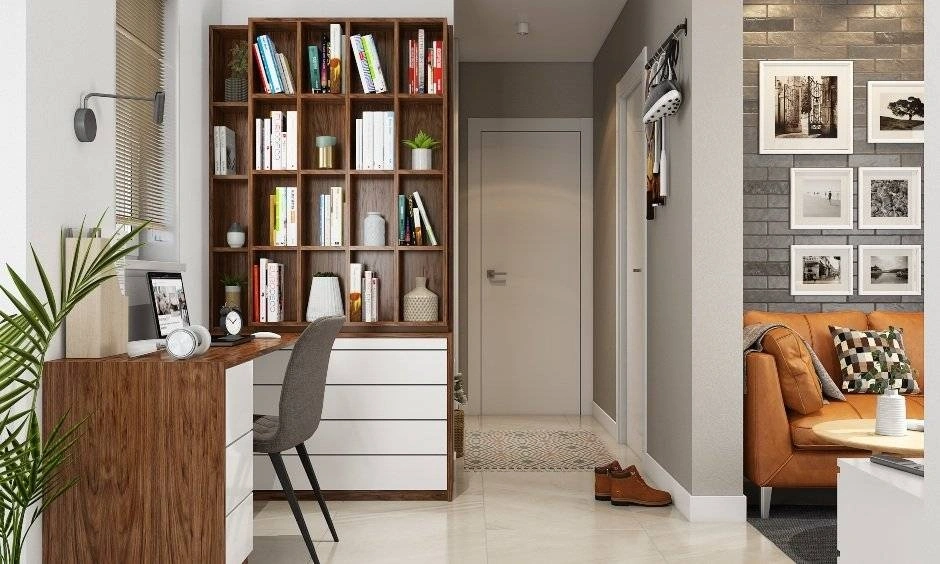
The study table should be sized in relation to circulation patterns, natural light, and surrounding furniture. A desk that fits physically within a room may still feel intrusive if it restricts movement or blocks daylight.
Compact Spaces
Compact rooms benefit from study tables that take up minimal visual space while preserving usable floor area.
Design Rule
Maintain at least 90 cm of clearance behind the chair to preserve comfortable movement.
Wall-mounted desks, slim-profile workstations, and foldable study tables minimise the workspace footprint. By keeping floor area open and reducing visual interruptions, these configurations help compact layouts retain a stronger sense of openness while still supporting daily work or study requirements.
Medium Rooms
Medium-sized rooms allow greater flexibility in balancing work surface area and storage requirements. This is often where integrated drawers, return desks, and L-shaped configurations begin to make sense without overwhelming the room.
- Storage can be absorbed into the workstation itself, reducing the need for separate filing units or side cabinets.
- Maintaining approximately 90–100 cm of circulation space around the desk helps preserve comfortable movement and visual openness.
Richer timber finishes often perform better in larger rooms because the additional space prevents darker surfaces from feeling visually heavy.

Check Out Trending Space Saving Interior Design Ideas


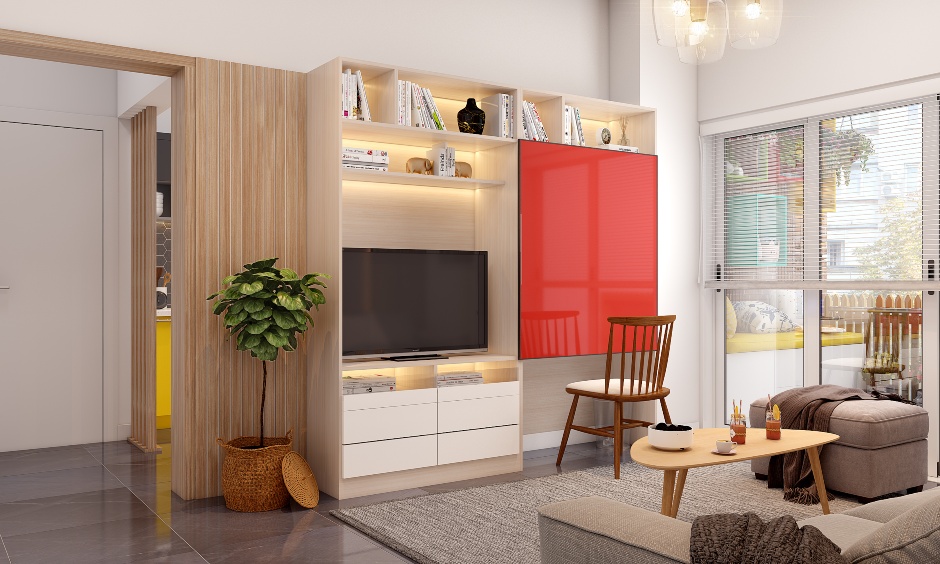
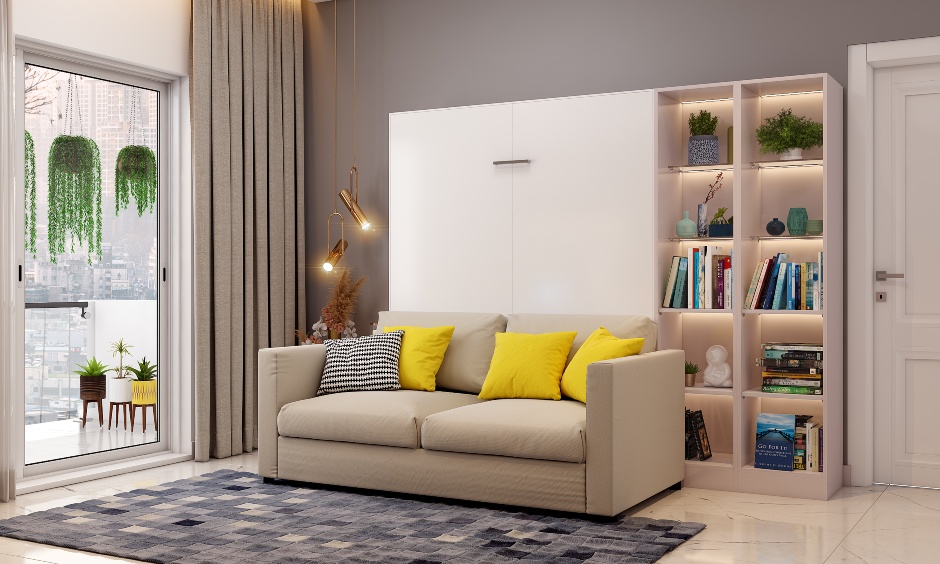

Latest Trends Influencing Wooden Study Table Designs
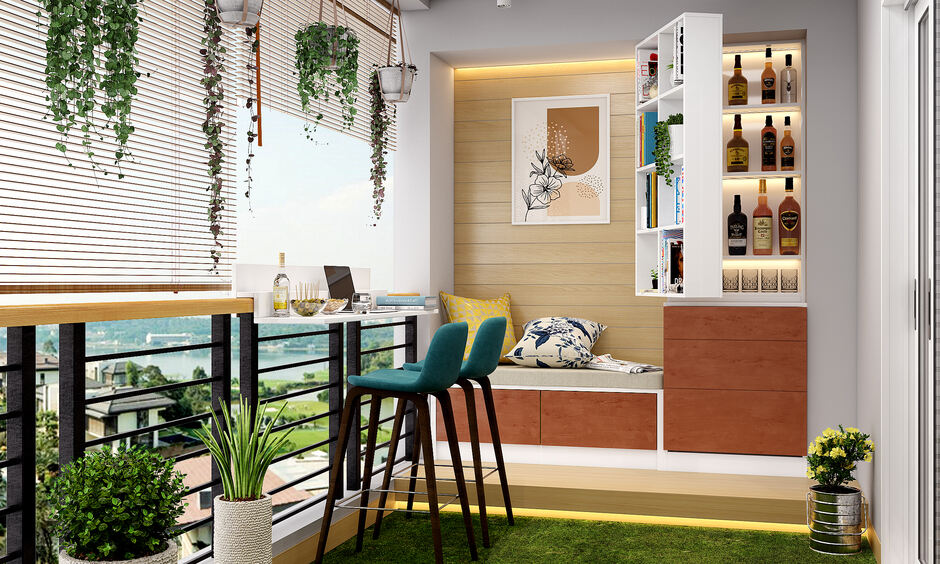
The current direction of study table design reflects a broader movement toward integrated living. Rather than adding furniture after a room is completed, homeowners increasingly treat workstations as part of the architectural planning process.
- Minimal Forms: Simple geometries, concealed hardware, and uninterrupted surfaces continue to dominate contemporary interiors. These details reduce visual noise and make smaller rooms feel more open.
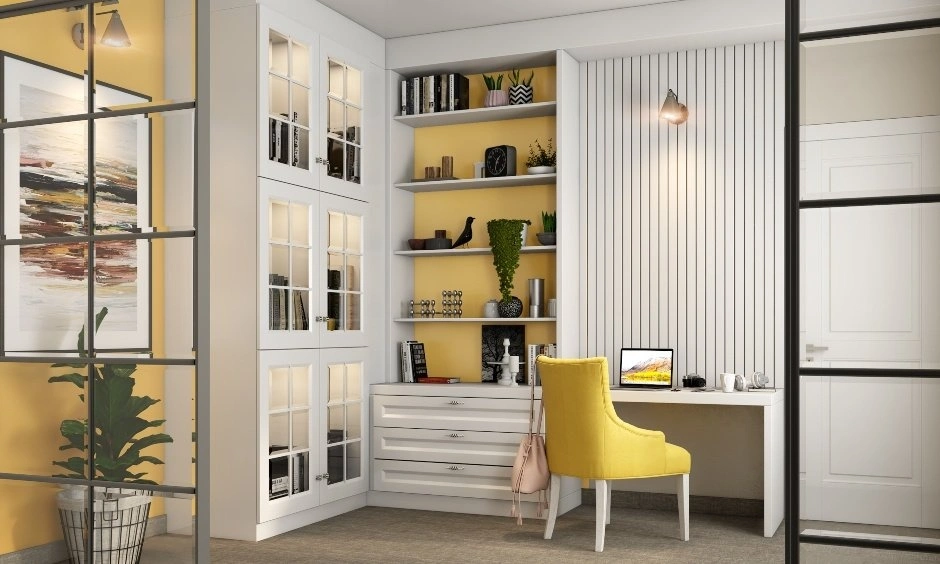
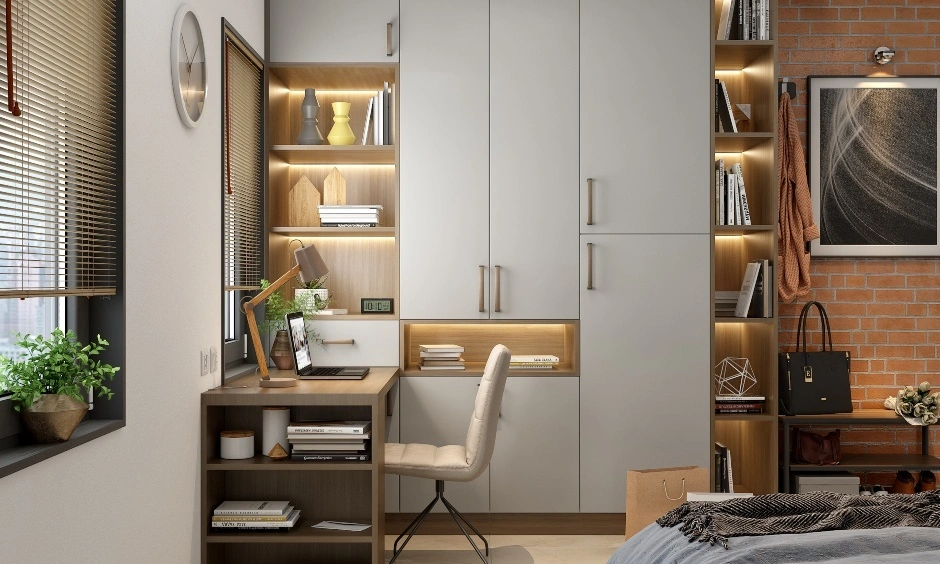
- Integrated Functionality: Study tables are increasingly combined with wardrobes, bookshelves, television units, and bedroom headboard walls. This approach improves space utilisation without introducing additional furniture pieces.
- Organised Storage Systems: Cable-routing channels, concealed charging stations, floating drawers, and open display shelving are becoming standard requirements in modern workspaces.
- Natural Material Expression: Wood grains, matte finishes, and textured laminates remain popular because they introduce warmth without relying on decorative ornamentation.
How To Select the Material For Wooden Study Tables?
Material selection influences more than appearance. It affects structural performance, maintenance requirements, moisture resistance, and the expected lifespan.
Material Comparison At A Glance
| Factor | Engineered Wood | Teak Wood |
| Typical Construction | MDF, HDF, or particle-board core with laminate finish | Solid hardwood |
| Appearance | Consistent finish and colour | Natural grain variation |
| Weight | Relatively lightweight | Significantly heavier |
| Moisture Resistance | Depends on core quality and edge sealing | Naturally resistant |
| Typical Lifespan | Approximately 3–5 years for entry-level products under heavy daily use | Often lasts for decades with maintenance |
| Best Suited For | Apartments, student rooms, occasional workspaces | Long-term workstations and permanent home offices |
Engineered Wood Study Tables
Engineered wood is often chosen for its ability to create uninterrupted, flat work surfaces with consistent finishes across larger built-in compositions. Laminates applied over MDF (medium-density fibreboard) or HDF (high-density fibreboard) cores produce a smooth writing and working surface while allowing a wide range of colours and textures.
The material requires careful detailing at joints and exposed edges. Unlike solid timber, engineered boards are more vulnerable to moisture ingress at unsealed edge conditions. Designers therefore rely on quality edge-banding, moisture-resistant board grades, and adequate support detailing to improve durability, particularly in study tables that form part of larger storage systems.
Teak Wood Study Tables
Teak remains valued for its structural stability and distinctive grain. Natural oils within the timber help resist moisture absorption, termite activity, and seasonal expansion.
Unlike many engineered alternatives, teak develops character over time rather than deteriorating visually. Surface scratches can often be refinished, making the material suitable for households seeking furniture meant to last for decades.
Expert Tip:
If selecting solid wood, look for kiln-dried timber. Kiln drying removes excess moisture before fabrication, significantly reducing the likelihood of future warping or cracking.
Material selection should also respond to the room’s location within the home. In many Indian apartments, study tables are placed near windows to take advantage of natural light. While this arrangement improves daytime visibility, prolonged exposure to direct sunlight can gradually alter the appearance of natural wood finishes. In coastal regions, elevated humidity levels place additional emphasis on moisture-resistant detailing and properly seasoned timber. These environmental factors often influence material choices as much as budget or appearance.


How To Choose The Best Wooden Study Table Design For Your Space?
A study table should fit both your room and your working habits. Choosing purely based on appearance often leads to poor functionality later.
Before buying, consider:
- Storage needs: Choose drawers or shelves if you work with books, files, or stationery
- Space availability: Measure circulation space before selecting larger tables
- Ergonomics: The ideal table height usually ranges between 28 and 30 inches
- Budget: Engineered wood supports a wider range of finish options, while teak is often selected where refinishing and long-term material ageing are priorities.
Expert Tip: Ensure the chair height pairs comfortably with the table to avoid neck and shoulder strain.

Why Wooden Study Tables with Storage Are A Smart Choice?
Storage-integrated study tables are often specified to manage visual clutter rather than simply increase capacity. Concealed drawers, overhead units, and built-in shelving keep work essentials hidden from view, allowing the desk to read as part of the room’s architecture rather than as a collection of objects. In open-plan and multifunctional interiors, this approach helps maintain cleaner sightlines and a more cohesive spatial composition.
Integrated storage helps:
- Organise stationery and devices
- Reduce visual clutter
- Improve work efficiency
- Maintain a cleaner room aesthetic
Storage-focused tables are especially useful for students, remote workers, and multifunctional rooms where organisation matters daily.

Simple vs Modern Wooden Study Tables
The distinction between simple and modern study tables is less about decoration and more about construction language.
Simple study tables typically rely on exposed joinery, four-leg support systems, and open under-desk space. Their visual lightness makes them particularly effective in compact rooms where furniture should not dominate the architecture.
Modern study tables often conceal their structural elements. Floating wall-mounted desks, integrated storage volumes, metal detailing, and hidden cable-management systems create a more streamlined appearance. These designs are commonly specified in homes where the workstation forms part of a larger built-in composition.
| Feature | Simple Study Table | Modern Study Table |
| Construction | Four-leg or trestle base | Floating, cantilevered, or integrated |
| Visual Weight | Light and open | More architectural |
| Storage | Minimal | Frequently integrated |
| Best For | Compact rooms and flexible layouts | Planned work zones and contemporary interiors |
| Maintenance Access | Easy | Depends on integration level |
Consider how likely the room is to evolve in the coming years. A simple study table offers greater flexibility in guest rooms, children’s bedrooms, or multipurpose spaces where furniture arrangements may change. A modern built-in study table is often better suited to dedicated work zones, where the workstation can be planned as a permanent feature alongside storage, lighting, and other architectural elements.
A Study Table As Part Of The Room, Not Separate From It
A study table performs best when it responds to the room around it. Surface dimensions, circulation clearances, storage requirements, material behaviour, and access to natural light all influence how comfortable the workspace feels over time.
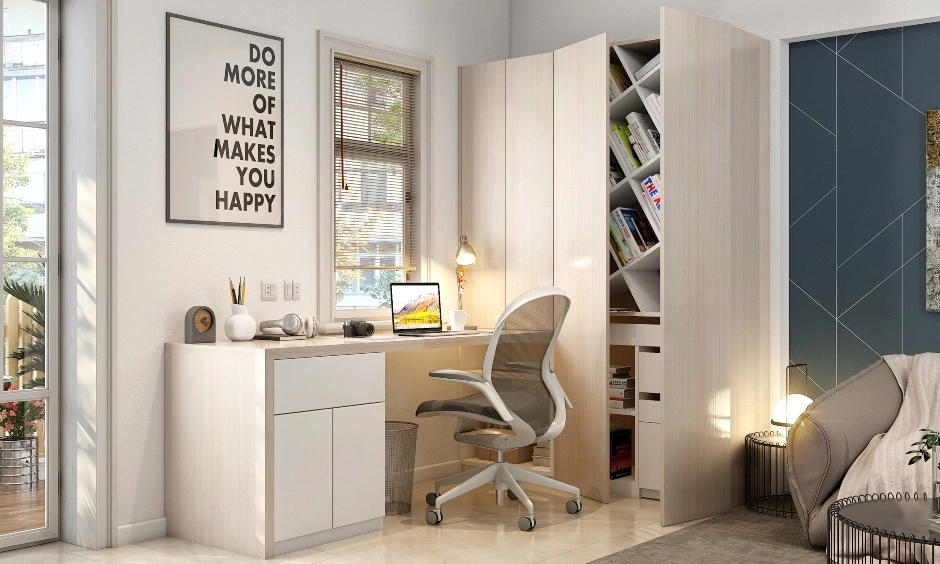
For compact homes, foldable and wall-mounted solutions preserve flexibility. Medium-sized rooms often benefit from integrated storage and larger work surfaces. In dedicated home offices, solid timber workstations and custom-built configurations can provide decades of use when planned correctly.
The most effective wooden study table design is rarely the largest or the most decorative. It is the one that fits naturally into the architecture of the room while supporting the way the space is used every day in bedroom interior design.
FAQs
1. What are the best wooden study table designs for small spaces?
Foldable tables, wall-mounted desks, and slim-profile wooden study tables work best for compact rooms.
2. How do I choose the right wooden study table design for my room?
Consider room size, storage requirements, ergonomics, and your daily work habits before selecting a design.
3. What materials are used in wooden study table designs?
Common materials include engineered wood, plywood, MDF, teak wood, oak, and solid hardwood.
4. How do I maintain wooden study table designs for long life?
Workstations experience different wear patterns than most furniture because the same areas are used repeatedly throughout the day. Using coasters under coffee cups and heat-resistant pads under laptops or docking stations helps prevent surface marks from heat buildup and moisture rings. Monitor stands, printers, and desk-mounted accessories should be positioned carefully to avoid concentrated loads on unsupported sections of the tabletop.
For engineered wood surfaces, protecting exposed edges from moisture is particularly important because edge swelling is often the first sign of deterioration. Solid wood study tables benefit from periodic refinishing, which can help address minor scratches and surface wear accumulated through daily use. In regions with significant seasonal humidity changes, maintaining stable indoor conditions can also help minimise timber movement over time.
5. Which wooden study table designs are best for laptops and desktops?
Tables with wider surfaces, cable management, and integrated storage work best for laptops and desktop setups.
6. What are the advantages of modern wooden study table designs?
They offer cleaner aesthetics, better storage integration, space efficiency, and improved functionality for modern homes.