Select Category


AI Summary
4 key insights · 1 expert tipDesigning an under-sink storage cabinet starts with understanding the plumbing layout, not the cabinet itself. This guide covers how to assess daily storage needs, measure the cabinet's usable space around pipes and connections, and choose between standard cabinets, drawer units, pull-out systems, or compact corner solutions based on your kitchen's plumbing configuration. It also breaks down moisture-resistant material options like BWP plywood, PVC foam board, and HDHMR, along with practical organisation ideas and common mistakes to avoid—so the space beneath your sink stays functional, tidy, and built to last.
KEY INSIGHTS
- The right under-sink storage cabinet begins with your plumbing layout, not the cabinet itself.
- Moisture-resistant materials and thoughtful detailing improve longevity.
- Pull-outs, drawers and organisers should suit your storage habits rather than simply maximise capacity.
- Good under-sink planning creates a kitchen that is easier to use and maintain.
 DESIGNCAFE EXPERT TIP
By our design team
DESIGNCAFE EXPERT TIP
By our design team
Sahajeet Chandrakumar, Senior Designer (With over five years of experience designing modular kitchens and residential interiors across Karnataka), DesignCafe Experience Centre, Mysore, says, “Many homeowners try to maximise storage beneath the sink, but we usually begin by reducing conflict between plumbing, storage and maintenance. Once those three work together, the cabinet naturally becomes more organised."
Smart under-sink storage starts with the plumbing, not the cabinet. Here’s how to plan, organise, and choose materials that last.
An under-sink storage cabinet is one of the most demanding spaces in a kitchen. Unlike other base units, it has to accommodate plumbing, water filters, cleaning supplies and waste bins within a footprint that is rarely symmetrical. The success of this cabinet isn’t measured by how much it stores, but by how comfortably it supports everyday routines.
Architects rarely begin by selecting storage accessories. They begin by understanding the space itself. Pipe locations, maintenance access, moisture exposure and daily habits all influence what belongs beneath the sink. Once these constraints are understood, choosing the right cabinet becomes far more straightforward.
Whether you are planning a new modular kitchen or improving an existing one, here’s how to make this overlooked cabinet work harder without making it feel overcrowded.

Why Every Kitchen Benefits From Better Under-Sink Storage?
The cabinet beneath the sink is often treated as overflow storage, yet it handles some of the kitchen’s most frequently used items. When organised with intention, it improves efficiency well beyond this single cabinet. It reduces unnecessary cross-kitchen movement by clustering specific task tools directly beneath the wet zone.
A well-planned under-kitchen-sink organiser keeps cleaning products close to where they are used, reducing unnecessary movement across the kitchen. At the same time, it separates household chemicals from cookware and food storage, creating a safer and more hygienic environment.
The area is also exposed to constant humidity and the occasional plumbing leak. Choosing moisture-resistant under-sink storage solutions protects both the cabinet and its contents while making routine maintenance easier.
Organised storage reduces visual clutter throughout the kitchen. When every item has a dedicated place beneath the sink, neighbouring cabinets remain available for cookware, groceries and serving essentials instead of becoming overflow spaces.
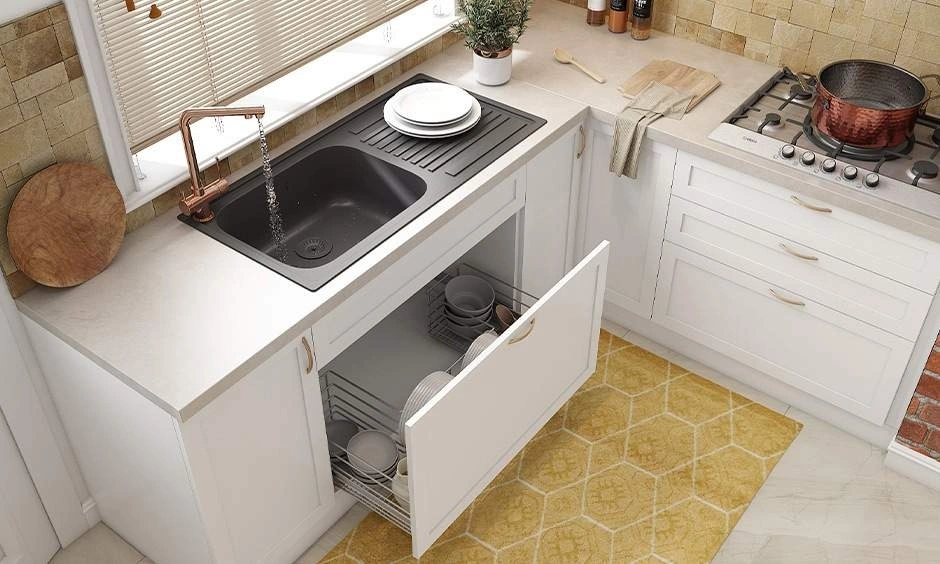
Assess Your Storage Before Choosing A Cabinet
Buying the largest cabinet rarely solves storage problems. Understanding what actually belongs beneath the sink leads to better decisions.
Start With Your Daily Essentials
Reserve this cabinet for items that naturally belong near the sink:
- Dishwashing liquids and hand wash
- Cleaning sprays
- Scrubbers and brushes
- Garbage bags
- Waste segregation bins
- Water purifier accessories
Large refill containers require vertical clearance, while spray bottles need uninterrupted height. Recognising these differences helps determine whether fixed shelving or flexible under-sink storage solutions will work better.
Match Storage to Household Size
Storage requirements vary between homes. A one- or two-person household usually stores four to six everyday cleaning products and a compact waste bin. Family kitchens often require space for refill bottles, segregated waste bins and RO maintenance supplies. Estimating the actual volume before choosing a cabinet prevents overcrowding from day one.
Prioritise Accessibility
Frequently used items should always remain within easy reach. If dishwashing liquid, dishwasher tablets or compost bags are used several times a day, an under-sink cabinet with drawers or a shallow pull-out tray offers easier access than deep shelving. Visibility often matters more than storage volume.
Trending Modular Kitchen Interior Designs


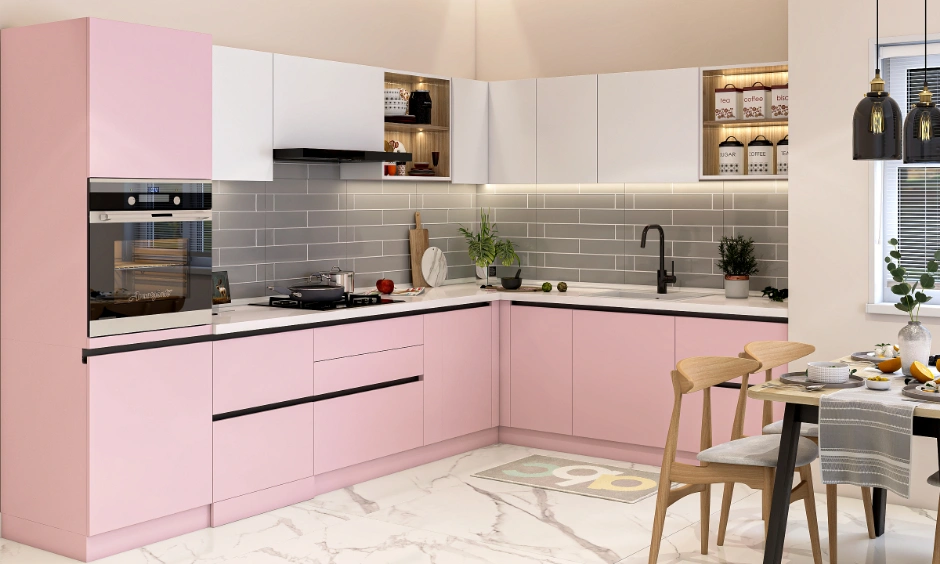
Measure Your Under-Sink Organiser Before You Buy
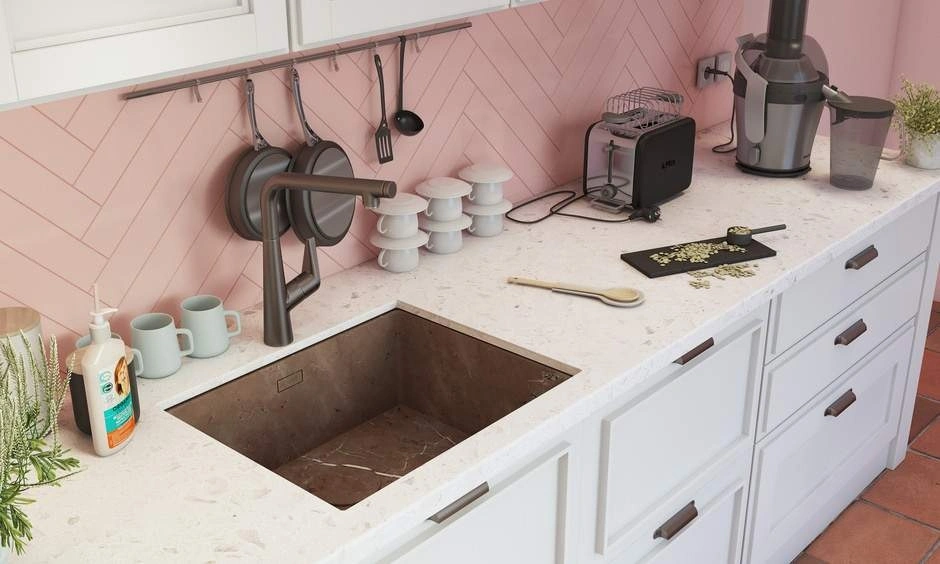
Many storage systems fail because the available space is estimated rather than measured. Begin by identifying everything that interrupts the cabinet’s usable volume, including drain pipes, water supply lines, purifier tubing and electrical outlets. These fixed services determine how much storage remains.
Next, measure the cabinet’s internal width, depth and height instead of relying on external dimensions. Take measurements at different heights because plumbing frequently narrows the cabinet midway. When planning a sliding under-sink organiser, remember to check that cabinet doors can open fully without hitting nearby walls or appliances.
As a practical guideline, leave at least 50 mm of clearance around plumbing connections. This allows future maintenance without dismantling the storage system and helps prevent organisers from obstructing valves or pipework.
Choose the Cabinet That Fits The Space
There isn’t a universal under-sink storage cabinet for every kitchen. The right choice depends on where the plumbing sits, how much usable floor area remains and what you intend to store. Thinking about the cabinet as part of the kitchen’s layout, rather than as a standalone product, leads to a more durable solution.
Standard Cabinets
A conventional sink cabinet remains the most adaptable option when plumbing runs through the centre of the base unit. The open floor makes future plumbing repairs easier because organisers can simply be lifted out. The trade-off is that accidental leaks may spread across the cabinet base unless waterproof liners or raised trays are included.
Cabinets With Drawers
An under-sink cabinet with drawers works best when the plumbing exits through the rear wall, leaving uninterrupted space beneath the sink. U-shaped drawers wrap neatly around the pipework, bringing stored items forward instead of hiding them at the back of the cabinet. The advantage is easier access, not greater capacity.
Pull-Out Systems
A sliding under-sink organiser makes excellent use of the narrow spaces beside plumbing lines. It keeps spray bottles, cleaning cloths, and frequently used supplies visible without wasting the cabinet’s depth. This solution works particularly well in compact kitchens where every centimetre matters.
Compact And Corner Cabinets
A small under-sink cabinet benefits from vertical planning. Stackable containers, door-mounted racks and shelf risers make better use of height while keeping the cabinet floor uncluttered.
Corner sink cabinets present a different challenge. Deep shelves often leave large areas inaccessible, so pull-out trays or swing mechanisms are better suited to these layouts than fixed shelving.
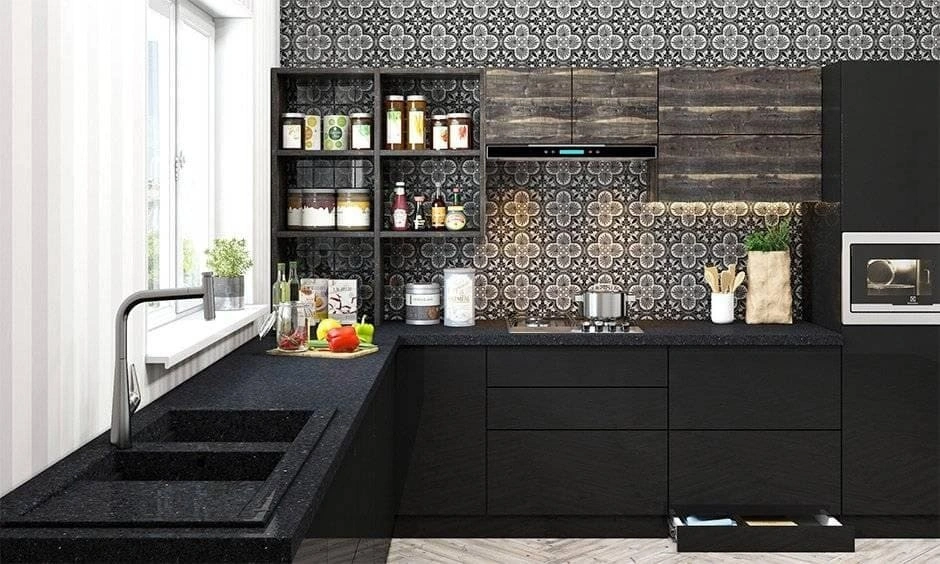
Choosing The Right Under-Sink Materials That Last
The space beneath the sink experiences more moisture than almost any other cabinet in the kitchen. Material selection should therefore prioritise durability over appearance.
| Material | Moisture Resistance | Best Use |
| BWP plywood with laminate | Excellent | Premium modular kitchens requiring long-term durability |
| PVC foam board | Excellent | High-moisture environments and leak-prone areas |
| HDHMR board with laminate | Good | Kitchens with well-maintained plumbing |
| Plastic storage inserts | Excellent | Removable organisers, trays and baskets |
A wooden under-sink cabinet built using BWP plywood offers excellent structural strength while maintaining the warm appearance expected in modular kitchens. When combined with sealed edges and high-quality laminates, it withstands daily humidity far better than untreated particle boards.
A plastic under-sink cabinet or modular organiser is lightweight, washable and unaffected by moisture, making it ideal for internal storage accessories. While it doesn’t replace quality cabinetry, it complements it effectively.
If your kitchen is prone to condensation or has concealed plumbing, a waterproof under-sink cabinet constructed with PVC components or moisture-resistant panels provides greater protection against accidental leaks.
Whatever material you choose, pay close attention to the finishing details. Edge banding, waterproof laminates and sealed joints often determine how well a cabinet performs over the next decade.
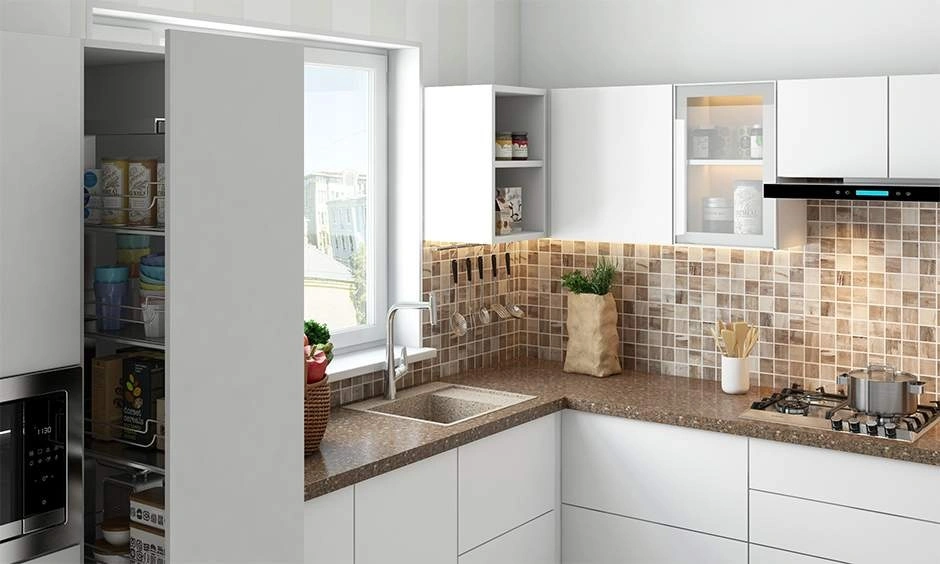
Key Features To Look For In An Under-Sink Cabinet
The best storage systems simplify daily routines rather than adding more compartments. Before choosing accessories, think about how often you’ll use the cabinet and how easily you need to reach its contents.
Adjustable shelves allow the layout to evolve as your storage needs change. Taller spray bottles, refill packs and cleaning tools can all be accommodated without replacing the cabinet.
Pull-out trays and drawers improve visibility inside deep cabinets. Instead of reaching around plumbing to find a bottle hidden at the back, everything slides forward into view.
Integrated organisers help separate cleaning products, replacement sponges, waste bags and maintenance supplies into dedicated zones. This simple approach keeps the cabinet tidy without relying on multiple standalone containers.
Moisture-resistant liners and removable trays deserve equal attention. Small plumbing leaks are far easier to manage when the cabinet includes surfaces that can be cleaned or replaced without damaging the structure.
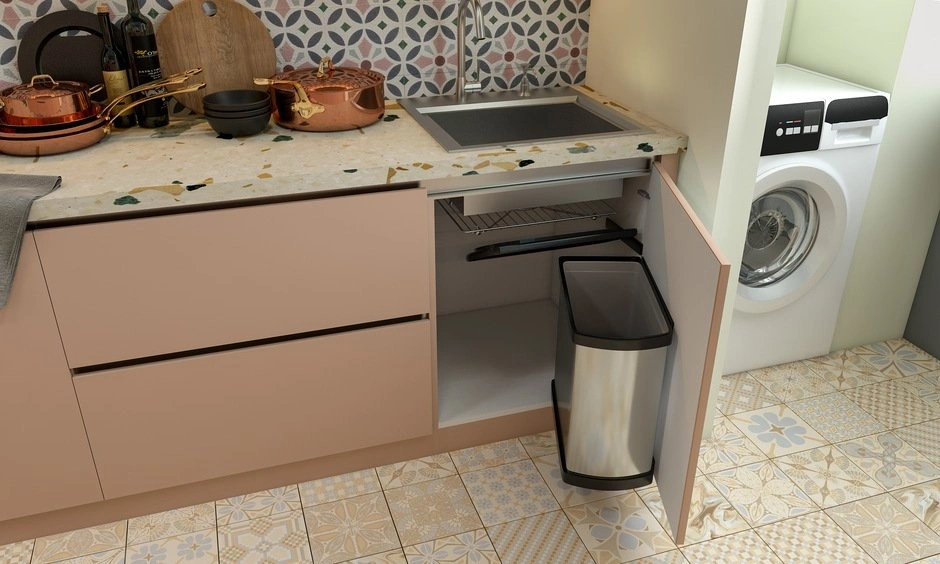

Smarter Ways to Organise the Kitchen Sink Storage
Good organisation isn’t about storing more. It’s about making the space easier to use. One of the most practical kitchen under-sink storage ideas is to build upwards rather than outwards. Shelf risers and stackable containers create additional storage levels without blocking plumbing access.
Door-mounted racks provide a convenient place for gloves, brushes and garbage bags while keeping the main cabinet available for larger items.
Pull-out baskets improve visibility in deep cabinets and make frequently used products easier to reach. They are especially useful when paired with an under-sink organiser that separates cleaning products from refill supplies.
Finally, divide the cabinet into simple zones. Keep dishwashing products together, assign another section for household cleaners and reserve one area for waste management accessories. This approach answers how to organise under the kitchen sink far more effectively than simply adding extra organisers.
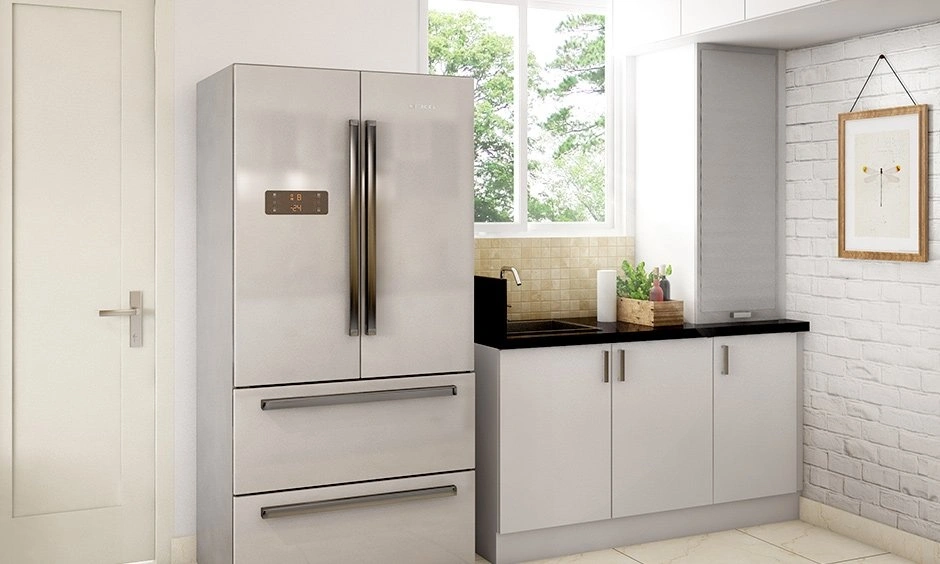
Common Mistakes That Reduce Storage Efficiency in Under-Sink Storage Cabinet
A well-designed under-sink cabinet isn’t defined by how much it holds but by how easily it functions over time. These are the mistakes designers encounter most often during kitchen renovations.
- Ignoring the plumbing layout: Cabinets planned without considering drain pipes or purifier lines often leave awkward, unusable gaps.
- Choosing the wrong material: Standard particle board can deteriorate quickly in damp conditions. Moisture-resistant boards or a waterproof under-sink cabinet offer better long-term performance.
- Buying organisers before measuring: Always measure the cabinet’s internal dimensions, including pipe clearances, before selecting inserts or pull-out systems.
- Filling every available space: Leave enough room around plumbing for airflow and future maintenance.
- Prioritising appearance over usability: Neatly arranged storage is valuable only if everyday items remain easy to access.
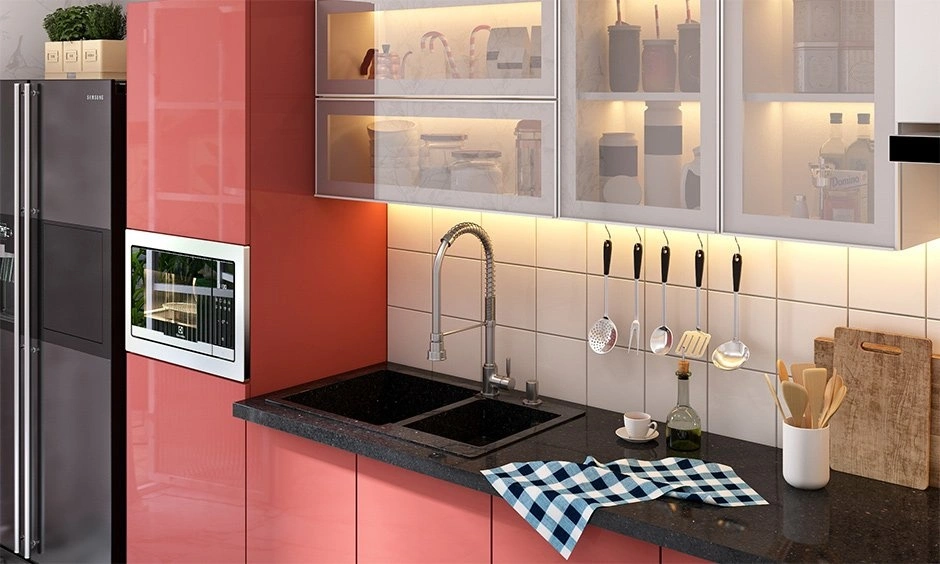
Supporting the Rest of Your Kitchen Storage
The sink cabinet shouldn’t carry the burden of storing everything. A balanced kitchen distributes storage according to function.
Dry groceries, oils and pantry staples belong in pull-out pantry units, while utensils and food containers are better organised in dedicated drawers. Vertical tray dividers, bottle pull-outs and other kitchen cabinet storage solutions help free up the sink base for cleaning supplies and waste management. Offloading non-cleaning items to surrounding tall units or dedicated modular pull-outs preserves the under-sink zone strictly for high-moisture utility.
When storage is planned as a connected system, each cabinet performs a clearer role and the kitchen becomes noticeably easier to maintain.
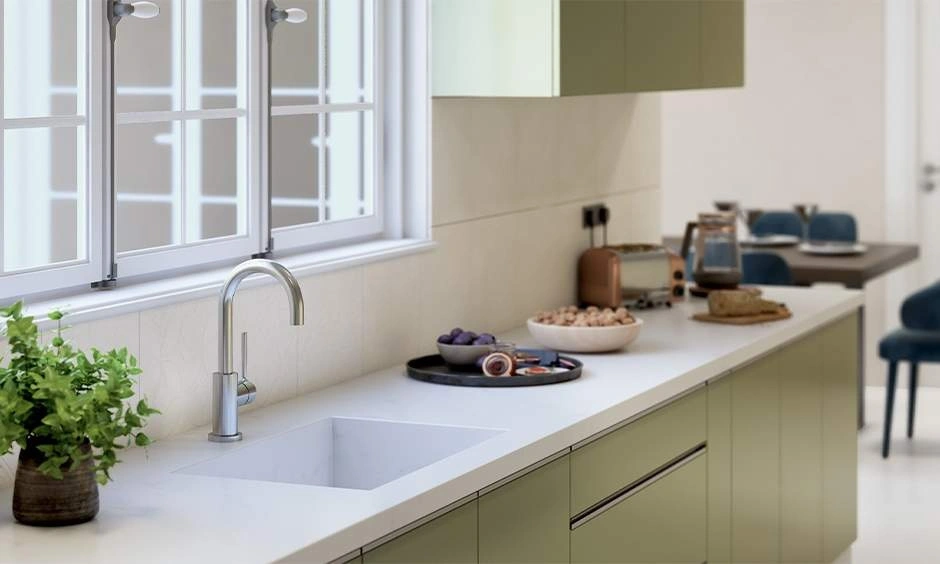
Caring for Your Under-Sink Cabinet
Regular maintenance extends the life of even the best cabinetry. Check plumbing connections every few months for signs of slow leaks or condensation, and wipe away standing water immediately. Remove all stored items during routine cleaning so shelves, liners and corners can be inspected properly.
If organisers become cracked, warped or difficult to clean, replace them rather than allowing dirt and moisture to accumulate. Small maintenance habits help preserve both the cabinet and the surrounding finishes for years.
Conclusion
The most successful kitchens aren’t defined by how much storage they offer, but by how naturally that storage supports everyday life. An under-sink storage cabinet may occupy only one corner of the kitchen, yet its design influences cleaning routines, maintenance and long-term durability more than most homeowners expect. If you are planning a new modular kitchen, begin with the constraints of the space. The right layout almost always follows. For more, Talk To The Experts At DesignCafe Now!
FAQs
1. What is the best under-sink storage cabinet?
The best under-sink storage cabinet is one that fits around your plumbing, uses moisture-resistant materials and matches the way your household stores cleaning supplies. Pull-out trays and adjustable shelving usually provide the greatest flexibility.
2. What should not be stored under a kitchen sink?
Avoid storing food, medicines, electrical appliances or important documents beneath the sink. This area is exposed to moisture and occasional plumbing leaks, making it better suited for cleaning products and waste management supplies.
3. How do I choose the right under-sink storage cabinet?
Measure the available space carefully, account for plumbing, identify what needs to be stored and select materials designed to withstand humidity. Accessibility is just as important as storage capacity.
4. What are the best under-the-kitchen-sink cabinet storage ideas?
Some of the most practical under-kitchen-sink cabinet storage ideas include stackable containers, pull-out baskets, door-mounted organisers and clearly defined storage zones for cleaning products, waste bags and daily essentials.
5. What kitchen cabinet storage solutions work well with under-sink storage?
Pull-out pantry units, drawer organisers, tray dividers and vertical storage accessories complement kitchen cabinet storage solutions beneath the sink by distributing storage more efficiently across the kitchen.
6. How often should I clean my under-sink storage cabinet?
Clean the cabinet at least once a month and inspect the plumbing every few months. Regular cleaning makes it easier to spot leaks early and helps extend the life of both the cabinet and its organisers.