 Select Category


AI Summary
4 key insights · 1 expert tipIndian living room designs do not need to feel heavy or traditional. Explore regional styles, jaali, jhulas, arches, textiles and pooja corners, plus practical tips for modern 2BHKs. Find out how to balance Indian character with contemporary layouts, costs and easy maintenance.
KEY INSIGHTS
- Choose one region instead of mixing several traditions.
- Limit a 2 BHK hall to three strong craft elements.
- Check the structural slab before installing a jhula.
- Keep walls and flooring calm so Indian details stand out.
 DESIGNCAFE EXPERT TIP
By our design team
Sneha S, DC Designer, suggests, “Pick the three things you want people to notice. Everything else in the room exists to make those three look good.”
Indian style is not a shopping list of brass and carving. It is a few things, chosen well.
Think of an Indian living room that feels like your grandmother’s house, with a carved teak coffee table, a brass lamp and a jhula by the window.
Now put those same pieces in a contemporary 2BHK hall. Suddenly, the sofa competes with the carving, the brass competes with the TV unit, and the room feels more like a chaotic mish-mash of a showroom.
The problem is not the budget. It is knowing when to stop. The best Indian living room designs use a few strong elements instead of decorating every surface. Pick three pieces that carry the look and let everything else stay quiet.

What Makes An Indian Living Room Indian? Beyond The Decor
An Indian living room is about more than furniture, colours and decorative pieces.
It also needs to work for family gatherings, guests, pooja and sometimes overnight stays. So flexible seating, clear circulation and enough floor space matter just as much as the decor. Start with how your family uses the room, then build the style around it. When the layout works, the Indian details fall into place naturally.
Bengal To Kerala: Regional Living Room Designs Indian Style
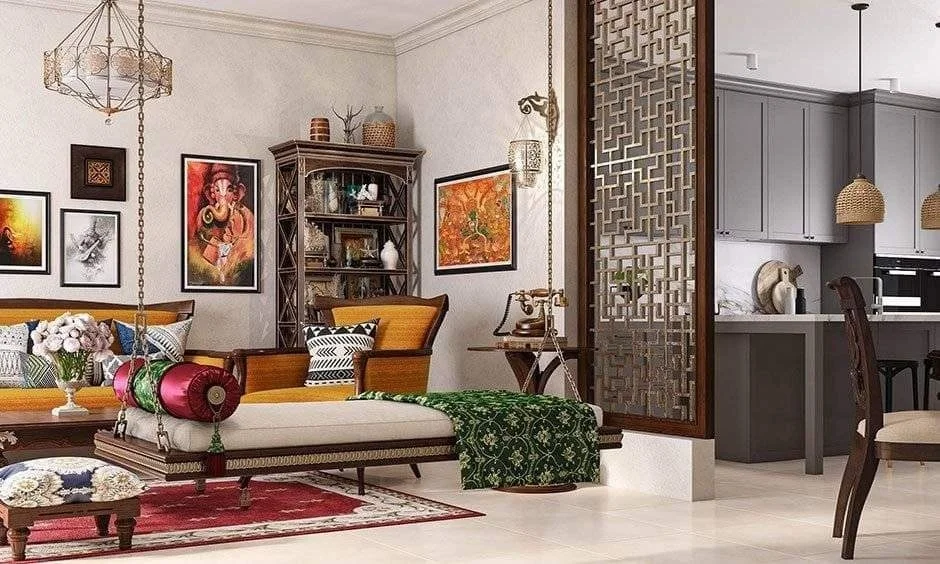
The easiest way to make Indian style feel intentional is to choose one regional influence.
Mixing Chettinad tiles, Rajasthani mirrors, Kerala woodwork and Bengali furniture can quickly make a room feel busy. Instead, borrow a region’s colours, materials or craft and give them a modern setting.
| Region | Signature elements | Palette |
| Chettinad | Athangudi tiles, teak pillars, oxide floors | Ochre, deep red, black |
| Kerala traditional | Teak and rosewood, jaali screens, brass lamps | Warm wood, cream, brass |
| Rajasthani haveli | Jharokha frames, mirror work, carved doors | Pink, indigo, gold |
| Bengali colonial | Louvred shutters, cane, red oxide floors | White, green, dark wood |
Chettinad and Kerala styles generally translate well to flats because you can use their strongest details selectively. Rajasthani elements need a little more breathing room, especially when they involve heavy carving or bold colour.
The idea is to take inspiration from a region, not recreate an entire traditional house.
Craft Elements In Indian Living Room Decor: How To Use Them
Craft gives an Indian living room its character, but too much can overwhelm a modern flat.
Choose a few standout elements and give them room to breathe. A jaali, jhula and brass lamp can say more than an entire room of carved furniture.
| Element | What it does | Watch out for |
| Jaali screen | Divides without blocking light | Keep 30 to 40% open |
| Jhula | The strongest Indian design cue | Needs a slab anchor, not a false ceiling |
| Arches | Softens a boxy modern hall | Keep head height above 2.1m |
| Carved teak | Creates one statement piece | A full carved set can overwhelm a flat |
| Brass and terracotta | Adds warmth at a lower cost | Brass needs regular cleaning |
| Floor seating | Adds flexible seating | Keep a diwan around 350 to 400mm high |
| The cement shelf | Adds character and storage | Finish or clad it properly |
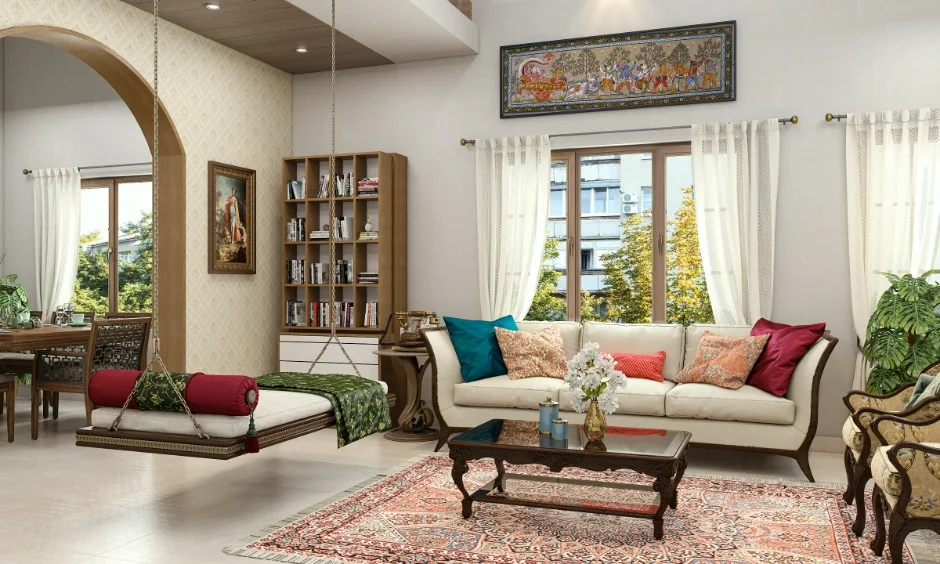
A jhula needs structural planning because it carries a real load, not just visual weight. A swing with two adults can put roughly 250kg on the fixing point. It needs a suitable structural anchor into the slab or beam, never a false ceiling.
Pro Tip: Mark the fixing point on the drawing before the ceiling work begins.
Other elements can add the same character without taking up as much space.
A living room arch design can soften a boxy hall, while a jaali can divide spaces without blocking light. Floor seating adds another distinctly Indian touch while giving you extra seating when guests arrive. The trick is to choose elements that add character without competing with each other.
Indian And Royal Colour Palettes For A Traditional Living Room Design
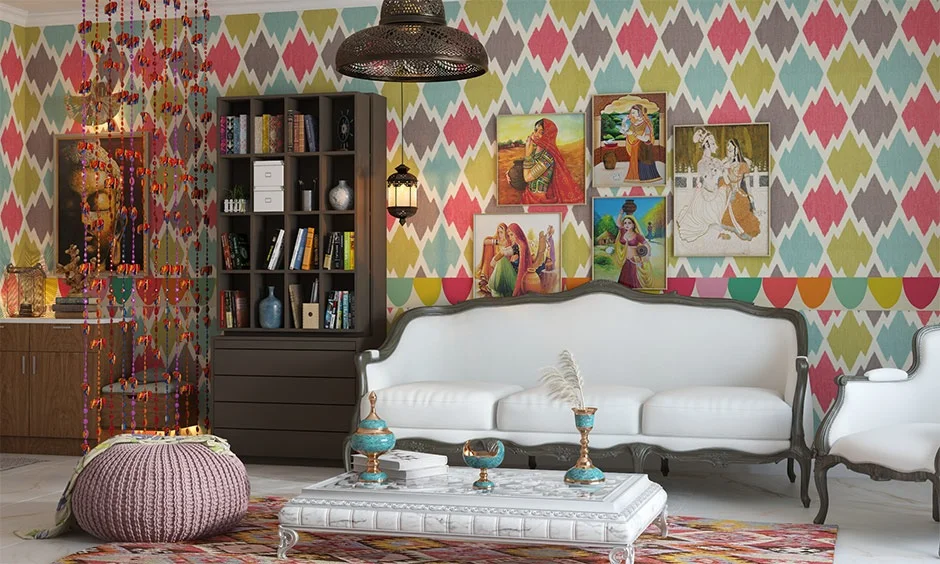
Indian interiors boast colour, but that does not mean every surface needs it.
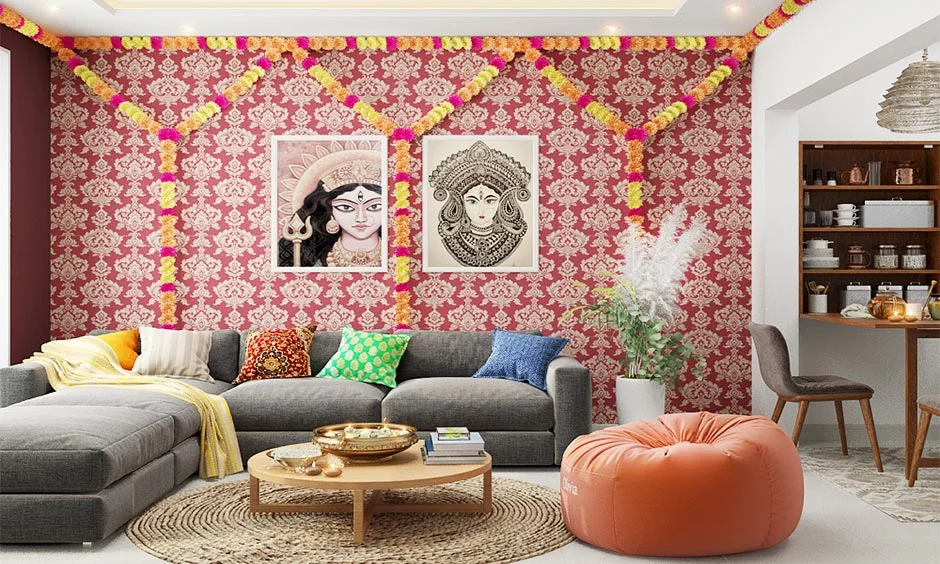
Keep the walls, flooring and larger furniture neutral, then bring in colour through cushions, rugs, artwork and craft. This keeps the room warm without making it feel heavy.
For a royal look, use maroon, emerald and gold as accents. Mustard, indigo and terracotta are easier to live with while still giving the room plenty of Indian character.
Textiles: Dhurries, Block Prints And Indian Wall Decor For Living Room
Textiles are one of the easiest ways to bring Indian flavour without changing the furniture.
Start with a block-printed dhurrie, or a few tie-and-dye cushion covers. Mixing textures or patterns can instantly make a neutral sofa feel more considered, e.g., pairing a raw silk cushion with a flat-weave cotton dhurrie. For Indian wall decor for living room walls, resist filling every blank space. One framed textile or Pichwai can make a stronger focal point than a wall full of tiny frames.
A Pooja Corner In A Simple Indian Living Room, Done Properly
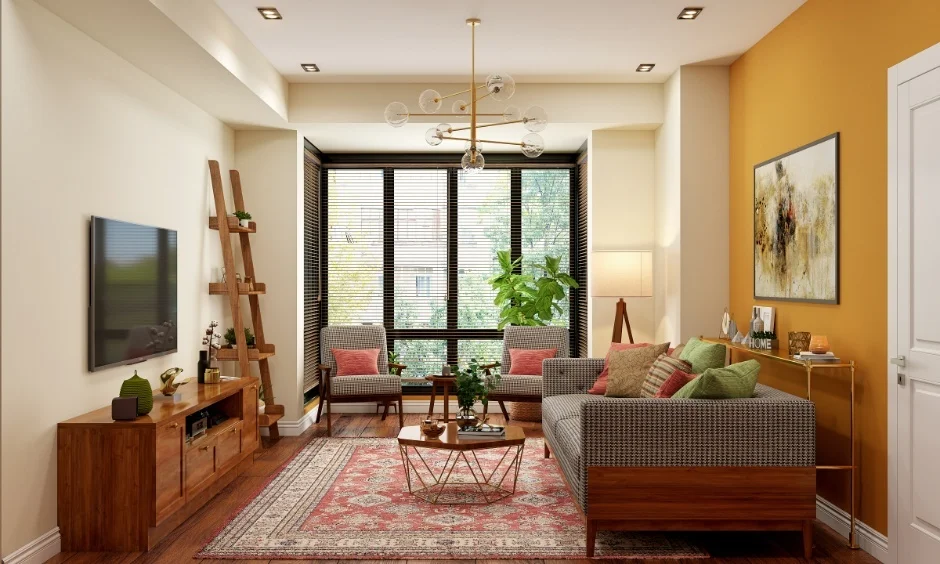
A separate pooja room is not always possible in compact homes, so the living room often has to make space for it.
A jaali or shutter can define the corner without making it feel like another bulky unit. If your family follows vastu, the north-east wall is commonly preferred. Ensure your living room has enough ventilation for diyas, agarbattis, and camphor.
Jaali Partition For Living Room Interior Design
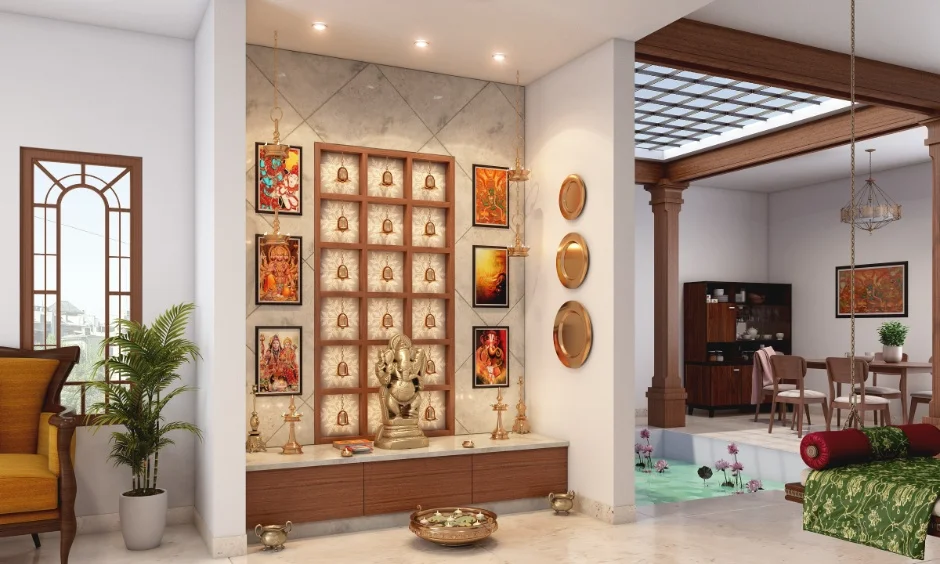
The charupady is one Kerala-inspired idea that works particularly well in modern flats.
This low wooden partition, around 1200mm to 1500mm high, separates living and dining without blocking light or conversation. It can also double as seating, making the space work harder. Use teak for a more traditional look, or MDF with a wood finish if you’re on a tighter budget. It is especially useful in creating zones in an open-plan 2 BHK.
Indian Living Room Ideas For A 2 BHK Flat Minus The Heaviness
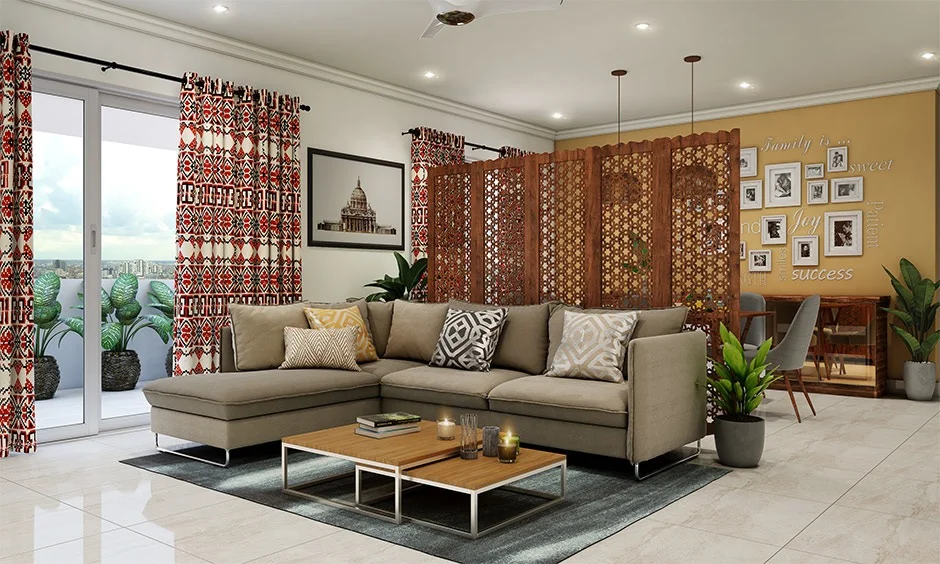
Traditional Indian furniture was often designed for larger homes, while today’s 2BHKs need to do more with less space.
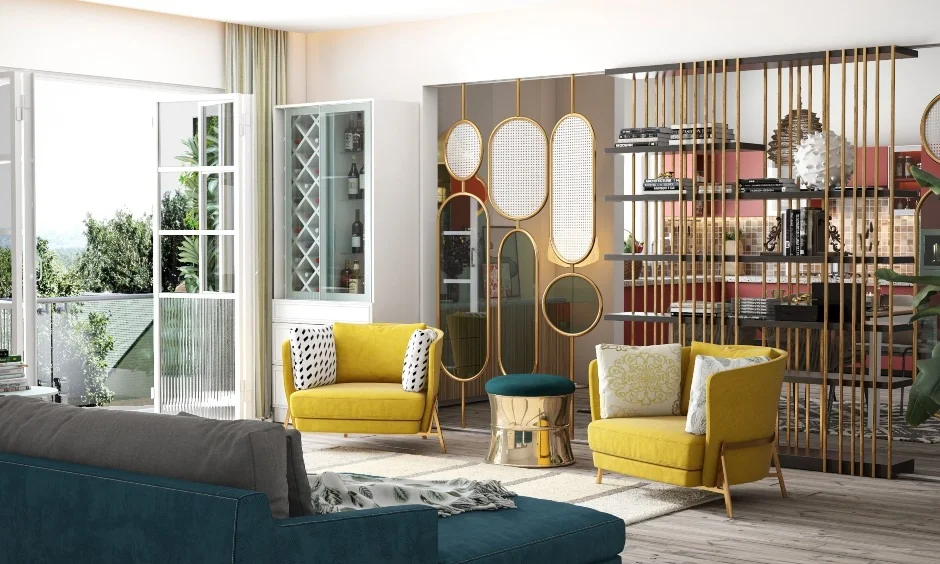
Opt for space-saving multipurpose furniture. Keep the ceiling, walls and flooring simple. A sofabed, jaali screen and brass lamp can be enough to add character. Modern living room designs Indian style work best when the structure stays contemporary, and the details bring in the Indian character.
Traditional Indian middle-class living room furniture tells stories without spending thousands. A wooden chest, cane chair or family heirloom can bring more personality than a room filled with new furniture.
For a cost-effective option, small living room designs Indian style should take advantage of vertical space. A tall jaali panel, artwork or narrow storage unit draws the eye upwards without eating into floor space.
Pro Tip: Spend on one good piece instead of five average ones.
Transform Your Home With Indian Style Living Room Interior Design Ideas


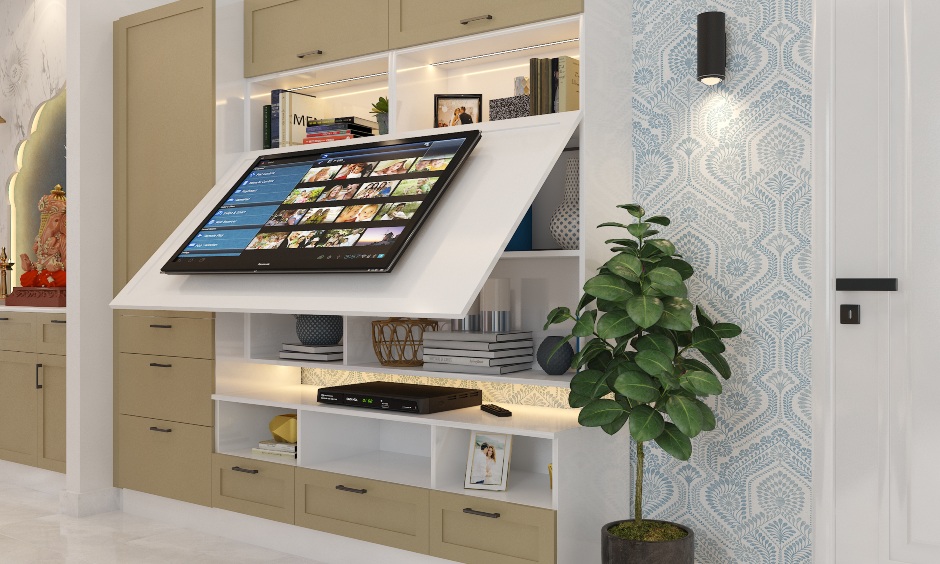
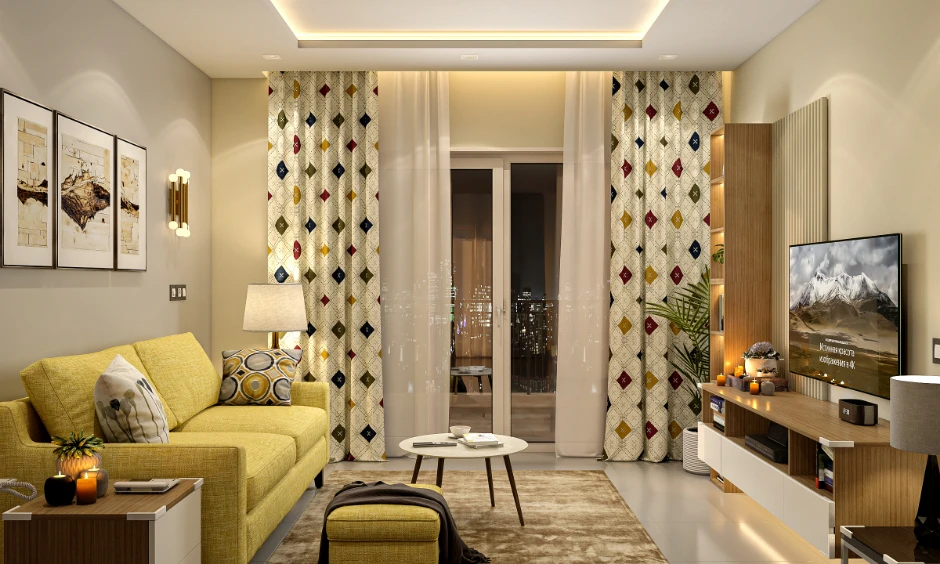
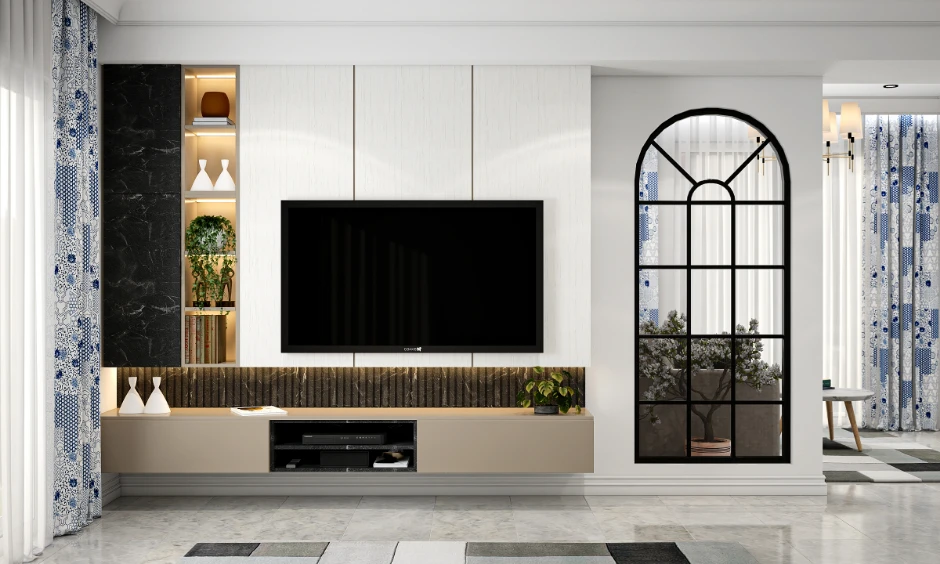
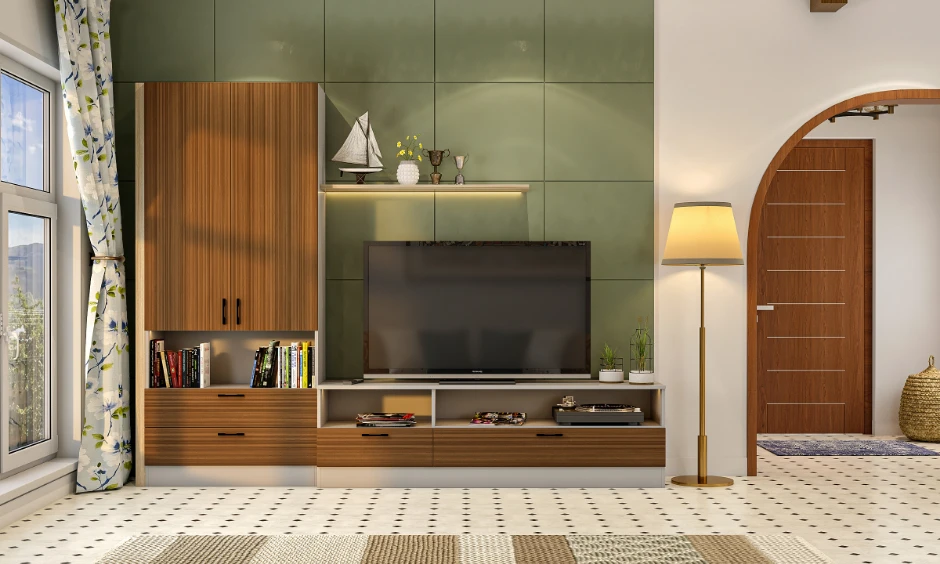
How Much Does an Indian Living Room Interior Cost?
Indian style doesn’t automatically mean expensive, but custom craftsmanship and natural materials can raise the budget.
| Item | Indicative cost |
| Jaali panel, MDF or wood | ₹800 to ₹1,800 per sq ft |
| Jhula, wooden with fittings | ₹25,000 to ₹90,000 |
| Plastered arch opening | ₹12,000 to ₹30,000 |
| Charupady-style partition | ₹30,000 to ₹80,000 |
Disclaimer: Costs vary by city, material, finish and customisation, so use these as indicative starting bands.

How To Maintain Indian Living Room Interior?
Traditional wooden furniture needs regular maintenance. A little upkeep goes a long way.
| Material | Upkeep |
| Brass | Clean monthly with a suitable brass cleaner |
| Carved wood | Dust weekly with a soft brush, polish yearly |
| Terracotta | Seal once, then dust regularly |
| Athangudi tiles | Plain-water mop, avoid acid cleaners |
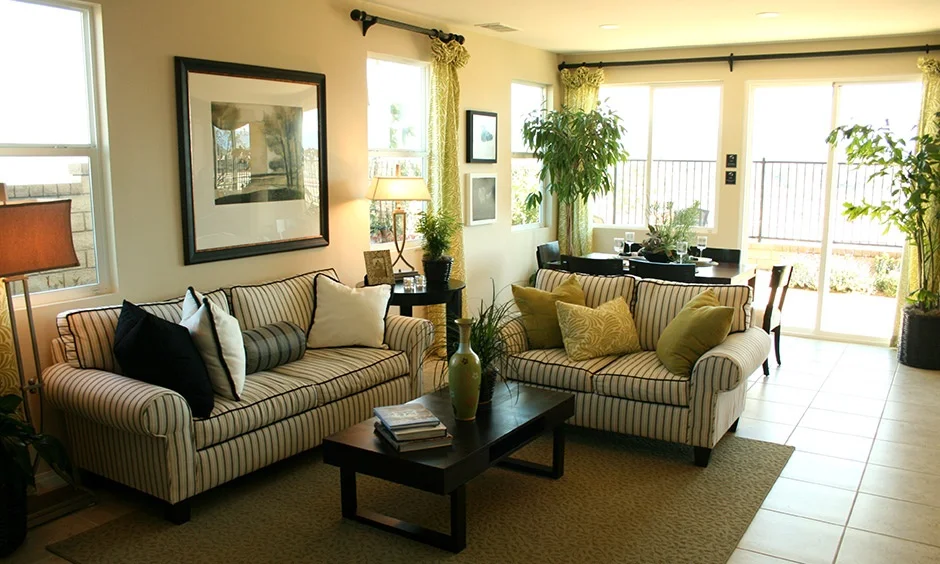
Mistakes That Make Ethnic Indian Living Room Designs Look Like a Showroom
Indian details work best when they feel like part of the home, not a theme. If you are decorating your home, avoid these 5 mistakes:
- Mixing four regional styles in one room.
- Buying a full carved furniture set instead of one statement piece.
- Hanging a jhula from a false ceiling.
- Covering every wall with small framed pieces.
- Using strong colour across every surface.
Your living room should feel collected over time, not decorated in one afternoon.
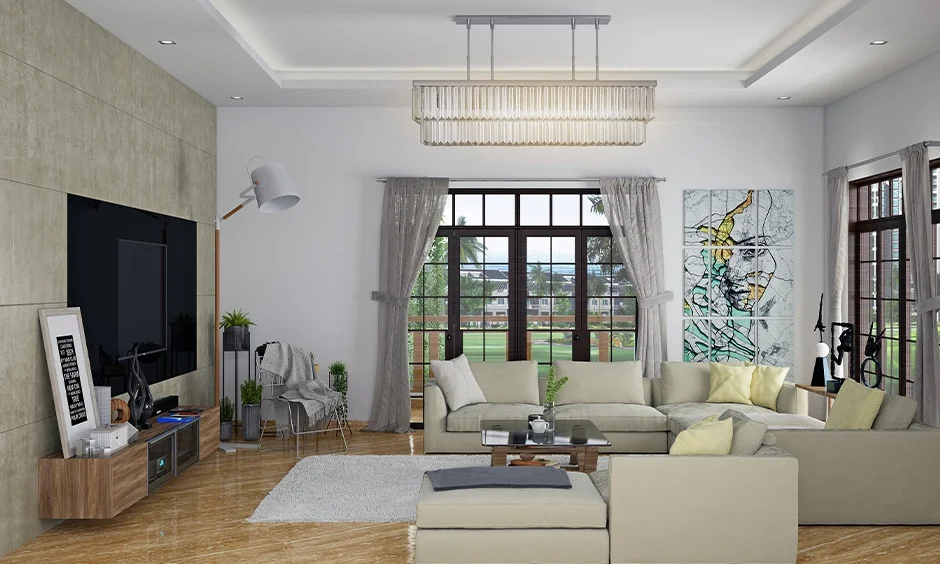
How DesignCafe Approaches Modern Indian Interior Design?
A good living room starts with how you use it, not what you want to buy.
We look at seating, circulation, pooja placement and storage before deciding on the decor. This keeps the room practical while giving each Indian detail its place.
Still planning the rest of your home? Explore our top living room interior ideas for more inspo.
When you’re ready to see your hall drawn to scale, book a free consultation with a DesignCafe designer.
FAQs
1. What is Indian style interior design?
It combines Indian colours, materials, crafts and traditional design details with modern layouts.
2. How do you design an Indian living room in a small flat?
Choose three Indian design elements and keep the walls, flooring and larger furniture simple.
3. Which colours suit a traditional Indian hall?
Mustard, indigo, terracotta and deep green work well. Use maroon and gold as accents.
4. Is a jhula practical in an apartment living room?
Yes, if it is properly anchored to a structural slab or beam. Never fix it to a false ceiling.
5. What is the difference between South Indian and Kerala traditional interiors?
Chettinad uses Athangudi tiles, teak and bold patterns. Kerala interiors lean towards timber, jaali and brass.
6. How do you add a pooja space to a living room?
Use a dedicated corner with a shutter or jaali to separate it. If you follow Vastu, the north-east is commonly preferred.
7. How much does an Indian style living room cost in India?
A jaali panel can cost ₹800 to ₹1,800 per sq ft. A wooden jhula with fittings can cost ₹25,000 to ₹90,000.
8. How do you maintain brass and carved wood?
Clean brass regularly and dust carved wood weekly with a soft brush. Polish the wood once a year if needed.








What’s up, yeah this article is genuinely nice and I have learned lot of things from it regarding blogging.
thanks.