Select Category


AI Summary
3 key insights · 1 expert tipHome interior design costs in India vary significantly by apartment size, with 1 BHKs ranging from ₹5-7 Lakhs and 3 BHKs from ₹10-15 Lakhs.
KEY INSIGHTS
- Kitchens are typically the most expensive space, with costs influenced by shutter finishes and countertop materials.
- Laminate finishes offer a durable and budget-friendly option for furniture and wall treatments across various interior styles.
- ₹1.5-4 Lakhs is a common budget range for essential kitchen and utility area renovations in most Indian homes.
 DESIGNCAFE EXPERT TIP
By our design team
DESIGNCAFE EXPERT TIP
By our design team
Prioritize a well-planned modular kitchen with practical laminate shutters and quartz countertops for a balance of functionality and style.
Why Budgeting Is The First Step In Home Interior Design
- Before choosing colours, layouts or furniture, it helps to know your home interior design cost.
- A budget gives clarity on what is possible now and what can wait.
- With a clear number in mind, planning becomes easier, and stress is reduced. Knowing your interior design budget early also helps you avoid impulsive decisions and keeps your spending aligned with real priorities.
Understanding Scope And Scale
a) Scope: What do you want to include?
- Basic kitchen and wardrobe → lower cost
- Full home interiors with custom units, lighting and decor → higher cost
b) Scale: Size of your home
- 1BHK → fewer units and materials.
- 3BHK or 4BHK → more rooms, more storage, more finishes.
- Bigger home = higher overall cost.
Why A Clear Budget Matters Before Starting
- A budget is not a restriction.
- It is a guide that helps you make the right choices.
- It helps you decide which rooms to prioritise.
- It keeps you focused on what matters to your family.
- It stops last-minute confusion and overspending.
Some people begin with the kitchen. Some want comfortable bedrooms first. Some prefer investing in the living room. Your priorities shape your spending and set the direction for your entire interior plan, especially when planning interior design for a home cost realistically.

1. Cost of Home Interior Designer & How Professional Fees Are Decided
When you bring a designer into your project, you are making your first real investment. Your interior designer’s cost is not only about getting drawings. It includes:
- Ideas and planning
- Time spent on site
- Guidance on what works and what does not
This early clarity helps you plan the rest of your interiors with less confusion.
a) Overview Of Designer Fee Structures
Designers charge in a few common ways, and each method fits a different kind of project. Many people check an interior design cost calculator online just to understand how these fee types usually work.
| Fee Type | Description | Best For |
| Per Square Foot | Pay based on the size of your home. | When the designer handles everything. |
| Fixed Fee | One flat amount for the whole design work. | Projects requiring easy planning. |
| Percentage of Project Value | A percentage of your total interior budget. | Usually chosen for large homes. |
Understanding these fee types helps you choose a home interior designer whose approach matches your comfort and budget.
Future projections
- Designer fees may continue to change as the industry becomes more organised.
- Homeowners want clearer pricing.
- Brands are slowly offering more structured packages.
- With better tools and modular planning, the cost of home interior designer services may become easier to predict in the future.

2. Home Interior Design Cost Based on Project Scope & Apartment Size
a) Understanding how your home size affects your budget
Every home has its own needs; a compact 1BHK works very differently from a spacious 3BHK. Costs change based on the number of rooms, storage needs, and design choices. Once you know how your home size affects the budget, planning becomes much easier. Some homeowners also look at interior design cost per sq ft as a starting benchmark, but the final cost depends far more on storage needs, finishes and personalisation than just square footage.
b) 1 BHK Interior Design Cost: Typical Ranges & What It Includes
Designing a small home means using space wisely. A 1 bhk interior design cost usually depends on:
- How much storage do you want?
- How many custom units do you plan to include?
Most compact homes need:
- A well-planned modular kitchen
- A wardrobe with lofts
- A simple TV unit or study area
Families who want a low-cost interior design for their home often:
- Keep the design minimal
- Focus only on essential furniture
Compact homes look beautiful when the layout is clean and clutter-free.

Premium 3BHK Interior Designs


c) 2 BHK Interior Design Cost: Storage Needs, Layouts & Budget Factors
A 2BHK requires more detailed planning because there are two bedrooms and a larger living area. Storage needs increase, and homeowners often add extra units based on lifestyle requirements.
Cost is influenced by:
- Type and size of wardrobes
- Kitchen layout and shutter finishes
- Additional units like crockery storage, bookshelves, or study tables
What a typical 2 BHK Flat Interior Design usually includes:
• A modular kitchen with full base and wall units
• Wardrobes for both bedrooms, often with internal organisers
• A TV unit or media wall in the living room
• Optional storage units like crockery cabinets or study desks
Common layout considerations in a 2 BHK flat interior design:
- Furniture layouts that keep movement areas open and functional.
- Space planning that separates private bedrooms from shared living areas.
- Storage is distributed across rooms to avoid overcrowding.
City-wise variation also plays a role in the 2BHK interior design cost, as labour and material costs differ across locations..

d) 3 BHK Interior Design Cost: Customisation Levels & Planning Scope
A 3BHK offers more flexibility but also demands more planning. With more rooms, there are more wardrobes, layouts, and opportunities for customisation.
Common inclusions usually involve:
- A well-equipped kitchen
- Multiple wardrobes
- A kids’ room or guest room setup
- Feature walls or TV panelling
City trends and finish preferences further influence the final 3 BHK interior design cost.


3. Estimated Home Interior Design Cost By Apartment Size
| Apartment Size | Interior Design Cost Range |
| 1 BHK | ₹5- ₹7 Lakh |
| 2 BHK | ₹7- ₹10 Lakh |
| 3 BHK | ₹10- ₹15 Lakh |
| 4 BHK | ₹18- ₹20 Lkah |
- A 1 BHK interior budget usually focuses on essentials like the kitchen and wardrobes.
- A 2 BHK balances comfort and storage across rooms.
- A 3 BHK or 4 BHK allows deeper customisation but needs tighter budget control due to more carpentry and finishes.
“We worked with a 2 BHK homeowner in Pune who wanted to stay within a fixed interior design budget. By choosing laminate shutters instead of acrylic and limiting custom units to high-use areas, the overall interior cost was reduced by nearly 12% without compromising daily usability,” shared senior interior designer Tasneem Arsiwala, based on one of her recently delivered home interior projects.
4. Room-by-Room Home Interior Design Cost Breakdown
Understanding your home interior design cost becomes much easier when you look at it room by room. Each space has a different purpose, detailing level, and material requirement.
What the planning scope looks like in a 3 BHK:
- Coordinating designs across multiple bedrooms without visual clutter
- Balancing shared spaces like the living and dining areas with private rooms
- Planning storage room-wise instead of adding units randomly
- Allowing flexibility for future needs such as home offices or growing families
Some rooms need more storage, some need more electrical work, and some need specialised materials.
This section helps you understand:
- Which rooms usually take up more of your budget?
- What factors influence the cost for each space?
1. Kitchen and Utility Budgeting: The Heart of Your Home
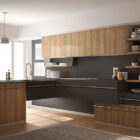
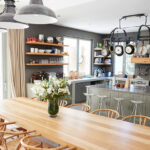
The kitchen is almost always the most detailed and expensive space in any home. A well-planned kitchen makes your daily routine smoother, which is why it is worth investing in the right materials and layout. Your kitchen interior design cost changes based on:
a) Shutters and finishes
- Basic laminate shutters cost less.
- Acrylic, membrane and PU finishes cost more because they give a premium look.
b) Internal accessories
- Pullouts
- Bottle organisers
- Corner units
- Cutlery trays
- Tall units
These increase the cost but improve day-to-day convenience.
c) Countertops
- Quartz is more premium.
- Granite is more affordable.
- Prices vary based on thickness, colour and brand
This directly affects the cost of your kitchen countertops.
d) Utility area
- Additional plumbing.
- Open storage.
- Space for washing machines
If your home has a utility area, these requirements can increase the cost.
Families looking for a low-cost interior design for their home often:
- Choose simple L-shaped or straight kitchen layouts.
- Use laminate shutters
This keeps spending comfortable while still achieving a neat and durable finish.

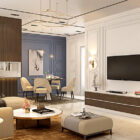
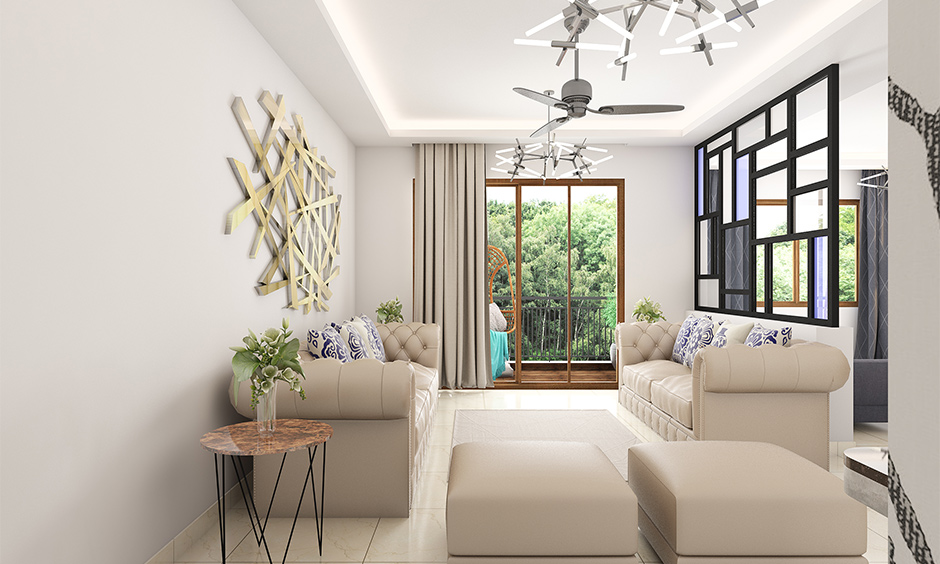
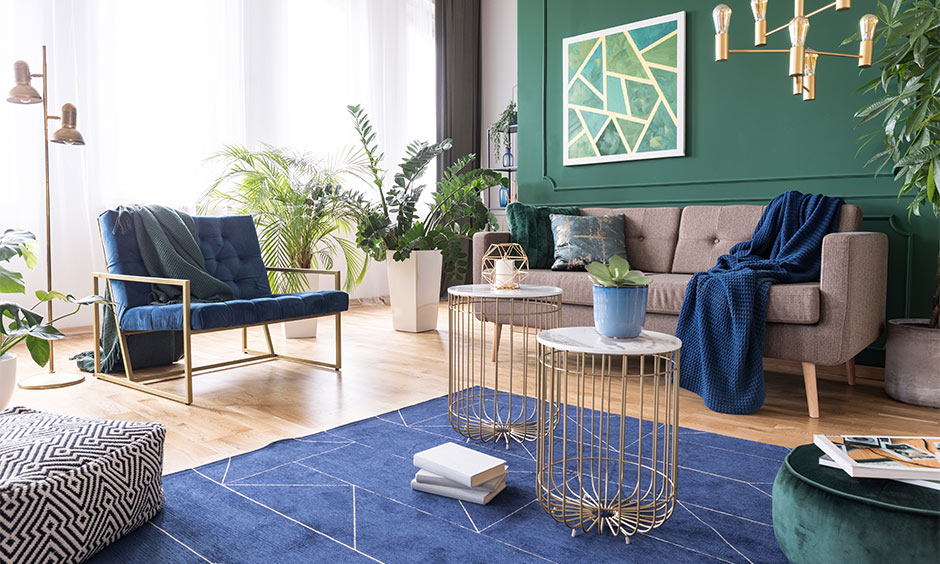
2. Living Room Investments: Furniture, Layout and Statement Designs
The living room creates the first impression of your home. Unlike the kitchen, this space gives you more flexibility. You can:
- Keep it simple.
- Or design it as a statement space.
Your living room interior design cost mainly depends on the amount of carpentry and decor involved.
What drives the cost of a living room
a) TV unit
- Basic units with open shelves are more affordable.
- Wall-to-wall panels with storage, lighting or fluting cost more
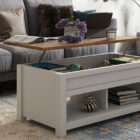
b) Furniture
- Sofa selection.
- Centre table.
- Side units
These choices influence both look and spending.
c) Feature walls
- Wall panelling
- Wallpaper
- Textured finishes
These add character but also increase cost.
d) Lighting
- Spotlights
- Profile lights
- Wall lamps
Lighting plays a major role in setting the mood and ambience.
For families following a low-cost home interior design approach:
- Keeping the TV unit simple
- Adding decor elements later is a practical strategy.

3. Bedroom Budgets: Comfort and Custom Storage
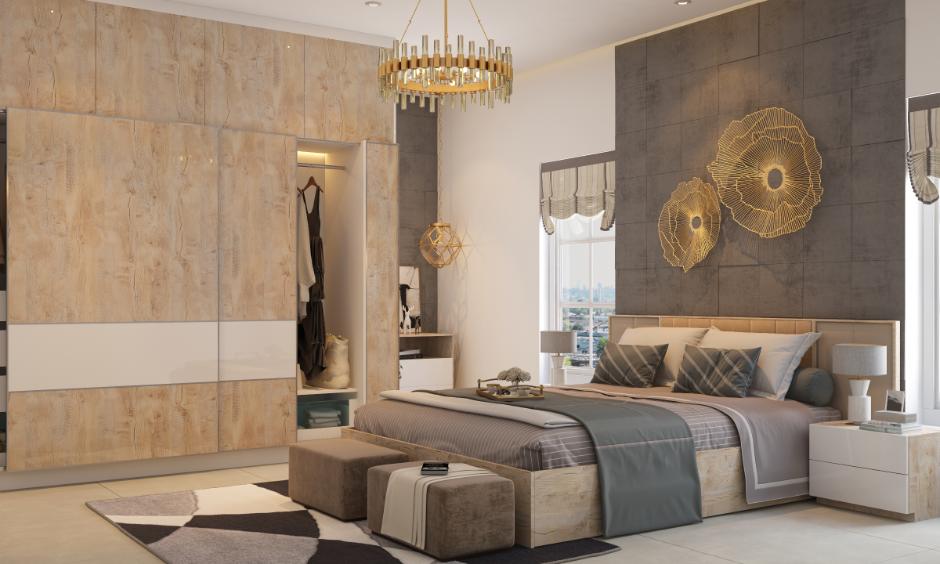
Bedrooms are personal spaces where comfort and storage matter most. Your interior design bedroom cost varies based on storage choices and additional furniture.
What influences bedroom cost
a) Wardrobes
- Sliding wardrobes cost more than hinged ones.
- Mirrors, lofts and internal organisers increase cost.
- Laminates are budget-friendly.
- Acrylic finishes give a premium look
b) Headboards and side tables
- Soft cushioned headboards cost more.
- Simple laminated designs are more economical
c) Study tables or work corners
- Increasingly common.
- Add to carpentry cost
d) Kids’ rooms
- Extra shelves
- Colourful finishes
These additions influence the overall budget. Homeowners looking for low-cost interior design ideas often:
- Keep wardrobes simple
- Choose laminate finishes
This gives a clean, durable result without overspending.
4. Bathroom Budgets: Function Comes First
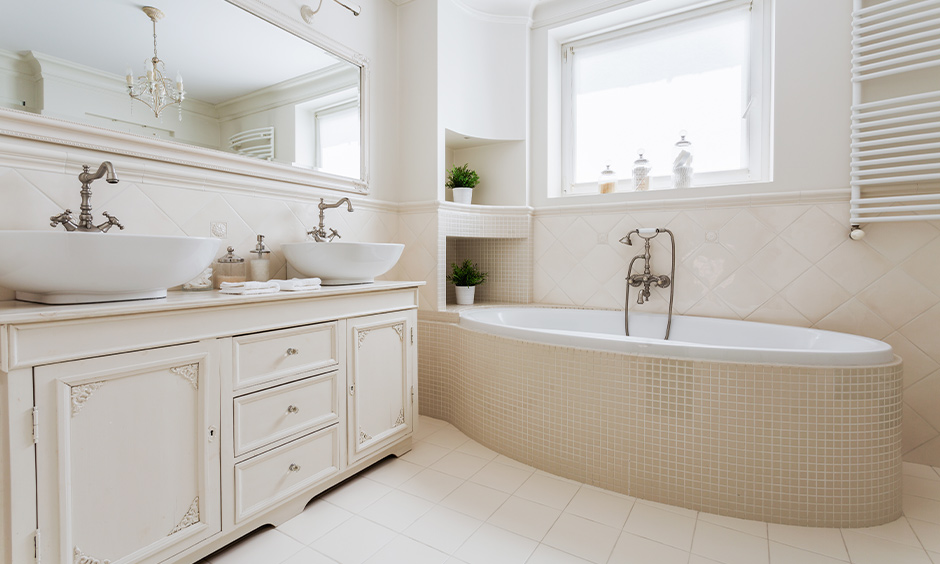
Bathrooms may be smaller in size, but they require careful planning. Waterproofing, tiles, plumbing and storage make this space slightly cost-intensive.
What influences bathroom cost
a) Vanity units
- Wall-mounted vanities with storage cost more
- They help save floor space
b) Shower partitions
- Bathroom Glass partitions improve cleanliness and style
- They increase the budget
c) Tiles and fittings
- Wall tiles
- Faucets
- Shower heads
- Mirrors
These impact both appearance and cost.
d) Lighting
- Warm lighting near mirrors
- Brighter ceiling lights for usability
People searching for low-cost Indian bathroom designs usually:
- Focus on surface-level upgrades
- Avoid major plumbing changes
5. Dining Room Budgets: Subtle But Impactful Additions
The dining area is generally simpler to design. Costs increase mainly when custom storage units are added. Your cost for home interior design goes up when you include:
a) Crockery units
- Tall units with glass shutters cost more
- Simple sideboards are more pocket-friendly
b) Bar units
- Wall-mounted bars
- Counter-style bars
c) Costs vary based on material selection.
d) Lighting and decor
- Pendant lights above the dining table
- Decorative elements
These add warmth but increase spending slightly. If you prefer a home interior design low-cost approach:
- Skip built-in units
- Use freestanding furniture instead


5. Combined Estimated Cost by Room
| Space | Typical Cost Range |
| Kitchen & Utility | ₹ 1.5 lakh- 4 lakh+ |
| Living Room | ₹ 1 lakh- 2 lakh+ |
| Bedroom | ₹ 3 lakh- 4 lakh+ |
| Bathroom | ₹ 2 lakh- 3 lakh+ (full renovation) |
| Dining Area | ₹ 1 lakh- 2 lakh+ |
Note: These are just indicative ranges. Final costs depend on materials, finishes, layout and level of customisation.
6. Home Interior Design Cost in India: Key Materials and Components
Materials may look small on paper, but they make a big difference to your home interior design cost.
- The choices you make for ceilings, walls and finishes decide how your home looks.
- These choices also decide how long your interiors stay durable and easy to maintain.
- This is where smart planning helps you balance beauty and budget instead of overspending.
1. Ceiling And Overhead Costs
False ceilings are popular in modern homes for both function and aesthetics.
Why are false ceilings commonly used
- They hide wiring and ducts.
- They support better lighting layouts.
- They give the home a clean and finished look.
Why false ceilings add to the budget
- They require good-quality boards.
- Metal frameworks are needed.
- Skilled labour is essential for installation.
Design choices that affect cost
- A simple single-level false ceiling is usually the most budget-friendly.
- Multi-level designs increase material and labour usage.
- Curves and customised shapes push the cost higher.
- Heavy lighting layouts add further expense.
Homeowners often check false ceiling cost bangalore while budgeting because:
- Labour rates vary by city.
- Material costs change from one region to another.
POP (Plaster of Paris) Ceiling Options – POP, also known as Plaster of Paris, is another popular ceiling choice.
Why homeowners choose POP
- It allows smooth, seamless surfaces.
- Decorative shapes and designs are easier to create.
- It works well for feature ceilings.
Cost considerations for POP ceilings
- POP requires more time to finish.
- Labour effort increases with design complexity.
- The more detailed the design, the higher the cost.
When planning ceilings:
- If clean lighting and simplicity matter more, a basic false ceiling works well.
- If visual impact is the priority, a POP feature ceiling may need a higher budget.
2. Wall Treatments and Finishes
Wall finishes have a strong impact on both appearance and house interior design cost.
- Walls cover the largest surface area in a home.
- Even small changes in wall materials can affect the overall budget.
- The right finish improves durability and visual appeal.
a) Paint Finishes – Paint is one of the most commonly used wall finishes.
Why is painting a popular choice
- It is the simplest option.
- It is the most budget-friendly.
- It works well across different rooms.
Common paint types
- Matte finishes for a soft look.
- Satin finishes for easy maintenance.
- Textured paint for added character, though it costs more.
b) Wall Panelling – Wall panelling is chosen for a more premium and layered look.
Why is wall panelling used
- It adds warmth and depth.
- It creates a strong visual impact.
- It works especially well in living rooms and bedrooms.
Homeowners often refer to a wall panelling cost guide to compare:
- MDF panels
- PVC panels
- Wooden panels
Each option differs in durability, appearance and price.
3. Laminates for Walls and Furniture
Laminates remain one of the most practical material choices.
Why are laminates widely used
- They are easy to clean.
- They are budget-friendly.
- They are available in many colours, textures and patterns.
People researching materials often look up all about laminates to compare:
- Durability
- Maintenance
- Finish options
Because of their versatility, laminates work well in both:
- Modern interiors
- Classic interior styles
7. How City Location Impacts Home Interior Design Cost
Where you live plays a big role in your home interior design cost. Even if two homes are the same size, the total cost can change because labour rates, transport charges and material availability are different in every city. This is why cost planning must always consider your city first.
Why Metropolitan Prices Vary
- Labour charges – Bigger cities usually have higher labour costs because demand is high and skilled workers charge more. This affects carpentry, electrical work, painting and installation.
- Material movement – Some materials are cheaper in one city and more expensive in another because of transport distance and supply availability. If a material has to travel farther, the cost increases.
- Local trends – Each metro has its own style. Bangalore prefers space-saving modular units while Mumbai needs compact layouts for smaller homes. Chennai focuses on moisture-resistant materials. These preferences influence the final budget because interior designers work with different material sets in each region.
Examples Of How Costs Differ Across Major Cities
- Chennai – Material choices depend a lot on humidity. Waterproof plywood and special laminates may increase the budget slightly.
- Mumbai – Compact apartments often need custom solutions, which raises labour and design effort.
- Bangalore – Homeowners prefer modular kitchens and wardrobes, so factory-made units influence the price.
- Pune – As compared to Mumbai, the layouts are slightly larger here, so wardrobe and kitchen sizes can increase overall spending.
- Kolkata – Due to older building structures, sometimes extra preparations are required before installation, which adds to the cost.
- Ahmedabad – Labour charges can be more flexible, but premium finishes still increase the total budget.
- Bhubaneswar – Material transport is a big factor here, so the cost depends on what is sourced locally and what must be brought in.
Why Understanding City Differences Helps Your Planning
Once you know how your city affects labour and materials, your budget becomes much clearer. You can plan better, avoid surprise expenses and pick designs that work well for your region. This also helps your designer recommend the right finishes that match your climate and your comfort.
Conclusion: Key Takeaways for Budget Success
- Quality of materials matters – Good materials may feel slightly expensive in the beginning, but they save money in the long run. Durable shutters, strong plywood, reliable hardware and proper finishes reduce repairs and keep your home looking new for years.
- Personalised Touches change the budget – The more personalised your home is, the more time and labour it needs. personalised wardrobes, feature walls and detailed designs increase your spending. Choosing where to personalise and where to keep things simple helps you balance style and cost.
- Location influences your final number – Every city has different labour rates, transport costs and material availability. Planning your budget with your city in mind helps you make realistic decisions and avoid surprise expenses later.
- How to prioritise your spending – Start with the spaces you use every day. Most homes benefit from a well-planned kitchen, practical wardrobes and good lighting. Once the essentials are in place, you can slowly add decor, wall finishes or furniture as your budget allows.
- The right budget makes the process easier – When you know what you can spend, you make quicker decisions and enjoy the design journey more. A clear budget helps your designer understand your expectations and ensures your home turns out the way you imagined it.
Planning your home interiors? Schedule a free design consultation with us to get a personalised cost estimate and a realistic interior design budget for your home.
FAQs
1. Why is budgeting important for home interior design?
Budgeting is important because it helps control expenses, prevents overspending, and ensures that design decisions align with financial limits while still achieving the desired results.
2. What factors influence home interior design costs?
Key factors include home size, design style, material quality, furniture selection, labour costs, customisation level, and location.
3. Is hiring an interior designer more expensive?
Hiring an interior designer may seem costly initially, but it often saves money in the long run by avoiding mistakes, optimising resources, and managing expenses efficiently.
4. How early should budgeting start in the interior design process?
Budgeting should start at the planning stage before design selection, material sourcing, or contractor hiring to ensure smooth project execution.
5. Do interior design costs vary by room?
Yes, costs vary by room depending on usage, furniture needs, storage requirements, and level of customisation, with kitchens and bathrooms often costing more.
6. How does budgeting affect the quality of interior design?
Proper budgeting allows better allocation of funds, ensuring high-quality materials and finishes in priority areas without compromising the overall design.