Select Category


AI Summary
4 key insights · 1 expert tipA good small bedroom ceiling design takes as little height as possible while still carrying the lighting you want. A basic false ceiling costs you four inches, six with cove lighting, and eight or more for multi-level work. In a room with a nine-foot slab, that difference decides whether the room feels normal or low. This guide covers minimum heights and the designs that suit low rooms. It also covers fan clearance, materials, colours, and when skipping the ceiling is better.
KEY INSIGHTS
- Peripheral designs lose height only at the edges, not in the centre.
- You need at least 9 feet of slab before a full-drop ceiling makes sense.
- A fan needs 7 feet of clearance from the floor to the blades.
- White or a very pale tint keeps a low ceiling visually higher.
 DESIGNCAFE EXPERT TIP
By our design team
DESIGNCAFE EXPERT TIP
By our design team
Koye Nissi, Senior Interior Designer, DesignCafe, Hyderabad, suggests, “Under nine feet, run the ceiling only where the lighting needs it. The middle of the room should stay untouched.”
Before you choose a ceiling design, measure the height you can afford to lose.
You find a beautiful small bedroom false ceiling design online and picture it in your home. The contractor says it can be done, so you go ahead. Then the ceiling drops eight inches. In a nine-foot-high bedroom, that leaves just 8 feet 4 inches. Suddenly, the room feels smaller than it did on paper.
That is the problem with most bedroom ceiling designs. You do not need less detail. You need to place it where it does not eat into the room’s height.
This guide starts with the height calculation, then covers designs that work around it – fan clearance, lighting, materials, colours and when skipping the false ceiling is the better choice.

Small Bedroom Ceiling Design Ideas
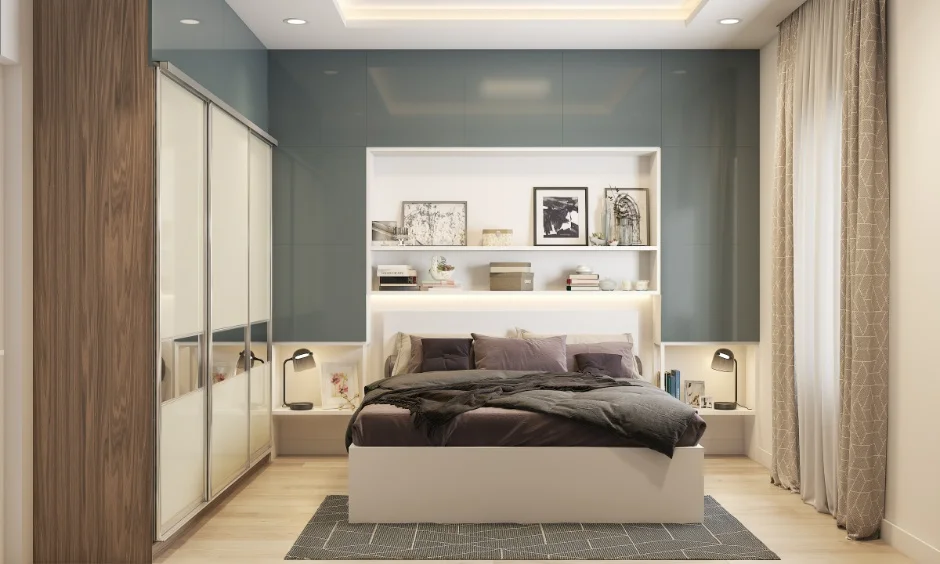
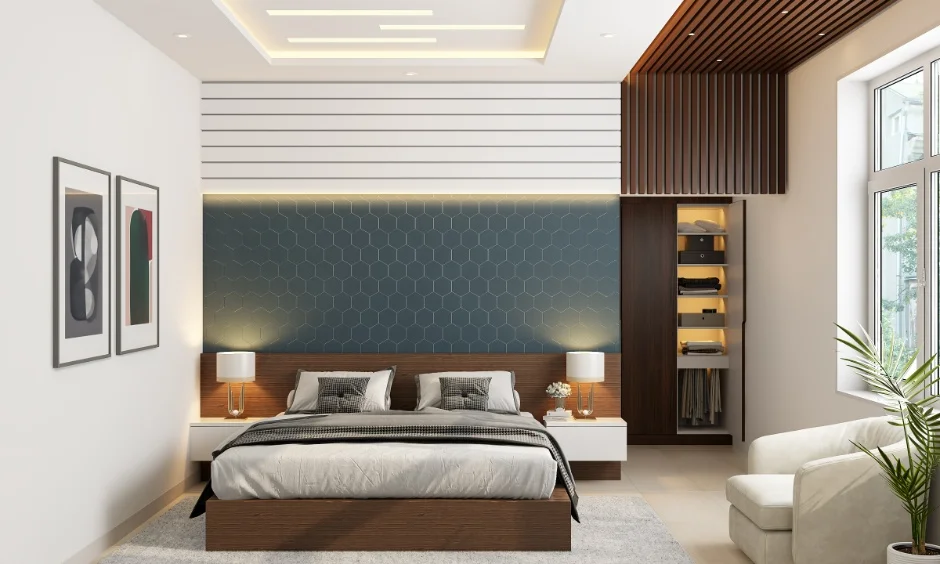
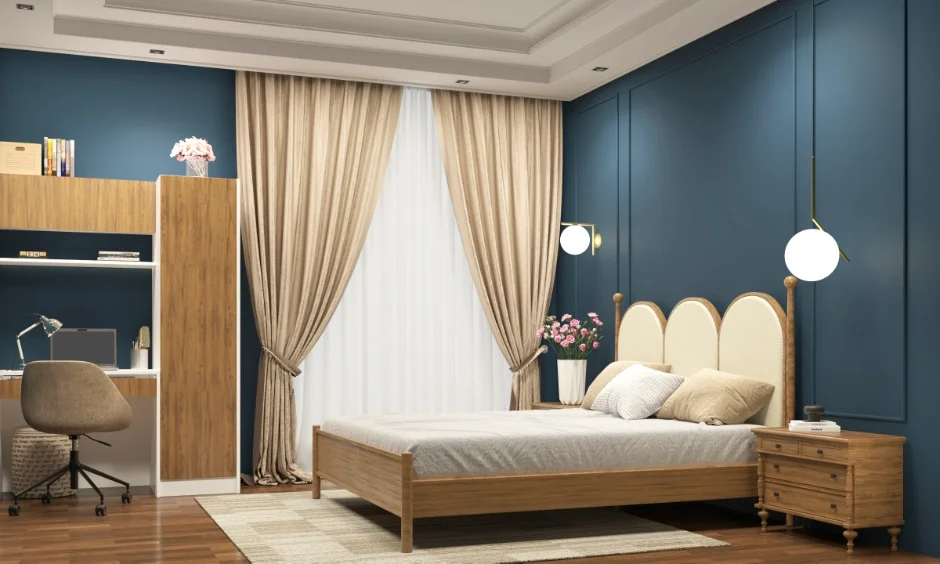
The most workable designs for small bedrooms do one of two things: stay shallow or stay around the edges. A single perimeter band with a cove channel is a reliable option. A partial drop above the bed adds detail without lowering the entire room.
What usually does not work is a bulky, multi-level ceiling. In a small bedroom, it can feel less like a design feature and more like a lowered lid.
How Much Height Does a Small Bedroom Ceiling Design Take?
This number decides everything else.
| Design | Height lost |
|---|---|
| Single-level, plain | 4 in |
| Single-level with cove | 6 in |
| Peripheral band only | 4-6 in at edges |
| Two-level with cove | 8 in or more |
Minimum Ceiling Height You Need
Start with the height you want after the false ceiling goes in. Around 8 feet 6 inches feels comfortable; 8 feet can start to feel low.
A nine-foot slab can comfortably accommodate a shallow perimeter or single-level design. With a 10-foot slab, you have far more freedom.
Don’t Forget The Pelmet And The AC
The ceiling is not the only thing competing for height. Curtain pelmets and split AC units need space too. A recessed curtain pocket typically needs 6-8 inches of depth at the window wall. A split AC also needs adequate clearance from the slab for airflow.
Put both on the same drawing as the ceiling. Planning them later can force costly changes mid-project.
What To Do If Your Room Is Too Low?
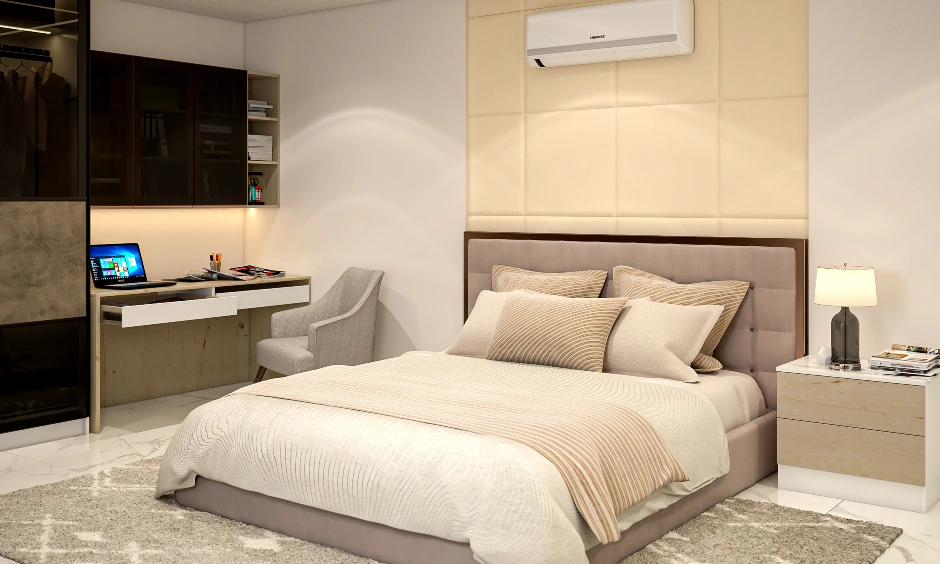
If the ceiling is below nine feet, avoid deep drops and move the design detail to the walls.
Bed-wall panelling works well. So does a slim cove at the wall-ceiling junction or simply a well-finished flat ceiling. None of these options takes away much headroom.
Small Bedroom Interior Design Ideas



The Simplest Small Bedroom Ceiling Design Is Usually The Best One
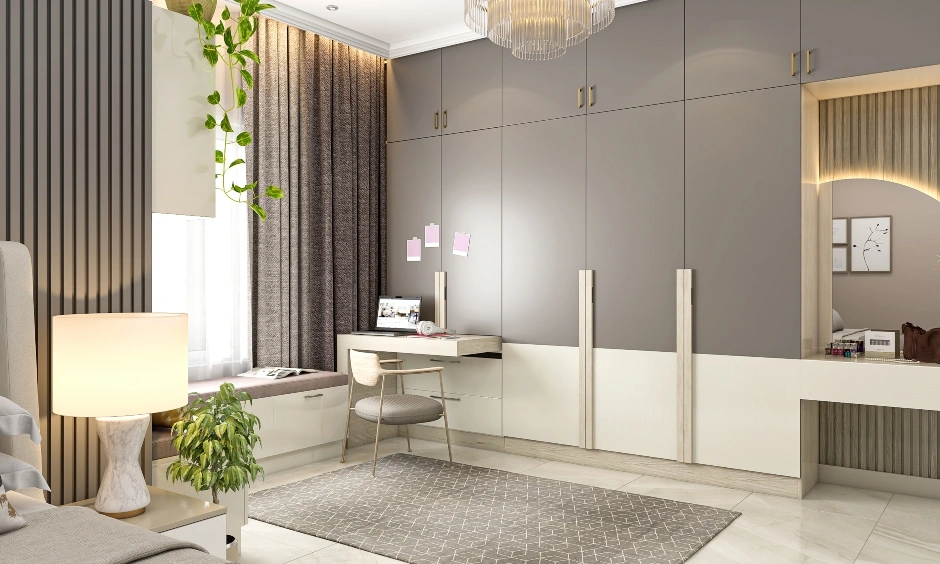
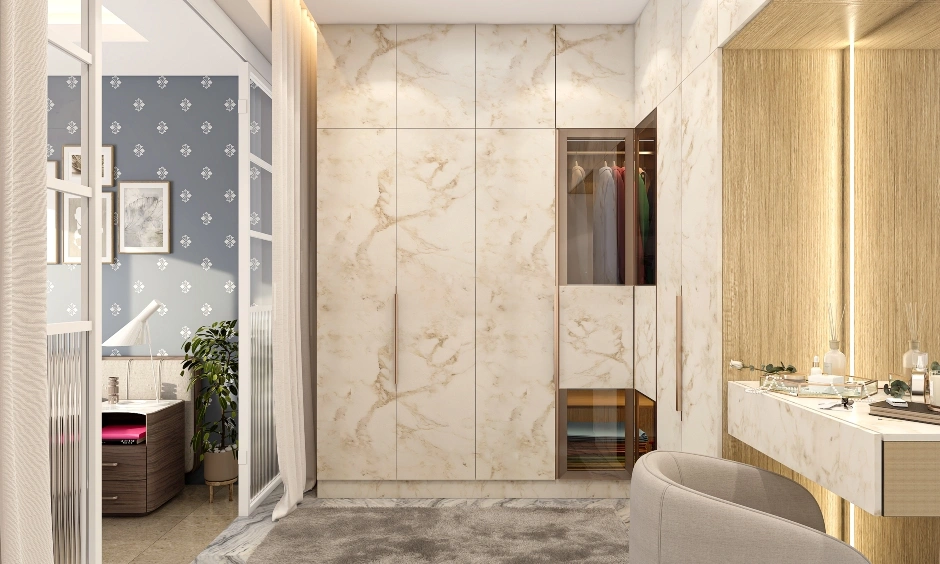
In a small bedroom, simplicity is not a compromise. It is often the better design choice. A plain perimeter band with warm cove lighting can add more to the room than a busy pattern. Clean lines make the ceiling feel intentional, while too many shapes can make a small room feel cluttered.
If you want one decorative feature, place it above the headboard. It becomes a focal point without taking over the entire ceiling.
A Modern False Ceiling Design For Small Bedroom Layouts
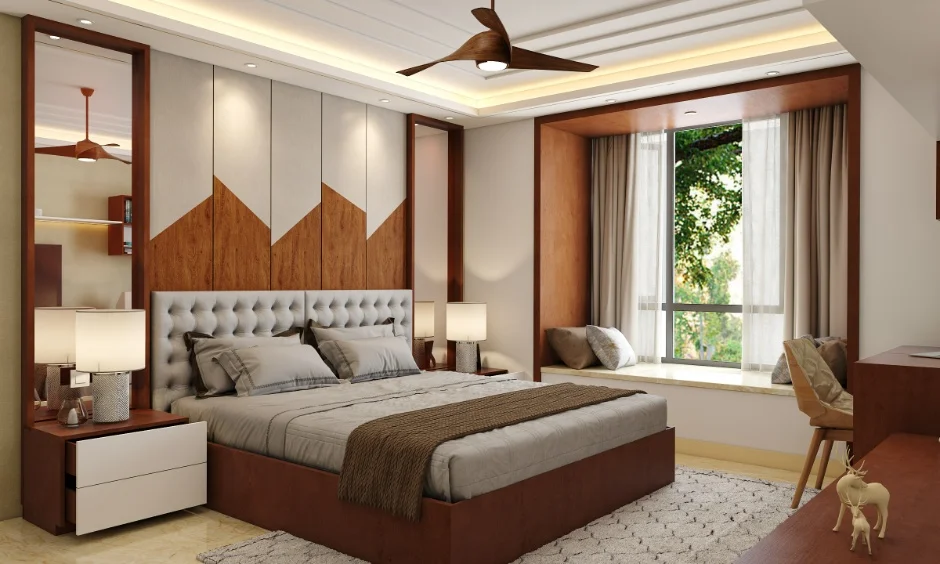
Most low-ceiling bedrooms can work with four basic approaches. The key is to keep the overall drop shallow. Choose the pattern and ceiling height based on what you want to highlight. A perimeter band pushes the eye towards the edges, while a partial drop makes the bed the focal point. Pick one approach rather than combining too many elements.
- Single-Level: A single flat plane dropped around four inches is simple and relatively unobtrusive, provided the slab height allows it.
- Peripheral and Border-Only: A narrow band runs around the perimeter while the centre stays open. It is one of the most height-efficient options.
- Partial and Floating: A section, usually above the bed, drops without extending across the whole room. It works particularly well in narrow bedrooms.
- Plus-Minus POP: Raised and recessed sections create depth within a single plane. Keep the overall drop to around four or five inches where possible.

Lighting A Small Bedroom Ceiling Design Without Losing Height
Lighting is one of the main reasons to add a false ceiling. Plan it before the ceiling is built.
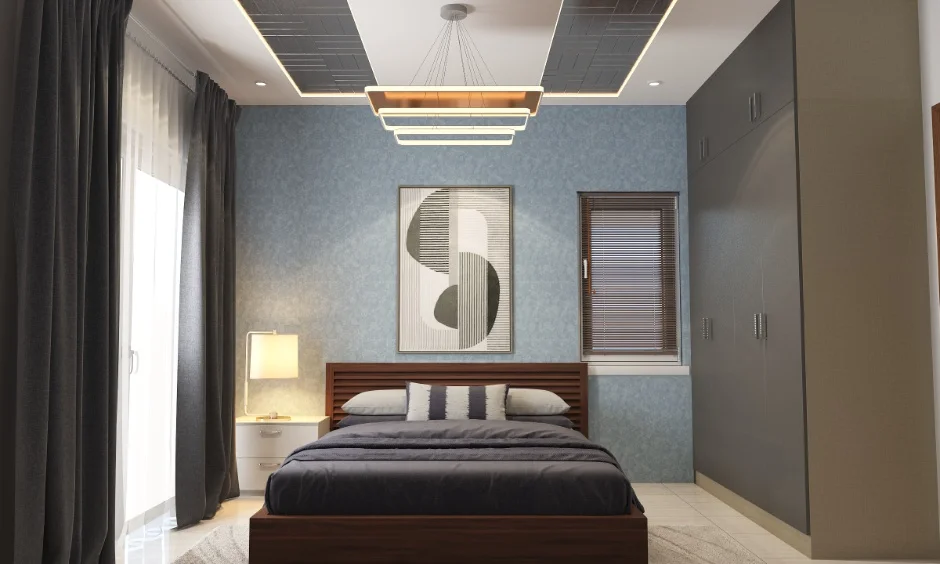
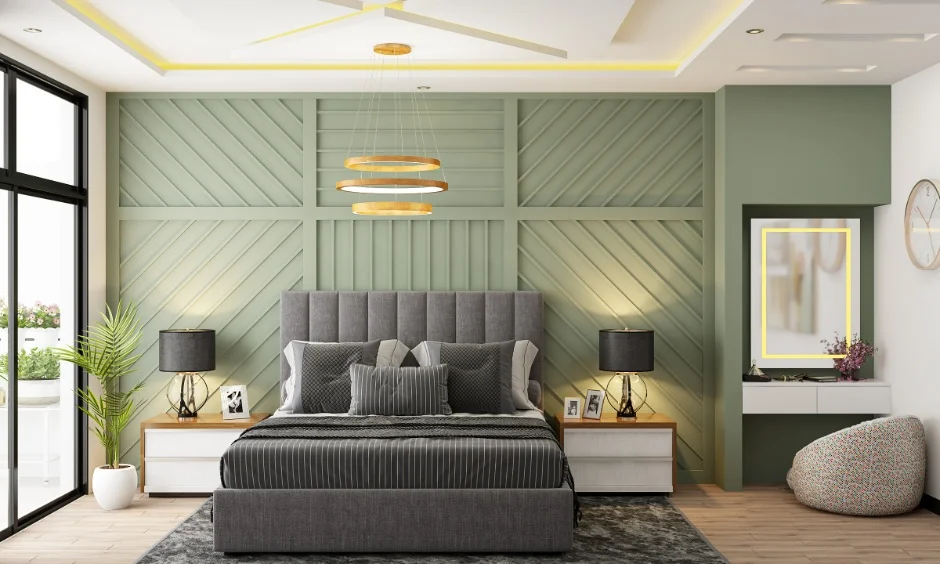
Cove lighting throws light upwards, helping the ceiling feel visually lighter and taller. Keep recessed spotlights to a minimum and avoid placing them directly along the bed axis. In a small bedroom, four well-placed lights can be more useful than a ceiling full of spots.
Choose 2700K-3000K for a warm bedroom ambience. Cooler light can make the room feel harsher and less inviting. Put the cove light on a separate switch. Then you can leave only the soft upward glow on at night.
Where Does The Fan Go In A Small Bedroom Ceiling Design?
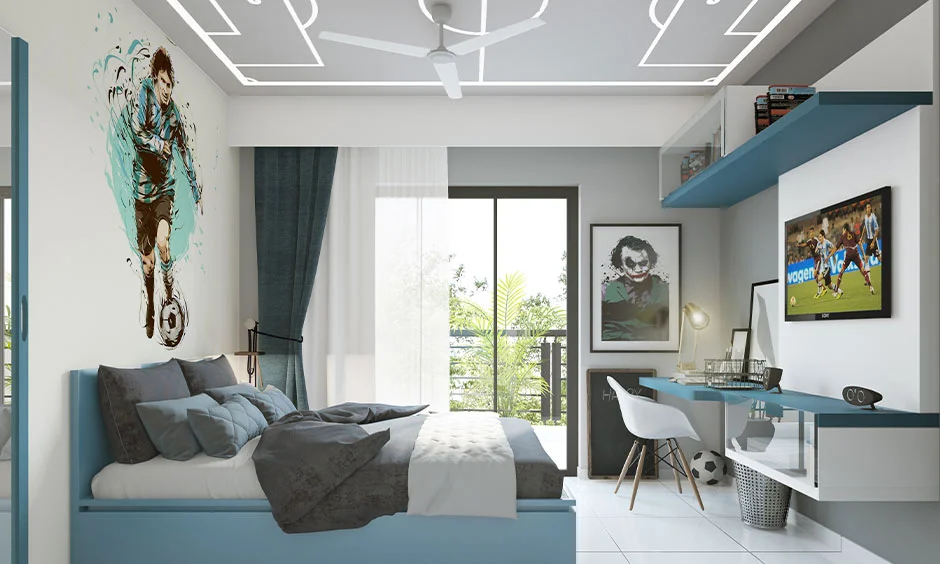
The fan is one detail you need to plan before the ceiling drops. Aim for around 7 feet of clearance between the floor and the fan blades. On a nine-foot slab with a six-inch drop, this still leaves reasonable clearance for a standard ceiling fan.
Keep the fan in the open centre rather than placing it under a dropped section. A fan too close to the ceiling can have reduced airflow and become noisier.
Leave adequate space between the blades and the ceiling, and keep the blade tips safely away from the walls. For a 10×10-foot bedroom, a 48-inch fan may be more appropriate than an oversized 56-inch model.
POP, Gypsum Or PVC: Which Is The Best For Your Small Bedroom Ceiling Design?
For a small bedroom, the material matters less than how much height the ceiling structure takes up.
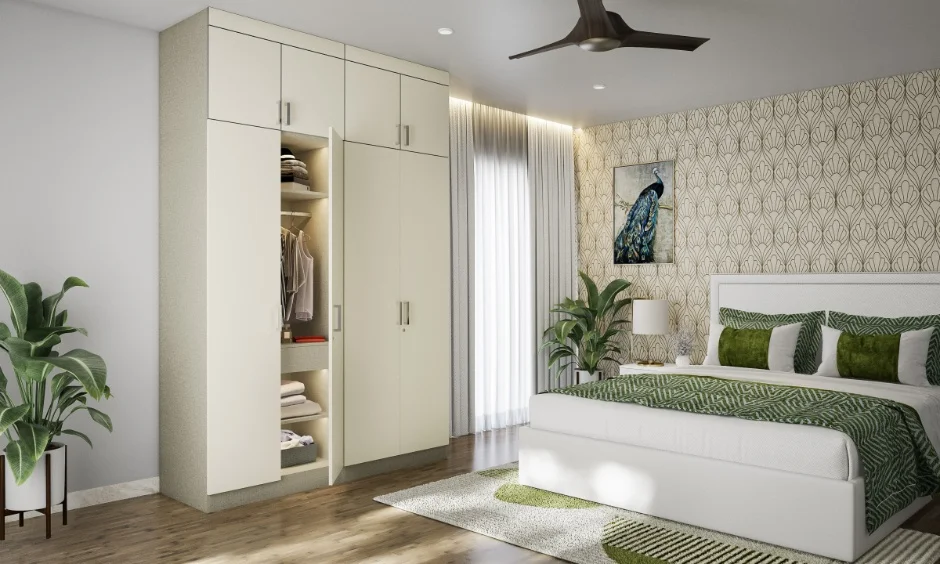
POP costs around ₹60-120 per sq ft and works well for curves. Gypsum costs around ₹75-180, gives a clean, flat finish and is generally easier to repair. PVC is affordable and moisture-resistant but can look less refined in a bedroom.
For most small bedrooms, gypsum with a shallow perimeter band is a practical choice.
Ask your contractor for the total frame depth, not just the board thickness. A 12mm gypsum sheet on a 50mm channel already takes up around 2.5 inches before adding a cove or other detailing.
Colours That Make A Small Bedroom Ceiling Design Look Taller
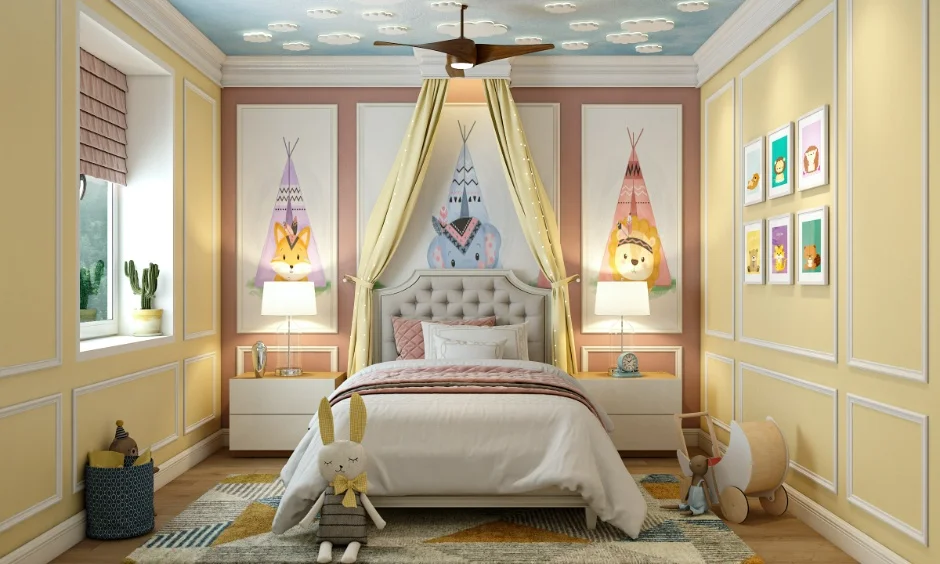
White is still the safest choice for a small bedroom ceiling. Matt white works particularly well because it reflects light without the glare of a glossy finish.
If you want some colour, use a very pale tint in the recess and keep it slightly lighter than the walls. Avoid dark colours on ceilings below 10 feet. They can make the room feel visually lower and more enclosed.
Small Bedroom Ceiling Design Mistakes To Avoid
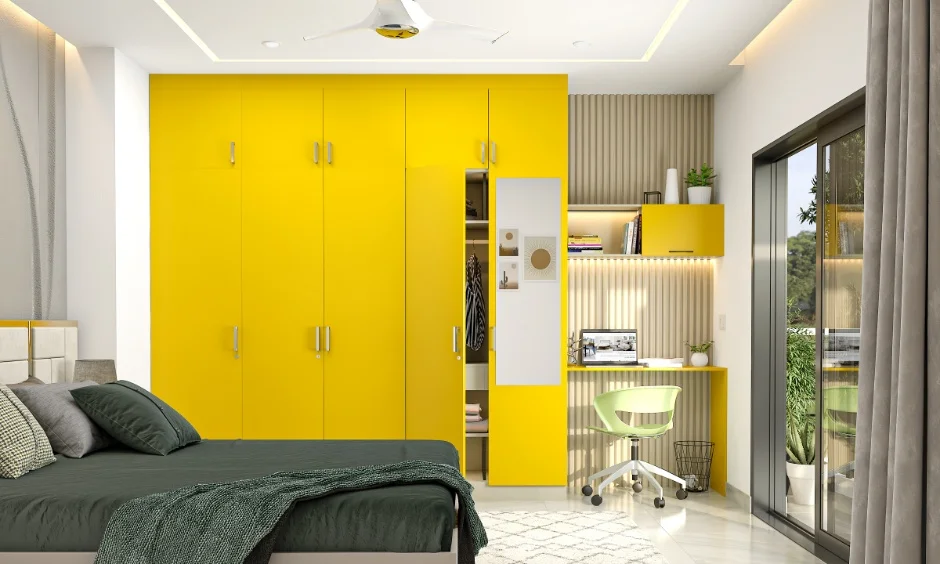
- Copying a large-room design: Its proportions may overwhelm a small bedroom.
- Using multiple levels below nine feet: The ceiling can feel lower without adding much visual value.
- Planning lighting last: Retrofitting lights can mean reopening the ceiling.
- Boxing in the fan: A dropped section can affect airflow and increase noise.
- Using dark colours overhead: They can make the room feel smaller and lower.

When To Skip The Small Bedroom Ceiling Design Altogether?
Sometimes, the smartest ceiling design is no false ceiling at all.
If your finished ceiling height would fall below around 8 feet 6 inches, the loss of headroom may not be worth the decorative gain. A well-finished flat ceiling with a pendant and bed-wall panelling can still create a strong focal point. Surface-mounted profile lights can also provide a clean, modern look without reducing ceiling height.
What Does A Small Bedroom Ceiling Design Cost?
This costs less than a living room ceiling simply because there is less area to cover.
| Scope | Indicative cost |
|---|---|
| Peripheral band, 10×12 room | ₹8,000-15,000 |
| Single-level, full room | ₹9,000-18,000 |
| Plus-minus POP | ₹12,000-22,000 |
| Cove lighting, added | ₹3,000-7,000 |
Cost Factors For A Small Bedroom Ceiling
Three things push the cost up: cove channels add labour and depth, POP mouldings add site time, and curves require more complex framing.
Rates often exclude painting and GST. For how ceiling work fits into your overall home budget, see our guide to interior designer cost.

How DesignCafe Plans Your Small Bedroom Ceiling Design?
Our designers measure the actual slab height before drawing the ceiling.
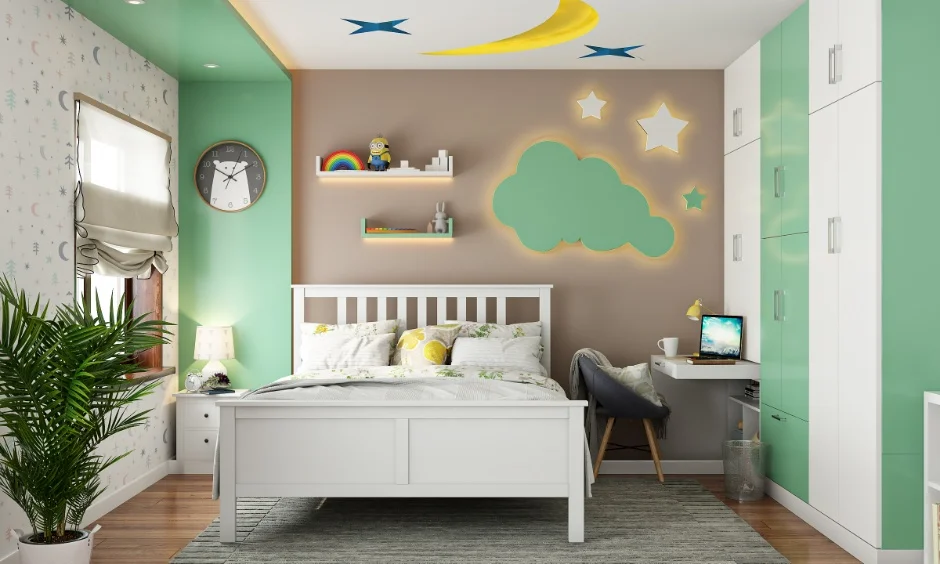
That measurement determines whether your room needs a perimeter band, a partial drop or no false ceiling at all. See finished rooms in our bedroom design gallery to see how ceilings and lighting work together.
Final Thoughts
A ceiling works best when you stop noticing the ceiling and notice the light instead.
Measure the slab, keep the drop shallow, push the detail towards the edges and light it upwards. If the numbers don’t allow even that, a flat ceiling with a good pendant isn’t a compromise. It is the better design.
Ready to take the next step? Book a free consultation.
Still need more time to think? Explore our blog section for more design inspirations.
FAQs
1. Can you have a false ceiling in a small bedroom?
Yes, as long as the drop stays at four to six inches. Use a peripheral or partial design rather than a full multi-level one.
2. How much height does a false ceiling take?
Four inches for a plain design, six with cove lighting, and eight or more for two-level work.
3. What is the minimum ceiling height for a false ceiling?
Around nine feet of slab. If it’s below 8 feet 6 inches, skip the drop and put the detail on the walls.
4. Which ceiling design suits a small bedroom?
A peripheral band with cove lighting and an open centre. It uses the least height and still carries concealed light.
5. Where should the fan go with a false ceiling?
In the open centre of the room, clear of any dropped plane. Allow about 7 feet of clearance from floor to blades.
6. Which ceiling colour makes a small bedroom look taller?
Matt white, or a tint two to three shades lighter than the walls. Dark ceilings visually lower the room.
7. Is POP or PVC better for a small bedroom?
POP, or gypsum. PVC is cheap and waterproof but reads as plastic, which suits bathrooms rather than bedrooms.