Select Category


AI Summary
5 key insights · 1 expert tipTransparent home interior pricing gives homeowners a clear understanding of where their investment goes before work begins. A detailed quotation outlines design fees, materials, millwork, labour, installation and taxes, making it easier to compare proposals, plan budgets and avoid unexpected costs during execution. This guide explains how transparent pricing works, what a comprehensive quotation should include and the factors that influence interior design costs in India.
KEY INSIGHTS
- Transparent home interior pricing breaks down every project cost before execution begins.
- A detailed quotation makes it easier to compare designers beyond the final project value.
- Understanding material specifications, hardware grades and installation scope reduces unexpected expenses.
- Modular kitchen quotations should clearly specify cabinetry, hardware, countertops and appliance integration.
- Reviewing inclusions, exclusions and payment schedules helps homeowners make more informed decisions.
 DESIGNCAFE EXPERT TIP
By our design team
DESIGNCAFE EXPERT TIP
By our design team
Shanmathi Marichamy, Studio Manager, DesignCafe Chennai, suggests, “Don't compare quotations based only on the final project value. Compare the specifications behind the price, including plywood grade, hardware brands, shutter finishes, installation scope, warranty and payment schedule. A detailed quotation often reveals far more about the quality of an interior project than the total cost alone.”
Make informed interior decisions with complete cost clarity, detailed quotations and architect-led planning.
Transparent home interior pricing gives homeowners the clarity to evaluate quotations before committing to an interior project. Instead of comparing a single project estimate, a detailed quotation explains exactly how the budget is distributed across design, materials, millwork, labour, installation and taxes. That level of visibility makes it easier to compare proposals, align design decisions with your budget and avoid unexpected costs once site execution begins.
This guide explains what transparent pricing looks like in practice and how it helps homeowners make informed interior design decisions.

What Is Transparent Pricing In Interior Design?
Transparent pricing is a pricing approach where every cost associated with an interior project is clearly listed before work begins. Instead of presenting a single lump-sum estimate, designers provide a detailed breakdown of services, materials, labour, installation, taxes, and optional upgrades.
Understanding Transparent Pricing
A transparent interior quotation should clearly outline:
- Design consultation charges
- Material specifications and brands
- Furniture and modular unit costs
- Labour and installation charges
- Transportation or delivery fees
- GST and applicable taxes
- Optional upgrades and their costs
- Payment milestones
With transparent pricing in interior design, homeowners know what is included and what falls outside the agreed scope.
Why It Matters For Homeowners?
A transparent quotation becomes the working brief for both the homeowner and the design team. When cabinet specifications, laminate finishes, hardware grades and installation scope are documented before production begins, there is far less room for interpretation during execution.
This clarity also makes decision-making easier. Homeowners can evaluate where their budget is being allocated, compare quotations on an equal footing and understand how design choices influence the overall project investment instead of discovering additional costs after work has started.
Trending 2BHK Interior Design Ideas




Common Hidden Costs In Interior Design Projects
Not every quotation includes every expense. Understanding the most common hidden costs in interior design helps you ask the right questions before signing a contract.
1. Design Revision Charges: Some designers include only a limited number of revisions. Additional design changes may attract separate fees, particularly after drawings are approved or manufacturing begins.
2. Material Upgrades: A quotation may include standard laminates, hardware, or finishes. Choosing premium materials later can increase the overall project cost considerably.
3. Installation And Labour Costs: Installation is sometimes billed separately, especially for modular furniture, wardrobes, false ceilings, or specialised finishes. Clarifying whether labour charges are included prevents confusion later.
4. Delivery And Transportation Fees: Transporting materials to your home may involve delivery charges, especially if the project site is outside the service area or requires multiple deliveries.
5. Taxes And Miscellaneous Charges: GST, site supervision, debris removal, protective packaging, and temporary storage are examples of charges that may not always be included in the initial quotation. Reviewing these items beforehand helps you avoid unexpected additions.
Benefits Of Transparent Pricing For Home Interior Projects
The benefits of transparent pricing extend beyond understanding the final project value. An itemised quotation gives homeowners visibility into how every design decision influences the budget while helping architects and execution teams work from the same brief throughout the project.
1. Better Budget Planning
A detailed quotation allows you to allocate funds across different aspects of your home interiors. Knowing where every rupee goes helps prioritise spending and identify areas where adjustments can be made without compromising functionality.
2. Improved Trust Between Homeowners And Designers
Trust is built through openness. When every component of the quotation is explained clearly, homeowners feel more confident about the designer’s recommendations and project management approach.
3. Easier Cost Comparison
Comparing quotations becomes far simpler when costs are broken down into categories. Instead of evaluating only the total project value, you can compare materials, hardware, warranties, and services to determine which proposal offers better overall value.
4. Fewer Financial Surprises
Clear pricing significantly reduces the risk of unexpected invoices during the project. Knowing the scope of work in advance allows homeowners to plan for optional upgrades rather than being caught off guard.
5. Greater Value For Money
Transparent pricing helps you understand exactly what you’re paying for. Rather than choosing the lowest quotation, you can evaluate the quality of materials, workmanship, warranties, and after-sales support to make a more informed decision.
Understanding The Interior Design Cost Breakdown
A comprehensive interior design cost breakdown makes it easier to understand how your project budget is distributed.
| Cost Component | What It Should Clearly Specify |
| Design consultation | Design development, layout planning, 3D visualisations and revision policy |
| Materials | Plywood grade, laminates, finishes, hardware brands and quantities |
| Custom millwork | Wardrobes, TV units, storage systems and modular furniture |
| Site execution | Carpentry, painting, electrical and plumbing work |
| Installation | Assembly, alignment, appliance integration and site finishing |
| Taxes & statutory charges | GST and any applicable project-specific charges |
Every project differs depending on its scope, but a transparent quotation should clearly identify each of these categories.
How Much Does Interior Design Cost In India?
Home interior costs vary according to the project’s scope, level of customisation and material selections. While every home is different, understanding indicative investment ranges helps homeowners evaluate quotations more realistically before finalising a design partner.
Factors That Influence Interior Design Costs
The total investment depends on:
- Home size
- Number of rooms
- Material selection
- Degree of customisation
- Brand preferences
- Civil modifications
- Location of the property
- Project timeline
Cost Based On Home Size
Home size influences the quantity of cabinetry, finishes and site work involved, but it is rarely the biggest cost driver. Two apartments with the same floor area can have very different project budgets depending on the extent of custom furniture, civil modifications, storage planning and material specifications. Looking beyond square footage provides a more accurate understanding of project costs. Two identical 1,200 sq. ft. floor plans diverge when one opts for factory-finished modular cabinets and the other includes civil partition changes or custom millwork.
Cost Based On Scope Of Work
A project focused on modular furniture differs significantly from a complete home transformation involving false ceilings, electrical work, flooring, painting, and custom furniture: the broader the scope, the greater the investment.
Premium vs Budget Interiors
The difference between budget and premium interiors often comes down to material specifications rather than appearance alone. For example, HDHMR boards offer better moisture resistance than standard commercial plywood in certain applications, while premium hardware systems provide smoother operation and longer durability than entry-level alternatives.
Typical Investment Ranges
| Scope | Indicative Investment* |
| Essential modular interiors for a 2 BHK | ₹3.5 lakh–₹6 lakh |
| Complete home interiors for a 2 BHK | ₹6 lakh–₹10 lakh+ |
| Premium customised interiors | ₹10 lakh onwards |
Similarly, finishes such as acrylic, veneer or anti-fingerprint laminates each influence both the overall investment and the long-term maintenance of the space.
Understanding Interior Design Cost Per Sq Ft
Many homeowners compare estimates using interior design cost per sq ft, but this metric should be understood carefully.
What Does Per Sq Ft Pricing Include?
Per-square-foot pricing usually covers a defined scope of modular interiors, but inclusions vary between companies. Some estimates include design services, modular furniture and installation, while others exclude loose furniture, appliances, false ceilings or civil work. Always review the detailed scope before comparing per-square-foot rates.
Advantages and Limitations of Per Sq Ft Pricing
Per square foot pricing provides a useful starting point for budgeting and comparing projects. However, it may not accurately reflect differences in material quality, customisation levels, or specialised work. Two homes with identical square footage can have vastly different costs based on design choices.
When Should You Compare Per Sq Ft Costs?
Compare per square foot rates only after confirming that both quotations include similar materials, services, warranties, and project scope.
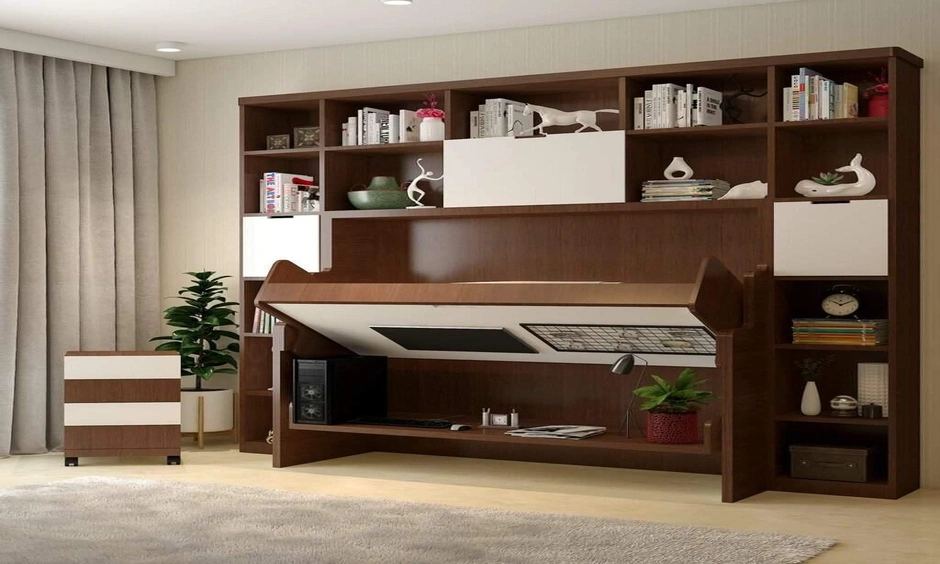
How An Interior Design Cost Calculator Can Help?
An interior design cost calculator gives homeowners an approximate budget before speaking to a designer.
1. Estimate Your Project Budget: Entering details such as home size, room requirements, and preferred finishes provides a preliminary cost estimate that helps with financial planning.
2. Compare Different Pricing Options: Estimated costs help you understand how changes in materials or project scope may influence the final investment before requesting detailed quotations.
3.Plan Before Requesting Quotations: Having a realistic budget in mind enables more productive discussions with designers and reduces the likelihood of major revisions later.

Why Transparent Pricing Matters For Modular Kitchens?
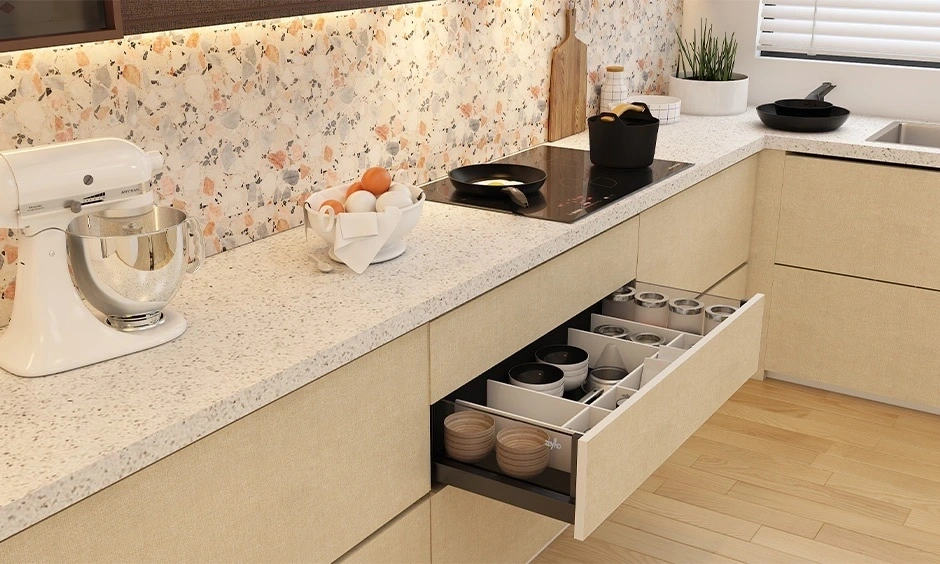
A modular kitchen contains several individual components, each contributing differently to the overall budget. Transparent pricing helps homeowners understand how cabinet construction, hardware, countertops and appliance integration influence the final quotation.
1. Cabinet Pricing: Cabinet pricing should specify the carcass material, shutter finish, internal shelving and construction method. The carcass forms the structural framework of the cabinet, making its material specification an important indicator of durability and long-term performance.
2. Hardware Costs: Hardware often has one of the biggest influences on both functionality and pricing. Soft-close hinges, tandem drawer systems, pull-out organisers and lift-up mechanisms vary considerably across brands, making it important for quotations to specify exactly which hardware systems are included.
3. Countertop Costs: Countertops vary depending on whether you choose granite, quartz, solid surface, or other materials. Thickness, finish, and installation should also be mentioned.
4. Appliance Integration: Built-in appliances such as chimneys, hobs, ovens, dishwashers, and microwaves should be clearly identified as included or excluded.
5. Installation Charges: Kitchen installation involves multiple trades. Confirm whether transportation, assembly, plumbing, electrical connections, and finishing work are already included.
What Should An Interior Design Pricing Guide Include?
A comprehensive interior design pricing guide should help homeowners understand every aspect of project costs before work begins.
1. Detailed Cost Breakdown: Every major component should be itemised instead of combining multiple expenses into one figure.
2. Material Specifications: Every quotation should identify the brands, grades and finishes being proposed. Specifications such as plywood grade, laminate finish, edge-banding technology and hardware brands allow homeowners to compare proposals on quality rather than price alone.
3. Timeline And Payment Schedule: Payment milestones linked to project progress provide greater financial clarity while reducing misunderstandings.
4. Warranty And Service Costs: Warranty coverage, maintenance support, and after-sales services should be clearly explained, along with any associated costs.
Questions To Ask Before Accepting An Interior Design Quotation
Before approving any proposal, ask these important questions:
Are All Costs Clearly Listed?
Ensure every major expense appears in the quotation.
Are Material Brands Mentioned?
Specific brands and product specifications reduce ambiguity and make comparisons easier.
Are Installation Charges Included?
Confirm whether labour, installation, and site execution are included in the quoted amount.
Is GST Included?
Ask whether the quoted price is inclusive or exclusive of applicable taxes.
Are There Any Additional Charges?
Request clarification on transportation, revisions, site visits, dismantling, or any optional services that may result in additional billing.
| Check | Why it Matters |
| Carcass material | Determines durability and moisture resistance |
| Hardware brand | Influences functionality and longevity |
| Edge banding | Affects finish quality and moisture protection |
| Installation scope | Clarifies execution responsibilities |
| GST | Confirms the final payable amount |
| Warranty | Explains long-term product support |
Why Transparent Pricing Creates Better Home Interior Experiences?
Transparent pricing is ultimately about preserving the integrity of the design brief from concept to completion. When every material specification, hardware selection, installation scope and payment milestone is documented upfront, homeowners can make design decisions with greater confidence while architects and execution teams work from the same shared expectations.
Before finalising any interior partner, review the quotation as carefully as the design itself. A detailed breakdown of costs, specifications and project scope provides a stronger foundation for successful execution than a single project estimate ever can.
If you are planning your home interiors, speaking with a DesignCafe expert early in the process can help you develop a detailed project brief and understand how every design decision influences the overall investment. Book A Free Consultation Now!
FAQs
1. What is transparent pricing in interior design?
Transparent pricing in interior design is a detailed pricing approach that clearly lists all project costs, including design fees, materials, labour, installation, taxes, and optional upgrades, allowing homeowners to understand exactly what they are paying for.
2. Why is transparent pricing important for home interior projects?
Transparent pricing helps homeowners budget accurately, compare quotations fairly, avoid hidden costs, and build trust with their interior designer throughout the project.
3. Can transparent pricing help me stay within my budget?
Yes. A detailed quotation allows you to identify essential and optional expenses, making it easier to prioritise spending and minimise unexpected costs during execution.
4. Does transparent pricing include modular kitchen costs?
It should. A transparent modular kitchen quotation generally includes cabinetry, hardware, countertops, installation, and any additional services or exclusions, ensuring homeowners understand the complete investment.
5. Does transparent pricing improve trust between homeowners and interior designers?
Yes. Open communication about costs creates realistic expectations, reduces misunderstandings, and strengthens the working relationship throughout the project.
6. Is transparent pricing suitable for customised interior design projects?
Absolutely. Even highly customised projects benefit from transparent pricing because every material, finish, design revision, and service can be documented, making the project easier to manage and budget for.