Select Category


AI Summary
4 key insights · 1 expert tipChoosing the right laminate for your home is about more than colour and pattern. The grade, thickness and finish affect how your surfaces look, feel and perform over time. This guide explains the different laminate options, where they work best and what to check before buying. Learn how to choose laminates for kitchens, wardrobes, furniture and wall panels.
KEY INSIGHTS
- Specify 1mm on every shutter your hands touch daily.
- Check the thickness stamp on the sheet, not just the invoice.
- Match the edge banding thickness to the laminate, or the edges will fail first.
- Write brand, grade, finish code and thickness into the quote.
 DESIGNCAFE EXPERT TIP
By our design team
Mufaddal Bharmal, Design Manager, DesignCafe, Mumbai, suggests, “Ask for one offcut of every laminate used in your home. When a shutter gets damaged in year three, matching it becomes almost impossible without one.”
Laminate is the most popular material for home interiors. But which one suits your home? Find out.
Laminate is the most common decorative material seen in Indian interiors nowadays and the least understood line in any quote. Everyone knows the word. Almost nobody takes the time to understand what thickness to use on their kitchen shutters, TV unit, or wardrobe, or whether the edge banding matches.
This gap is where money leaks. Two quotes may look identical. You will not see the difference on day one. But you will feel it in the second year, when the edges start warping near the sink.
We break this down and compared laminate with acrylic and veneer in terms of thickness, ideal placement, care, and cost.

What Is A Laminate, And How Is It Different From Acrylic, Veneer And Pvc?
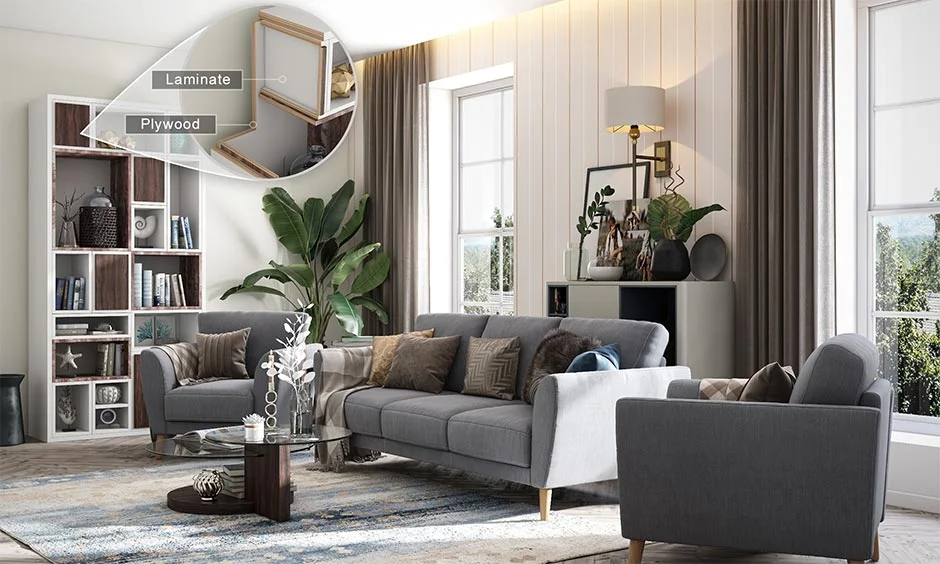
A laminate is a synthetic decorative material made by compressing layers of resin-soaked kraft paper under heat and high pressure. That is why it is also called high-pressure laminate (HPL). It is bonded onto a ply or MDF panel with adhesive. The laminate is only the skin, never the structure.
| Material | What it is | Look | Durability | Relative cost | Popular for |
|---|---|---|---|---|---|
| Laminate | Resin-pressed decorative paper | Hundreds of designs | High, scratch-resistant | Low to medium | Versatile use on every surface |
| Acrylic | Solid coloured plastic sheet | Deep mirror gloss | Good, but shows fine scratches | High | Glossy surface |
| Veneer | Thin slice of real wood | Natural grain, no two alike | Needs polish and care | High | Solid wood lookalike |
| PVC | Extruded plastic sheet | Limited designs | Waterproof, poor with heat | Low | Utility area use |
What Laminate Thickness Should You Choose?
- Choose 1mm For High-Touch Surfaces: For most home surfaces, 1mm laminate is the safest pick that sees daily use, like kitchen shutters, wardrobe fronts and study tables. It handles knocks, cleaning, and constant handling.
- Use 0.8mm For Low-Wear Areas: For wardrobe interiors, shelf undersides, TV units, back panels and loft interiors, 0.8mm is often enough.
- Check The Thickness Before Installation: Even if your quote says your laminate is 1mm thick, check the actual sheets when they arrive. The real thickness is printed on the back. Once the laminate is pasted, spotting the difference becomes much harder.
Pro Tip: Photograph the back of one sheet from each bundle on delivery day. It takes a minute and settles any argument later.
Standard Laminate Sheet Sizes
| Sheet size | Metric | Common use |
|---|---|---|
| 8ft x 4ft | 2440 x 1220mm | Can be used for almost every surface |
| 9ft x 4ft | 2745 x 1220mm | Full-height wardrobe and tall unit shutters |
| 10ft x 4ft | 3050 x 1220mm | Floor-to-ceiling panelling without a join |
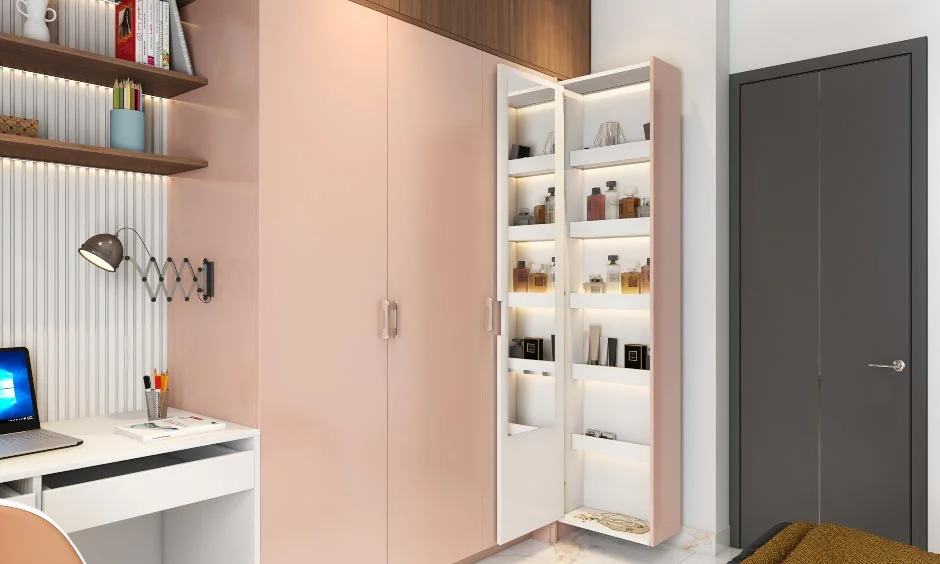
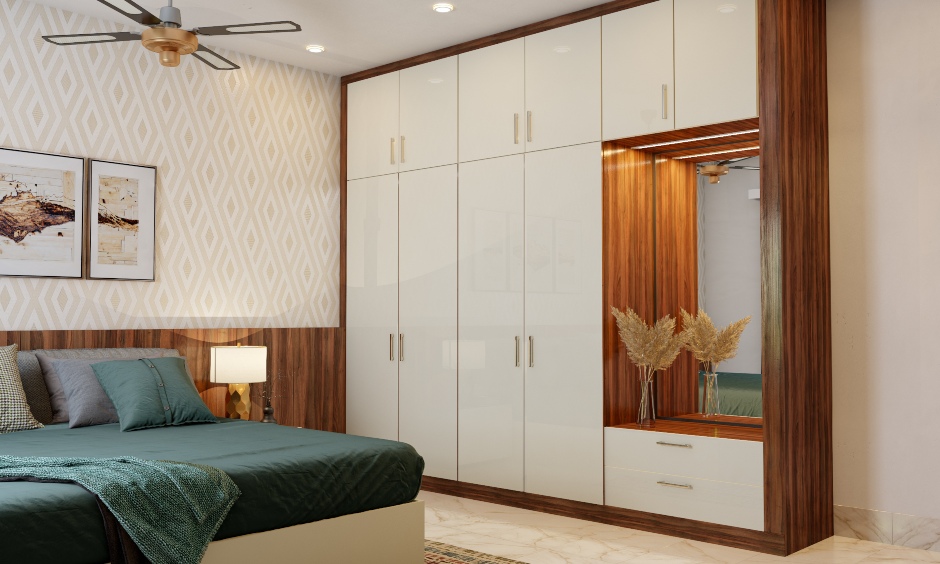
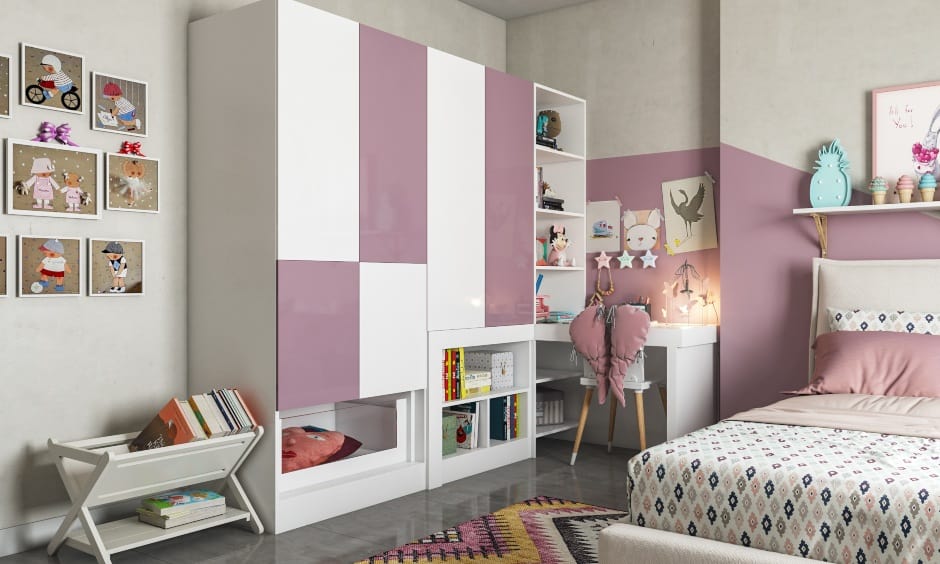
Browse Through These Trending Wardrobe Interior Design Ideas



Laminate Finish Options: Matte, Gloss, Textured And Suede
- Matte: Hides fingerprints, scratches and water spots better than anything else.
- High gloss: Highly reflective and makes a small kitchen feel brighter. It also shows every fingerprint.
- Textured: Carries a physical grain. Laminate with real wood-finish texture is the best alternative to veneer.
- Suede: Sits between matte and textured. Soft to touch and very low sheen – best for wardrobe shutters.
Pro Tip: Press your thumb hard onto a gloss sample in the showroom and hold it for a second. If the print stays visible after a dry wipe, avoid that.
Which Laminate For Which Surface In Your Home?
| Surface | Recommended thickness | Best finish |
|---|---|---|
| Kitchen shutters | 1mm | Matte or textured |
| Kitchen internals | 0.8mm | Plain matte |
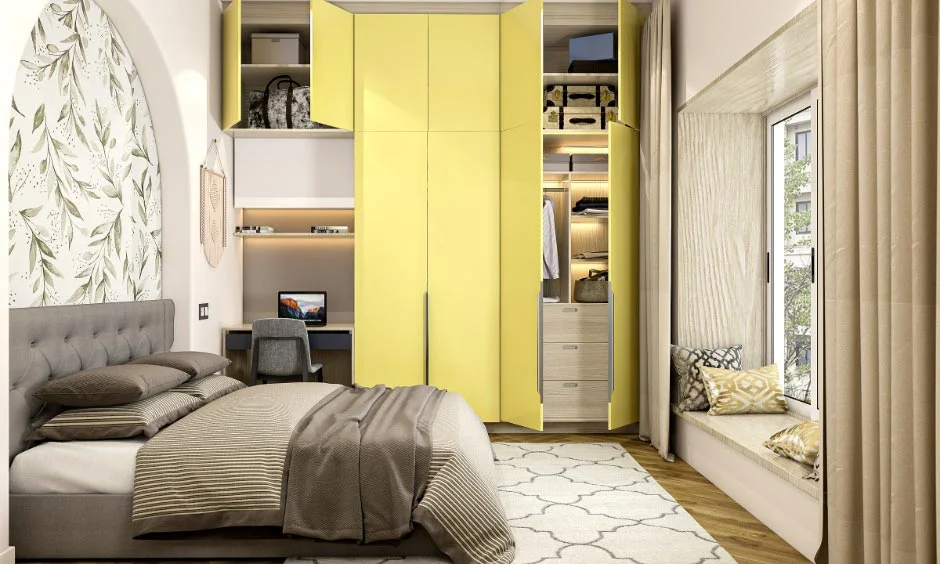
| Wardrobe shutters | 1mm | Suede or textured |
| Wardrobe internals | 0.8mm | Plain matte |
| Study and dressing tops | 1mm | Matte |
| Bed and loose furniture | 0.8mm to 1mm | Textured |
Kitchen Shutters And The High Heat/Grease Zone
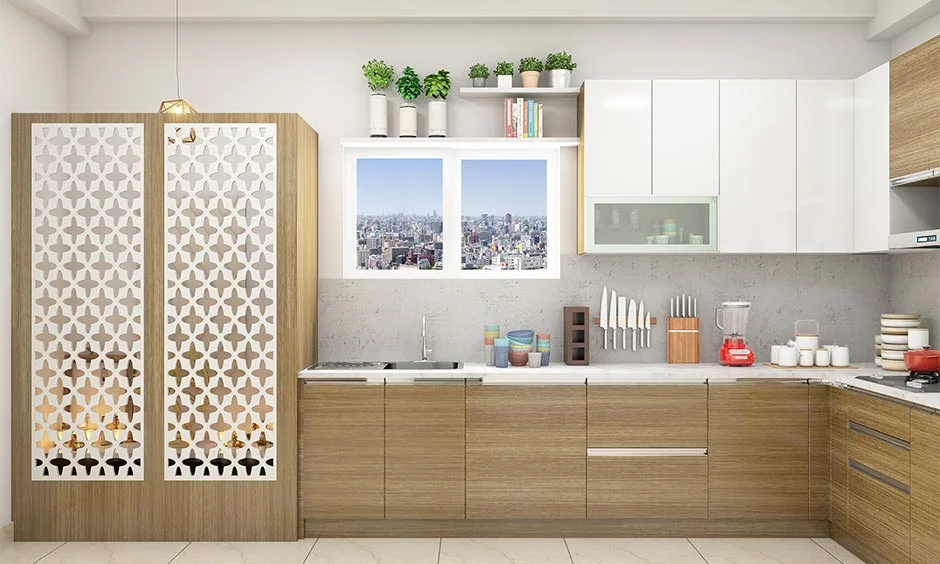
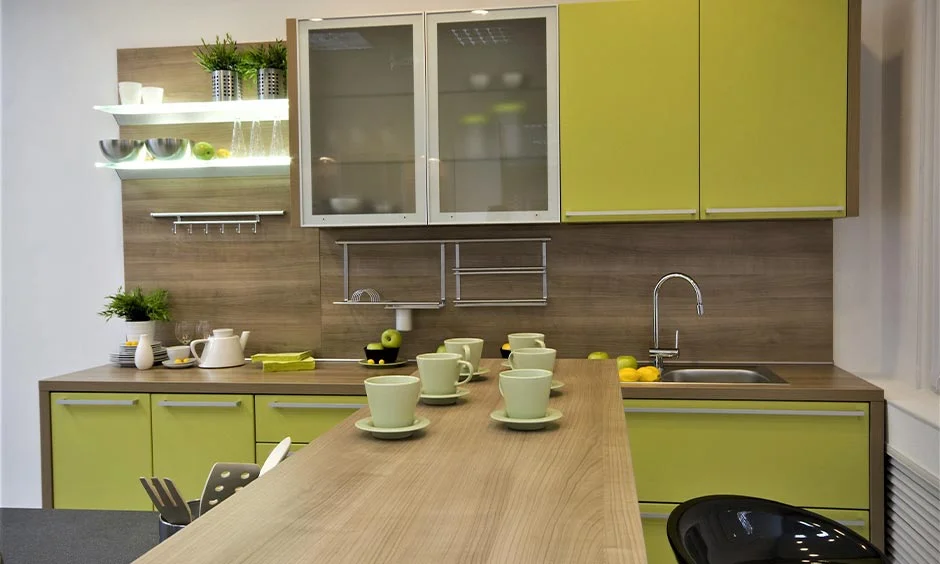
A kitchen laminate must withstand steam, oil spatter, dry spices, and daily scrubbing. Stick to 1mm matte laminate for cabinets within a metre of the hob. Acrylic handles grease wipes well but shows finger smudges and micro-scratches, whereas matte laminate absorbs reflections and hides smudges. Textured finishes hide marks even better, though the grain gets greasy over time. A soft cloth and warm water clear it in seconds.
Wardrobes And Humidity
Wardrobe laminate design mostly comes down to the finish, since wear is lower. The wooden panel is the real decision maker. In coastal and humid areas, choose BWP ply so humidity cannot warp the laminate off its base.
What Does Laminate Cost?
| Type | Indicative price per 8×4 sheet |
|---|---|
| 0.8mm plain | 700 to 1,400 |
| 1mm plain | 1,000 to 2,200 |
| 1mm textured or premium design | 2,000 to 4,000 |
| Acrylic laminate | 3,000 to 6,500 |
Disclaimer: Prices vary by brand, design and city. Treat these as indicative figures. Design can affect the price more than thickness. Adhesive, edge banding and labour are additional costs. For clarity, ask for laminate sheets to be quoted separately from carpentry.

Where Laminate Fails: Edges, Moisture And Heat
Laminate fails at the edges, not the middle. Exposed edges let moisture reach the plywood, causing the laminate to lift. Handle and hinge holes can also let moisture in, more so around sinks.
Use 2mm edge banding on shutter edges used in the kitchen and utility area for better protection. Keep laminate away from direct hob or oven heat, or add a heat-resistant strip.
How To Specify Laminate In Your Quote?
Mention these five details in your quote:
- Brand
- Grade and thickness
- Design or finish code
- Edge banding thickness
- Adhesive type
Also ask for offcuts after installation. Specify laminate thickness against each BOQ item.
How DesignCafe Selects Laminates?
We specify every laminate design in our catalogue by thickness for the surface it goes on. That is printed on your quote, not agreed verbally. Shutters get 1mm. Internals get 0.8mm. We match edge banding to the sheet, and we hand over offcuts at completion so future repairs can be matched.
Still choosing between materials and finishes? Our blog section has guides on acrylic, veneer and modular costs. Check here.
And when you want your own home specified properly, speak with an expert at DesignCafe about specifying your home’s finishes.
FAQs
1. Which laminate thickness is best for kitchen shutters?
Use 1mm for better durability around handles and sinks.
2. Is Sunmica the same as laminate?
Yes. Sunmica is a brand name commonly used for decorative laminates.
3. What does a laminate sheet cost?
An 8×4 sheet costs about ₹700–₹2,200. Premium designs can cost up to ₹4,000.
4. Laminate or acrylic for a kitchen?
Choose laminate for everyday use. Pick acrylic for a high-gloss look.
5. Which laminate works best in humid areas?
Use 1mm laminate over BWP ply with 2mm edge banding, especially in coastal areas.