Select Category


AI Summary
3 key insights · 1 expert tipTempered glass interiors elevate homes with light, depth, and safety, ideal for wardrobes, partitions, and windows to create a modern, brighter space.
KEY INSIGHTS
- Tempered glass for interiors costs ₹220–₹450 per sq ft, varying by finish and location.
- Frosted or tinted finishes enhance privacy and style, while clear glass maximizes light and openness.
- Thicker glass, special finishes, and additional hardware will increase the overall budget and installation complexity.
 DESIGNCAFE EXPERT TIP
By our design team
DESIGNCAFE EXPERT TIP
By our design team
Pair clear glass for openness with matte or privacy options for wardrobes and bathrooms, balancing light with comfort and avoiding over-application to maintain a cosy feel.
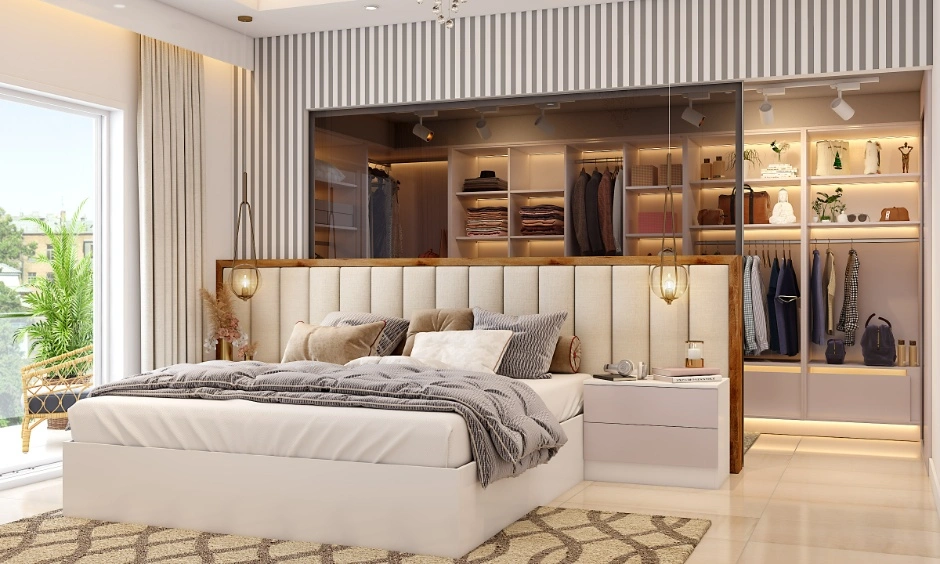
Turn your home into a bright, modern space with tempered glass used in wardrobes, wall panels, windows and partition walls.
How tempered glass can instantly upgrade the look of your home. Here, we demonstrate how this toughened glass adds light, depth, and a premium feel to everyday spaces, such as bedrooms, living rooms, and bathrooms. You will also learn how tempered glass balances style with safety, so your home feels modern but still works for daily family life.
What You Will Read Here:
- How tempered glass changes the look and feel of the home.
- Popular ways to use tempered glass in wall panelling, wardrobes, partitions, doors and windows.
- Key differences between tempered glass and regular glass in design and safety.
- Design styles that work well with glass, from modern minimal to industrial and luxury looks.
- Simple cleaning tips, basic cost pointers and common myths about tempered glass.
Best For: Homeowners who want a brighter, sleeker home and are exploring glass as a design element for their next renovation or new interior project.
Expert Tip: As shared by Sahajeet Chandrakumar, Studio Manager, DesignCafe, Mysore, “Use clear glass in areas where you want openness and views, and switch to matte or privacy tempered glass for wardrobes and bathrooms. This keeps the home bright, but still comfortable and private. Avoid using glass on every surface. Pair it with warm wood, soft fabrics and good lighting so the space feels cosy, not cold.”
Glass has a way of making any room feel lighter, brighter and more open. When you choose tempered glass, you get that same airy look with extra strength and safety. Imagine a slim transparent partition that separates zones without closing them off- wardrobe shutters that glow softly from cabinet lighting, huge windows that frame the view and make even a small room feel spacious. In each of these spaces, tempered glass turns a simple corner into a stylish highlight.
This blog will explore how this material can upgrade your home’s aesthetics. You’ll see where it works best, how it changes the feel of a room, and what to keep in mind before you bring it into your own space. Read on!
What is Tempered Glass?
This is a kind of safety glass that is heated and cooled quickly to make it stronger than normal glass. The process packs tension on the surface, so it can handle more impact and sudden temperature changes. If it breaks, it crumbles into many small blunt pieces instead of sharp shards, which makes it safer for homes with kids, pets and older family members. You will find different types of tempered glass used in doors, partitions, wardrobes and large windows, depending on the thickness and design.
Why is Privacy Tempered Glass Popular in Modern Homes?
This material is loved because it feels light, sleek and modern, without making a space look busy. It lets natural light pass through, so rooms feel brighter and more open, even in compact city homes. At the same time, it brings a clean, premium finish that works well with wood, metal and soft furnishings.
People also like that it is safe, strong and easy to clean. You can use it in doors, wardrobes, partitions and railings without making the home feel closed off. A well-planned glass interior can give your home a contemporary look while still staying practical for daily family life.
Popular Applications of Tempered Glass in Home Interiors
You can use tempered glass interior elements in many parts of the house to keep things light, bright and stylish.
- Glass Wall Panelling: Add glass panels to feature walls to reflect light and give a premium, hotel-like feel to living or dining spaces.
- Bed Headboard Back Panels: Use a glass panel behind the bed with soft lighting or wallpaper behind it for a glossy, layered look in the bedroom.
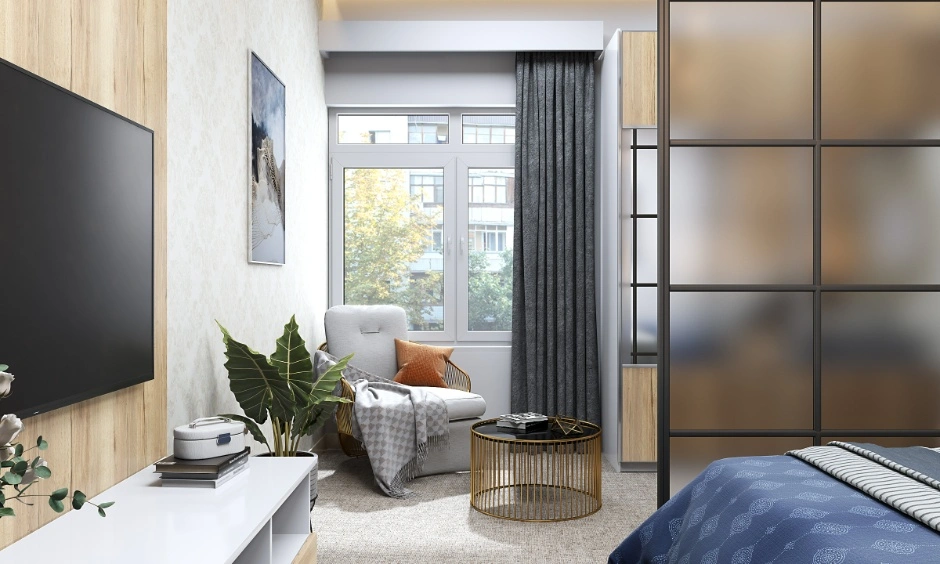
- TV Unit Panelling: A glass back panel behind the TV makes the unit look sleek and easy to wipe clean, especially in compact living rooms.
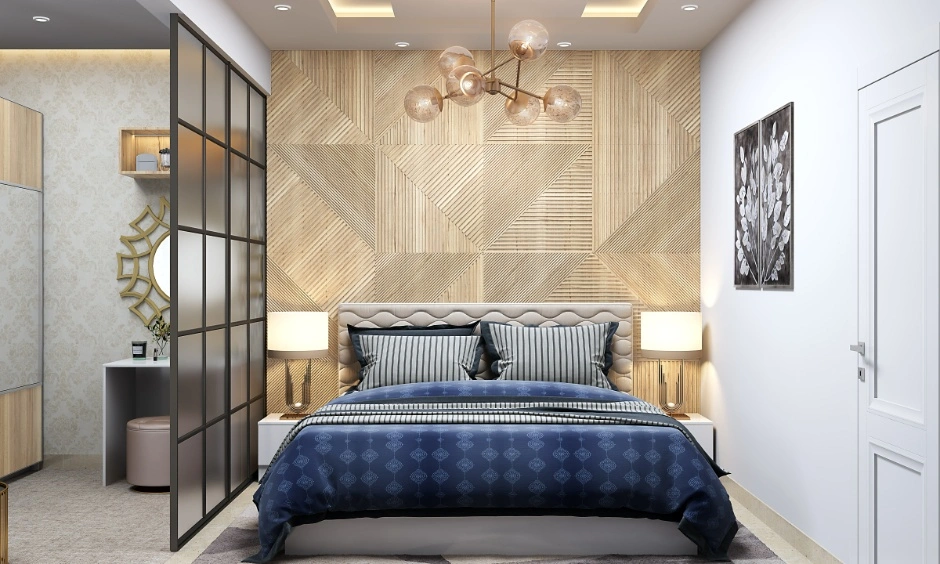
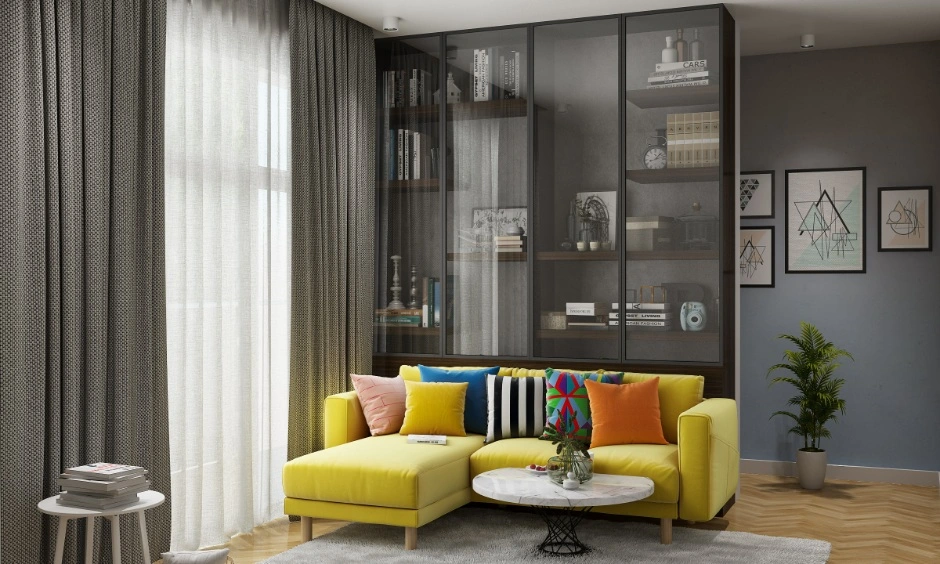
- Room Partitions: Slim-framed glass partitions help separate living, dining, study or dressing areas without making the space feel closed.
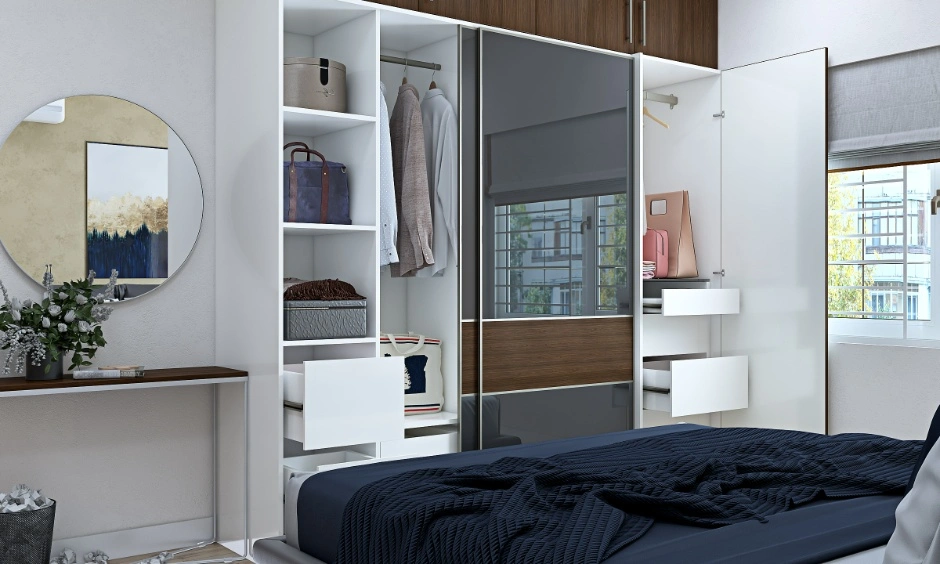
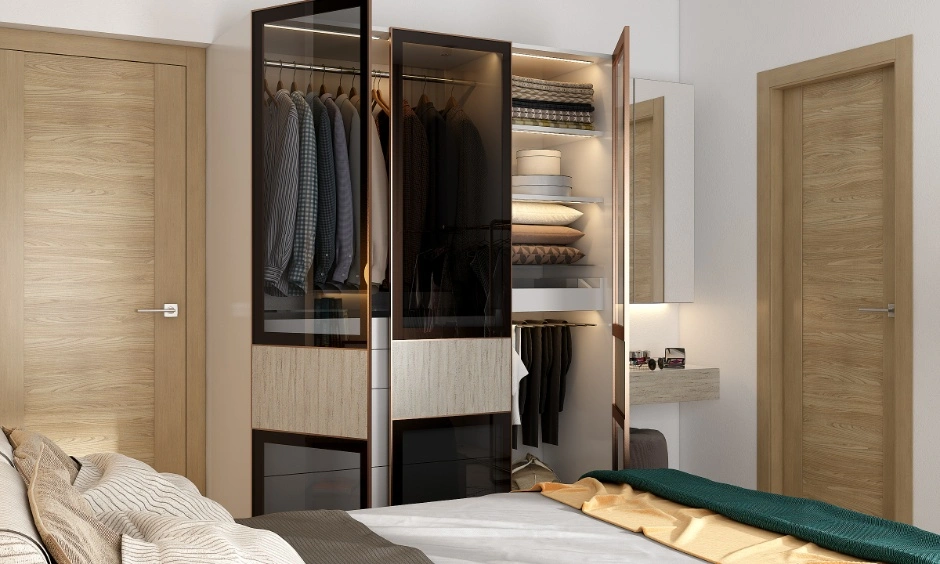
- Wardrobe Shutters and Walk-In Front: Clear, tinted or frosted glass shutters make wardrobes look modern while keeping the room visually light.
- Shower Enclosures: Simple glass enclosures keep the bathroom dry and open, without the bulk of brick or opaque partitions.
- Windows and Doors: Large glass panels in windows and balcony doors bring in more light and make the home feel more connected to the outdoors.
Trending 3BHK Interior Designs


Tempered Glass Vs Regular Glass
Both look similar at first glance, but they behave very differently in real homes. Here is a quick comparison to help you decide where each one fits better in a tempered glass interior.
| Feature | Tempered Glass | Regular Glass |
| Strength | Processed to be several times stronger and harder to break | More fragile and can crack or shatter with impact |
| Safety on Breakage | Breaks into many small, blunt pieces that are less likely to cause deep cuts | Breaks into large, sharp shards that can cause injuries |
| Heat Resistance | Handles sudden temperature changes better | More likely to crack with sudden heat or cold |
| Look and Finish | Can be clear, tinted or frosted and feels sturdy in larger panels | Similar look, but better for smaller pieces |
| Best Use Cases | Doors, partitions, railings, shower enclosures and large windows | Picture frames, small shelves and light decorative elements |
| Cost | Higher, as it goes through a special toughening process | Lower, as it is not treated |
Design Styles That Pair Well With Tempered Glass Interior
Tempered glass pairs well with many styles, so you can easily match it to your taste. Here are some instances where it works really well.
- Modern Minimalist: Clean lines, neutral colours, hidden storage. Glass wardrobes, simple partitions and neat TV panels keep the space light and clutter-free.
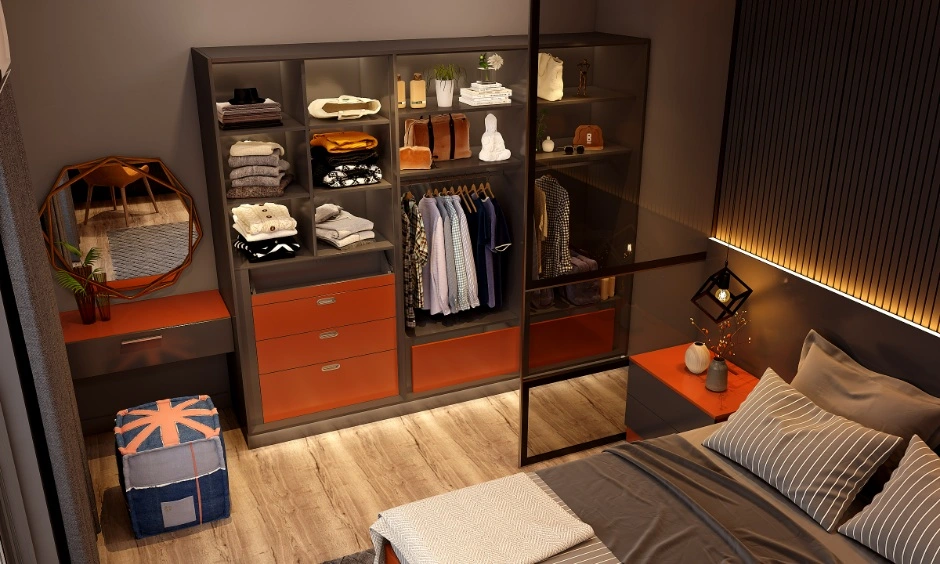
- Industrial Chic: Think metal frames, rustic finishes and exposed textures. A slim black-framed partition or wardrobe with black tempered glass gives that loft-style feel without making the room dark.
- Contemporary Luxury: Glossy wardrobes, soft lighting and rich fabrics. Glass wall panelling behind the bed or TV, paired with warm lights, adds a hotel-like touch.
- Scandinavian Calm: Soft wood, white walls and lots of light. Clear glass for windows, balcony doors and simple shower enclosures keeps everything bright and airy.
- Indian Urban Style: A mix of wood tones, colour, and pattern. Glass wardrobes, pooja room doors, or partitions help separate spaces while still showing off décor, wallpapers, or jaali details behind.
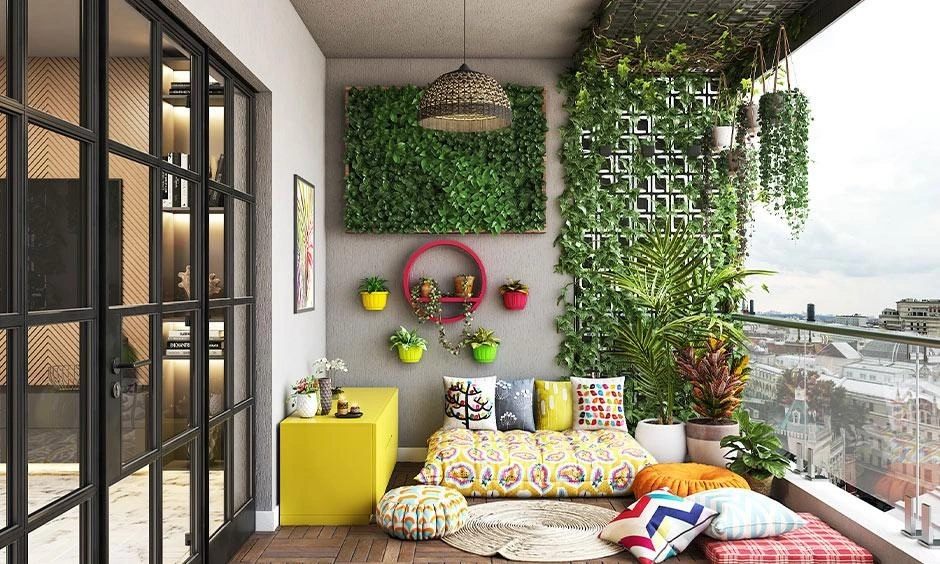
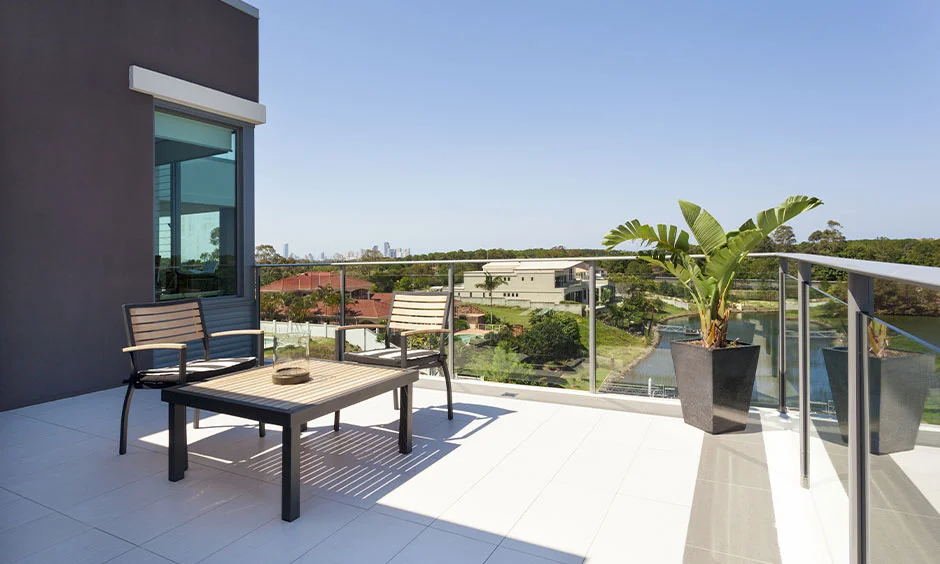
- Boho Balcony Style: Layered greens, bright cushions, and a cosy floor-seating corner feel even more open with a clear tempered-glass railing that keeps the view wide and the space safe.
Tempered Glass Price: Cost Considerations for Home Designs
Tempered glass looks premium, but you can plan for it if you know the basics. In many Indian cities, simple, clear, toughened glass for interiors can start at around ₹220–₹350 per sq ft. Frosted or tinted versions may go up to ₹280–₹450 per sq ft or more. These are only average reference ranges, and the actual tempered glass price will vary by city, brand and installer.
A few quick points to remember:
- Thicker glass for doors, railings and large partitions costs more than for smaller shutters or panels.
- Special finishes, such as frosted or tinted, add to the budget but enhance privacy and style.
- Frames, channels, hinges and handles are extra, so include them in your estimate.
- A good installation may cost a bit more, but it keeps the glass safe, stable and neat in the long run.
Is Tempered Glass for Home Windows Right for Your Home?
Tempered glass works well in most modern homes, but it helps to check a few points before you decide. If you have kids, pets or older parents at home, the extra safety is a big plus. Homes with compact rooms also benefit, because glass keeps things open and lets in more light. If you like clean lines and a clutter-free look, a simple tempered glass interior on wardrobes, partitions, and windows will match your style. Just remember to plan your budget, choose the right thickness and finish, and consider where you need more privacy versus clear views.

Common Myths About Tempered Glass
There are a few common questions people have about this material. Clearing them makes it easier to choose with confidence.
- “It is unbreakable.”: Tempered glass is stronger than regular glass, but it can still break from a very hard impact, especially at the edges.
- “It can suddenly explode for no reason.”: Sudden breakage is rare and usually linked to poor quality, wrong fitting or hidden damage, not to normal daily use.
- “It only comes in plain, clear finish.”: You can choose from clear, tinted, frosted and patterned options, so it works for both simple and bold interiors.
- “It is only for very expensive homes.”: You can start small with wardrobes, shower areas, or a single partition and scale up later based on the tempered glass rate and your budget.
Tempered glass is a simple way to make your home feel brighter, lighter and more polished. It suits many styles, from cosy and minimal to bold and luxurious, and works in bedrooms, living rooms, kitchens and bathrooms without feeling heavy. When you choose the best tempered glass for each space, you get a home that looks stylish yet stays safe and practical for daily life.
If you are planning new interiors or thinking of a home revamp, you can use this material in partitions, wardrobes, wall panelling and windows to tie the whole look together. Book now or call us now to design your home with sleek, glass-led details that truly stand out.
FAQs
1. What colour, texture, and finish options are available in tempered glass?
Tempered glass comes in clear, frosted, tinted, fluted, patterned, glossy and matte finishes. You can mix colours and textures to match your wall paint, furniture and overall mood of the room.
2. How does tempered glass add elegance to living room tabletops?
A tempered glass top makes a centre or side table look lighter and more refined. It showcases the base design and adds a polished, premium surface that remains strong enough for daily use.
3. Can custom tempered glass accents personalise home interiors beautifully?
Yes, you can customise partitions, wardrobe shutters, pooja doors, railings and wall panels in any size, tint or finish. This helps you create one-of-a-kind details that reflect your style.
4. Can tempered glass make small homes look bigger and brighter?
Glass partitions, railings and shutters reduce visual blocks and let light to pass through the home. This makes compact rooms feel more open, airy and spacious.
5. How does tempered glass add a clean and minimalist look to interiors?
Tempered glass has smooth surfaces and slim edges, which reduce visual clutter. When used for wardrobes, doors or shower areas, it gives rooms a neat, modern, minimalist feel.
6. How does tempered glass complement wood, metal, and stone interiors?
Glass acts like a neutral layer that balances heavier materials. It lightens warm wood, softens bold metal frames and keeps stone surfaces from feeling too solid or bulky.
7. What are the design advantages of tempered glass over regular glass?
Tempered glass lets you safely use larger panels in doors, railings and partitions, reducing the number of joints and frames. This creates a seamless, high-end look while still being safer and stronger than regular glass.
8. How does tinted tempered glass create a sophisticated home ambience?
Tinted tempered glass softens views and light, adding a subtle, smoky effect to wardrobes, cabinets and partitions. It gently hides clutter and instantly makes the space feel more luxurious.