Select Category



AI Summary
5 key insights · 1 expert tipThis guide compares false ceilings and exposed ceilings across cost, height, maintenance, room suitability, and the Indian climate, so you can make the right ceiling decision before spending a single rupee on installation.
KEY INSIGHTS
- How false ceilings and exposed ceilings differ in cost, ceiling height, and long-term maintenance
- Which ceiling suits compact Indian apartments, and which works better in spacious lofts
- Room-by-room guidance for kitchens, bedrooms, living rooms, and home workspaces
- Why Indian summers and dust levels make ceiling choice more than just an aesthetic decision
- The most common mistakes homeowners make before committing to a ceiling type
 DESIGNCAFE EXPERT TIP
By our design team
DESIGNCAFE EXPERT TIP
By our design team
“Start with ceiling height, not ceiling style. Every other decision – materials, lighting, and cost – will fall into place”, suggests Anusha C, Studio Manager, DesignCafe Hyderabad.
False ceiling or exposed ceiling? One decision changes how your entire home feels.
False ceiling vs exposed ceiling – one gives your home an old-world charm with raw concrete, visible beams, and honest materials that age well. The other makes a room look pristine, finished, and modern.
Both are excellent choices. The ceiling you choose depends on the height of your slab, the heat outside, and what your home needs to feel like every day. Read this before you decide.

Ceiling Explained: False Ceiling vs Exposed Ceiling
These are two completely different approaches to the ceiling above your head. One adds a layer. The other removes it.
- False Ceiling (Dropped Ceiling) Explained: A false ceiling is a second layer fixed below your main concrete slab. Gypsum boards, or POP, are installed on a metal frame to hide AC ducts, wires, and pipes.
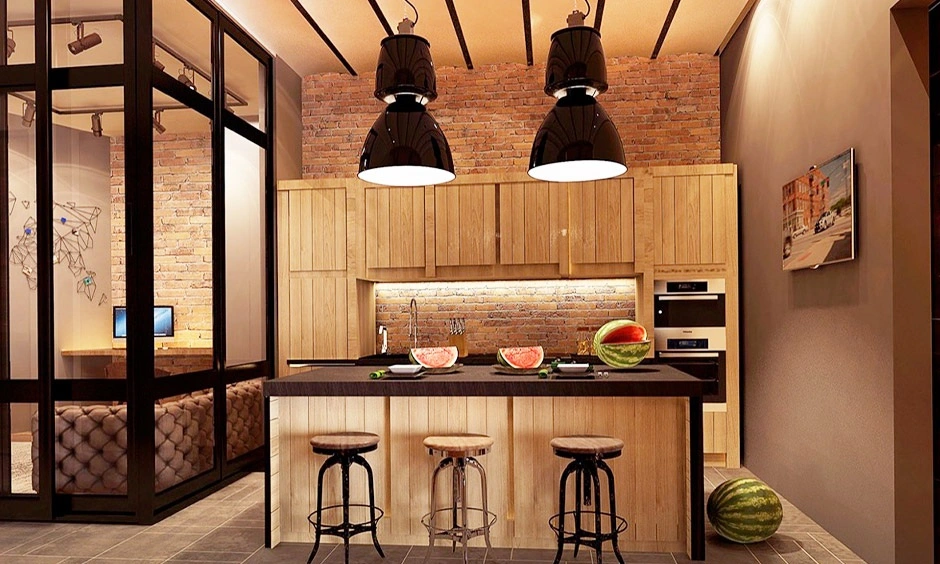
- Exposed Ceiling Explained: With an exposed ceiling, raw concrete slab, beams, ducts, and wiring are shown exactly as they are. In industrial ceiling design, this rawness is fitting. The ceiling itself becomes part of the room’s character.
- Key Structural Difference: False ceilings drop down by 6 to 12 inches. Exposed ceilings use the full original height of your room.

False Ceiling vs Exposed Ceiling: Visual & Aesthetic Differences
Your ceiling does more than cover a room. It sets the entire tone.
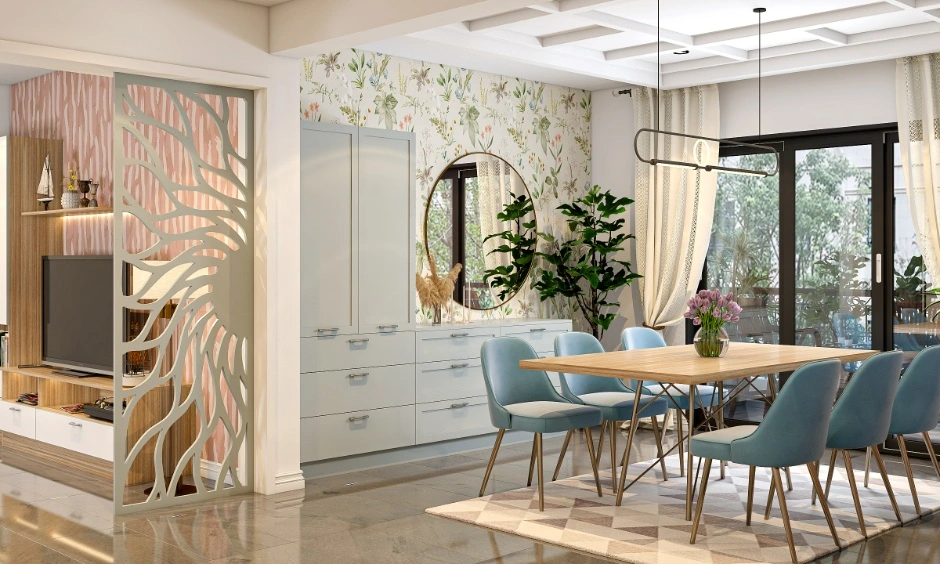
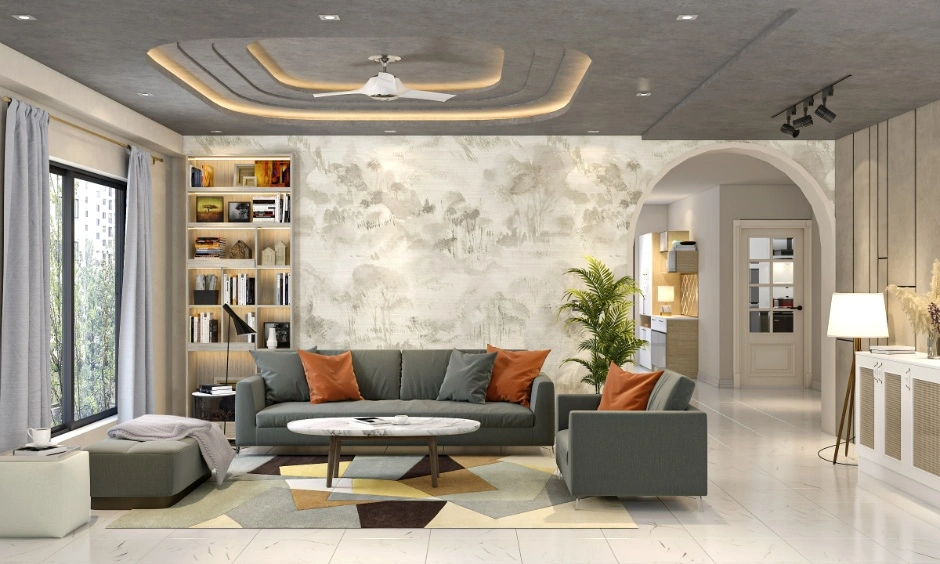
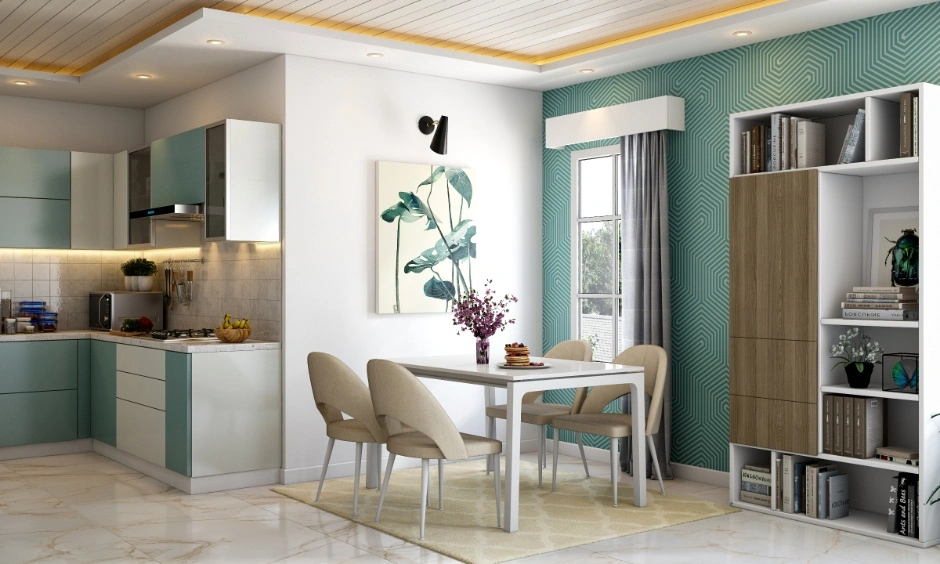
- Look & Feel of False Ceilings: These ceilings give a clean and neat look. A white gypsum ceiling paired with cove lighting gives the room a dreamy vibe.
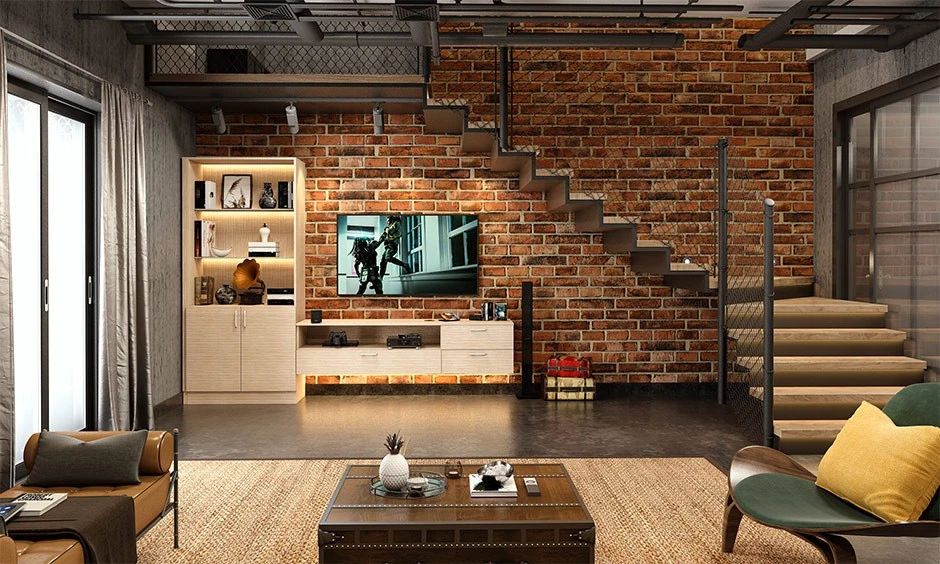
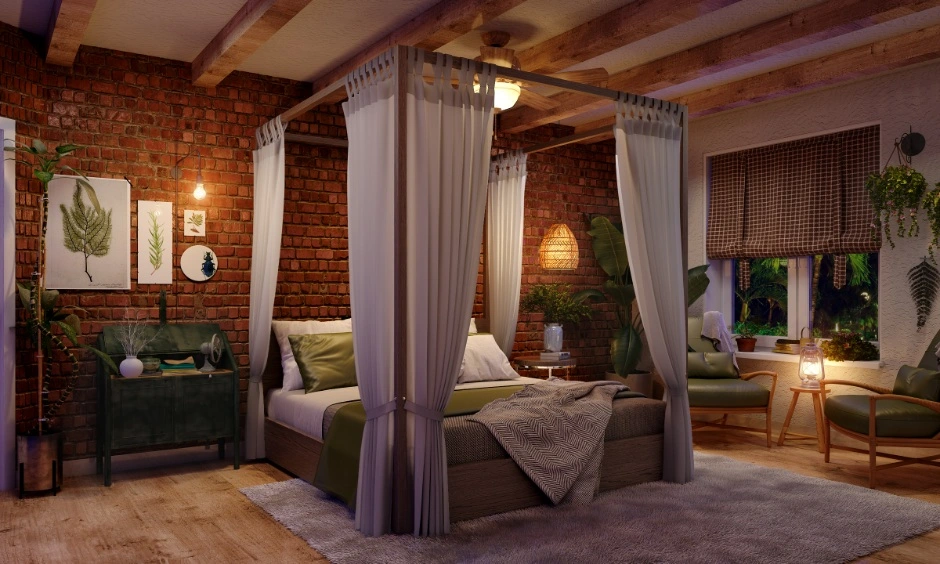
- Look & Feel of Exposed Ceilings: Exposed concrete ceiling and visible ductwork or wooden beams carry a raw energy. Cafes, lofts, and co-working spaces use this style regularly. At home, it works best in a double-height ceiling. The openness becomes the main visual element.
- Style Compatibility (Modern, Industrial, Minimalist): Modern and minimalist homes usually go well with false ceilings. Industrial ceiling design and loft homes suit an exposed concrete ceiling better. You can adjust both with good lighting choices.
Ceiling Height & Space Impact on Open Ceiling Design and Room Fall Ceiling
Height is everything. Lose a few inches to the wrong ceiling, and a room feels more cramped.
- How False Ceilings Reduce Height?: A standard false ceiling lowers your room height by 6 to 12 inches. In a room with 10-foot ceilings, that is still comfortable. But a room with an 8.5-foot ceiling can feel cramped with a false ceiling.
- How Exposed Ceilings Enhance Vertical Space?: Exposed ceilings keep the full height. Your rooms feel taller and more open. This helps a lot in smaller Indian homes.
- Ideal Ceiling Heights For Each Option: Go for false ceilings when your slab height is 10 feet or more. Choose an exposed ceiling when your ceiling height is already limited to 9 feet or below.
Trending Living Room Interior Designs




Lighting Possibilities: False Ceiling vs Exposed Ceiling
Ceiling design ideas are often limited by the ceiling’s construction. Light placement changes everything.
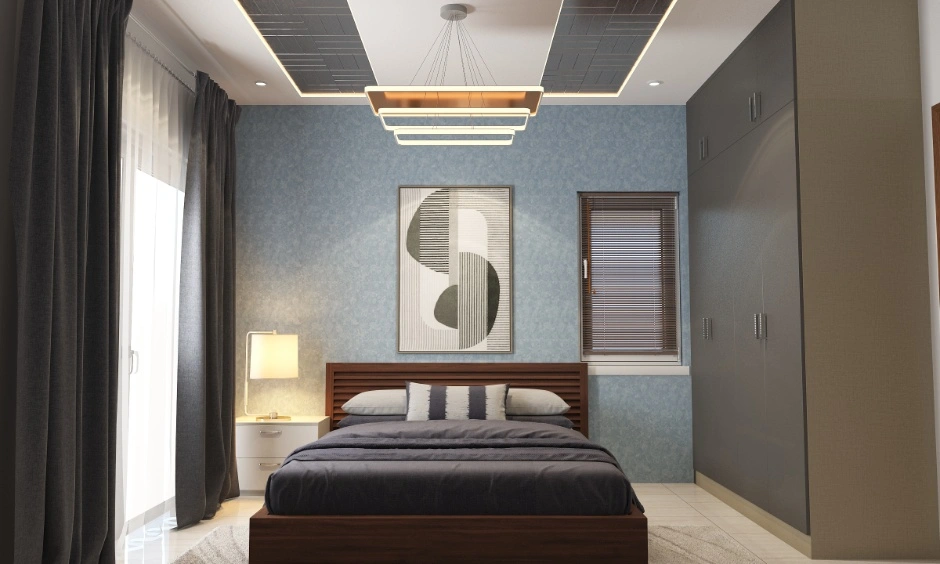
- False Ceiling Lighting: Recessed lights work best with a false ceiling as they sit flush with the ceiling surface. You can try cove lighting or LED strips if you are going with a tray ceiling.
- Exposed Ceiling Lighting: Pair this ceiling with track lights, big pendant lamps, and industrial fixtures for a statement look.
- Ambience Comparison: False ceilings with soft, diffused light that evenly fills the room. Exposed ceilings with pendant and track lights create pockets of focused light and shadow.

Cost Comparison: False Ceiling vs Exposed Ceiling
Ceiling design comparison is incomplete without the numbers. Here is where the two options really differ.
| Cost Factor | False Ceiling | Exposed Ceiling |
| Installation (per sq ft) | ₹60–₹130 | ₹20–₹50 |
| Primary material | Gypsum board / POP | Concrete sealer + paint |
| Repair difficulty | Moderate (Requires Professional Patching) | Easy (Surface Patching & Painting) |
| Long-term maintenance | Higher | Lower |
Long-Term Cost
False ceilings can crack or sag if moisture enters from above. Repairs usually need a professional. Exposed ceilings are cheaper to repaint if they get stained. But exposed wiring may need re-routing if you renovate later.
Maintenance & Durability Differences: False Ceiling Interior vs Open Ceiling Design
What looks good on day one should still look good in year five.
- False Ceiling Maintenance (Cracks, Moisture, Repairs): Gypsum and POP false ceilings are prone to water damage. Cracks appear near joints over time, especially in older buildings. Annual checks are a must to catch issues early.
- Exposed Ceiling Maintenance (Dust, Wiring Visibility): The main issues with exposed wood-beam ceilings are dust accumulation and potential termite infestation. Cleaning is a time-consuming and labour-intensive task.
Industrial-style exposed ceilings feature open pipes and wiring that can look untidy; therefore, regular safety checks are necessary to avoid electrical and plumbing hazards. - Longevity Comparison: A well-installed gypsum false ceiling lasts 10 to 15 years with good upkeep. An exposed concrete ceiling can last as long as the building itself, provided the surface is sealed properly. For pure longevity, exposed wins.

Functional Benefits: Dropped Ceiling vs Open Ceiling
Both ceiling types do more than look good. They serve practical roles in how your home functions daily.
| Feature | False Ceiling | Exposed Ceiling |
| Wire & duct concealment | Yes | No |
| Thermal insulation | Good | Minimal |
| Acoustic control | Better | Limited |
| Easy utility access | No | Yes |
| Visual ceiling height | Reduced by 6-12 inches | Preserved fully |
| Best style fit | Modern / Traditional | Industrial / Loft |

False Ceiling vs Exposed Ceiling: Room-by-Room Suitability
No single ceiling design works equally well in every room. Here is the breakdown.
Living Room
- A false ceiling with cove lighting suits a modern living room.
- An exposed ceiling works beautifully in a loft-style home with a slab height of 10+ feet.
Bedroom
- Soft cove lighting makes the room feel cosier.
- An exposed ceiling in a bedroom works in spacious homes. In smaller rooms, the raw look can feel cold.
Kitchen
- A false ceiling is a winner, as it neatly hides exhaust ductwork and electrical wiring.
- An exposed ceiling is not suitable for a kitchen, as it may get greasy over time.
Pro Tip: Always use moisture-resistant gypsum boards in the kitchen to handle heat and steam exposure.
Office/Home Workspace
- Exposed ceilings can boost the open feel for creative work.
- False ceilings help reduce noise in busy home offices.
Which Ceiling Works Better for Indian Homes?
Exposed ceiling vs false ceiling India is not just a design question. It is a climate, space, and lifestyle.
- Climate & Heat Considerations: In hot, dry regions, exposed concrete slabs absorb and radiate heat into the room during the evening. Insulated false ceilings act as a thermal barrier, making them highly effective in humid coastal cities like Mumbai or Kolkata.
- Dust & Maintenance Factors: Indian homes see a lot of dust. False ceilings hide it, but they need regular attention. Exposed ceilings show it, but are simpler to wipe.
- Apartment Constraints: Most apartments have lower slabs and strict rules. False ceilings remain the practical choice for many families.

False Ceiling vs Exposed Ceiling: Quick Comparison Table
Use this ceiling design comparison at a glance before your next design consultation.
| Feature | False Ceiling | Exposed Ceiling |
| Appearance | Clean, polished | Raw, industrial |
| Height Impact | Reduces by 6–12 inches | No reduction |
| Cost (Per Sq Ft) | ₹60-₹130 | ₹20-₹50 |
| Lighting Options | Recessed, cove, LED | Track, pendant, industrial |
| Maintenance Effort | Moderate | Low to moderate |
| Heat Insulation | Good | Poor without added insulation |
| Acoustic Benefit | Better | Limited |
| Best Style | Modern & Traditional | Contemporary, Loft & Minimalist |
| Suited For India | Most apartment homes | High-ceiling or loft spaces |

When to Choose False Ceiling vs Exposed Ceiling?
Still unsure? Use these scenarios as your guide.
Choose False Ceiling When…
- Your room is on the top floor and gets very hot in summer.
- You want to hide AC ducts, wiring, and overhead pipes neatly.
- Your home style is modern, traditional, or transitional.
- You need acoustic control in a bedroom or home theatre.
- The original ceiling slab has cracks, stains, or rough patches.
Choose an Exposed Ceiling When…
- Your ceiling height is 10 feet or more.
- You want an industrial or loft-style interior.
- Your budget is tight, and you want to reallocate savings to other rooms.
- You need easy future access to plumbing, wiring, or ducts.
- You live in a studio apartment or open-plan home with tall ceilings.

Common Mistakes When Choosing Between the Two
Here are some common mistakes you should avoid.
| Ceiling Type | Common Mistake | What To Do Instead |
| False Ceiling | Choosing it only because it looks neat on social media | Start with your room size, height and daily needs first |
| Exposed Ceiling | Skipping proper sealing and painting on concrete | Apply primer and good-quality matte paint first |
| False Ceiling | Installing in low-height rooms without checking the AC ducts | Always measure duct depth and available clearance |
| Exposed Ceiling | Using a dramatic exposed look in small bedrooms | Reserve bold industrial styles for larger spaces |
Expert Tips on Exposed Ceiling and False Ceiling
Quick ceiling design ideas to guide your decision:
- Measure your original ceiling height first.
- Seal and prime exposed concrete before painting.
- Get moisture-resistant false ceiling boards for kitchens.
- Paint exposed pipes and ducts in the same colour as the room.
- Avoid false ceilings when the room height is less than 9 feet.
- If the budget is tight, use an exposed ceiling design and redirect the budget toward better lighting.
Conclusion
Your ceiling sets the tone for everything below it. The ceiling decision is rarely wrong when it starts with the right question: what does this room actually need? Book a free consultation with the DesignCafe team and let our designers help you make this decision with confidence.
For more such home interior design ideas, check out our blog section.
FAQs
1. Is a false ceiling necessary in modern homes?
No. It depends on your room height and what finish you want. Many modern homes now use exposed ceilings.
2. Are exposed ceilings less costly than false ceilings?
Yes. They usually cost less both at the start and over time if finished properly.
3. Which ceiling is better for small apartments?
False ceilings generally work better. They give a neat look even with limited height.
4. Does a false ceiling reduce room height?
Yes. It usually takes away 6 to 12 inches. Always measure first.
5. Is an exposed ceiling suitable for Indian homes?
Yes. It works especially well in villas and drier areas with good planning.
6. Which ceiling is easier to maintain?
Exposed ceilings are often easier in the long run. You skip panel repairs.
7. Can I mix both styles in one home?
Yes. Many homes use false ceilings in bedrooms and the kitchen, while keeping the living area ceiling exposed.