Select Category


AI Summary
4 key insights · 1 expert tipThe main types of false ceiling used in Indian homes number eight. Gypsum, POP, PVC, wooden, metal, glass, fabric and mineral fibre. Gypsum and POP cover most residential work between ₹60 and ₹180 per square foot. PVC suits bathrooms and kitchens, metal and mineral fibre suit offices, and wood is a premium accent. This guide compares all of them on cost, durability and maintenance, then recommends a material for each room.
KEY INSIGHTS
- Gypsum and POP account for the majority of Indian home ceilings.
- PVC is the only common option that genuinely tolerates a wet room.
- Every false ceiling costs you four to eight inches of height.
- Match material to the room, not to the photograph you liked.
 DESIGNCAFE EXPERT TIP
By our design team
Pallak Jain, Senior Interior Designer, DesignCafe, Chennai suggests, “Decide the lighting before the material. Cove and recessed fittings need depth, and that depth is easier to design in than to add later.”
Eight materials, one comparison table, and the right one for each room. Read more about false ceiling ahead.
You decide to add a false ceiling. Then the contractor asks, “What material for POP false ceiling design?” Suddenly, you have to choose between factory convenience or site craftsmanship.
Once painted, both can look almost identical. The real differences are underneath – how they are installed, what they cost, how they handle moisture and how they hold up over time. That choice matters because a false ceiling is not something you want to redo every few years.
This guide breaks down the options in simple terms: what each material is, what it costs, where it works best and what can go wrong. Let’s begin.

What A False Ceiling Is? How Many Types of False Ceilings Exist?
A false ceiling is a second ceiling built below the structural slab, usually on a metal or wooden frame.
It can hide wiring and pipes, support recessed or cove lighting, and improve acoustics. But every false ceiling also reduces headroom. A simple design may need around 4 inches of depth, while more elaborate multi-level designs with cove lighting can take up 6-8 inches.
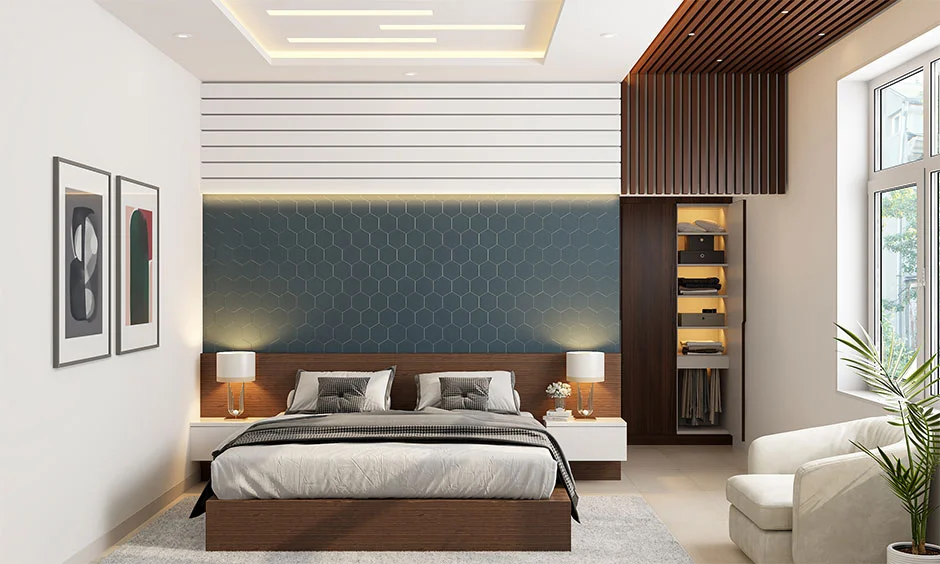
Different Types of False Ceiling Materials
| Material | Cost per sq ft | Durability | Best for |
|---|---|---|---|
| POP | ₹60-120 | 10-15 years | Curved, ornate work |
| Gypsum board | ₹75-180 | 15-20 years | Large flat planes |
| PVC | ₹70-150 | 10-15 years | Bathrooms, kitchens |
| Wooden | ₹250-600 | 20+ years | Accent areas |
| Metal | ₹150-400 | 20+ years | Offices, commercial |
| Glass | ₹300-800 | 15+ years | Feature panels only |
| Fabric | ₹200-500 | 5-8 years | Event and accent use |
| Mineral fibre | ₹80-200 | 10-15 years | Offices, acoustics |
These false ceiling materials are not interchangeable. The next sections explain why.
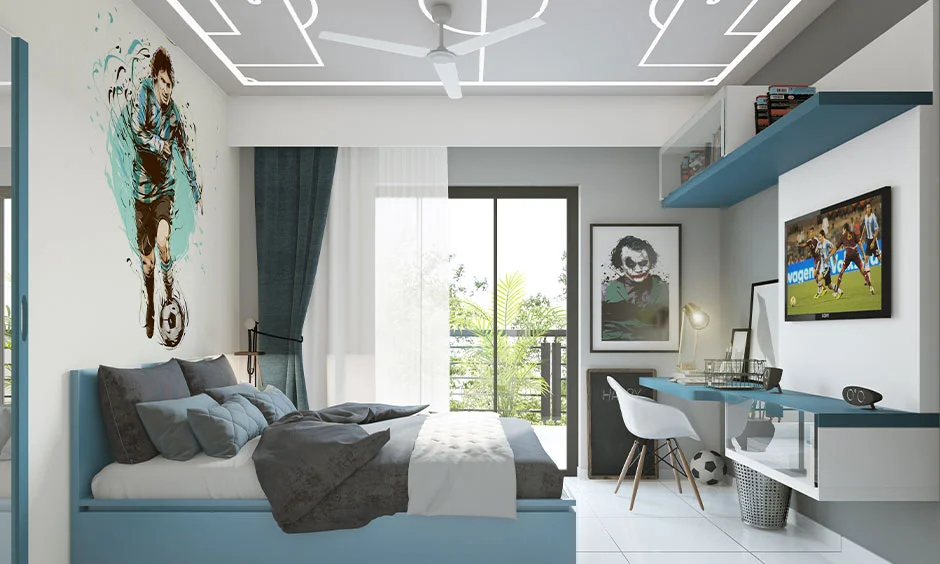
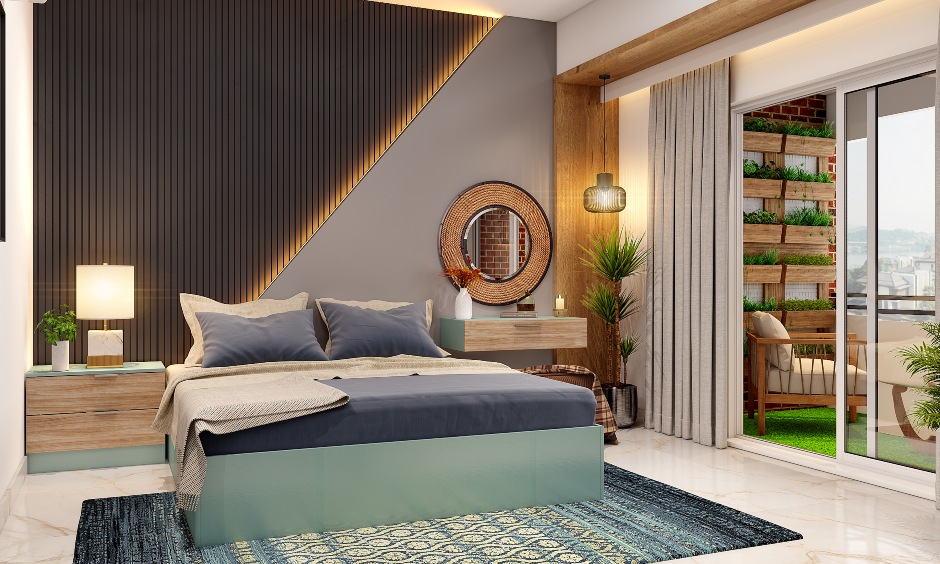
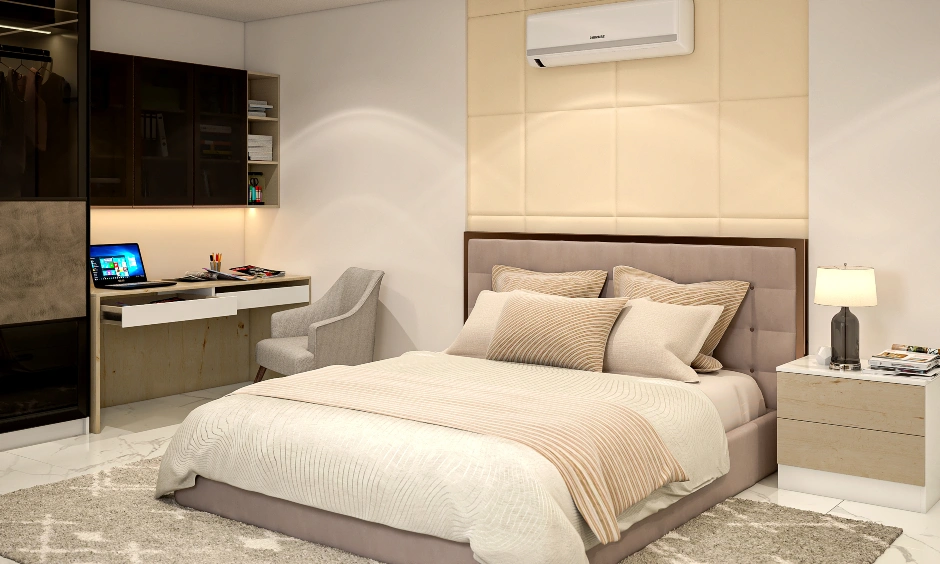
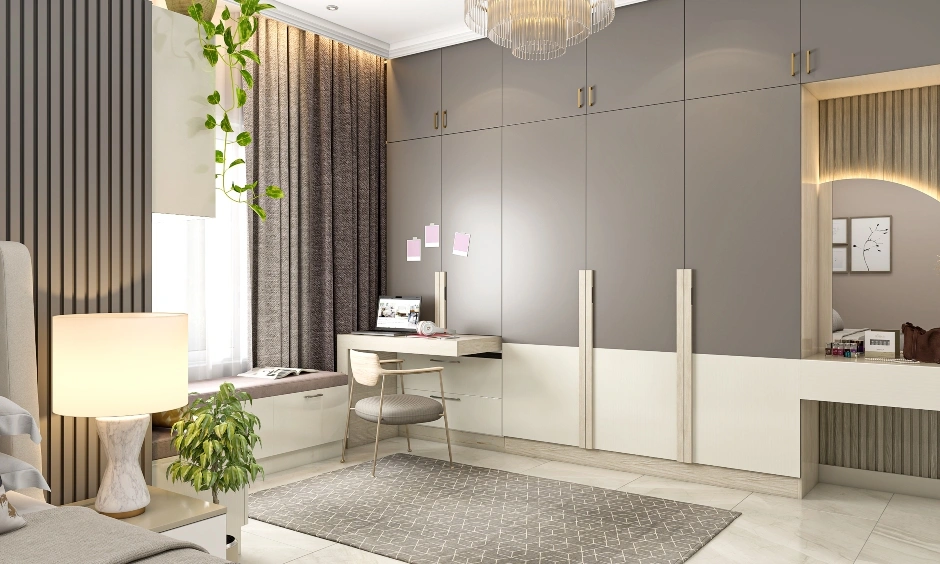
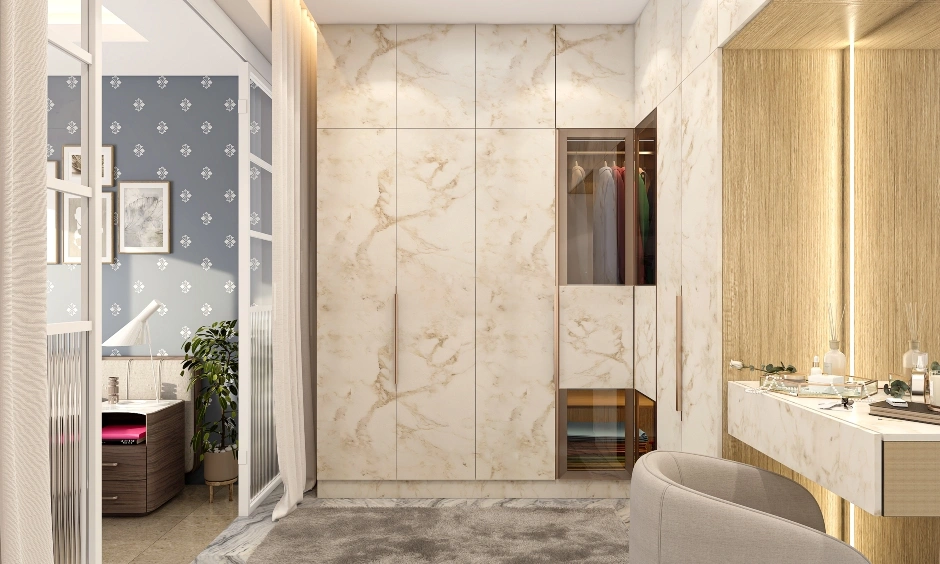
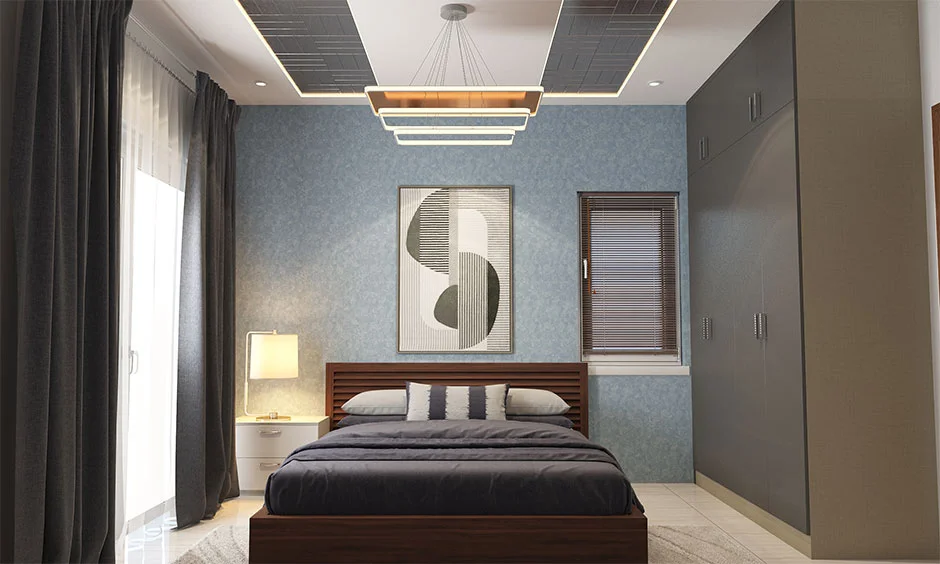
Trending Bedroom Interior Design With False Ceiling Ideas


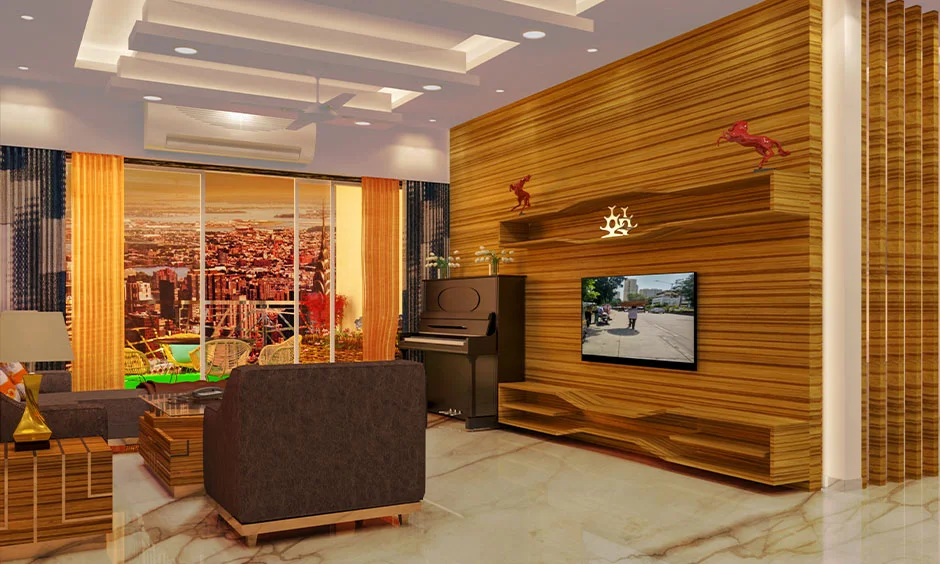
Gypsum False Ceiling Design: Why Designers Default To It?
- What it is: Factory-made gypsum boards fixed to a metal frame and finished with jointing compound.
- Why choose it: Gives a smooth, flat finish and works well across large areas.
- Cost: ₹75-110 per sq ft for basic work; ₹120-180 for premium boards or complex designs.
- Best for: Living rooms, bedrooms and large, flat ceiling designs.
POP False Ceiling Design For Curves And Mouldings
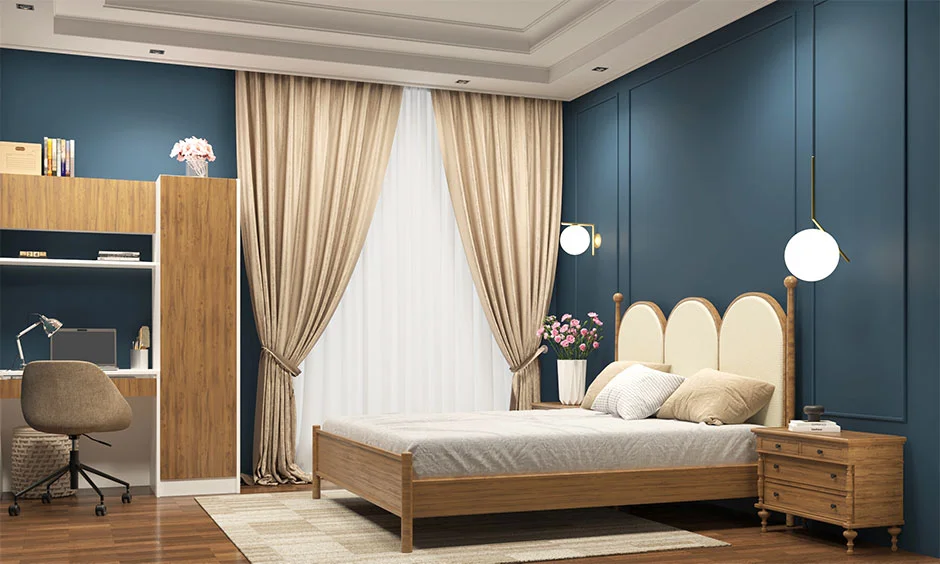
- What it is: POP is mixed and applied on site over a frame.
- Why choose it: Can be moulded into curves, arches and decorative details.
- Cost: ₹60-120 per sq ft.
- Trade-off: Takes longer to install and is more prone to hairline cracks.
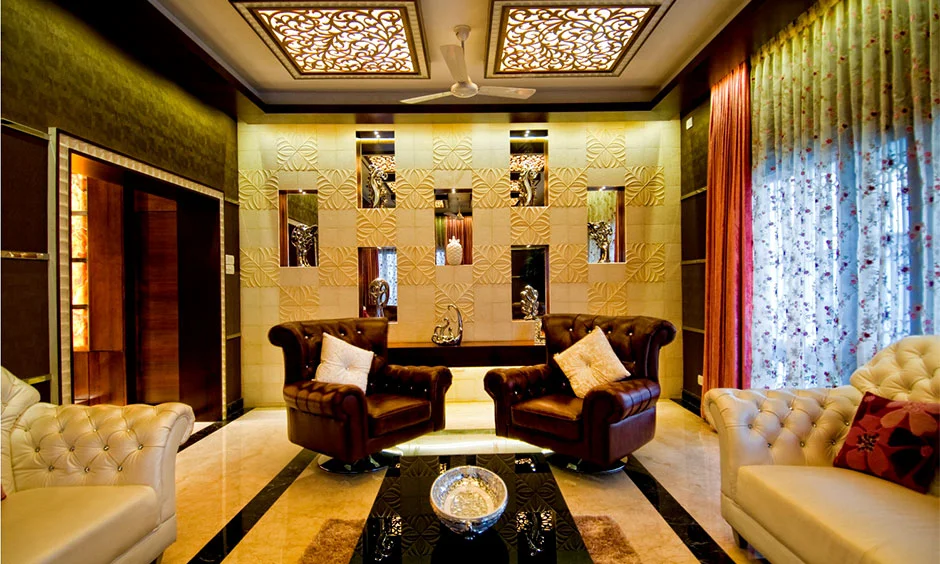
Wooden False Ceiling: Warmth, Texture And Spatial Framing
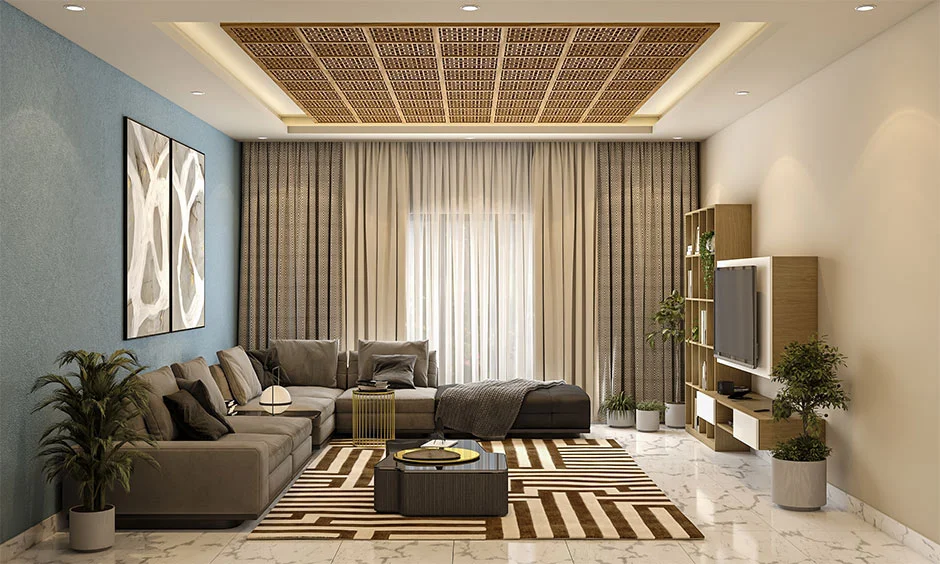
A wooden false ceiling brings warmth and natural texture to a room, with design options such as slats, planks and veneer.
- Look: Warm and natural, with options such as slats, planks and veneer.
- Cost: ₹250-600 per sq ft.
- Watch out for: Termites, moisture and higher maintenance.
- Best for: Feature panels above a dining table or bed rather than entire ceilings.
PVC False Ceiling Design
A PVC false ceiling is a practical option for spaces exposed to moisture, as it is moisture-resistant and easy to install.
- Why choose it: Moisture-resistant and easy to install.
- Cost: ₹70-150 per sq ft.
- Best for: Bathrooms, balconies and utility areas.
- Trade-off: The plastic appearance can look out of place in living spaces.

Metal False Ceiling Materials
Metal false ceiling materials such as aluminium and galvanised steel offer durability, fire resistance and convenient maintenance access.
- Materials: Aluminium or galvanised steel.
- Why choose it: Durable, fire-resistant and easy to remove for maintenance.
- Cost: ₹150-400 per sq ft.
- Best for: Offices, retail and service-heavy spaces.
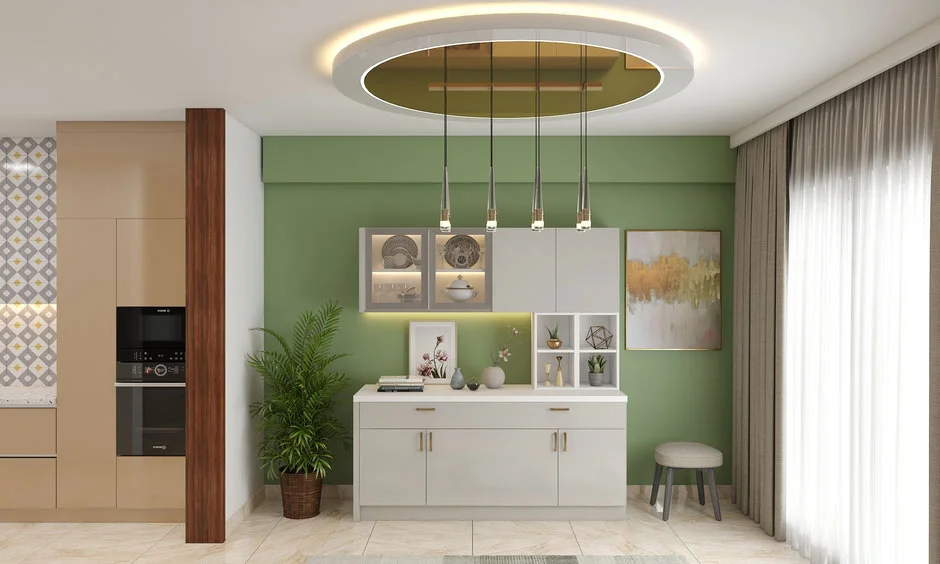
Glass: Types Of False Ceiling For Luxurious Homes
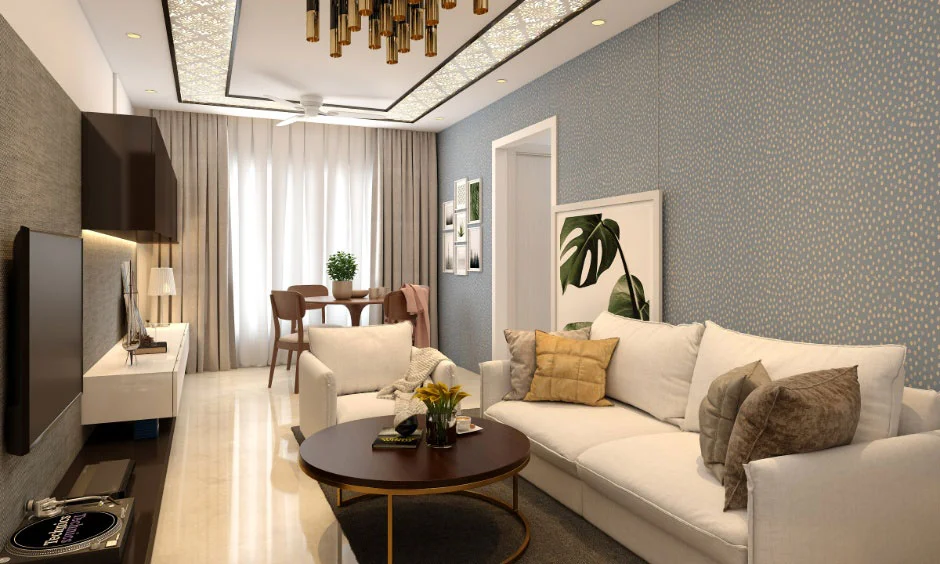
A glass false ceiling can create an elegant focal point in luxurious homes, using toughened or laminated glass for backlit and translucent features.
- What it offers: Toughened or laminated glass can create backlit or translucent features.
- Cost: ₹300-800 per sq ft.
- Best for: A single feature panel, such as above a dining table.
- Trade-off: Expensive, heavy and best left to professional installers.
Fabric False Ceiling Materials And How Long They Last
Fabric false ceiling materials offer a soft, seamless finish and can be installed quickly, making them suitable for decorative applications.
- Look: Soft, seamless and quick to install.
- Cost: ₹200-500 per sq ft.
- Lifespan: Around 5-8 years.
- Best for: Decorative applications where longevity is lesser concern than aesthetics.
- Watch out for: Dust and humidity.
Mineral Fibre for The Quietest Type Of False Ceiling
Mineral fibre false ceiling is a practical choice when sound absorption is a priority, making it suitable for spaces where acoustic comfort matters.
- Why choose it: Excellent sound absorption.
- Cost: ₹80-200 per sq ft.
- Best for: Offices, clinics, home offices and music rooms.
- Trade-off: The exposed grid gives it a commercial rather than residential look.
Modular Tiles And Grid Types Of False Ceiling
- How it works: Tiles sit in a visible T-grid and can be removed individually.
- Why choose it: Provides quick access to wiring, pipes and ducts.
- Best for: Utility areas and spaces needing regular maintenance.
- Trade-off: The visible grid is less suited to most residential interiors.
Design Shapes Across All Types Of False Ceiling
The material and ceiling shape are separate decisions. Most designs work with several materials.
- Single-level: One even drop across the ceiling.
- Peripheral: A band around the edges with the centre left open.
- Multi-level: Two or more ceiling planes at different heights.
- Plus-minus: Raised and recessed sections within one plane.
- Cove-lit: A concealed channel that throws light upwards.
Peripheral designs are often the safest choice for Indian flats because they minimise height loss.

Best False Ceiling Types For Living Room, Bedroom And Bathroom
| Room | Recommended | Why |
|---|---|---|
| Living room | Gypsum | Flat planes, holds cove lighting well |
| Bedroom | POP or gypsum | Quiet finish, easy to repaint |
| Kitchen | PVC or gypsum | Grease wipes off, tolerates heat |
| Bathroom | PVC | The only reliably water-tolerant option |
| Balcony | PVC or metal | Handles humidity and rain splash |
| Home office | Mineral fibre | Absorbs sound on calls |
For living-room false ceilings, gypsum with a peripheral cove is the default for good reason.
Comparing Gypsum, POP False Ceiling, PVC And Wood
If you are comparing just four materials, these are the key differences:
| Material | Best for | Main advantage | Main drawback |
| Gypsum | Dry rooms | Flat finish, faster installation | Less suited to curves |
| POP | Curves and mouldings | Easy to shape | More site work and cracking |
| PVC | Wet areas | Moisture-resistant and affordable | Less premium appearance |
| Wood | Feature ceilings | Warm, natural look | Expensive and needs upkeep |
For most homes, gypsum works well in dry rooms and PVC in wet areas.
How To Choose Between The Types Of False Ceiling?
Four questions will narrow down your options quickly:
- How high is the slab? Under nine feet? Stick to a shallow peripheral or single-level design.
- Does the room get wet? For bathrooms, PVC is the practical choice.
- What lighting do you want? Recessed spots need some depth; cove lighting needs more.
- What is your budget per sq ft? This quickly rules out materials that do not fit.
Latest Trends In False Ceiling Lights And Design
False ceilings are getting simpler and more purposeful.
- Slim peripheral bands are replacing heavy multi-level designs.
- Recessed linear profile lights are replacing rows of spotlights.
- Fluted and slatted wood accents are being used above beds and dining areas.
The overall direction is simple: less ceiling, better lighting.
Common Mistakes With False Ceiling Types In India
- Ignoring slab height: An eight-inch drop in a nine-foot room leaves just 8 feet 4 inches.
- Choosing from photographs: A design that works in a large room may not suit your ceiling height.
- Planning lighting later: Retrofitting can mean cutting into the finished ceiling.
- Using the wrong material in wet areas: Gypsum and POP are not designed for sustained moisture.
- Skipping access panels: Concealed valves, junctions, and services still need future access.
Maintaining The Different Types Of False Ceiling
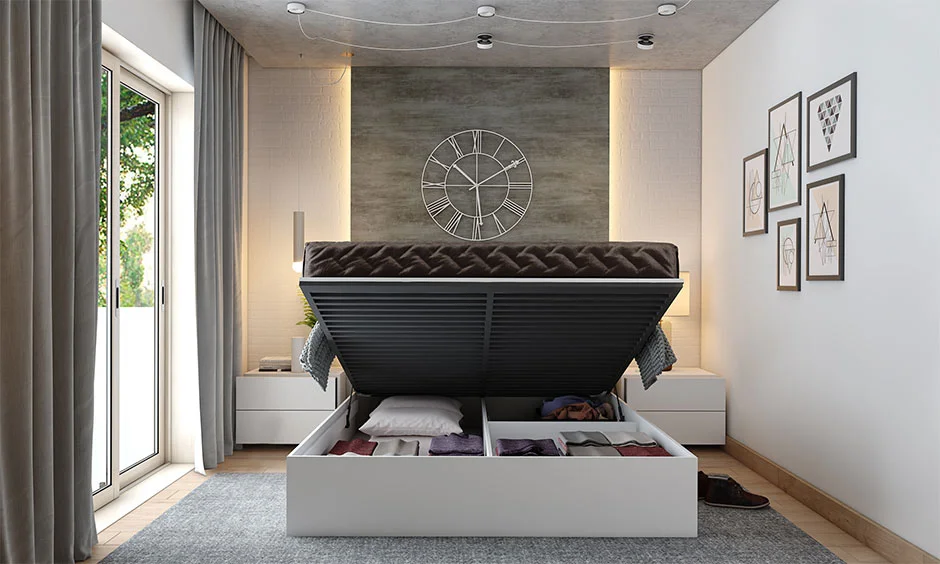
Most false ceilings need little more than regular dusting with a dry microfibre mop.
- Repaint gypsum and POP roughly every 4-5 years, depending on the finish and room.
- Treat stains as a possible sign of a leak above the ceiling.
- Repair hairline cracks early before they become more noticeable.
Final Thoughts
There is no single best false ceiling material. The right choice depends on the room.
Start with the slab height and lighting plan. Then choose the material based on how the room is used: gypsum for dry areas, PVC where moisture is a concern, and wood where you want warmth and can manage the upkeep.
Ready to take the next step? Book a free consultation.
Still need more time to think? Explore our blog section for more design inspirations.
FAQs
1. What are the different types of false ceilings?
Gypsum, POP, PVC, wooden, metal, glass, fabric and mineral fibre. Gypsum and POP cover most Indian residential work.
2. Which false ceiling material is best for homes?
Gypsum for dry rooms and PVC for bathrooms and balconies. That pairing suits almost every Indian flat.
3. Which false ceiling is best for the living room?
Gypsum, usually with a peripheral cove. It gives a flat plane and carries concealed lighting well.
4. Which false ceiling is suitable for bedrooms?
POP or gypsum. Keep it peripheral or single-level if your slab is under nine feet.
5. Which false ceiling requires the least maintenance?
PVC and metal. Both wipe clean, and neither needs repainting the way gypsum and POP do.
6. Are wooden false ceilings durable?
Yes, twenty years or more when treated against termites and moisture. They cost ₹250-600 per sq ft and need periodic polishing.