Select Category


AI Summary
4 key insights · 1 expert tipA low-cost bathroom renovation in India focuses on upgrading the look and functionality of the space without major structural changes. With the right approach, smart planning, careful material selection, and small design upgrades such as better lighting, mirrors, and storage, even a low-cost small bathroom design can look modern, clean, and efficient.
KEY INSIGHTS
- Maintain the existing layout and avoid plumbing or structural changes to reduce labour costs.
- Use some budget-friendly options like ceramic tiles, standard sanitaryware and shower curtains.
- Opt for practical design choices like wall-mounted fixtures and compact storage to maximise space.
- Compare supplier prices and focus spending smartly on essential upgrades (waterproofing/ventilation).
 DESIGNCAFE EXPERT TIP
By our design team
DESIGNCAFE EXPERT TIP
By our design team
If you're working with a limited budget, spend on waterproofing before decorative upgrades. A beautiful bathroom can be redone later, but fixing seepage and leakage after renovation can cost several times more than preventive waterproofing.
Transform your bathroom with simple, low-cost design renovation ideas that make a big impact without overspending.
Designing a stylish middle-class Indian bathroom design does not necessarily mean stretching your budget. With the right choices in materials, layout, decor and clever storage hacks coupled with smart planning, Indian homes can achieve a clean and modern look at minimal cost without compromising on comfort.
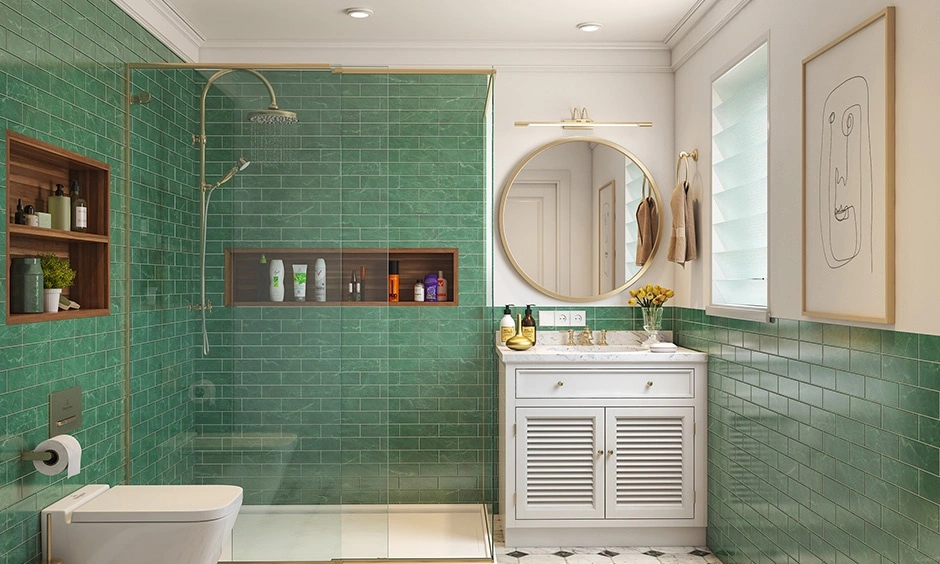
What is a Low-Cost Bathroom Renovation in India?
- It focuses on cosmetic upgrades rather than full reconstruction, thereby keeping costs controlled.
- It improves functionality, hygiene and the overall visual appearance without major structural work.
- It uses mid-range, locally sourced materials rather than premium designer products.
- It involves hiring individual labourers (a mason and a plumber) instead of a full contractor.
- It extends tile use and waterproofing only to essential wet areas, thereby reducing overall costs.
- Low-cost renovations mostly reuse existing plumbing lines, thereby avoiding expensive relocation.
- Homeowners repair, refinish or repaint existing bathroom elements instead of replacing everything.
Plan Smart Before You Start the Low-Cost Small Bathroom Design Project
1. Finalise the Various Bathroom Elements in Advance
- Always set a fixed budget with a 10–15% buffer to handle unexpected repairs.
- Break your budget into categories like tiles, labour, fixtures, waterproofing, etc.
- Identify priority issues first (leaks/cracks/broken fittings) before the design upgrades.
- Take accurate measurements of the walls, floor, and fixture spacing to avoid wastage.
- Plan your small bathroom layout based on the existing plumbing, not on design trends.
- Decide early on which items you want to reuse and which to replace (WC, basin, taps).
- Visit local markets to compare material prices and quality before the final purchase.
- Plan smart and multifunctional storage solutions to avoid visual clutter later.
- Choose a simple design theme (light-colour based, minimal) to keep overall costs low.
- Schedule your renovation work properly to avoid labour delays and extra daily charges.
2. Avoid Making Structural Changes to Your Bathroom
Structural changes, including moving toilets, basins, or drains, or breaking walls, defeat the purpose of low-cost Indian bathroom design renovations. They significantly increase costs due to plumbing and waterproofing rework. Shifting the drainage points requires breaking the floor and recreating the slope, which can be expensive. The electrical rewiring for new small bathroom layouts also adds hidden costs and labour time. Avoiding the structural changes to your bathroom reduces labour dependency and complexity, and proves to be the single most effective way to stay within budget.
How to Work Around This?
- Keep the existing layout to finish your bathroom renovation faster.
- Choose compact/wall-mounted alternatives instead of moving fixtures.
- Adjust the design around existing placements using smart storage tricks.
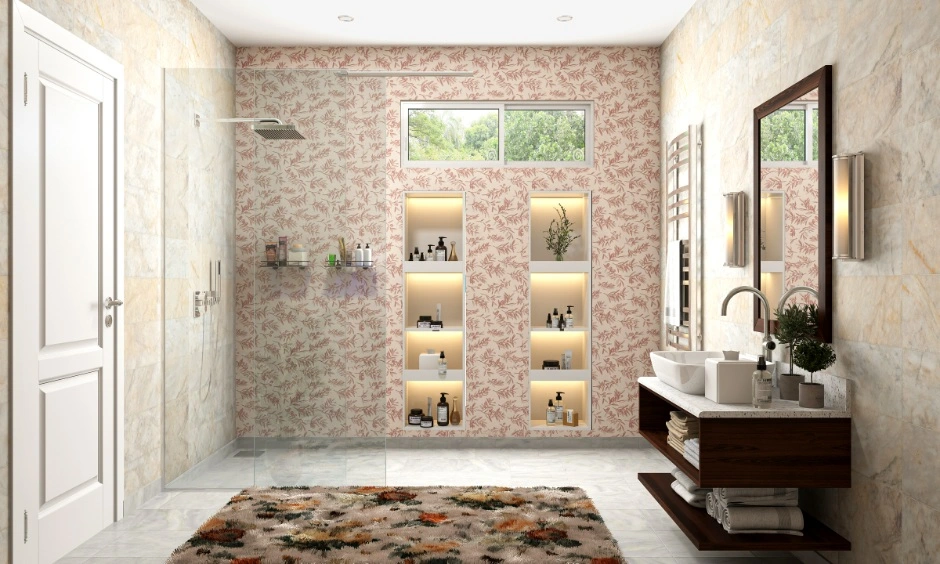

Affordable Materials for a Low-Cost Indian Bathroom Design
| Element | Budget Option | Why Does It Work? |
| Flooring | Anti-Skid Ceramic Tiles | It is durable, provides grip in wet areas and is reasonably priced. |
| Wall Finish | Ceramic Wall Tiles | It is affordable, water-resistant, easy to clean and widely available in many designs. |
| Shower Fixtures | 2-Way Diverter With Overhead Shower With Spout | It allows the water flow to switch between the overhead shower and the spout. This setup is cost-effective, widely available and offers essential functionality without the expense of advanced shower systems. |
| Sanitary Fixture (WC) | Basic Ceramic Western Toilet | It is durable, easy to maintain and available in many low-cost options. |
| Wash Basin | Half-Pedestal Ceramic Wash Basin | It saves floor space, hides plumbing pipes, and gives a clean, modern look. |
| Ledge Wall | Granite Off-Cuts | The granite slab on top provides a strong and water-resistant surface. It is budget-friendly and offers storage and a neat finished look. |
| Ceiling | PVC Ceiling Panels | It is moisture-resistant, easy to maintain and hides wiring and plumbing. |
| Light | LED Ceiling Light | It provides sufficient illumination while being energy-efficient. |
| LED Mirror | LED Mirror | It is low-cost and can perform functional tasks. |
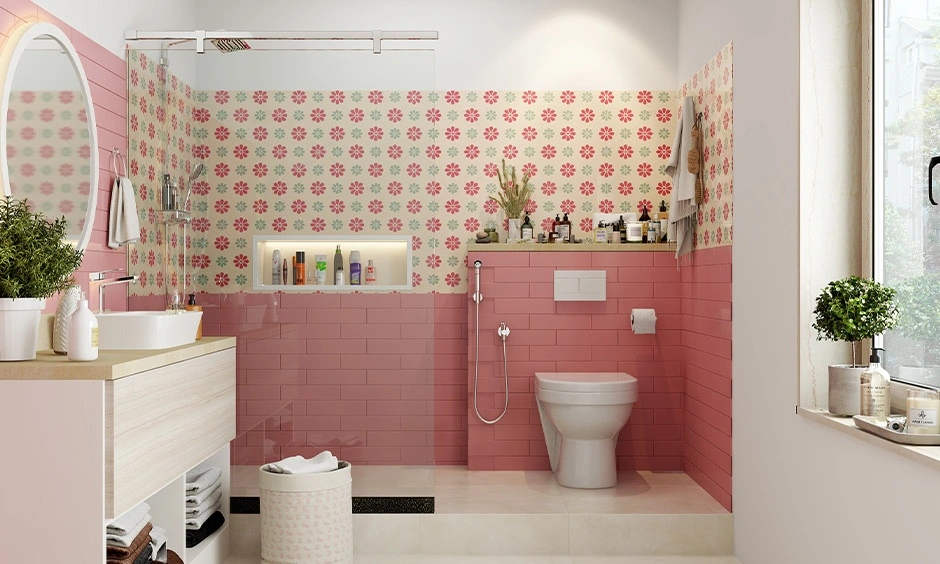
Low-Cost Middle-Class Small Indian Bathroom Design Ideas
- Use tiles only in high-moisture zones like showers and lower wall sections.
- Paint walls with waterproof or anti-fungal paint to save costs.
- Choose light colours to make the bathroom appear larger and brighter.
- Replace the old fixtures (taps/showerheads) for an instant modern look.
- Install open shelves instead of closed cabinets to reduce the furniture cost.
- Use simple mirrors (frameless or basic-framed) to visually enhance the space.
- Add low-cost accessories (towel rods/soap holders/hooks) for functionality.
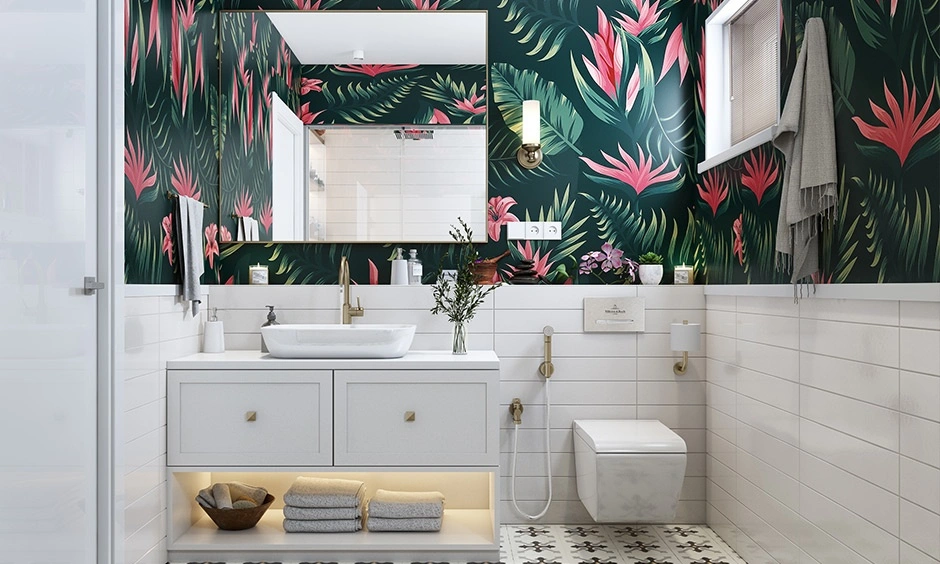
- Consider peel-and-stick tiles/wallpapers for quick and budget-friendly styling.
- Use PVC or other plastic elements instead of wood to avoid water damage and reduce costs.
- Focus on a clean, minimal design rather than heavy decorative elements.
- Use wall-mounted fixtures to free up floor space and improve movement.
- Opt for shower curtains instead of glass partitions to save significant money.
- Choose sliding or folding doors to maximise the usable space in the bathroom.
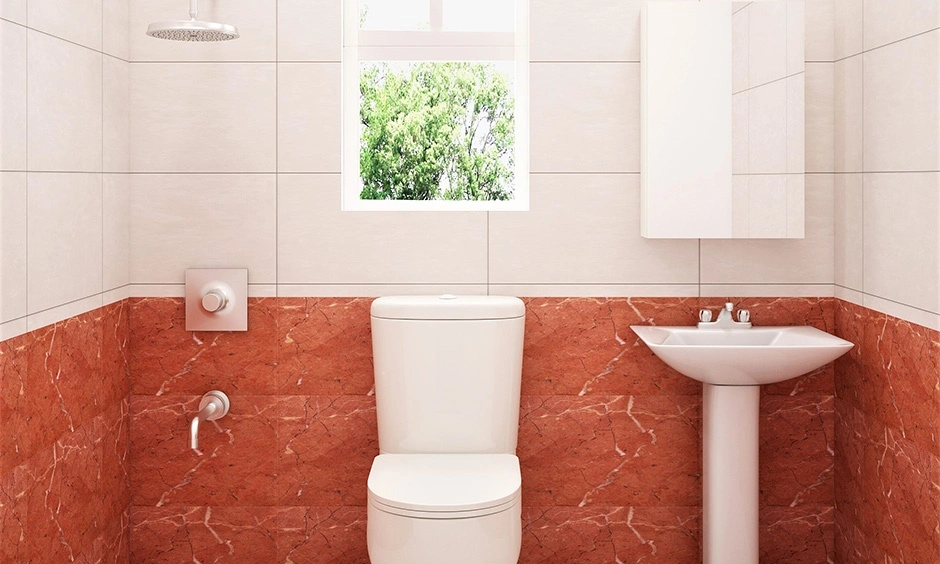
Trending Bathroom Interior Designs


Cost-Saving Tips for Indian Homeowners to Achieve a Low-Cost Small Indian Bathroom Design
- Reuse existing fixtures smartly if they are functional. Deep clean with descaling products and repolishing exposed pipes. Replace only small parts and not the entire fixture.
- Buy materials from local wholesale markets instead of branded showrooms. Local hardware and tile markets often offer better negotiation flexibility, lower prices and bulk discounts.
- Compare prices aggressively from multiple vendors before purchasing anything. Visit at least 3 to 5 vendors, check both online and offline rates and always ask for ‘final price’ or ‘best rate’.
- Choose ceramic tiles over expensive vitrified or designer tiles. Ceramic tiles are cheaper, easier to install and durable enough for bathrooms. Use premium tiles only as accents if needed.
- Carry out simple tasks like painting walls, installing shelves/hooks, cleaning and sealing joints and installing accessories yourself.
- Purchase combo sets (bathroom basin + tap + shower sets, vanity mirror + bathroom cabinet) for better deals. Bundled pricing is often cheaper than individual purchases.
- Time your purchase during sales on festivals like Diwali for heavy discounts on fittings, tiles and sanitaryware. You can also buy from clearance sales on older designs.
- Stick strictly to your simple design plan (lower cost + cleaner look) to avoid impulse purchases. Minimal design means fewer materials, faster labour and fewer chances of costly mistakes.
- Limit your bathroom tile coverage strategically. Instead of full wall tiling, tile only up to 4–5 feet and do a full tile design only in the shower area. It reduces labour costs significantly.
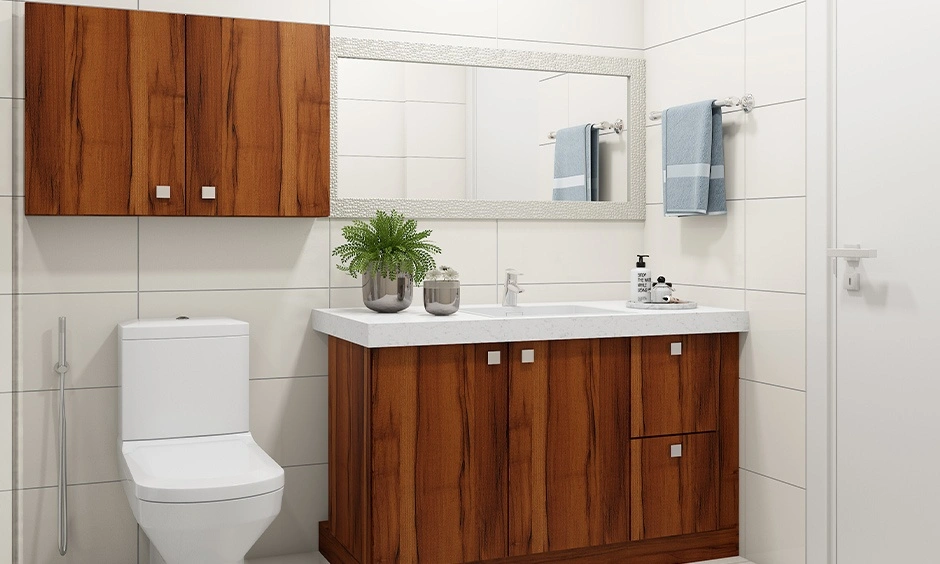

Common Budget Mistakes to Avoid for a Low-Cost Indian Bathroom Design
- Skipping waterproofing to save money leads to long-term damage and higher future costs.
- Buying extremely cheap fittings and fixtures often results in frequent repairs and replacements.
- Over-tiling the entire bathroom unnecessarily increases both material and labour expenses.
- Ignoring ventilation causes mould, odour and moisture problems in your small bathroom.
- Failing to set aside a contingency fund for hidden issues can halt your bathroom renovation midway.
- Poor lighting makes the bathroom look dull/cramped and makes tasks difficult.
- Buying materials without accurate measurements leads to material wastage and overspending.
- Overcrowding a small bathroom with too many elements makes the space feel uncomfortable.
- Rushing decisions and changing the design midway lead to major mistakes and extra expenses.
- Hiring unskilled labour can ruin your bathroom tile alignment and cause leakage issues.
- Following trends unquestioningly, like designer tiles or matte black fittings, results in higher costs with low practicality.
- Ignoring a proper water-drainage slope leads to slippery floors, water pooling, and hygiene issues.
Estimated Budget Breakdown for a Small Bathroom Renovation in India
| Category | Item / Work | Notes | Estimated Budget (Rs.) |
| Flooring | Anti-Skid Floor Tiles | Package price for a 4 x 7 size bathroom. The cost of bathroom renovation includes demolition, waterproofing, installation, plumbing fittings, tiles and fixtures. | Rs. 127561 |
| Wall Finish | Ceramic Wall Tiles | ||
| Sanitary Ware | WC (Western/Indian) | ||
| Wash Basin | Basic Ceramic Basin | ||
| Plumbing Fittings | Taps, Shower, Faucet | ||
| Ceiling | Painting | For True Ceiling Bathroom | Rs. 728 |
Wrapping Up
Modern homeowners can transform their simple bathrooms while staying within a limited budget by focusing on smart planning, affordable materials, efficient storage, modern lighting and minimal structural changes. Getting professional guidance from an interior design solutions firm can help you avoid costly mistakes and optimise your spending when planning a low-cost Indian bathroom design for your home. In this regard, book a free virtual consultation with DesignCafe today to get a customised bathroom renovation plan that fits your budget and style.
FAQs
1. What is the cheapest way to upgrade a bathroom?
- Focus on cosmetic changes rather than an entire structural renovation.
- Replace faucets, mirrors and cabinet handles to improve the look instantly.
- Painting the walls and installing waterproof wall panels are other low-cost options.
- Change lighting fixtures and add bath accessories for a fresh appearance.
- Replace only the damaged tiles rather than retiling the entire bathroom.
2. What are budget-friendly bathroom storage ideas?
- Wall-mounted shelves can help store toiletries without taking up floor space.
- Over-the-toilet storage or display racks help you use the unused vertical space.
- Reuse small cabinets to create stylish, low-cost DIY storage.
- Hanging baskets or organisers behind the bathroom door can store towels and other items.
- Plastic storage bins or stackable containers keep items organised at a low cost.
3. How much does a small bathroom renovation cost in India?
- A basic renovation for a small bathroom (25 to 35 sq. ft.) with simple tiles and standard fittings typically costs around Rs. 25000 to Rs. 60000.
- The cost of an Indian bathroom design with slightly better materials and branded fixtures increases between Rs. 50000 to Rs. 100000 or more.
- A small bathroom with luxury upgrades (designer tiles/glass partitions/premium sanitaryware) pushes the budget above Rs. 2 lakhs.
- On average, most modern homeowners spend between Rs. 25000 and Rs. 150000 for a practical small bathroom renovation, depending on the quality of choices.
4. How do you reduce bathroom renovation costs?
- Keep the existing layout and plumbing instead of moving basins/showers to avoid expensive civil works.
- Use standard ceramic tiles or local brands of fittings instead of premium imported materials to save money.
- Mix high-quality materials only in visible areas and cheaper materials elsewhere as another smart strategy.
- Choose a shower instead of a bathtub to achieve a middle-class, low-cost, simple Indian bathroom design.
- Plan the renovation properly and compare quotes from multiple contractors to prevent overspending.
5. Are ceramic tiles good for bathrooms?
Ceramic tiles are widely used in small bathrooms because they are water-resistant, durable and easy to clean. They are one of the most affordable bathroom tile options available in the market and come in many colours, textures, finishes and designs. They resist stains and moisture, which helps prevent mould growth in wet areas. Antiskid tiles are recommended for bathroom floors over glossy ceramic tiles for safety reasons.