Select Category


AI Summary
3 key insights · 1 expert tipFollow standard kitchen dimensions for counters, cabinets, and walkways to ensure a practical, comfortable, and clutter-free cooking space tailored to your needs.
KEY INSIGHTS
- Countertops typically range from 34–36 inches high and 24 inches deep for comfortable use.
- Base cabinets have a carcass depth of about 21 inches, with wall cabinets 12–15 inches deep.
- Walkways require a minimum of 3 feet, increasing to 3.5–4 feet for comfortable two-person use.
 DESIGNCAFE EXPERT TIP
By our design team
DESIGNCAFE EXPERT TIP
By our design team
Use standard kitchen dimensions as a base for counter height, cabinet depth, and walkway space, then customize finishes for your cooking style without sacrificing comfort.
Use standard kitchen dimensions to plan counters, cabinets and walkways that fit your home, your height and your daily cooking routine.
Every kitchen design is unique. It tells a story of the people who live there, their food habits, traditions, and lifestyle. The way a joint family cooks for multiple generations is very different from how a young couple juggles work, quick meals, and healthy eating. Yet most of us want the same things—a mess-free kitchen, ample storage, a comfortable space to move around without bumping into things. A space where you can chop, cook, and clean without feeling cramped or cluttered.
To get this right, one thing matters more than we realise: Kitchen dimensions & cabinet sizes. When your counters, cabinets, and clearances are planned well, the kitchen feels organised, easy to use, and ready for your everyday life. That is where standard dimensions come in. Once you know the ideal sizes for platforms, cabinets, sinks, and walkways, it becomes much easier to design a layout that suits your home, your height, and the way you actually cook every day.

Why Standard Kitchen Dimensions Matter?
Standard kitchen dimensions are the quiet heroes of a well-planned kitchen. You may not notice them every day, but you feel the difference when they are wrong. A slightly low counter, a tight gap near the fridge, or a shallow drawer can make daily cooking tiring.
When you follow the right kitchen dimensions, you:
- Work at a counter height that feels natural and does not strain your back.
- Open drawers and shutters fully without bumping into walls or appliances.
- Keep enough space around the hob and sink to move safely while cooking.
- Plan storage so that everyday items sit within easy reach and heavier things stay lower.
These basic kitchen dimensions give you a reliable starting point. From there, you can tweak a little for your height, your family’s needs, and your cooking habits, while still keeping the kitchen comfortable and practical for years.
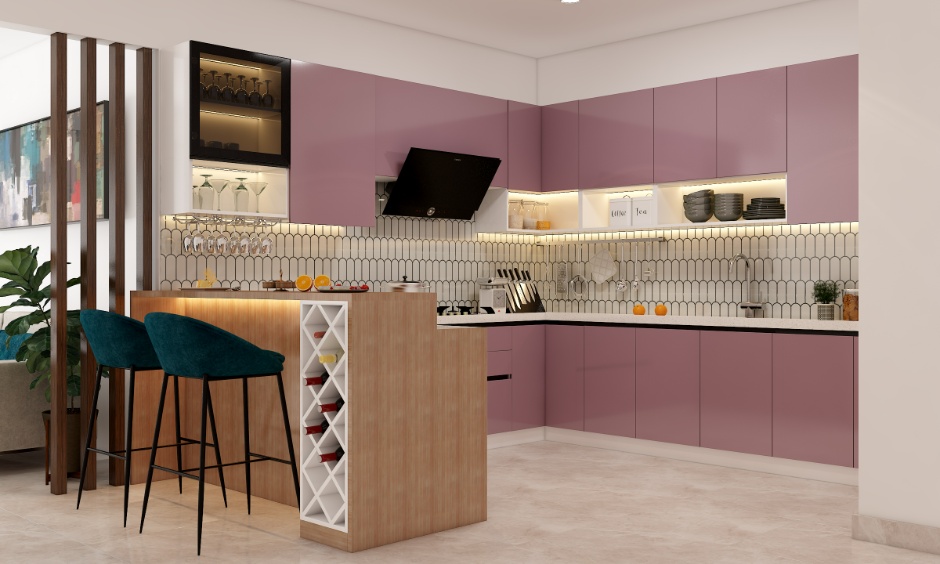
Standard Kitchen Dimensions for Popular Layouts
Once you fix the right layout, half your kitchen planning is done. The kitchen design dimensions you choose for each layout decide how freely you can move, cook, and clean.
Here is a simple guide you can use:
- Straight Kitchen: Ideal for compact homes and studio flats. Try to keep the main counter at least 8–10 feet long so the hob, sink, and prep space can sit in one line.
- L-shaped Kitchen: Works well in most modern homes. Each leg of the L should be around 7–9 feet or more. Place the hob on one side and the sink on the other, with a clear prep zone in between.
- Parallel or Gallery Kitchen: Best for narrow rooms. Keep at least 3.5–4 feet between the two counters so two people can work and pass each other comfortably.
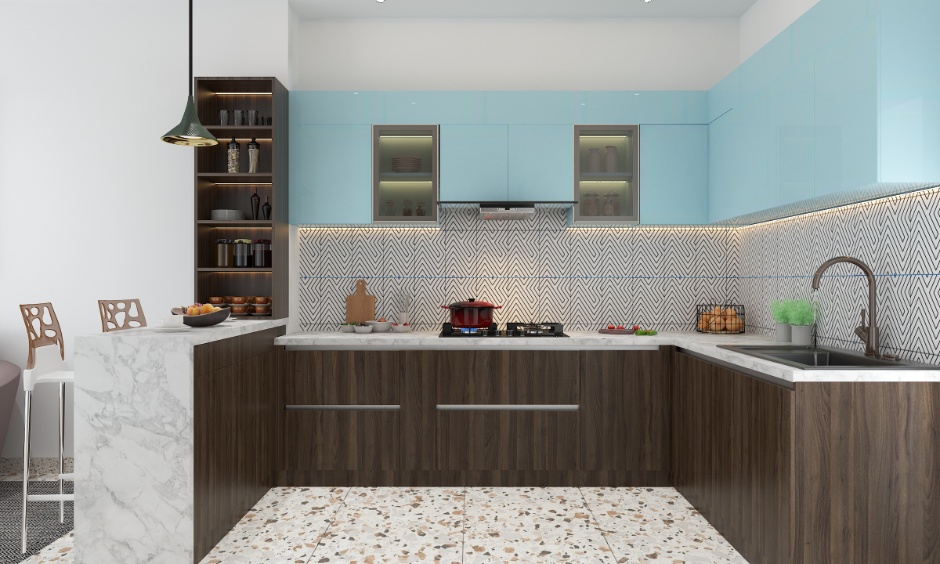
- U-shaped Kitchen: Great for bigger families who cook often. Each side of the U should ideally be 7–8 feet or more. Use one side for cooking, one for washing, and one mainly for prep and storage.
- Kitchen With Island: Needs more space to work well. Try to keep at least 3–4 feet of clear space on all sides of the island so drawers, shutters, and appliances can open without blocking movement.
Once the layout and these basic dimensions are in place, it becomes easier to fine-tune heights, depths, and appliance gaps for your daily routine.
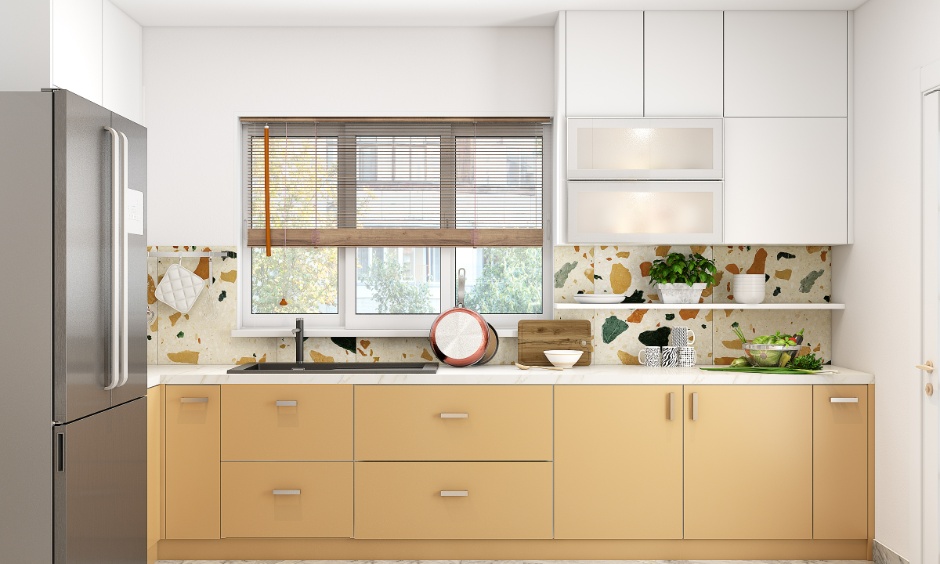
Standard Countertop Dimensions for Comfortable Kitchen Counter Dimensions
Your countertop is where you chop, mix, and plate every meal. When the kitchen platform dimensions are right, the whole kitchen feels easier to use.
- Counter Height: Keep the main counter around 34–36 inches high (about 86–91 cm) so most adults can work without bending too much.
- Counter Depth: Standard depth is about 24 inches (around 60 cm), which gives enough space for the hob, vessels, and prep while keeping sockets and wall units within easy reach.
- Front Overhang: Allow a small overhang of about 1–1.5 inches in front so the counter edge looks neat and is easy to wipe
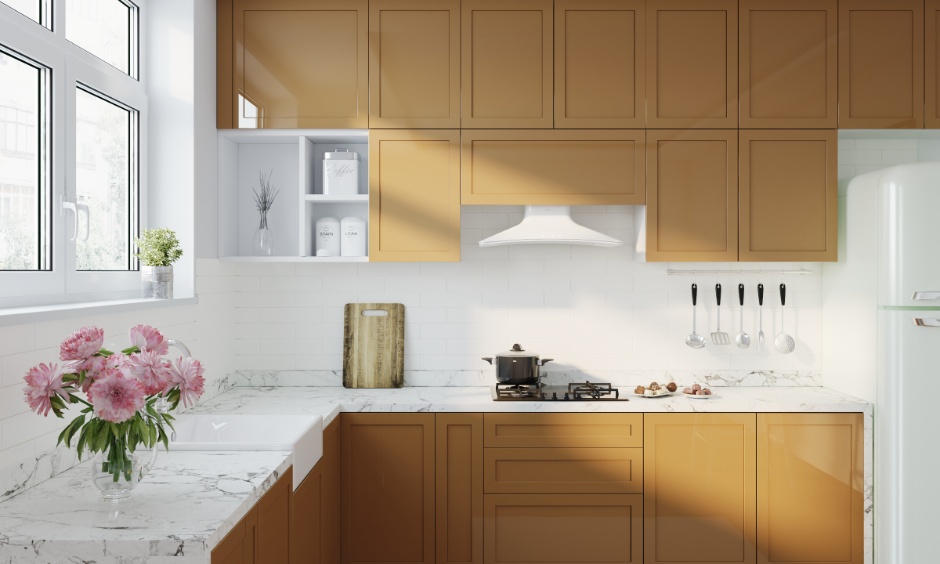
Standard Kitchen Cabinet Dimensions
Once your counter height is fixed, the next step is to plan your storage. Good kitchen drawer dimensions make every cabinet feel more useful and less cluttered. You always know where everything belongs, you bend less, and you can find what you need much faster.
Here is a simple guide you can use:
- Base Cabinet Height
– Base units sit below the counter.
– With plinth and countertop, the total height is usually around 34–36 inches. - Base Cabinet Depth
– Carcass depth is about 21 inches.
– The countertop overhang extends to roughly 24 inches in depth. - Wall Cabinet Height
– Common heights are 24, 27, or 30 inches.
– Choose based on the ceiling height and the amount of closed storage you need. - Wall Cabinet Depth
– Keep wall units around 12–15 inches deep.
– This keeps them slim, so you do not bump your head while working. - Gap Between Counter And Wall Units
– Leave 18–21 inches clear between the counter and the bottom of wall cabinets.
– This provides enough space for appliances such as a mixer, a toaster, or a kettle. - Tall Cabinet Size
– Pantry or oven units usually run from floor to near the ceiling.
– Depth is around 21–24 inches, with shelves spaced for bottles, jars, and baskets. - Oil Pull Out Unit
– Keep a slim pull-out 6–9 inches wide.
– Depth matches the base unit at around 21 inches, so bottles sit safely.
– Aim for an internal height of about 18–22 inches to fit tall oil and sauce bottles. - Janitor or Cleaning Unit
– Plan this tall unit 15–24 inches wide, close to the sink or utility.
– Keep one full height section for broom, mop, and wiper.
– Add side shelves for cleaning liquids, cloths, and other supplies. - Appliance Garage
– This usually sits on the counter with shutters that lift or slide.
– Width can be 24–36 inches, with an inner depth of around 16–18 inches for a mixer, toaster, or coffee machine.
– Add plug points at the back so appliances can stay plugged in and hidden when not in use.
With these sizes in mind, you can mix shelves, drawers, and pull-outs to match how you cook and what you store, without wasting precious cabinet space.
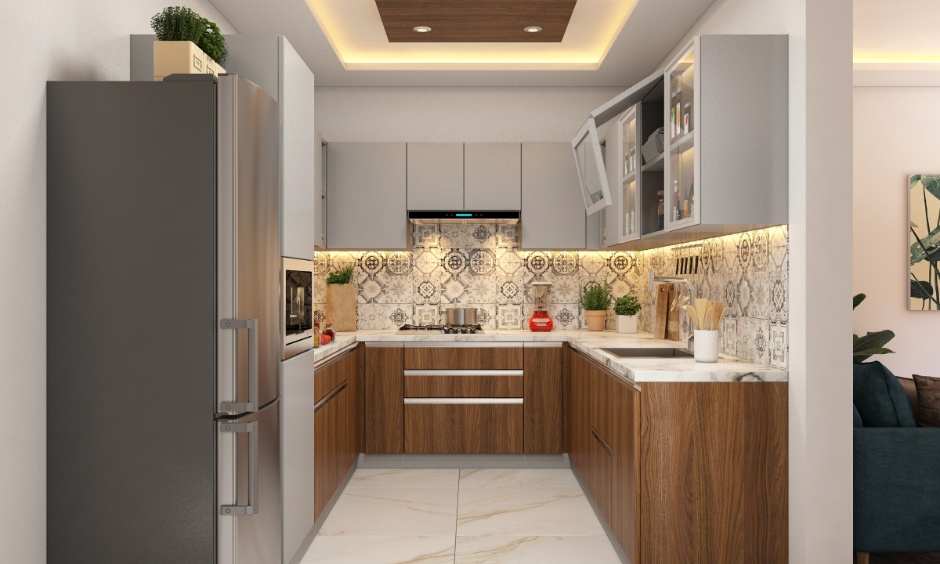
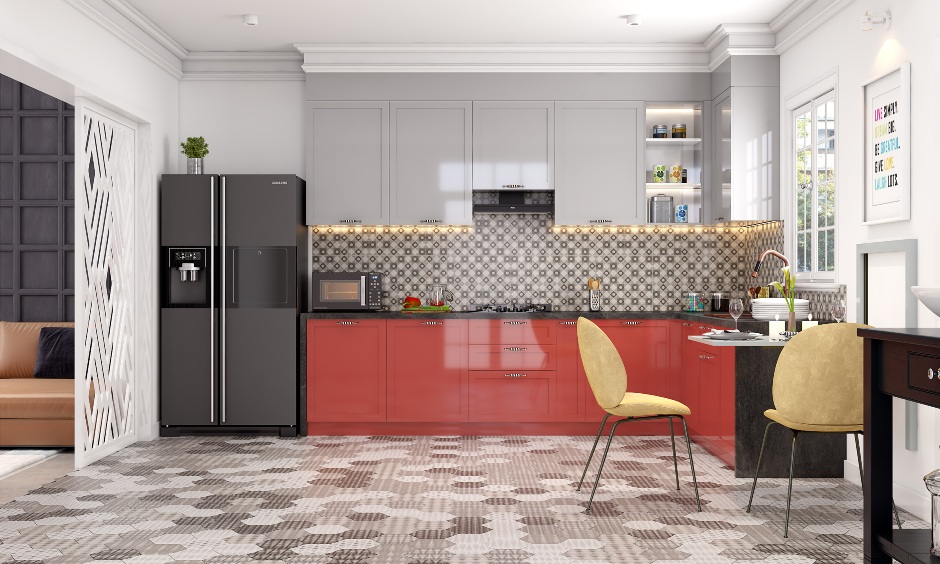
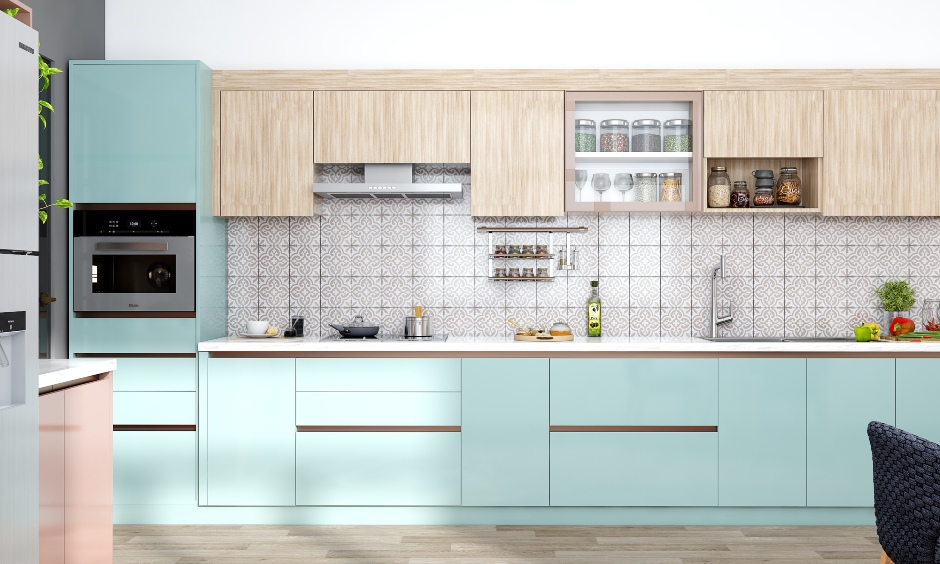
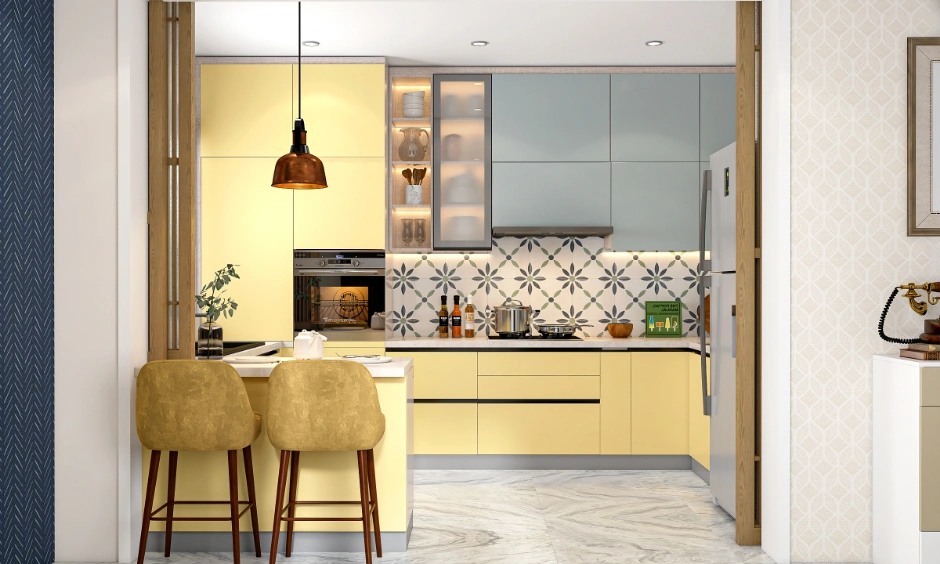
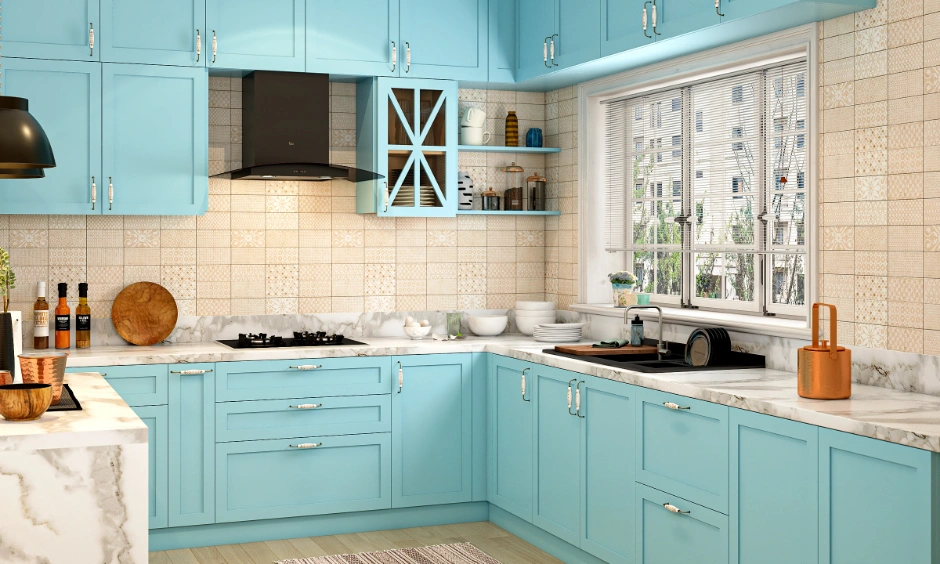
Modular Kitchen Interior Design Ideas

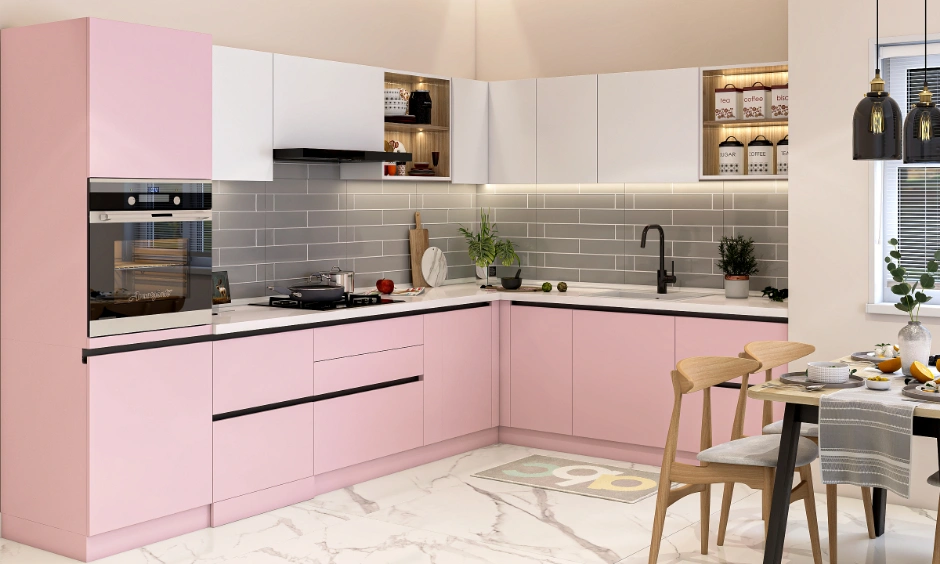
Standard Appliance Space Requirements for Modular Kitchen Dimensions
Appliances take up more room than we realise. If you plan their space early, your cabinets, shutters, and pathways all fall into place neatly. Even when you think of your kitchen dimensions in feet, it helps to break them down by each major appliance so nothing feels squeezed in at the end.
Here is a simple guide you can use while planning:
- Refrigerator
– Keep a 1–2-inch-wide niche on each side of the fridge body.
– Leave at least 2 inches at the back and some space above for ventilation.
– Make sure there is enough room in front of the door to open fully without hitting a wall or counter. - Hob and Chimney
– Match the hob width to the chimney size, usually 60, 75, or 90 cm.
– Leave a few inches of counter on both sides of the hob for placing pans and spoons.
– Keep the chimney height as per brand guidelines, usually 24–30 inches above the hob. - Built-in Oven or Microwave
– These usually sit in a tall unit.
– Leave the width as per the appliance, plus a small margin as suggested in the catalogue.
– Ensure some airflow gaps around and behind so the unit does not overheat. - Dishwasher
– A standard dishwasher is about 24 inches wide and fits under the counter.
– Plan a water inlet, drain, and a plug point in the same zone as the sink.
– Keep at least 3 feet clear in front so the door can fold down and you can load dishes comfortably. - Washing machine in the kitchen
– If your washing machine sits in the kitchen itself, keep enough width for the machine body plus a little breathing space.
– Allow space for pipes at the back and a full door swing in the front.
When you lock these clear spaces early, it becomes much easier to build cabinets around them and keep your kitchen looking aligned, clean, and easy to use every day.
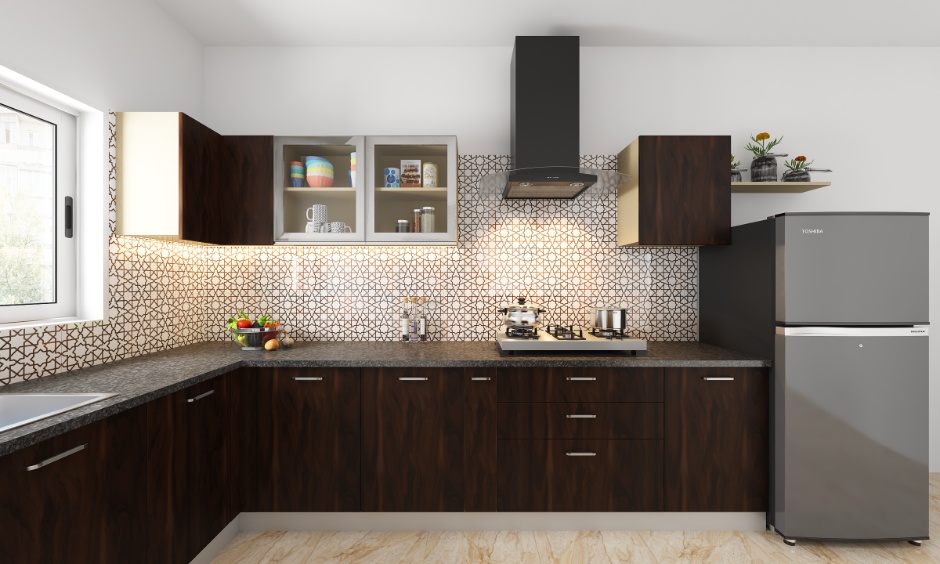
Kitchen Work Triangle Dimensions for Small Kitchen Dimensions
The work triangle is the invisible line that connects your hob, sink, and fridge. When this path is smooth, your kitchen feels easy to use, even in compact homes. You walk less, turn less, and finish tasks faster.
You can use these simple ranges while planning your kitchen dimensions in feet:
- Distance Between Each Point: Try to keep each side of the triangle between 4 and 9 feet. So hob to sink, sink to fridge, and fridge to hob should all fall within this range.
- Total Triangle Length
– Add all three sides together.
– A comfortable total usually sits between 13 and 26 feet.
– Smaller than this feels cramped. Larger than this feels tiring. - Keep the Route Clear
– Avoid putting tall units or islands right in the middle of this triangle.
– Walkways that cross it should have at least 3 feet of free space so two people can pass each other.
This idea works for L-shaped, U-shaped, and parallel kitchens. Once your work triangle feels right, you can add extra counters, tall units, or a breakfast nook without disturbing your main cooking flow.
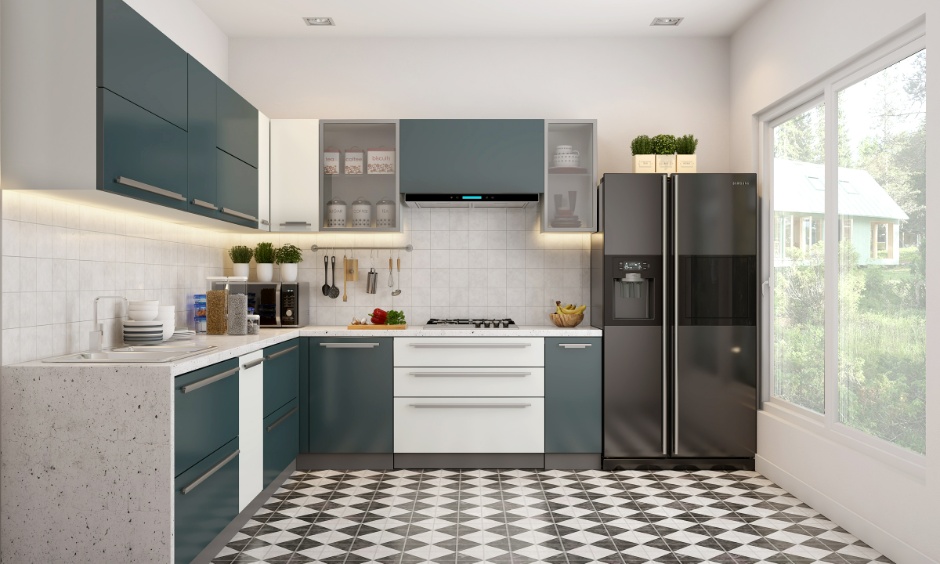
Minimum Walkway & Clearance Guidelines for Standard Kitchen Dimensions
Walkways can make or break how a kitchen feels. Even if your counters and cabinets are perfect, a tight gap can make the whole space feel cramped. That is why clear paths matter as much as measurements on the wall.
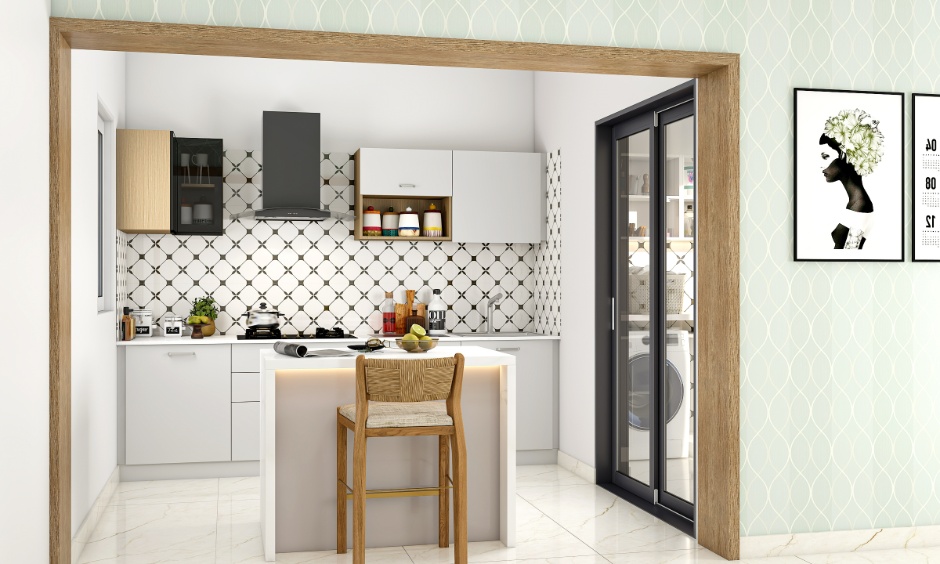
Use these as simple rules when planning your kitchen island dimensions and walkways:
- Main Working Aisle
– Keep at least 3 feet (90 cm) between two counters.
– If two people cook together often, 3.5–4 feet (105–120 cm) feels more comfortable. - Space Around an Island
– Leave 3–4 feet of clear space on all sides of the island.
– This allows drawers, shutters, and appliances to open without blocking the way. - Clearance in Front of Appliances
– In front of the fridge, oven, or dishwasher, keep at least 3 feet free.
– You should be able to open the door fully and still stand comfortably. - Corner Unit Clearance
– Avoid placing two corner shutters that clash when opened together.
– Stagger handles and plan enough gap so doors and drawers do not bang into each other. - Walkway Behind Seating
– If you have stools at a breakfast counter or island, leave around 3 feet behind them.
– This makes it easy to walk past even when someone is seated.
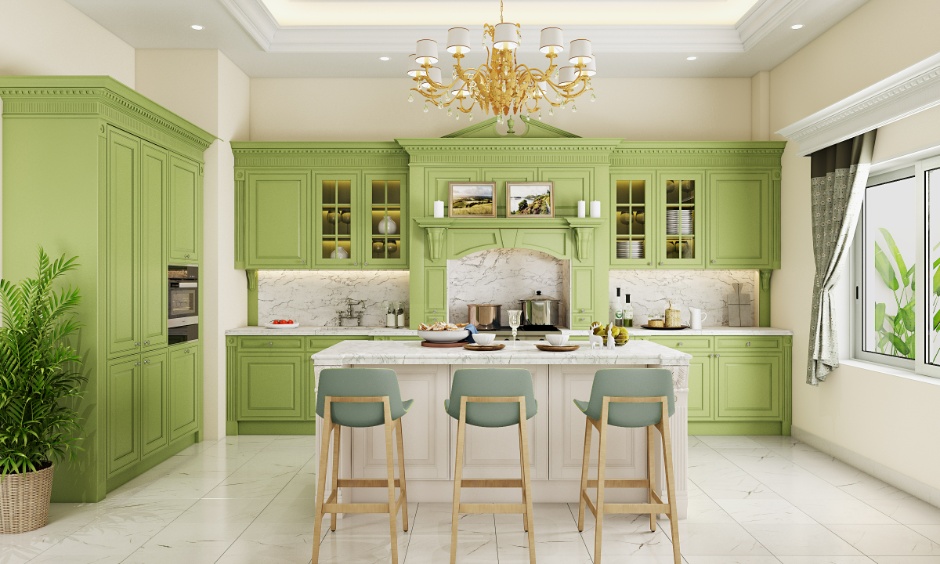
Standard Kitchen Island Dimensions for Dining & Seating
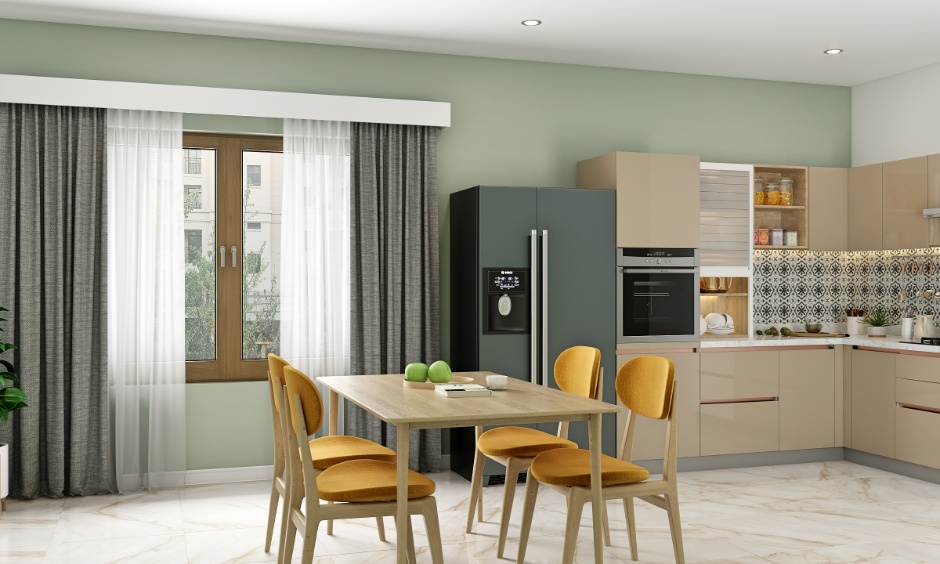
Many modern kitchens double up as casual dining spaces. You might have an island with stools, a breakfast counter, or a compact dining table near the cooking zone. Use these simple sizes to keep things cosy, not cramped.
- Dining Table Height: Standard dining table height is around 28–30 inches, with chair seat height at 17–19 inches for a comfortable dining experience.
- Space Per Person at the Table: Allow at least 22–24 inches of width per person on a straight edge so everyone has enough elbow room.
- Island or Counter Seating Height: Keep counter-height seating at about 36 inches and bar stool seating at 40–42 inches to match practical kitchen island dimensions.
- Knee Space Under the Counter: Plan at least 10–12 inches of overhang under an island or breakfast counter so knees fit in comfortably.
- Gap Behind Seating: Leave around 3 feet of clear space behind chairs or stools so people can walk past even when the seats are occupied.
Small Kitchen Dimensions That Make Compact Spaces Work
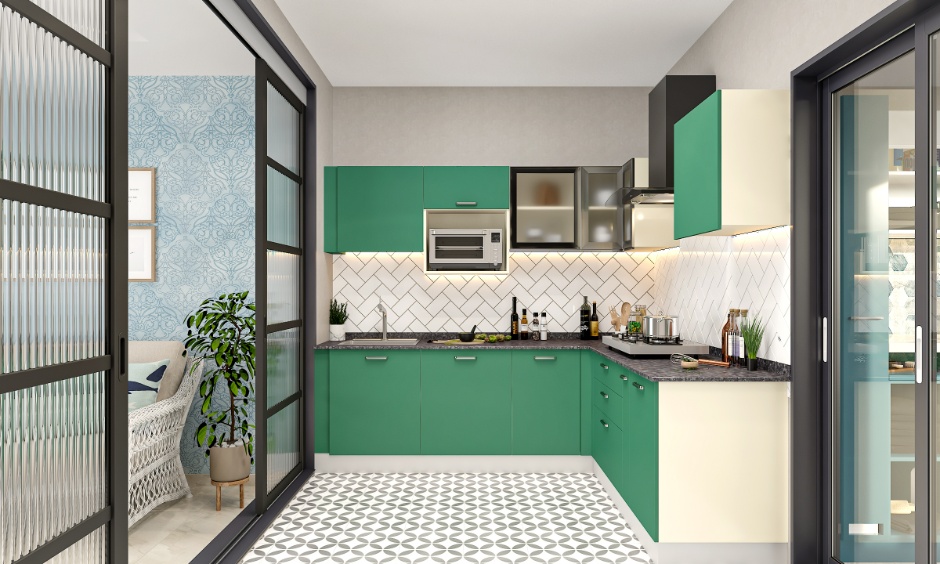
Compact homes can still have very efficient kitchens. The trick is to plan your modular kitchen dimensions carefully so every inch works harder for you. Use these simple guidelines for small spaces:
- Minimum Counter Run
– Try to keep at least 7–8 feet of continuous counter for hob, sink, and basic prep.
– If space is very tight, move the fridge just outside the main kitchen zone to free up platform length. - Walkway in Narrow Kitchens
– Keep at least 3 feet between two counters or between the counter and the wall.
– This is enough for one person to move and open drawers without feeling stuck. - Upper Cabinet Height and Depth
– Use tall wall units that go close to the ceiling, but keep depth around 12–14 inches so the kitchen does not feel heavy.
– Store rarely used items on the top shelves and daily items at eye level. - Single Bowl Sink Choice
– In very small kitchens, a single deep bowl often works better than a double bowl.
– It saves counter space and still handles large pots and pans. - Use Vertical Niches and Corners
– Add slim pull-outs near the hob, hooks on side walls, and open shelves above windows.
– These small touches increase storage without encroaching on the floor area.
Expert Tips to Optimise Standard Kitchen Dimensions
- Match counter height to your wrist level so long cooking sessions feel easier on your back.
- Use deep drawers in base units so your kitchen drawer dimensions suit heavy pots, tall jars, and daily staples.
- Keep the sink near natural light or a window so washing and prep feel brighter and more comfortable.
- Group appliances by task so your mixing, baking, and brewing zones are quick to use.
- Reserve eye-level cabinets for everyday dishes and lower or higher shelves for rarely used items.
- Leave one flexible niche for future appliances so you can upgrade later without redoing the whole kitchen.
- Add a slim breakfast ledge at standard counter height (around 36 inches) to get extra seating without disrupting your standard kitchen dimensions.
Common Kitchen Dimensions Mistakes to Avoid
Even a good layout can feel awkward if the measurements are off. Watch out for these common mistakes to keep your kitchen comfortable and clutter-free.
- Choosing counter height only by look, not by how your body feels when you stand and work.
- Forgetting toe space at the bottom of base units, which makes long cooking sessions tiring for your feet.
- Ignoring basic kitchen cabinet dimensions and ending up with shelves that are too shallow for plates or tall jars.
- Leaving very little gap between the counter and wall units, so appliances like the mixer and toaster feel cramped.
- Making walkways too narrow to save space causes constant bumping into drawers and doors.
- Squeezing in an island just for style, without checking if there is enough space to move around it comfortably.
- Not planning a clear space in front of fridge, oven, or dishwasher doors, so they clash with walls or cabinets when opened.
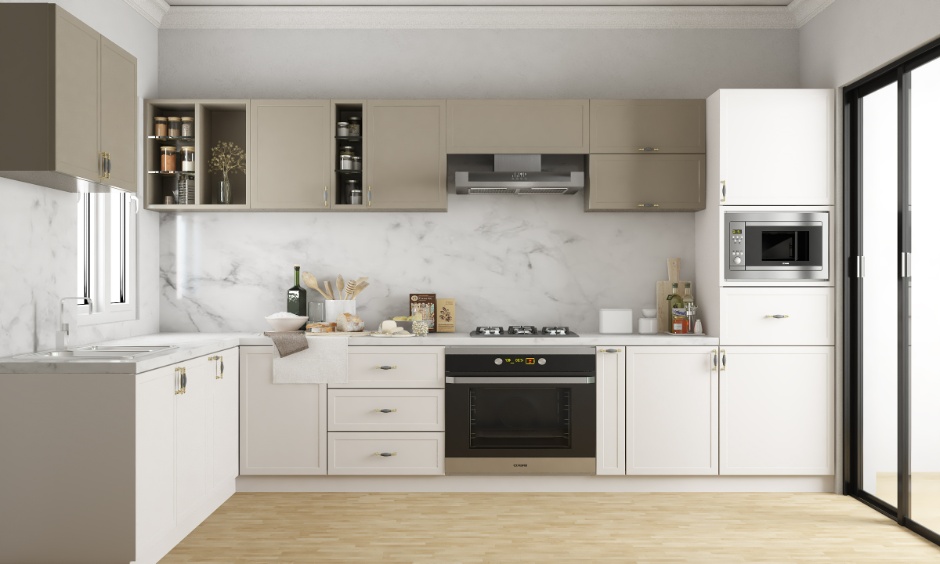
Standard kitchen dimensions give you a simple framework to start with. Once you know the right dimensions for your space, you can tweak heights, depths, and clearances to suit your height, cooking style, and storage needs. A little planning now can save a lot of discomfort and clutter later. Want to design your dream kitchen? Let us take the first step together. Calculate Your Kitchen Estimated Cost and see your kitchen cost before you begin.
Keep Reading: How Modular Kitchens Work?