Select Category


AI Summary
4 key insights · 1 expert tipChoosing a wall colour is easier once you stop looking at paint cards first. Your sofa, flooring and TV unit already decide half the palette. The rest depends on how much daylight the room gets. Warm shades lift darker spaces, while cooler colours work where natural light is generous. Most living rooms need one main colour and one supporting shade, not four. This guide covers colour combinations, room-wise ideas, finishes, and the colour mistakes worth avoiding.
KEY INSIGHTS
- Use one dominant shade on three walls and one supporting shade on the fourth.
- North-facing rooms need warm colours. South-facing rooms can take cool ones.
- Eggshell suits most living rooms. Matt looks better but shows every handprint.
- Painting walls and ceiling the same pale shade makes a small room read taller.
 DESIGNCAFE EXPERT TIP
By our design team
DESIGNCAFE EXPERT TIP
By our design team
E Pravallika, Studio Manager, DesignCafe, Hyderabad suggests, “Live with paint samples for a full day. Morning, afternoon and evening light can make the same shade look like three different colours.”
One dominant shade, one supporting shade, and a third only if the room can take it. Find more about best living room colours ahead.
Most living room repaint plans begin with a folder full of saved images.
The problem is, every room in those pictures is different. Choosing becomes much easier once you work with the room you already have, instead of the one on Pinterest. Paint shade changes based on the light and size of the room. So, start with a blank slate. This guide gives you that.

How To Choose The Right Wall Colour Combination For Your Living Room?
Start with what you are not replacing. Any wall colour combination for living room use has to complement the colour of your sofa, flooring, and other furniture. Then check the light.
A bright south-facing room can carry cooler shades, while a darker room usually feels better in warmer neutrals. Pick one dominant colour for three walls and an accent colour for the fourth. Test both on the wall, not on paper.
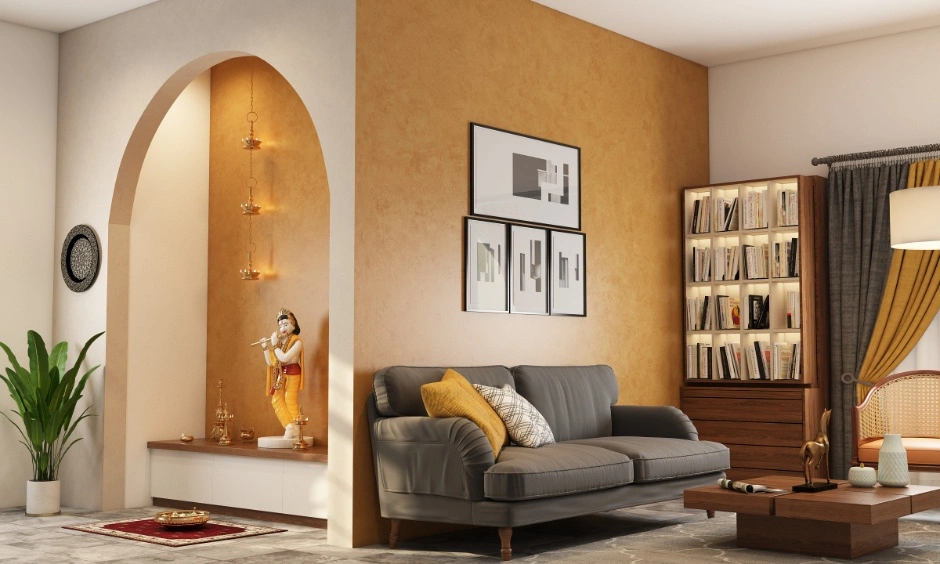
Best Wall Colour Combinations For Living Rooms
Some colour combinations stay relevant for years. Others make more of a statement. Here are twelve pairings that work across different home styles.
1. White + Beige: If you want a combination that rarely goes wrong, start here. White keeps the room bright, while beige adds warmth without making the space feel heavy.
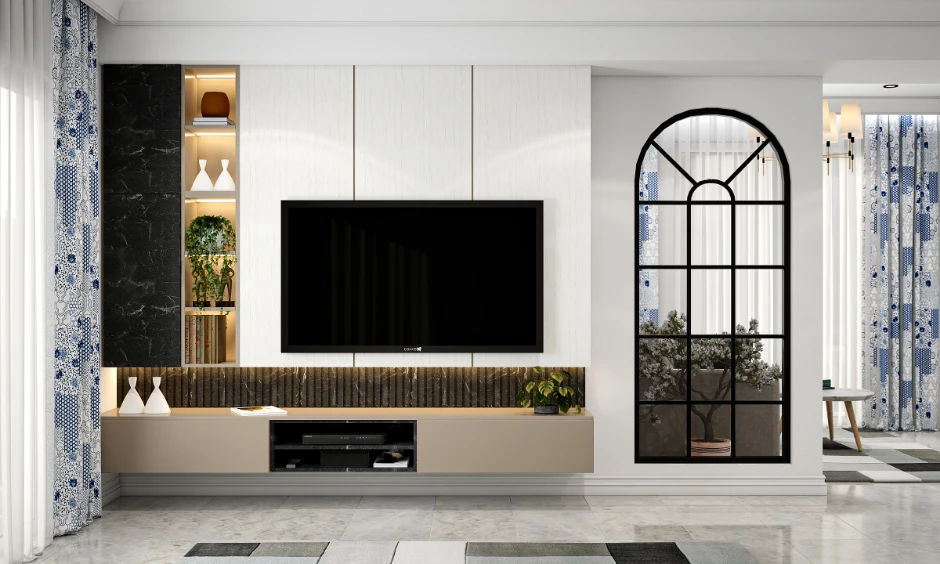
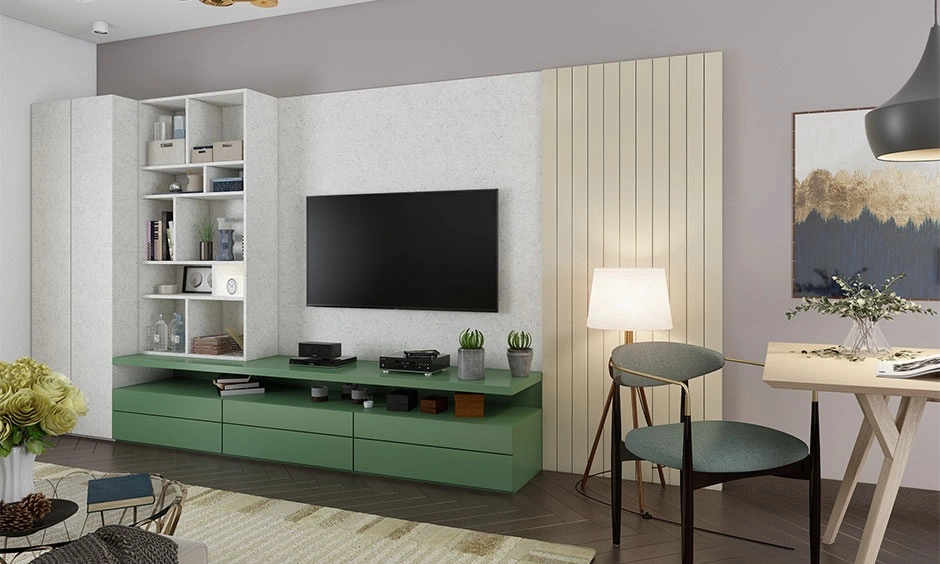
2. White + Grey: Grey works best behind the TV or media unit, where it softens the contrast of a black screen. Keep the remaining walls white so the room stays open.
3. Cream + Brown: Cream walls with a brown feature wall create a warm, timeless palette. The combination works especially well with teak and rosewood furniture.
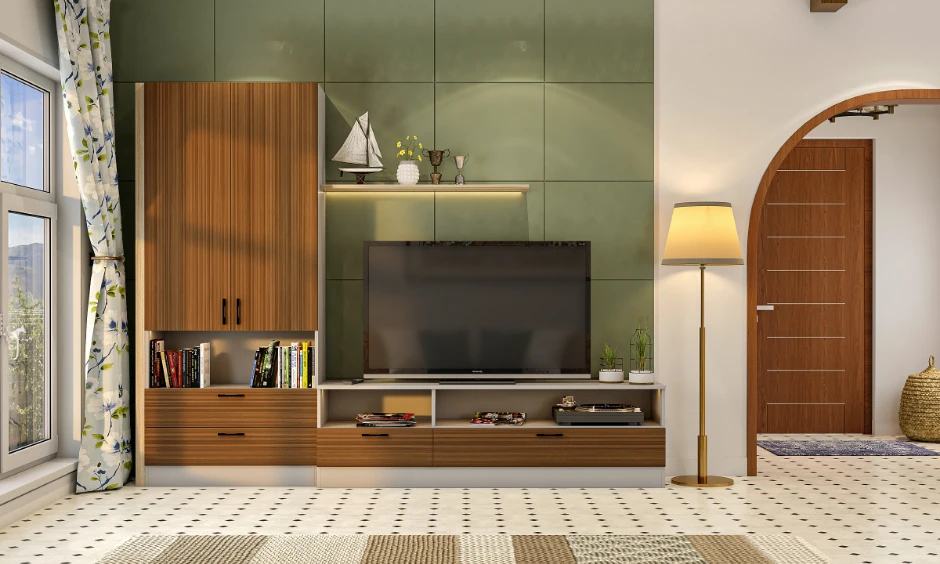
4. Sage Green + White: Sage on the accent wall, white on the rest. It works in rooms with plants and reads calmer than any blue.
5. Navy Blue + White: Navy behind the sofa, white on the other three. The dark wall stops a large living room from feeling empty.
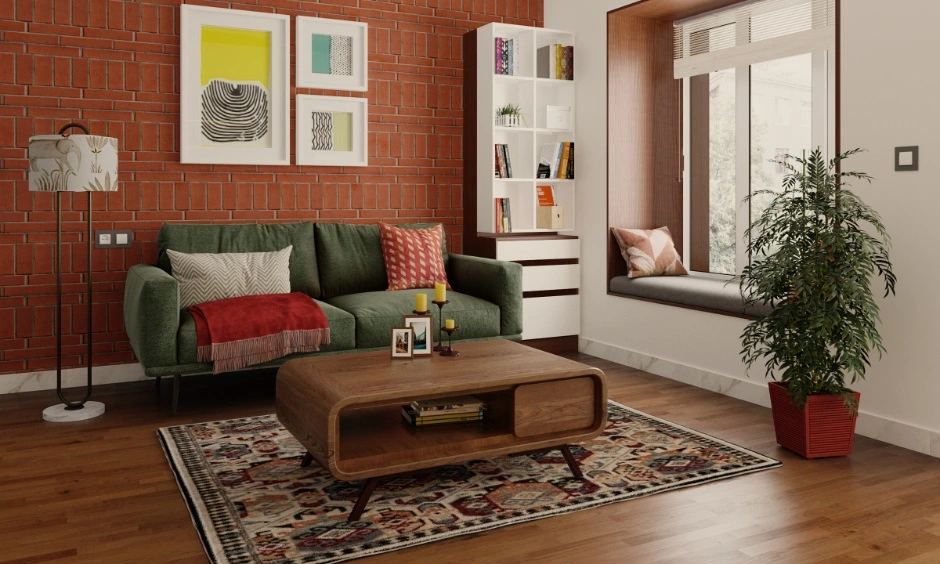
6. Terracotta + Beige: Terracotta adds warmth, while beige keeps the room balanced. It’s also a practical choice for homes where dust is hard to avoid.
7. Olive Green + Cream: Olive on the lower half, cream above, split by slim wooden beading. Best in rooms that get ample natural light.
8. Sky Blue + White: Sky blue brings lightness to compact living rooms. Keep the ceiling white to make the room feel taller.
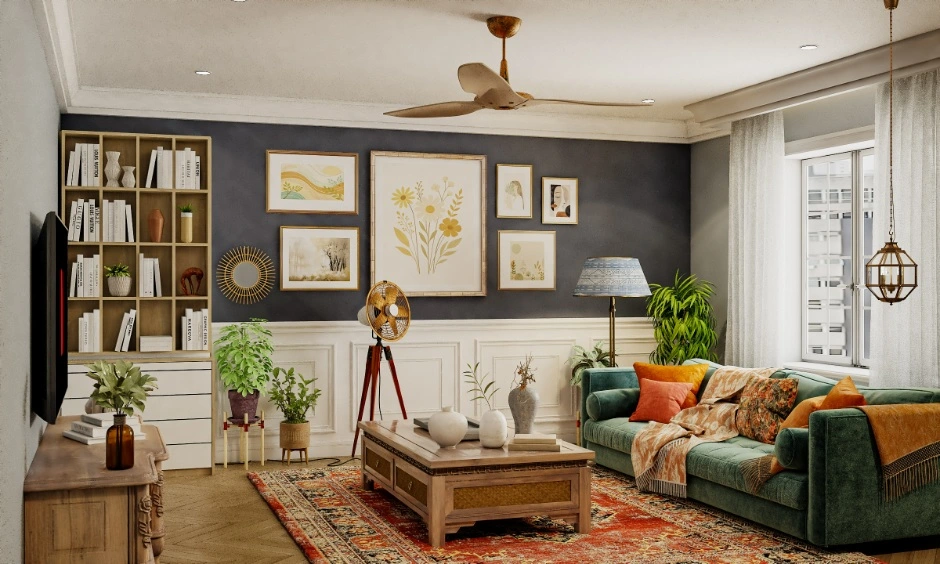
9. Charcoal + Wood: Charcoal pairs naturally with wooden battens, especially on the TV wall. Balance the look with lighter walls elsewhere.
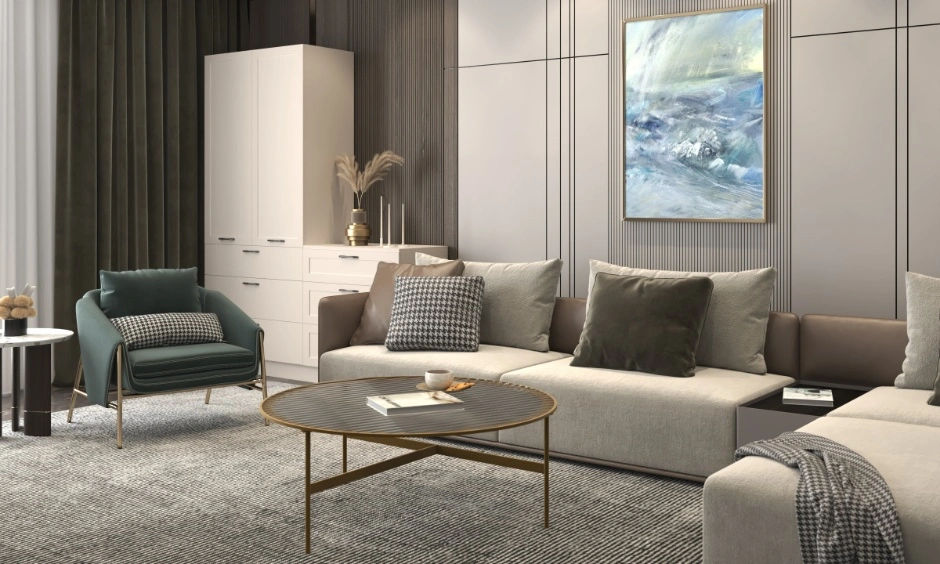
10. Greige + White: Greige is grey mixed with beige, so it is warmer than grey and less yellow than beige. White keeps the palette fresh.
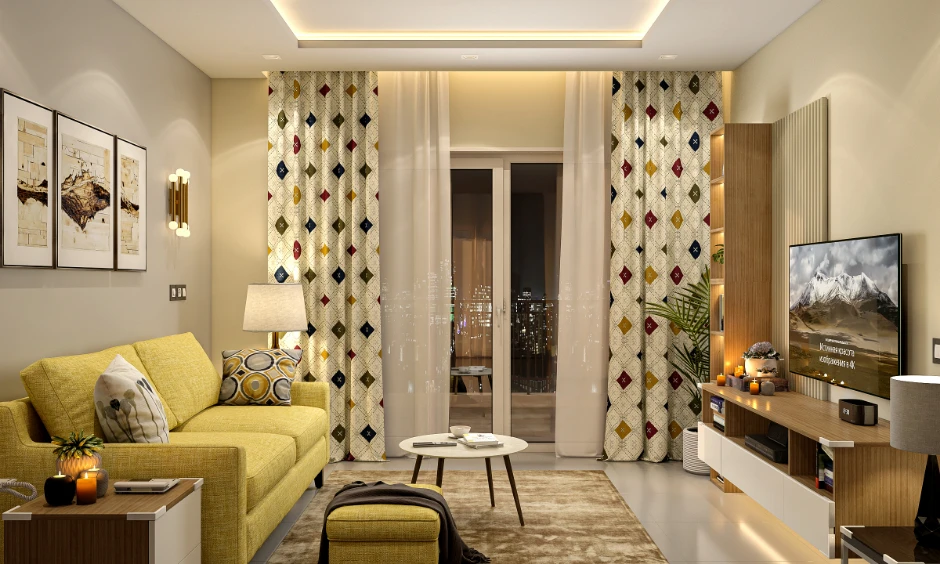
11. Mustard + Grey: A mustard accent wall adds personality without overwhelming the room. Warm grey on the remaining walls keeps the colour in check.
12. Blush Pink + White: Choose a muted blush instead of a bubblegum pink. Against white, it feels elegant and contemporary rather than overly playful.
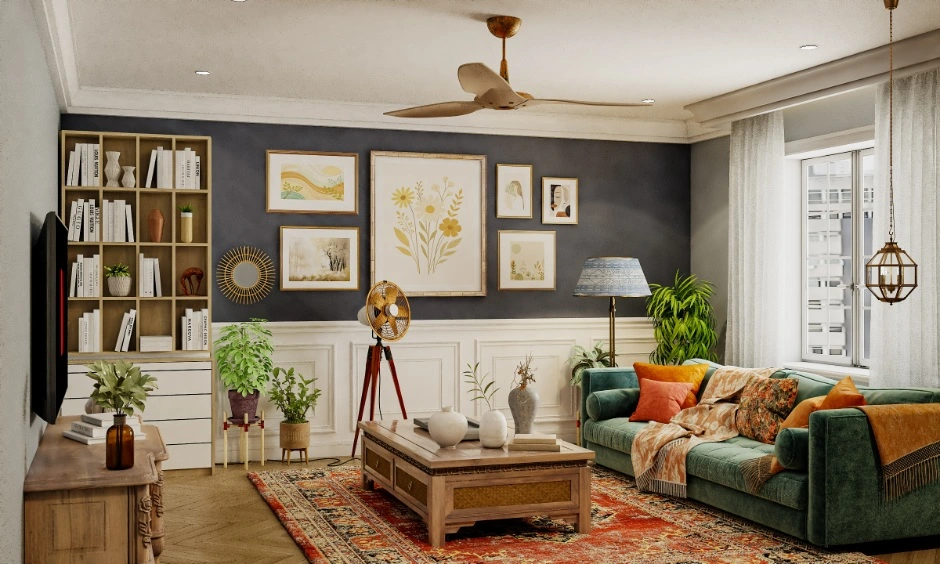
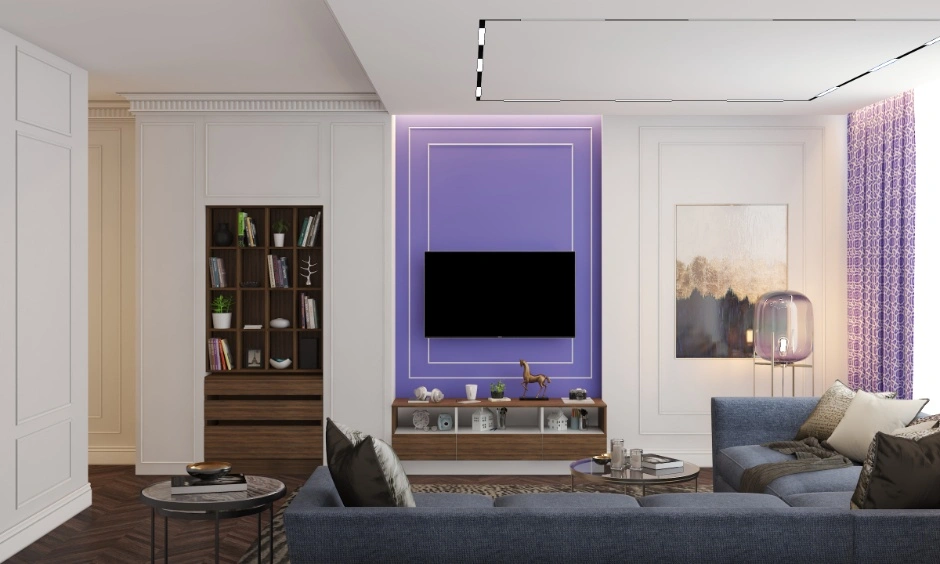
Modern Two-Colour Combination Ideas For Living Room Walls
Two-colour combinations for living room walls have become quieter over the last few years.
Instead of painting one entire wall a bold shade, homeowners are using colour to frame furniture or create subtle focal points. For example, colour blocking behind a TV hides wire visual clutter or defines an entry nook.
Some ideas that work well include:
- A darker lower section with a lighter upper wall
- A floor-to-ceiling colour block behind the TV
- A painted arch behind the sofa
- A slim border framing the feature wall
- Two shades of the same colour used together
Indian Living Room Colour Combinations
Indian homes usually receive stronger daylight and often include warm wooden furniture. That is why warm neutrals drawing room colour combinations are still so popular.
Some combinations that rarely disappoint include:
- Cream with emerald, mustard or bold pink accents
- Ivory paired with dark teak furniture
- Beige with terracotta
- Off-white with indigo
- Warm grey with brass and cane
Colourful Living Room Interior Design Ideas


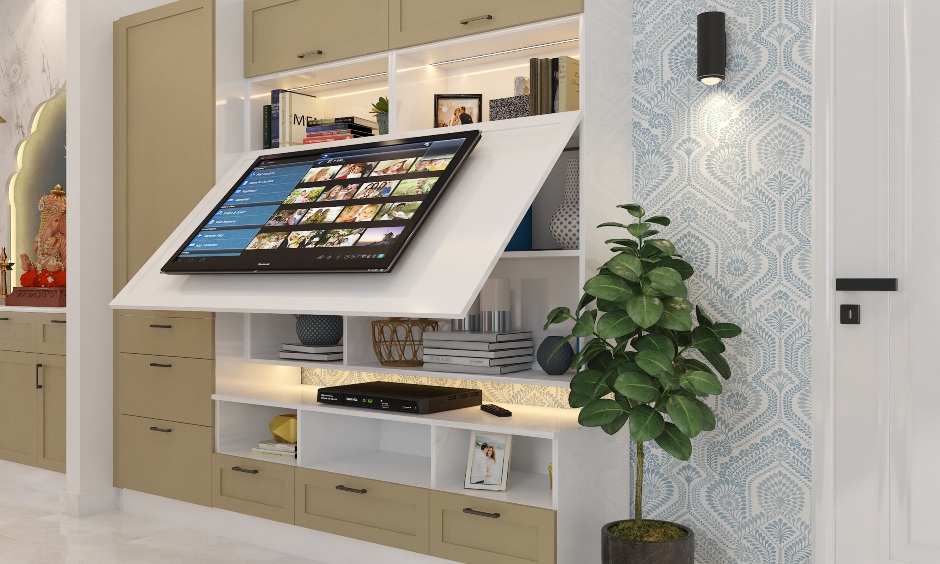
Living Room Colour Ideas By Interior Style
The right wall colours depend on two things: your room’s size and your interior style.
A palette that works in one home can feel completely different in another. Here’s a quick guide:
- Modern Minimal: Use greige on all four walls for a seamless look.
- Traditional Indian: Pair cream walls with a brown feature wall to complement wooden furniture.
- Contemporary: A charcoal accent wall against white walls adds depth without making the room feel dark.
- Boho: Combine terracotta and olive to create a warm, earthy palette.
Colour Ideas For Small Living Rooms
- A small room does not need more colours. It needs fewer visual breaks.
- Painting the walls and ceiling the same light shade softens the edges and makes the room feel taller.
- Skip the dark accent wall in anything under 120 sq ft. They tend to shrink the room rather than add drama.
- Plan an accent design for the wall behind the TV, since that is where you look longest.

Living Room Colours Based On Direction
Natural light changes how every paint colour looks.
- North-facing rooms usually benefit from cream, beige or terracotta.
- South-facing rooms can comfortably handle grey, sage and soft blues.
- East-facing rooms look best in warm neutrals that stay balanced through the day.
- West-facing rooms suit mid-tone colours that soften harsh afternoon sunlight.
If the room has only one window, keep the opposite wall lighter to help bounce daylight across the space.
Best Paint Finishes For Living Room Walls
| Finish | Look | Cleans | Best for |
|---|---|---|---|
| Matt | Flat and soft | Poorly | Ceilings, low-traffic walls |
| Eggshell | Low sheen | Reasonably | Most living room walls |
| Satin | Soft glow | Easily | Homes with children or pets |
| Gloss | Reflective | Easily | Doors, trim and skirting only |
Colour Psychology For Living Rooms
A wall colour doesn’t just change the look of a living room. It changes how the space feels when you spend time in it, and this is where colour psychology comes into play.
Cool shades like blue and green create a calm backdrop for everyday living. Warm colours such as terracotta and rust make larger rooms feel cosier and more inviting. If you prefer something timeless, neutrals are hard to beat. They pair easily with different furniture styles and rarely feel dated.
Common Living Room Wall Colour Mistakes To Avoid
Most colour mistakes happen before the first coat goes on. Here are some you should not repeat:
- Choosing from a paint chip instead of testing the wall.
- Picking an accent wall before understanding the natural light.
- Matching the wall exactly to the sofa. Exact matching flattens the visual depth of the room, whereas shifting one or two tones creates dimension.
- Using too many colours in one room.
- Pairing warm walls with a stark white ceiling.
Conclusion
The right wall colours don’t have to stand out.
They have to work with your furniture, natural light and the way you live in the room every day. Start with what you already have and choose a palette you’ll still enjoy years from now. If you’re planning a bigger makeover, book a free consultation with DesignCafe.
For more such living room design ideas, explore our blog section.
FAQs
1. Which colour combination is best for a living room?
White and beige are the safest choices for most homes. They work well with different furniture styles and never feel dated.
2. Which two-colour combination makes a living room look bigger?
Two light shades from the same colour family, such as white and greige or cream and beige, make a living room feel more spacious.
3. What colours are trending for living rooms?
Greige, sage green, terracotta, warm grey and muted blues are among the most popular living room colours today.
4. Which wall should be the accent wall?
Choose the wall that naturally draws attention, usually behind the sofa or the TV unit. Avoid walls with large windows.
5. How do I match wall colours with furniture?
Choose wall colours that complement your furniture instead of matching them exactly. A difference of one or two tones adds depth.
6. Which paint finish is best for living rooms?
Eggshell is the best choice for most living rooms. It offers a smooth finish and is easier to clean than matt paint.
7. What colours work best for Indian living rooms?
Cream, beige, ivory and greige work well as base colours. Pair them with one accent shade like terracotta, sage green or mustard.
8. Which neutral colours never go out of style?
Off-white, cream, beige and greige remain timeless because they suit most furniture styles and adapt easily to changing décor.