Select Category

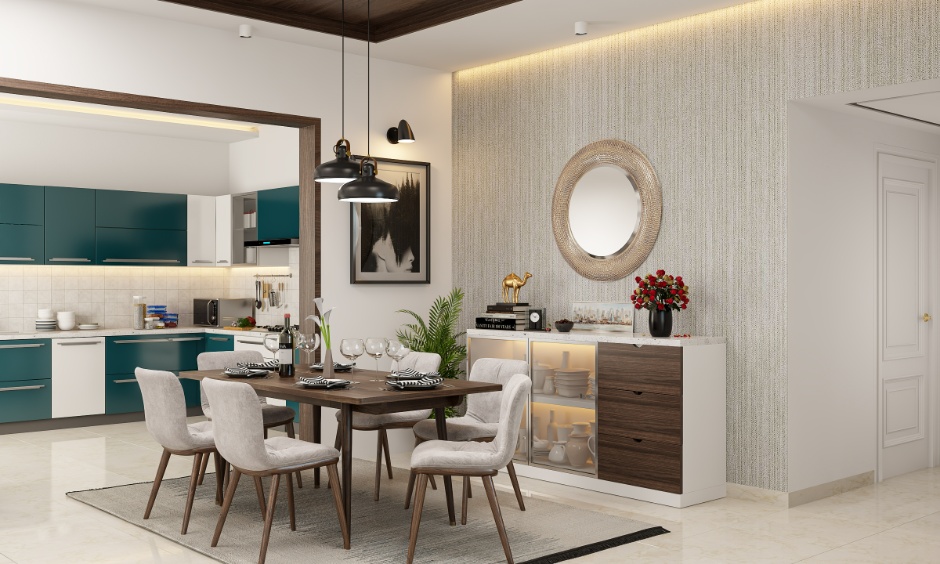
From daily family meals to festive feasts, a simple guide to dining room layout that keeps your dining corner cosy, open and stylish.
This blog explores how a smart dining room layout can make everyday meals and special gatherings feel easy, cosy, and stylish, even in compact Indian homes. It covers simple rules for table size, seating gaps, lighting height, and walking space so your dining area never feels cramped. You will also find ideas for living-dining combos, small dining corners, and space-saving furniture like benches and extendable tables. With clear steps and real home tips, this guide helps you plan a dining space that looks beautiful, functions well, and fits naturally between your kitchen and living room.
What You Will Read Here:
- Simple rules for planning a practical dining room layout.
- How to choose table size, shape, and seating for your space.
- Ideas to place storage, rugs, and lighting in the dining area.
- Tips to design small dining corners and living dining combos.
- Common dining layout mistakes and quick fixes you can use.
Best For: Homeowners who are planning a new dining space or redoing an existing one, especially in small flats, open-plan living-dining rooms, or compact homes, where every inch matters.
Expert Tip: Says Jessica, Studio Manager at DesignCafe, “Always plan your main walking path before your dining set. Keep at least 90 cm clear from the kitchen to the living room, then place the table and storage around it so the room feels instantly more spacious”.
Your dining room is where everyday meals, weekend brunches, and festive dinners all come together. It is where stories are shared, guests are welcomed, and your home feels warm and lived in. When this space is planned well, it does not just look good; it feels easy to use every single day. This blog walks you through how the right dining room layout can make your space look bigger, move better, and feel more stylish. You will find simple tips to plan your table, chairs, lighting, and walkways, so you can create a cosy, clutter-free dining area that works beautifully for both daily meals and special occasions.

Why Your Dining Room Layout Matters?
Your dining room often sits at the heart of your home. It connects the kitchen, the living room, and the people who use it every day. When the space is cramped or awkward, even simple things like serving food, pulling out chairs, or walking around the table can feel difficult. A well-planned dining room layout makes daily life smoother and more comfortable. It helps you use every inch wisely, keeps walkways clear, and creates a cosy spot where family dinners and friendly gatherings feel relaxed and inviting.
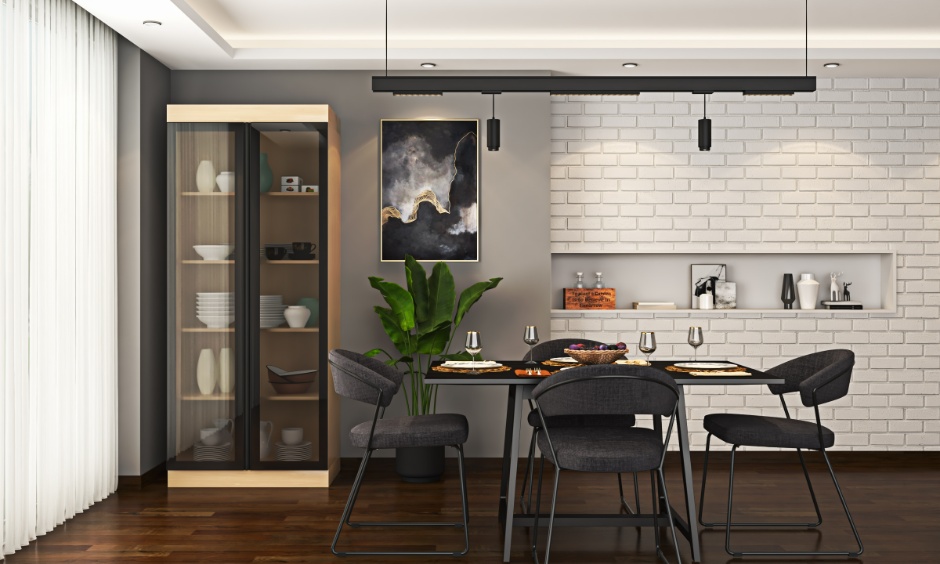
The ‘Golden Rule’ of Dining Room Layout Dimensions
If there is one simple rule for a comfortable dining space, it is this. Always leave enough walking space around your table. This is what makes the room feel open instead of cramped. As a thumb rule, try to keep at least 90 cm (about 3 feet) of clearance between the edge of your dining table and the nearest wall or furniture. This gap gives everyone enough room to pull out chairs, sit down, get up, and walk past without squeezing. When we plan dining room layout dimensions for compact homes, we first check the walking space and then finalise the table size and seating style. Once this clearance is set, everything else, from chairs to crockery units, falls into place more easily.
Expert Tip: Before you buy your dining table, mark the table size on the floor with masking tape and place a few chairs roughly in position. Walk around it, pretend to sit and serve. If it feels tight now, it will feel even tighter with the actual furniture, so size down or change the shape.
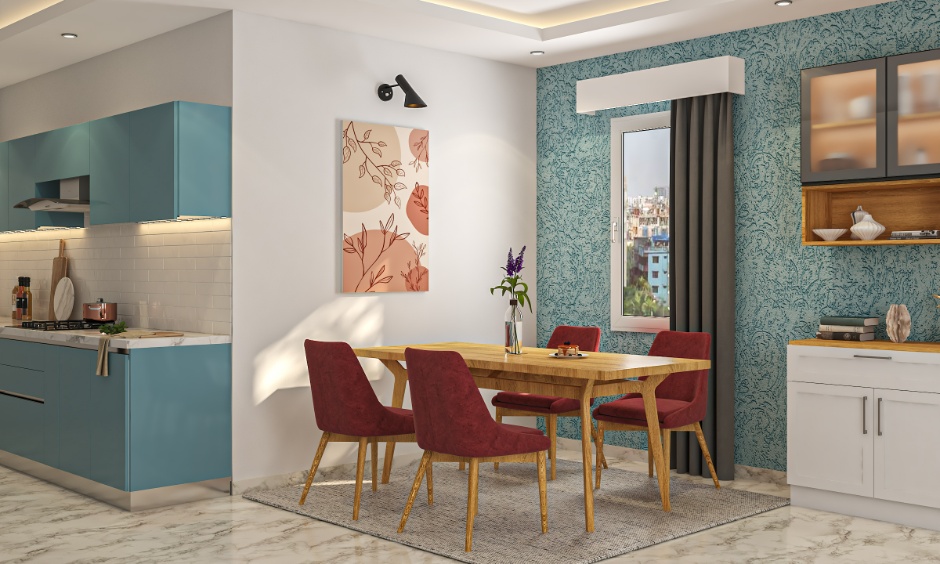
Key Components of an Effective Dining Room Furniture Layout
A well-planned dining room furniture layout makes the space look neat, cosy, and easy to use every day. Think of it as arranging a small team where each piece has a clear role.
- Start with the dining table: Pick a size and shape that suits your room and the number of people you usually seat.
- Plan the chairs next: Leave enough space between chairs so no one feels cramped when sitting or getting up.
- Add smart storage: Keep crockery units, consoles, or sideboards close for serving, but away from main walkways.
- Layer the lighting: Use a pendant above the table, plus wall lights or a floor lamp, to softly highlight the dining zone.
- Check the flow: You should be able to pull out chairs and walk around the table without bumping into any furniture.
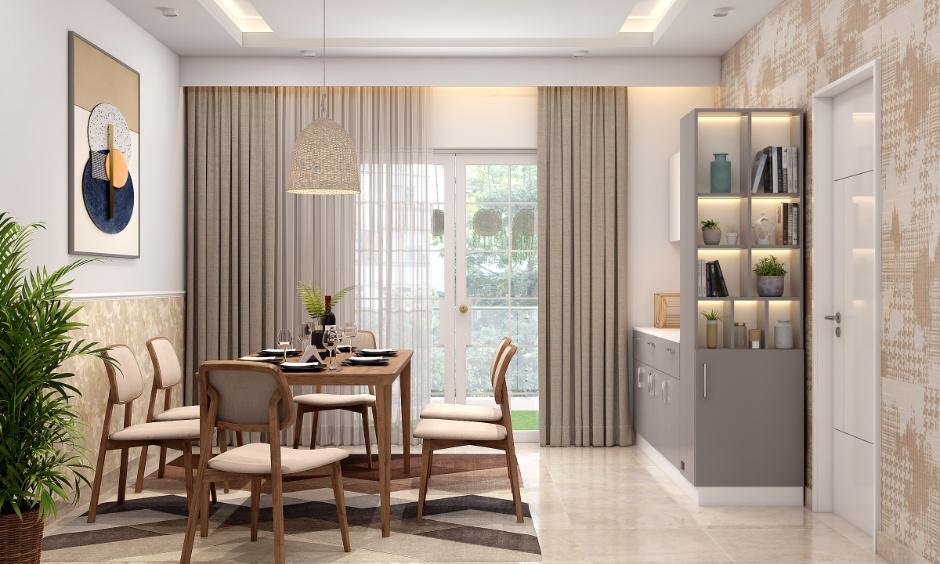
Trending Dining Room Interior Design Ideas


Steps for Designing the Perfect Dining Room Layout Plan
Designing a cosy, smart dining space is easier when you break it into simple steps. A clear dining room layout plan helps you pick the right pieces, avoid clutter, and make every corner work harder for you.
1. Choose the Right Table
Pick a shape that suits your room. Round tables work well in compact spaces. Rectangular tables suit longer rooms. Make sure the table size leaves enough walking space around it. If your home is small, look for space-saving options like a pull-out dining table, a foldable wall-mounted table, or a dining table with storage for crockery or cutlery.
2. Optimise Seating
Decide how many people you need to seat daily and on special occasions. Choose slim chairs for small rooms. You can also mix chairs with a bench on one side to save space and tuck it in neatly when not in use.
3. Include Proper Lighting
Hang a pendant or chandelier above the table to anchor the area. Add wall lights or a nearby floor lamp for a warm, relaxed mood during dinners.

4. Define Space With Rugs
Use a rug large enough for all chair legs to rest on, even when they are pulled out. This visually separates the dining zone, especially in an open-plan living and dining area.
5. Plan for Movement
Check all walkways. You should be able to walk from the kitchen to the table and from the table to the living room without squeezing through gaps. Adjust furniture if any corner feels tight.
6. Incorporate Decorative Elements
Add a simple runner, a vase, or a set of candles on the table. Use a wall clock, art, or a mirror on the nearby wall. These small touches make the dining corner feel welcoming without adding clutter.
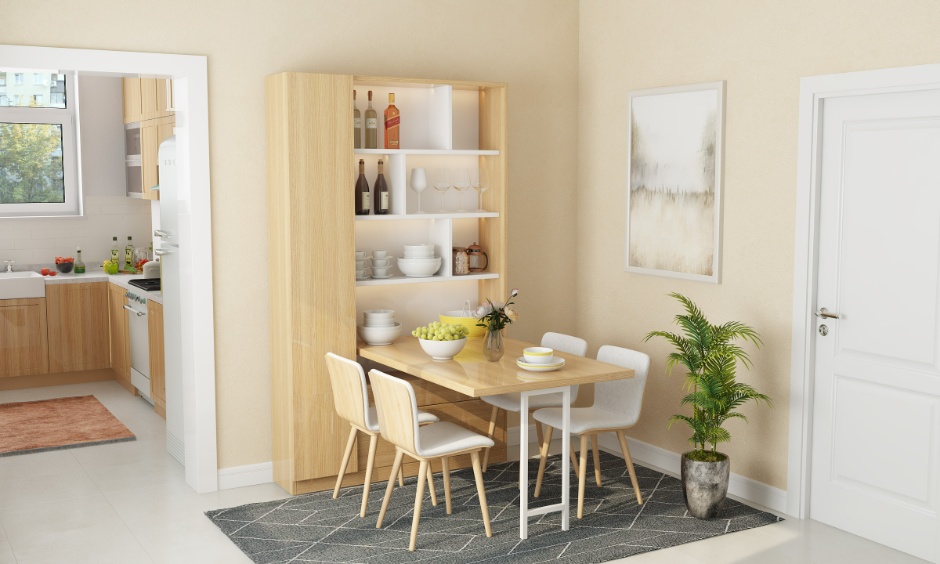
Common Dining Room Layout Mistakes and How to Fix Them
Even a beautiful dining set can feel odd if the layout is not planned well. Here are some simple mistakes we often see at home, and easy ways to fix them.
- Table Too Big for the Room: If the table touches walls or chairs cannot be pulled out fully, the table is too large. Switch to a smaller table, a round one, or a bench on one side to free up space.
- No Clear Walking Path: When you cannot walk from the kitchen to the dining room without turning sideways, the flow is blocked. Shift the table slightly, move storage to one wall, and keep at least 90 cm clear for movement.
- Chairs Crammed Too Close: If elbows keep bumping into each other, reduce the number of chairs used daily. Keep extra chairs in another room and pull them out only when guests arrive.
- Storage Placed in the Wrong Spot: A bulky crockery unit right next to the table can make the room feel heavy. Place storage along a longer wall and choose slimmer units to keep things airy.
- Lighting Not Centred Over the Table: A pendant that hangs off to one side looks odd. Shift the table to sit under the light or use a ceiling hook to centre the fixture above the table.
- Too Many Decor Pieces: Overdone centrepieces and wall decor can make the space feel cluttered. Stick to one or two simple accents and follow clean, fuss-free dining room layout ideas for a neat, calm look.
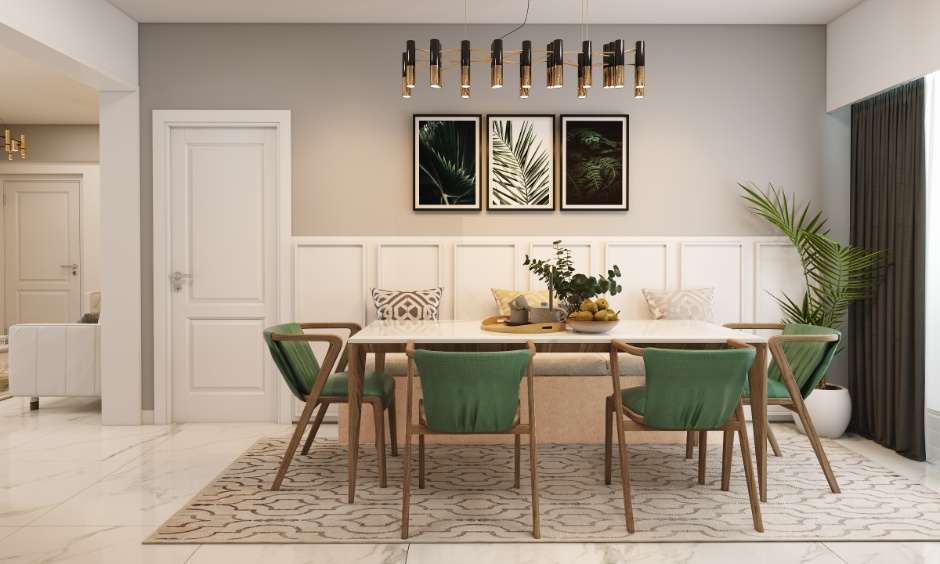
A good dining space is not only about matching the table and chairs. It is about how you move, how you serve, and how comfortable everyone feels when they sit down together. With the right dining room layout, even a compact corner can look stylish, open, and easy to use every day. At Design Cafe, we plan dining rooms the way you actually live. Maybe you need a pull-out table for small spaces, a cosy nook next to the kitchen, or a smart unit to store all your crockery. We look at your room size, your routine, and your style, then design a layout that brings it all together. If you are thinking of redoing your dining space or your entire home, book a free consultation with DesignCafe or call us now. Let us design a smart, beautiful dining area that your family will love.
FAQs
1. What is the optimal table size for a dining room?
Choose a table that gives each person about 60 cm of space and keeps at least 90 cm free around it for walking. For small homes, a compact 4 seater around 120–140 cm long usually works well.
2. Can I mix different styles of chairs?
Yes, you can mix chairs as long as one element matches, like colour, height, or material, so the set still looks coordinated.
3. What are some tips for small dining areas?
Pick a round or compact table, use slim chairs, and consider space-saving options like a bench or foldable table. Keep the area clutter-free so your dining room layout feels open.
4. How far above the table should the light fixture hang?
A pendant or chandelier usually works best at about 75–90 cm above the tabletop.
5. Is a bench better than chairs for small dining rooms?
A bench can save space because it tucks under the table and seats more people in a line. You can pair one bench with chairs on the other side for a cosy, flexible setup.