Select Category


AI Summary
4 key insights · 1 expert tipA kitchen false ceiling design does two jobs at once. It hides the chimney duct, wiring, and running pipes, and gives you a flat surface to plan lighting properly. In Indian kitchens, the material matters more than the shape. This guide compares POP, gypsum, PVC, wood and metal ceilings, explains which material suits Indian kitchens, and shares design ideas for small, open and modular layouts.
KEY INSIGHTS
- Gypsum gives a smoother, crack-resistant finish than POP, and installs in about two days.
- PVC costs the least and resists steam, but looks flat under strong light.
- The ceiling should drop no more than eight inches in a standard ten-foot kitchen.
- Always leave an access panel above the chimney duct, or the first service call means cutting the panel open.
 DESIGNCAFE EXPERT TIP
By our design team
DESIGNCAFE EXPERT TIP
By our design team
Nivedita Thaker, Studio Manager, DesignCafe Bengaluru, suggests, “Leave an access panel above the chimney duct. It makes future servicing easier and saves you from breaking the ceiling open.”
Here’s how kitchen false ceiling designs hide the chimney duct and better distribute the light.
Look up in most Indian kitchens, and you will find the same thing. A chimney duct running to the wall, a tangle of wiring, and one LED bulb doing all the work (plus creating shadow on the work surface). A false ceiling fixes all three. It covers the mess, holds better lighting, and gives the room a finished edge.
The trick is knowing which material survives daily Indian cooking, and which one gives up in the first monsoon.

Why Install A Kitchen False Ceiling?
Lighting, appliances and storage work together cohesively in an ideal kitchen. A false ceiling gives you the freedom to position task lights where you actually cook, allows the chimney duct to sit flush, and creates a cleaner finish around cabinets and tall units.
When planned with the layout, a kitchen false ceiling makes the space easier to use every day.
Materials For Unique Kitchen Ceiling Designs
Almost every kitchen ceiling design in India uses these 5 materials.
1. POP False Ceiling: Plaster of Paris (POP) is mixed and set on site. Being a mouldable wet plaster, it has unmatched capabilities to handle unique kitchen ceiling designs with curves. But POP may get cracks over the years.
2. Gypsum Ceiling: Gypsum boards screw onto a metal frame, so the work finishes fast and stays clean. A kitchen gypsum ceiling design holds its joints longer than POP, though one leak can ruin the board.
3. PVC Ceiling: A PVC ceiling design for kitchen use wins on moisture. Panels are waterproof. Wipe once in a while with soapy water. It is the cheapest material of all.
4. Wooden Ceiling Accents: Classy kitchen ceiling design with wooden accents breaks the clinical vibe and adds warmth. However, keep it away from the cooking hob as it tends to get oily. Use them over the island as an accent piece.
5. Metal Ceiling Panels: Brushed aluminium or steel suits industrial and modern kitchens. The panels resist heat and clean easily.
Modern Kitchen False Ceiling Ideas
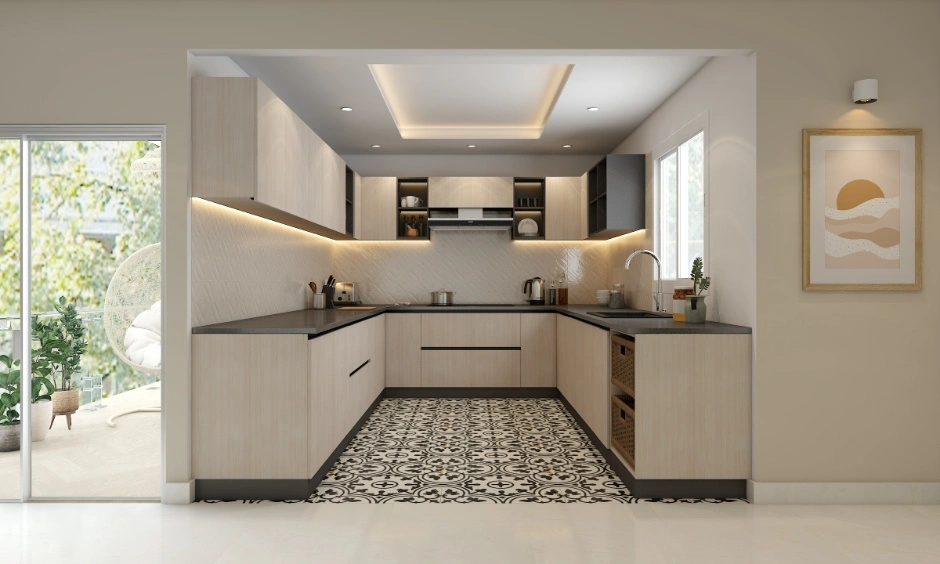
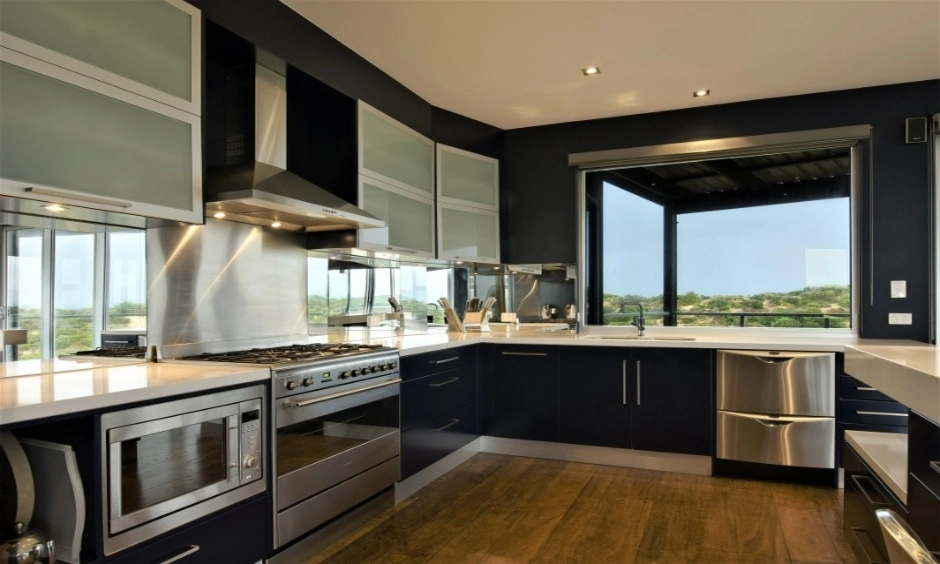
Today, most homeowners prefer clean and uncluttered kitchen ceilings. Instead of complex multi-layered designs, keep the modern kitchen ceiling design simple with a slim recessed border. A concealed cove light around the edge works as ambient lighting when the task lights are not in use.
If an all-white ceiling feels too boring, add wooden beams or a CNC wooden panel over the island or breakfast counter.
Small But Classy Kitchen Ceiling Design
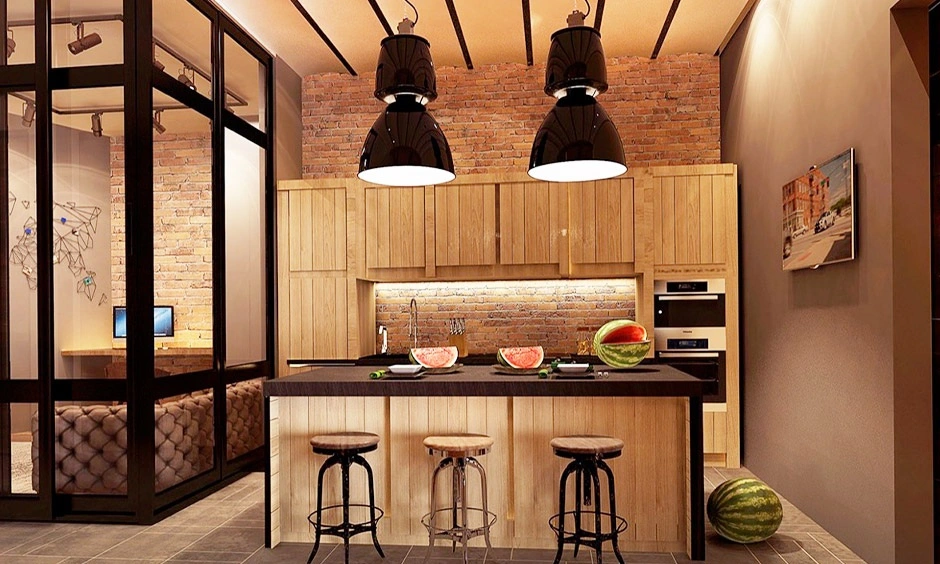
Designing a small kitchen false ceiling design is a major exercise in restraint. Limit the false ceiling drop to 4-5”. Go deeper, and a 7×8 kitchen starts to feel like a corridor.In small spaces, peripheral design works best. Drop the ceiling around the edges and leave the centre at full height.
In terms of colour, gloss white or a pale grey small kitchen ceiling design works best as it bounces natural light back and illuminates the space naturally.
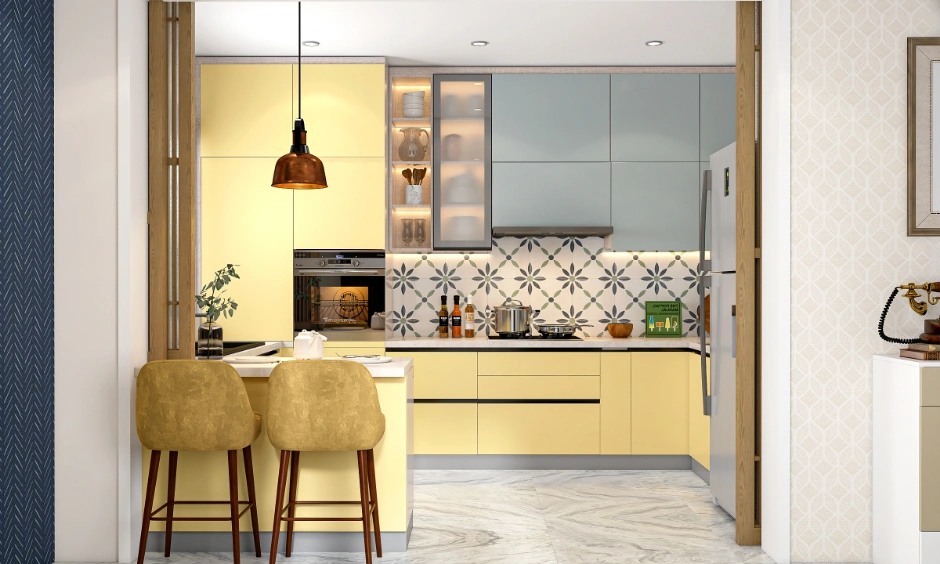
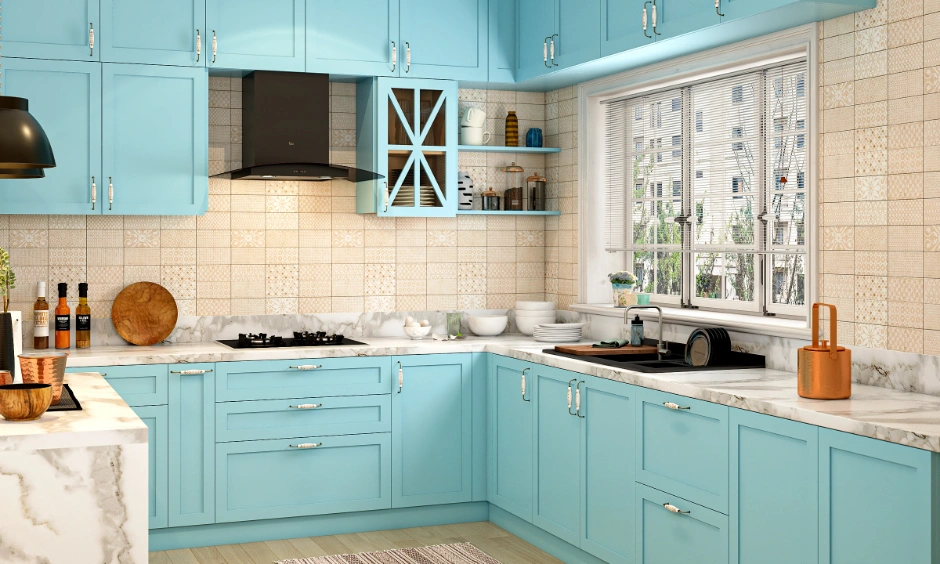
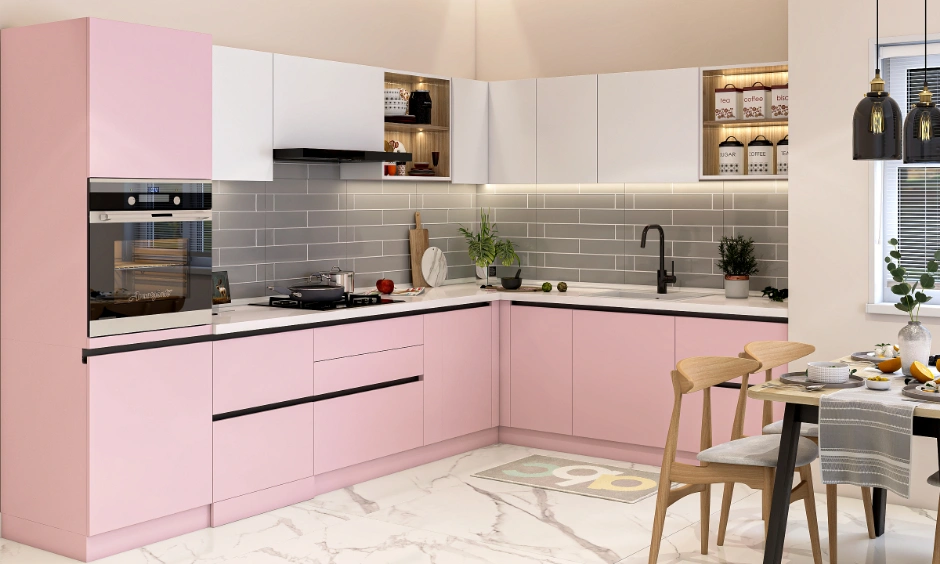
Trending Modular Kitchen Interior Designs

Open Kitchen Ceiling Design Ideas
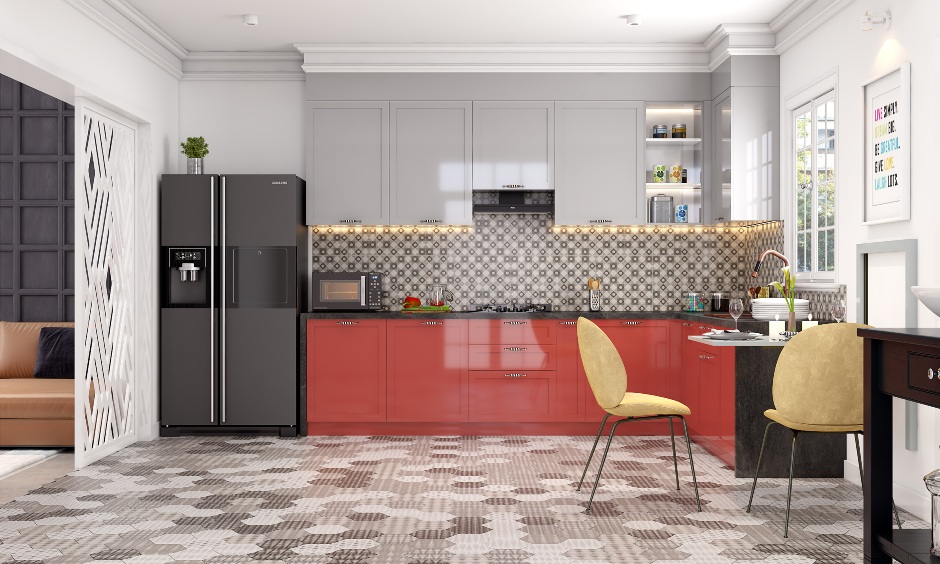
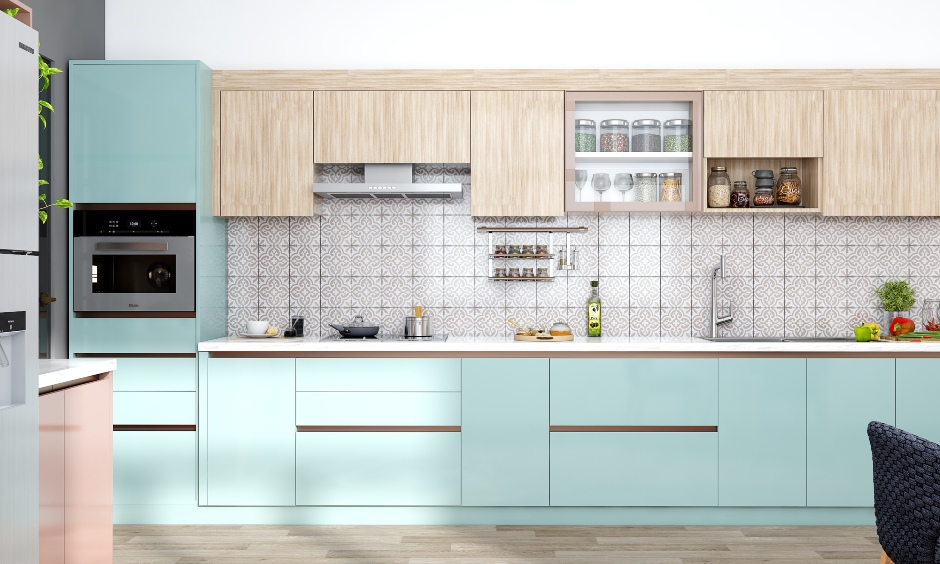
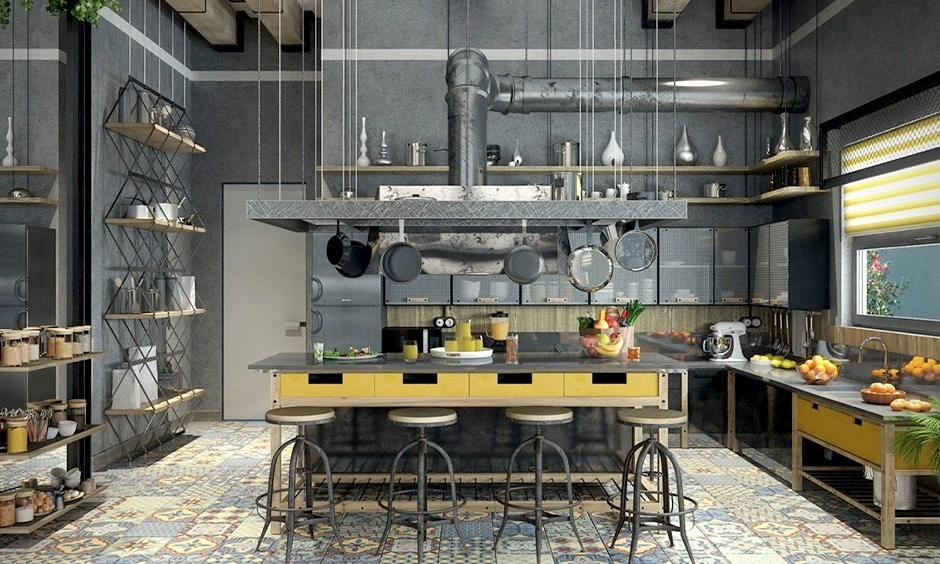
An open kitchen ceiling design should feel like the extension of the living room next to it. The easiest way to achieve this is by continuing the same interior design from the living room and using layered lighting to define the kitchen.
If you prefer clearer zoning, drop the ceiling only above the cooking area or island. It creates a visual separation quietly, without a wall.
POP Kitchen False Ceiling Design Ideas
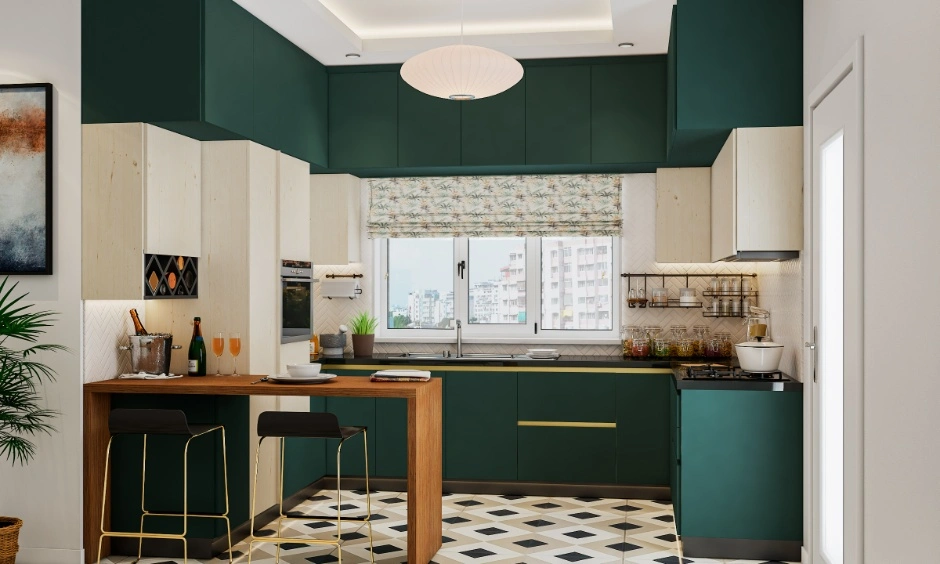
Complex kitchen POP ceiling design works well if you want the ceiling to be the highlight of the interior. Otherwise, a single cove running the length of the kitchen is the safest version. It adds depth without making the space feel busy.
Skip the multi-level kitchen POP false ceiling design in a low room. Every extra layer eats two more inches of height.
Choosing The Right Ceiling Material
| Material | Cost | Handles moisture | Lifespan | Best for |
| POP | Low to mid | Poor | 8–10 years | Curved and decorative shapes |
| Gypsum | Mid | Poor | 10–15 years | Flat, crack-free finishes |
| PVC | Low | Very good | 8–12 years | Steamy kitchens, tight budgets |
| Wood | High | Poor | 15+ years | Accents over islands |
| Metal | High | Good | 15+ years | Modern and industrial kitchens |
Gypsum is a popular choice in most modular kitchen interiors. It balances finish, speed and cost better than the rest.

Kitchen False Ceiling Lighting Ideas
Lighting should be planned before the false ceiling goes up, not after. Once the boards are installed, adding new fixtures means cutting into the ceiling.
Most kitchens need three types of lighting:
- Recessed spotlights for the worktop
- Cove lighting for the overall ambience
- Pendant light above the island for accent
Choose warm white light for a cosy feel. Opt for cool white lights if your kitchen has marble countertops.
Kitchen Ceiling Design Colour Ideas
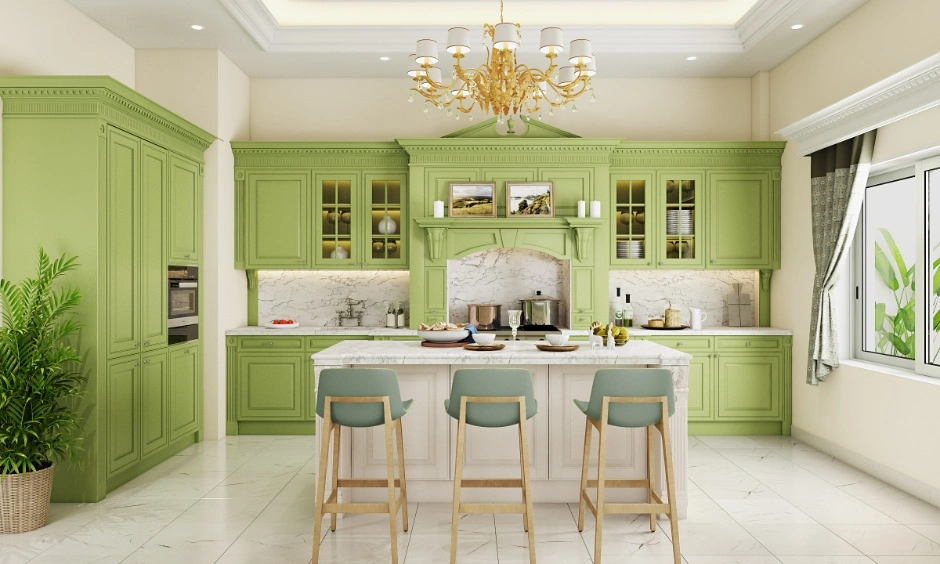
White is the forever choice for ceiling colour because it reflects light and keeps the kitchen feeling bright. If you want a little more warmth, off-white, pale grey or light beige are softer alternatives you can choose.
Avoid dark ceilings. Although they hide oil stains well, dark colours make the space feel lower than it is.
In compact kitchens, painting the ceiling and walls the same light shade helps blur the edges and creates the illusion of extra height.
False Ceiling Ideas By Kitchen Style
- Modern and Minimal: A flat ceiling with recessed spotlights keeps the space clean and uncluttered.
- Classic Indian: A simple POP cove painted the same colour as the walls adds artificial height without feeling heavy.
- Industrial: Exposed metal panels pair well with track lighting.
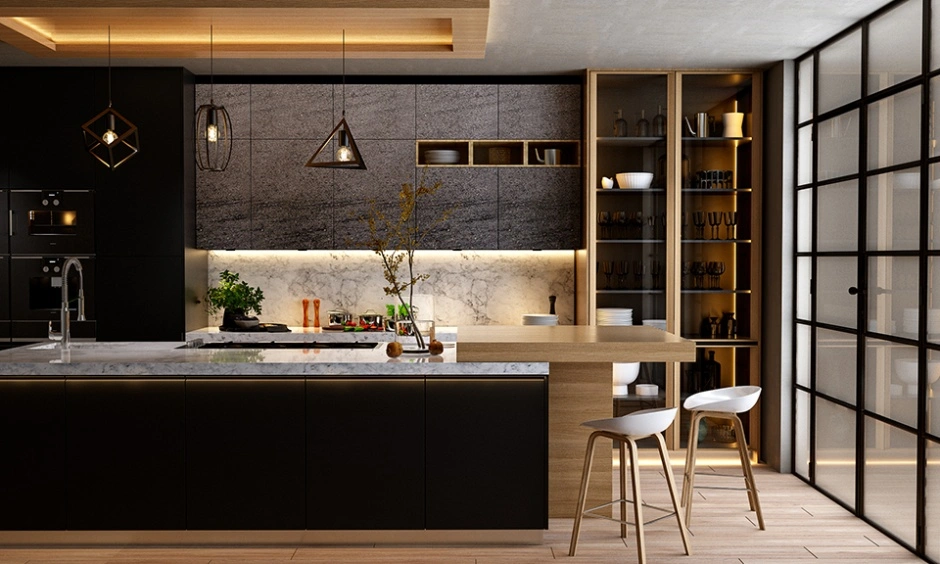
- Contemporary: Wooden ceiling accents over an island or breakfast counter add warmth without overpowering the kitchen.
| DesignCafe Tip: Whatever your style, keep the ceiling simple and invest in good lighting. It’s far easier to update light fittings over the years than to replace an elaborate ceiling. |
False Ceiling Ideas For Different Kitchen Layouts
- Straight kitchen: A long recessed strip above the counter keeps the design simple and the lighting even.
- L-shaped kitchen: Follow the shape of the cabinets to give the kitchen a clean, finished look.
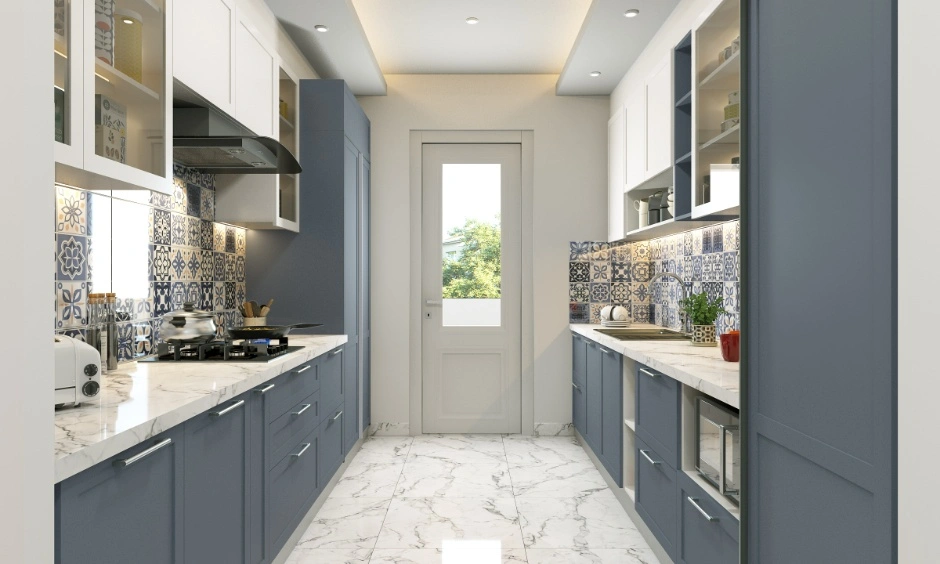
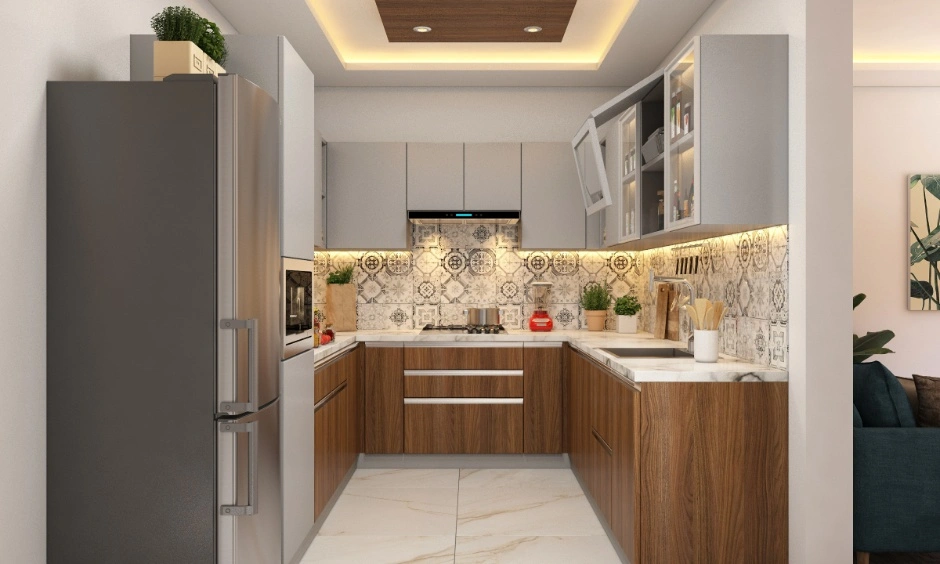
- Parallel kitchen: Drop the ceiling above both counters and keep the walkway open to maintain a spacious feel.
- Island kitchen: A floating ceiling panel above the island helps define the space. Hang pendant lights from the centre for a balanced look.
Common Kitchen False Ceiling Mistakes
- Dropping the ceiling too low. Under nine feet finished, a kitchen feels tight.
- Sealing the chimney duct with no access panel.
- Using POP or gypsum directly above the hob. Steam and oil will stain it inside a year.
- Planning the lights after the frame is up.
- Skipping a moisture-resistant primer. In monsoon months, damp comes down through the slab and leaves marks no paint will cover.
Conclusion
The best kitchen ceiling is one that fits your kitchen, not the latest trend. Choose the right material, keep the ceiling drop practical and plan the lighting before installation. Read our blogs for more modern kitchen interior ideas. Book a free consultation with DesignCafe, and we’ll help you design a ceiling that complements your layout and everyday cooking needs.
FAQs
1. Which false ceiling is best for a kitchen?
Gypsum suits most Indian kitchens. It gives a clean, crack-free finish and installs quickly. Choose PVC instead if your kitchen is small or prone to damp.
2. Is a gypsum ceiling better than a POP ceiling?
For flat ceilings, yes. Gypsum installs faster, cracks less and leaves far less mess on site. POP still wins when you want curves or a moulded cove.
3. Can PVC ceilings be used in kitchens?
Yes, and they handle steam better than any other option. The trade-off is appearance, since PVC looks flat next to gypsum or wood.
4. What is the ideal height for a kitchen false ceiling?
Aim for a finished height of nine to ten feet. In a standard ten-foot kitchen, keep the drop to eight inches or less.
5. Which lighting works best in kitchen false ceilings?
Recessed spots over the counter, a cove strip for ambient light, and a pendant over the island.
6. How do I choose a false ceiling for a small kitchen?
Keep the drop shallow, around four to five inches. Run it around the edges only, and finish it in gloss white so it reflects light.
7. Are false ceilings suitable for modular kitchens?
They work particularly well. The ceiling hides the chimney duct and lets you align lighting with the cabinet lines below.
8. Which ceiling colour makes a kitchen look bigger?
Gloss or satin white reflects the most light and makes the ceiling look higher. Painting the ceiling and walls the same pale shade also removes the line between them.