Select Category


AI Summary
5 key insights · 1 expert tipPick the wrong interior model, and you pay for it twice: first in money, then in time and a home that doesn't match your taste and vibe. This guide compares interior designer firms, design-build firms, and DIY in detail, so you can make the right choice before the first rupee leaves your account.
KEY INSIGHTS
- Why design-build firms prioritise construction speed over design depth
- Why interior designers lock in the full plan before a single wall goes up
- When DIY is the smart choice and when it ends up costing more
- Cost, timeline, and risk are compared across all three models
- Real scenarios: 1BHK, 3BHK, villa, and rental makeover
 DESIGNCAFE EXPERT TIP
By our design team
DESIGNCAFE EXPERT TIP
By our design team
“The biggest design mistake isn’t choosing the wrong wall paint. It’s choosing your execution model after the budget is gone. Pick your approach first, then plan the design.” — DesignCafe Design Team
Design-build, interior designer, or DIY? The right pick changes everything. Find yours here.
Before you buy a single tile or brick for designing or building your property, you must make one decision: choosing the right professional.
The decision to select an interior designer vs design-build vs DIYing the project affects everything: your budget, your timeline, your involvement, and the finished outcome.
All 3 approaches come with advantages and trade-offs. This guide provides all the clarity you need to make an informed decision before the first rupee leaves your account.

1. Your Three Options: Interior Designer vs Design Build vs DIY
What Does An Interior Designer Firm Do?
A traditional interior designer firm specialises in designing beautiful and functional spaces before or after construction begins. They plan floor layouts, colour palettes, materials, lighting, furniture, and 3D visualisations. Many interior design firms work with contractors, tradesmen, and vendors to offer a complete solution.
Fundamentally, their core value is the design itself: a personalised, cohesive plan.
What Does A Design-Build Firm Do?
A design-build firm handles both design and construction under one contract.
One team owns procurement, construction, civil work, and handover. This integrated plan reduces communication gaps, streamlines workflow, and ensures timely delivery.
While a traditional designer might recommend or coordinate with separate contractors, the contracts, financial liabilities, and execution management remain fragmented across multiple parties, quite unlike the single-point accountability of design-build
What Does DIY Interior Design Involve?
DIY gives you full creative ownership.
You choose every colour, source all the material, do all the manual labour, and arrange every corner yourself. Though it’s a labour-intensive and time-consuming process, the rewards are real.
Every coordination call, every procurement decision, every cost overrun is yours to manage.
Get Inspired Here: Full-service Design vs E-design
2. Side-by-Side Comparison: Interior Designer vs Contractor vs Builder
| Factor | Interior Designer | Design-Build Firm | DIY |
| Design approach | Full plan before construction | The design is unified with execution engineering upfront, ensuring that architectural limitations are factored into the initial drawings before construction begins. | You design as you go |
| Who carries the risk | Shared: designer + you (if you are managing the vendors) | The firm | Entirely you |
| Customisation | Highest. Wide scope of sourcing and bespoke design | Medium. The firm follows a catalogue | Unlimited if you’re skilled |
| Speed | Depends on the firm and contractors | Fastest. The firm owns the timeline | Slowest. You own the pace |
| Cost structure | ₹50,000 to ₹5,00,000 for design-only work | ₹1,200 to ₹2,500+ per sq. ft. for full execution | Cheapest. The risk of rework, sourcing errors, and contractor delays is high |
| Accountability | Design phase only | End-to-end | None. Fully self-managed |
| Timeline | Depends on the contractor network and quick decision-making | 2BHK: 3-4 months | 20 to 30% longer than planned |
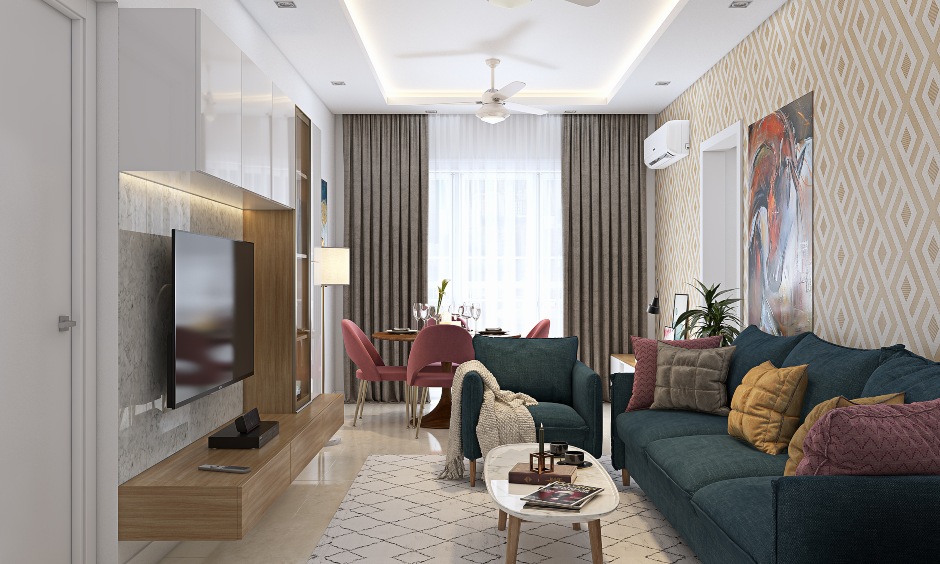
Premium 2 BHK Interior Designs




3. When To Hire An Interior Designer: Interior Designer vs Design-Build Firm?
An interior designer makes sense when:
- You prioritise design quality and customisation.
- You have trusted contractors but need design direction.
Pros of hiring an interior design firm:
- Fewer surprises on site as the complete design is pre-planned.
- Access to a wider range of materials than the standard catalogue.
- Highly customisable to your taste and your family’s needs.
- 3D renders and design boards.
- Lower upfront fee if you are handling the execution.
Watch out for:
- No execution accountability if you are managing contractors.
- The design vision can get lost if contractors can’t read technical drawings.
- The timeline depends on the contractor’s availability and your coordination efforts.
4. Design-Build vs Traditional Renovation: When Design-Build Firm Is A Better Choice?
The design-build model wins when you are:
- Setting up a full home after the new possession.
- Renovating a villa that involves structural work and a full interior renovation.
- New to a city and have no contractor contacts.
- Can’t commit 15+ hours a week to site visits and vendor coordination.
Why it works:
- Faster completion and delivery
- Fixed pricing
- 100% accountability – from first sketch to hand-off
- A dedicated site manager handles day-to-day coordination
Watch out for:
- Design evolves in phases: Construction first, design second, fixtures and finishes chosen last.
- Material options are limited to the firm’s catalogue
- Higher upfront investment
- Mid-project changes can attract additional fees and delays
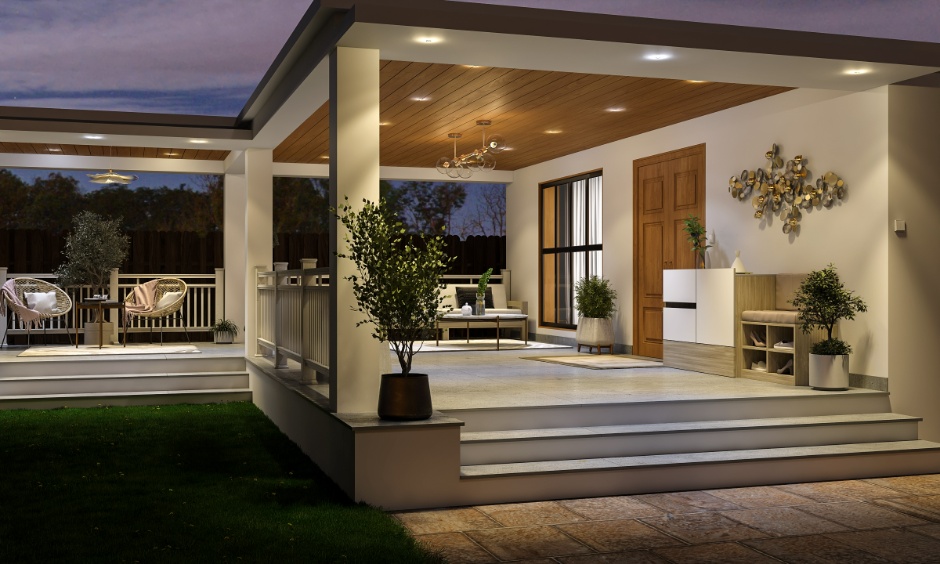
Learn More About Why Choose DesignCafe For Your Home Interiors

5. When DIY Makes Sense: DIY vs Hiring an Interior Designer?
DIY is the sensible choice when the priority is:
- Decorative styling: Cushions, rugs, curtains, wall art, plants, etc.
- Rental-friendly makeovers without structural changes
- Single-room updates where no walls, plumbing, civil or wiring are touched
Pros of DIYing:
- You get 100% creative ownership — every choice reflects your taste.
- The personal satisfaction of building your own space.
- Lowest upfront cost of the three options.
- Flexible timeline and well-suited for rental homes
Watch out for:
- Rooms styled separately often feel uncoordinated.
- Poor contractor briefing leads to expensive rework.
- Sourcing materials without design knowledge often results in mismatched finishes.
- Timeline is compromised.
- Electrical and structural errors pose a real safety risk.
6. What Are You Really Paying For: Cost Of Interior Designer vs DIY vs Design Build?
| Cost Factor | Interior Designer | Design-Build Firm | DIY |
| Fee structure | Fixed design fee | Per sq. ft. or lump sum | No professional fee |
| Typical range | ₹50K-₹5 Lakh (design only) | ₹1,200-₹2,500+/sq. ft. | Materials + labour only |
| Materials included | No | Yes | You source independently |
| Execution included | No | Yes | You manage |
| Material sources | Wide | Limited to the firm’s catalogue | Wherever you find them |
| Warranty | None | 10 years on modular furniture | None |
Hidden costs in DIY:
DIY feels cheap until the rework starts.
A contractor who misreads the tile layout.
Furniture arrives in the wrong dimensions.
Paint that looks nothing like the swatch.
Homeowners who DIY complex renovations typically spend 20 to 30% more than they planned on corrections alone. That’s paying twice for the same work.
Instead, DIY decorative styling or a rental refresh only.
Cost vs Value Analysis
When you are considering which approach to choose, cost alone should never drive your decision. You are not just paying for a service; you are paying for accountability, material expertise, unified design, and the surety that you won’t have to redo the work.
7. How To Choose: Design Build Firm vs Interior Designer Firm vs DIY?
Based on Budget
| Budget Range | Best Option | Why |
| ₹1 lakh and below | DIY styling or design consultancy | Low complexity; design guidance helps; you manage execution. |
| Up to ₹5L | Interior designer + self-managed execution | Quality design. Works if you have contractors. |
| ₹5-₹15L+ | Design-build firm | Full accountability, speed, warranty, and no coordination stress. |
Based on Project Complexity
- Full-home setups, villa renovations, and new possessions should be handled by a design-build firm or an interior design firm that coordinates civil work.
- Selective room makeovers work well with an interior designer + self execution by personal contractors.
- Minor decor changes and rental refreshes are best suited for DIY.
Based on Time Availability
Can you give 10-15 hours a week to vendor calls, site visits, and daily decisions? If yes, an interior designer or a DIY approach may work.
If you can’t manage, a design-build firm is the practical choice.
Based on Personal Involvement
Some homeowners want to be involved. They want to watch the space take shape slowly. Others want to approve a plan and walk into a finished home. Your answer to that question narrows the choice considerably.

8. Real Scenarios: Interior Designer vs Design Build vs DIY
1BHK Apartment Setup:
Context: A young professional in Bengaluru gets possession of a 1BHK. Budget: ₹2-6L. No contractor contacts. Creative, but short on time.
Solution: A comprehensive design-build package covers the modular kitchen, bedroom, wardrobe, bathroom, entryway, living room, and key furniture.
Verdict:
Primary Choice: A design-build firm is the best choice for peace of mind.
Budget Alternative: Consultancy plus DIY styling if the budget is constrained.
3BHK full home interiors:
Context: A family of 4 gets possession of a 3BHK. Move-in deadline: 90 days. No contractor network. New in town. Minimum bandwidth for site visits.
Solution: One design-build firm owns the full project from drawings to delivery. No contractor calls. No coordination surprises. No missed deadlines.
Verdict: Design-build firm is the practical choice for time-sensitive, full-home projects.
Villa Renovation:
Context: 3-storied home. Multiple floors. Civil changes, new flooring, false ceilings, and full interior execution are required for every room.
Solution: Ask yourself: Do you have the bandwidth to manage contractors? If yes, go for an interior designer only. If no, a design-build firm delivers end-to-end accountability that solo coordination rarely matches.
Verdict: Design-build firm is ideal. You get a dedicated site manager as complexity demands it.
Rental Property Makeover:
Context: A landlord wants to improve a 2BHK’s rental appeal on a tight budget. No structural changes. Just a visual refresh.
Solution: Fresh paint in a warm neutral, well-placed lighting, and a few styled shelves can noticeably lift rental appeal.
Verdict: Go for DIY – simple job, high flexibility, zero professional fee needed.
9. Mistakes That Cost Homeowners Most When Deciding Interior Designer vs Contractor vs Builder
| Mistake | Why It Hurts | What to Do Instead |
| Choosing based on the fee alone | A low design fee means nothing if rework doubles your execution budget. | Compare total project cost: design + execution + potential rework. |
| Assuming design-build always means better design | Design evolves in phases; the overall vision can feel fragmented. | Ask the firm: Is the full design locked before construction starts? |
| Using DIY for complex civil work | Without expertise, structural and electrical errors are costly and dangerous. | Reserve DIY for styling, decor, and low-risk decorative updates. |
| Not checking contractor readiness | A detailed design plan only works if your contractor can execute it accurately. | Verify contractor experience with technical drawings before committing. |
| Not defining who owns each phase | Overlapping roles create confusion, gaps, and budget overruns. | Define in writing who owns design, civil, procurement, and finishing. |
10. The Verdict
Before you hire anyone, answer three questions:
- What’s your budget?
- How much time can you give it each week?
- How involved do you want to be once the project starts?
These three boundaries naturally map your ideal approach.
At DesignCafe, our design experts help you choose and execute, whether that means owning your entire project or starting with a free consultation to sharpen your thinking.
What DesignCafe covers
| Service | Details |
| Space Planning & Design | Floor layouts, furniture planning, 3D renders, and full design before construction begins. |
| Civil Work | Flooring, tiling, plumbing, electrical, painting, and ceiling work |
| Furniture & Joinery | Modular kitchens, wardrobes, TV units, storage, and custom furniture |
| Décor & Styling | Curtains, rugs, lighting, artwork, and decorative accessories |
| Timeline | 2BHK: 3-4 months | 3BHK+ and villas: 6-9+ months. |
| Warranty | 30-year warranty on all modular furniture. |
| Supervision | Dedicated site manager for end-to-end coordination. |
| Budget Tools | Free cost calculator, transparent pricing, no hidden charges. |
Check our blog section to explore more home interior design ideas.
Not sure which model fits your project? Book a Free Consultation with DesignCafe. Get a clear, personalised recommendation.
Get Inspired Here Home Interior Design Ideas
FAQs
1. What’s the difference between design-build and interior design?
Design-build firms handle design + construction. They offer a comprehensive service. Interior designers create the full design plan, while you manage contractors separately.
2. Is DIY cheaper?
For styling and decor, yes. For complex renovations, rarely. Mistakes, delays, and rework often spike costs by 20-30%.
3. How much does a design-build firm cost in India?
Typically ₹1,200 to ₹2,500+ per sq. ft. for a full turnkey project, depending on scope, finishes, and city.
4. Can I hire a designer and manage execution myself?
Yes. Design-only consultancy works well if you already have a reliable contractor.
5. Which option works best for small apartments?
A design consultancy or compact design-build package suits 1BHK apartments well. DIY works for decorative styling in smaller spaces if no civil or structural work is involved.
6. How long does each approach take?
Design-build firms usually complete a 2BHK in 3-4 months. DIY and contractor-managed projects often take longer.