Select Category



AI Summary
3 key insights · 1 expert tipExplore the factory-to-home interior design process, focusing on material quality and meticulous manufacturing for durable, stylish living spaces.
KEY INSIGHTS
- Manufacturing involves 51 quality checkpoints ensuring high-grade materials and finishes.
- MDF, Plywood, BWP, HDMR, HDF, Metal, and Particle Boards are key materials.
- Finishes include Veneer, Laminates, Lacquer, and Acrylic for aesthetic appeal.
 DESIGNCAFE EXPERT TIP
By our design team
DESIGNCAFE EXPERT TIP
By our design team
Prioritise high-grade MDF, commercial plywood, and BWP boards for kitchen durability, ensuring a long-lasting, functional modular space.
Have you ever wondered what goes on behind the scenes at an interior design company? Right from manufacturing to delivering your dream home — take a look!
Interior design companies work with a range of protocols and criteria in the business. Right from machine production of the products to home installations and delivery — there is a set process for every single criterion that makes your house a home. At DesignCafe, we place the highest priority on the materials used in interior design. Here’s what makes interiors by DesignCafe a favourable choice for homeowners looking to transform their living spaces.
A Peek Into Our State-Of-The-Art Manufacturing Unit
Our manufacturing unit is spread across a pristine 35,000 sq. ft. space. We use high-end machinery and equipment to design and manufacture the products we use in the homes of our clients. That’s what enables us to deliver the home of your dreams. Experienced and trained carpenters supervise the production and they look into 51 quality checkpoints. Each of these checkpoints ensures that the materials and finishes produced are of the highest grade and quality and worth your investment.
At our manufacturing plant, you will come across dedicated project managers across the unit to help facilitate the product process and streamline all necessary timelines. This ensures that your home is delivered on time without compromising on quality in any way. Once ready, these products are then dispatched and delivered to their respective project sites, assembled and installed within the stipulated time frame.
A Behind-The-Scenes Look At DesignCafe’s Factory & Process
Now that you have seen our factory, let’s take a look at the different materials and finishes used in interior design that we produce for your modular solutions at home.

Materials And Finishes To Consider For Your Home’s Interior Design
The materials we use in our interior designs are factory-made. They can be designed and set up in multiple ways to suit the different requirements of our clients and their homes. Right from smart functions and space-saving features to modern aesthetics, there’s room for every choice, style and need at DesignCafe.
Materials Used In Interior Design By DesignCafe
- MDF: Medium Density Fiberboard is built with a single board which is produced by binding together multiple wood fibres.
- Commercial Plywood: This material is a popular choice for designing modular kitchens. Its surface is laminated and polished after being processed.
- BWP: Boiling Waterproof is a water-resistant modular structure perfect for the kitchen’s wet areas.
- HDMR: High-Density High Moisture-Resistant board is durable and used for kitchen shutters. It is made by combining fibre chips and forest wood waste.
- HDF: High-Density Fiberboard is used in areas where a strong and rigid material is required. It is often used for making bedroom furniture like Murphy beds, mirror pull-outs and wardrobes with in-built TV units.
- Metal: Mostly used in bedrooms for specific industrial, rustic or contemporary designs. DesignCafe produces rods, railings, claddings, pipes and support structures using metal.
- Particle Boards: These are lightweight and used as an alternative to plywood. Particle boards are relatively inexpensive and used for making wall partitions, false ceilings, shelves, study desks and cabinets.
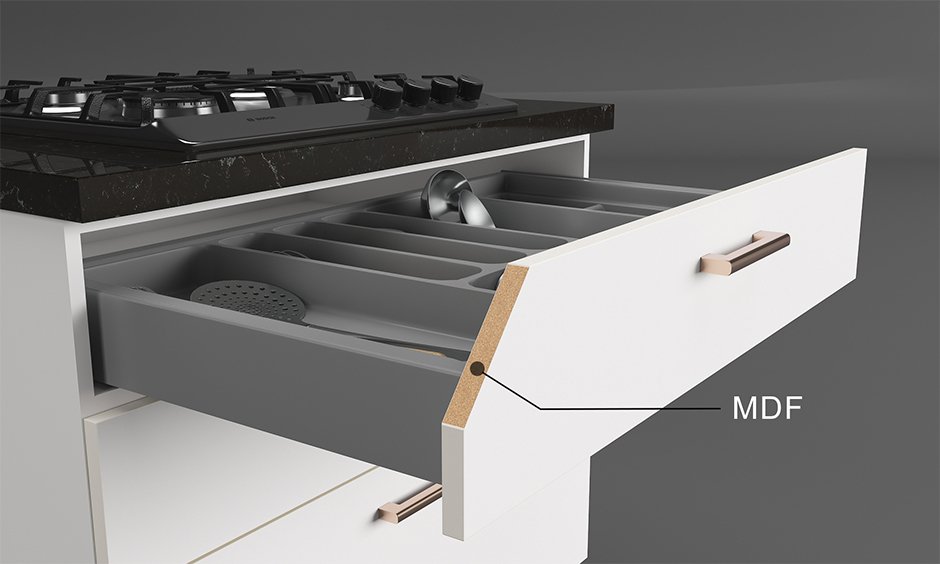


Now that we’ve introduced you to the materials we use in our interior designs, let’s move on to the home interior finishes.
Some Commonly Used Finishes In Kitchens
- Veneer: Typically used for cabinets, doors and tops, this finish is made of real wood. It is commonly used in modular kitchens for a natural look and feel.
- Laminates: Commonly known as sunmica in India, laminates are one of the most durable home interior finishes. This finish is made using plastic and is considered a colourful substitute for natural wood and veneers.
- Lacquer: Slightly high-end and expensive, lacquered glass is highly stain-resistant and easy to maintain. It’s made from high-quality glass and does not lose its lustre over time.
- Acrylic: An affordable alternative to lacquer, acrylics offer the same high glass look as lacquered glass and are durable. However, they are prone to scratches.
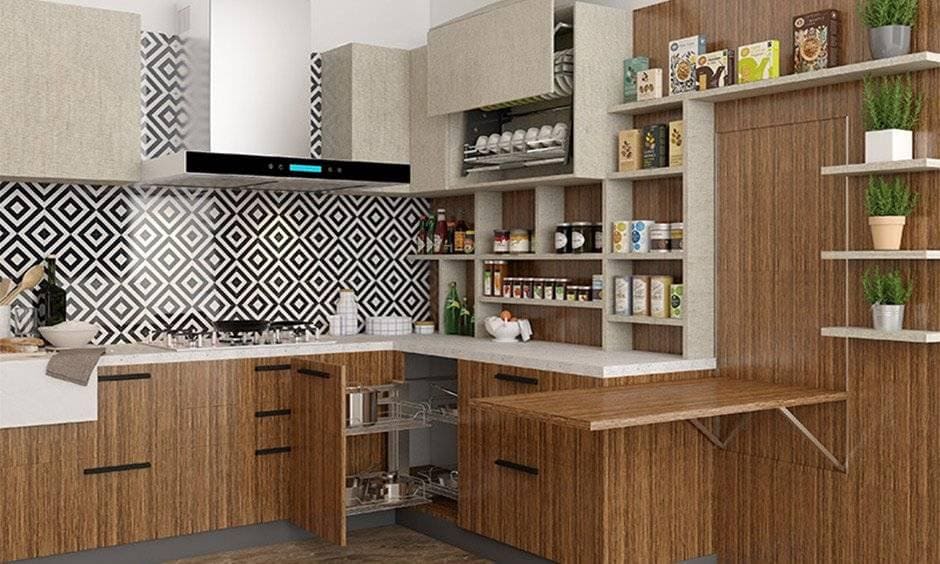


At DesignCafe, we also work with some of the finest national and international brands like Hettich, Grass, Merino, St. Gobain, Asian Paints, Greenlam to name a few to directly source materials and finishes for your home interiors. For instance, paints, wallpapers, upholstery, fittings, et al. Other commonly known materials used in interior design like granite, marble and quartz are also sourced from these brands and more.
DesignCafe strives to bring the highest quality of materials and finishes to home interiors. Also, we always have our eye on industry trends to offer our clients the latest designs, plans, materials and finishes. With our range of innovative materials for interior design, the homes we deliver are a class apart and offer you the luxury of exclusivity, comfort, aesthetics and functionality — all at the same time.

Wish to see some of our recent interior design projects in various cities? Inspire yourself with these luxurious and beautiful homes.
You can also check out some of our home tours:
FAQs
1. What are the 51 quality checkpoints that DesignCafe follows?
DesignCafe’s 51-point quality checkpoints are a set of rigorous checks followed throughout the manufacturing process to ensure every product meets high standards. They cover material quality, precision cutting, edge banding, machining, surface finishes, hardware fitting, product dimensions, assembly, and final quality inspections to deliver durable and high-quality home interiors.
2. Why is in-house manufacturing important for interior design projects?
In-house manufacturing gives better control over quality, timelines, and consistency. At DesignCafe, it helps ensure every product is made to the required specifications, undergoes strict quality checks, and is delivered on time. It also allows for better personalisation of designs and reduces the chances of delays caused by third-party manufacturers.
3. How does DesignCafe ensure consistency across all interior products?
In-house manufacturing gives better control over quality, timelines, and consistency. At DesignCafe, it has helped ensure every product is made to the required specifications, undergoes strict quality checks, and is delivered on time. It also allows for better customisation and reduces the chances of delays caused by third-party manufacturers.
4. What are the benefits of using advanced machinery in furniture production?
Using advanced machinery in furniture production helps interior design companies achieve greater precision, consistency, and efficiency. At DesignCafe, it has helped ensure accurate cutting, smoother finishes, and high-quality craftsmanship while reducing manual errors and material wastage. This results in durable, well-finished furniture.
5. What is the journey of a modular furniture unit from design to installation?
The journey of a modular furniture unit begins with understanding your requirements and creating a customised design. Once approved, it is manufactured, undergoes multiple quality checks, and is carefully packed before being delivered and installed. At DesignCafe, this entire process is managed end-to-end using advanced machinery and strict quality checks to ensure a perfect fit and finish.
6. Are the materials used by DesignCafe eco-friendly or sustainably sourced?
DesignCafe uses materials that are selected for durability, safety, and quality, with an emphasis on responsible sourcing wherever possible. The materials used in its modular furniture are designed to be long-lasting and low-maintenance. These reduce the need for frequent replacements and support sustainability.