Select Category

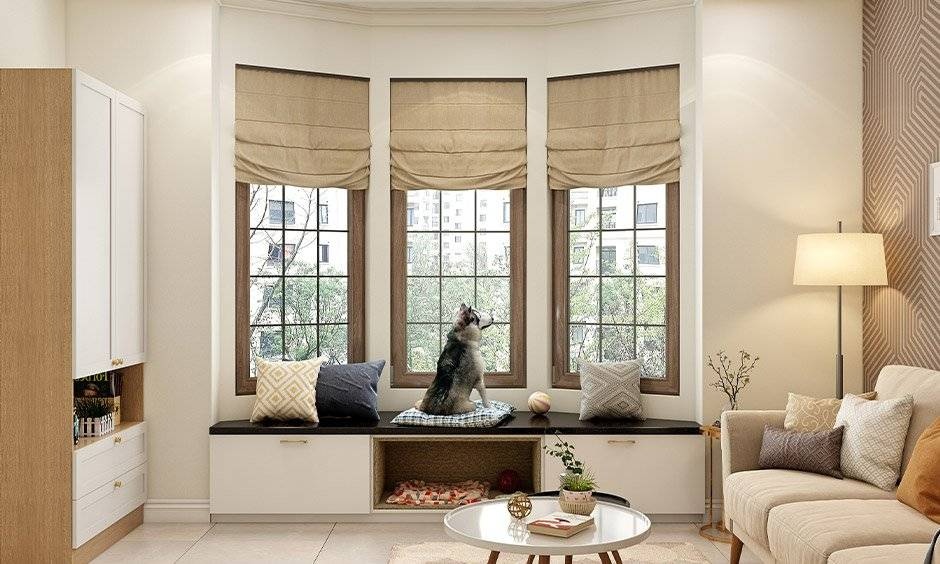
That beautiful curve deserves more than curtains—turn your bay window design into your home’s most useful corner.
Bay windows are often admired but rarely used to their full potential. This guide shows how to transform a bay window into a functional and stylish part of your home, whether as built-in seating with storage, a cosy reading nook, a compact workspace, or smart cabinetry.
What You’ll Read Here:
It covers practical considerations like window depth, structure, cushion materials, curtain solutions, lighting, and styling tips suited to Indian homes and climates. With thoughtful planning and design-led ideas, your bay window can become a space that adds comfort, storage, and everyday utility, without wasting its architectural charm.
Best For:
Perfect for those looking to give their homes a glow-up using their bay windows with smart, easy tips.
Ever noticed how bay window design instantly makes a room feel brighter, bigger, and more inviting—yet often sits unused or under-decorated? That beautiful architectural feature has far more potential than just holding a few plants or sheer curtains.
Whether you live in a modern apartment or a traditional Indian home, bay windows can become one of the most charming spaces in your house. The right design can completely transform how you use that space. With thoughtful planning, your bay window can work harder while still highlighting its aesthetic appeal.
Let’s explore how to use your bay window design for seating, storage, and everyday utility, with practical ideas that suit different room sizes and budgets. Read on to explore more.

Assessing Your Bay Window Design’s Structure and Size
Let’s begin by understanding what you are working with. Not all bay windows are the same; some project outward significantly, while others are shallow and compact.
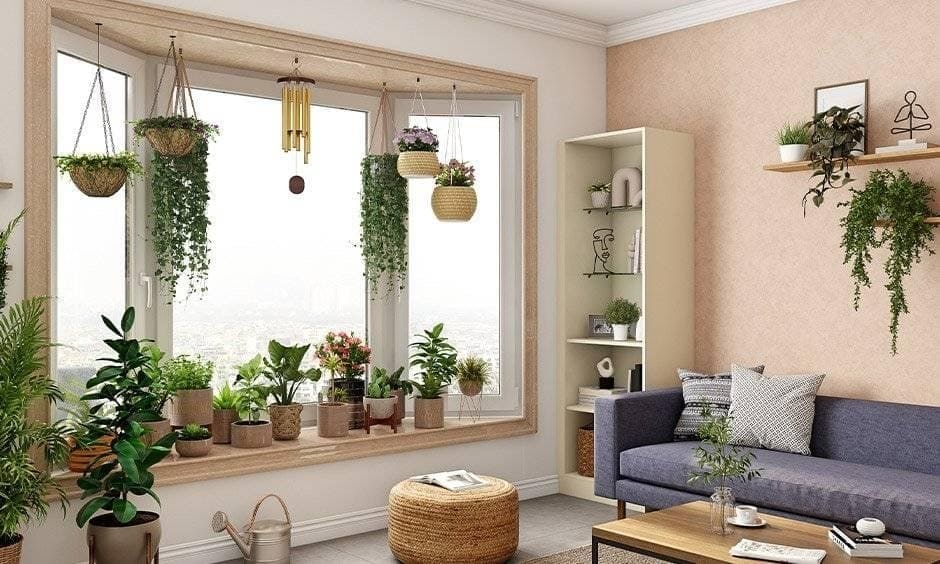
Measure the depth, width, and height carefully. A deeper bay window can easily accommodate built-in seating or cabinetry, while a smaller one may be better suited for a reading nook or compact desk. Also, consider the window type: box bay window designs are easier to customise compared to angled or curved bays.
This step helps you avoid impractical designs and ensures your bay window solutions are comfortable, safe, and visually balanced.
Creating Built-In Seating with Storage in Your Modern Bay Window Designs
One of the most popular designs is built-in seating, and for good reason. It gives you comfort, functionality, and visual appeal in one smart solution.
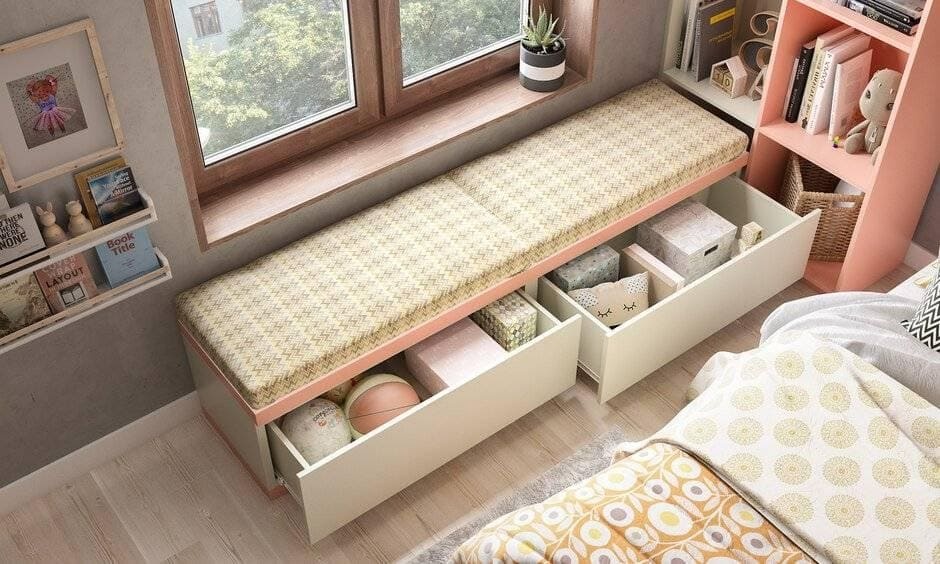
A custom bench seat fitted into the bay window frame creates a natural lounging area. Add hinged lids or pull-out drawers underneath to store blankets, books, toys, or seasonal items. This works especially well in living rooms and bedrooms where storage is always in demand.
In Indian homes, built-in seating complements both traditional and contemporary designs, especially when paired with neutral upholstery or wooden finishes.
Use Contemporary Bay Window Designs as a Cosy Relaxation Nook
If your goal is comfort over storage, turn your bay window into a cosy retreat. This works beautifully for bedroom bay windows or quiet corners of the home.
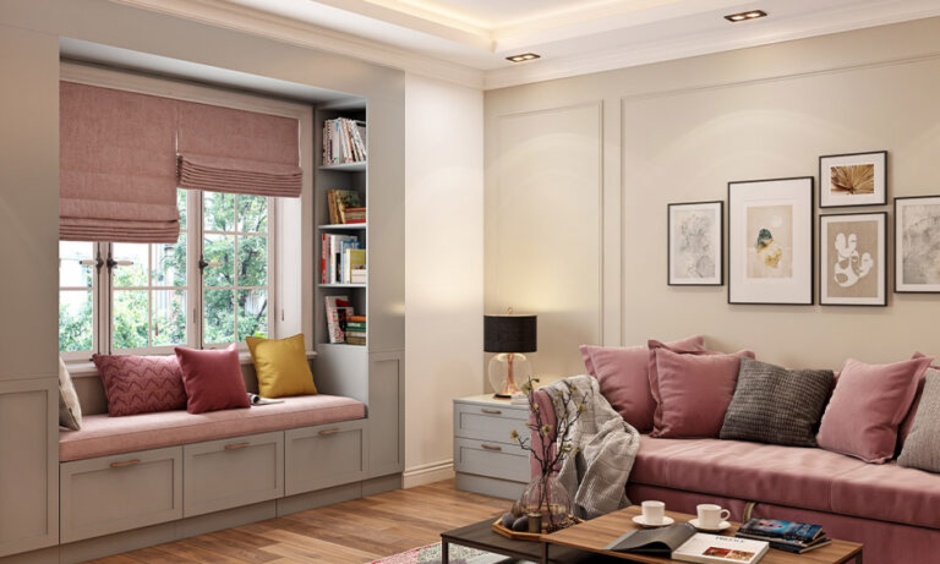
Use thick seat cushions, layered throw pillows, and soft upholstery to make the space inviting. Add a small side shelf or a wall-mounted light to make reading easier. Natural daylight from the window reduces the need for artificial lighting during the day, making it both practical and energy-efficient.
This bay window style encourages slow living—you can read, journal, or simply enjoy the view.
Incorporating a Functional Desk or Workspace With Your Bay Window Design
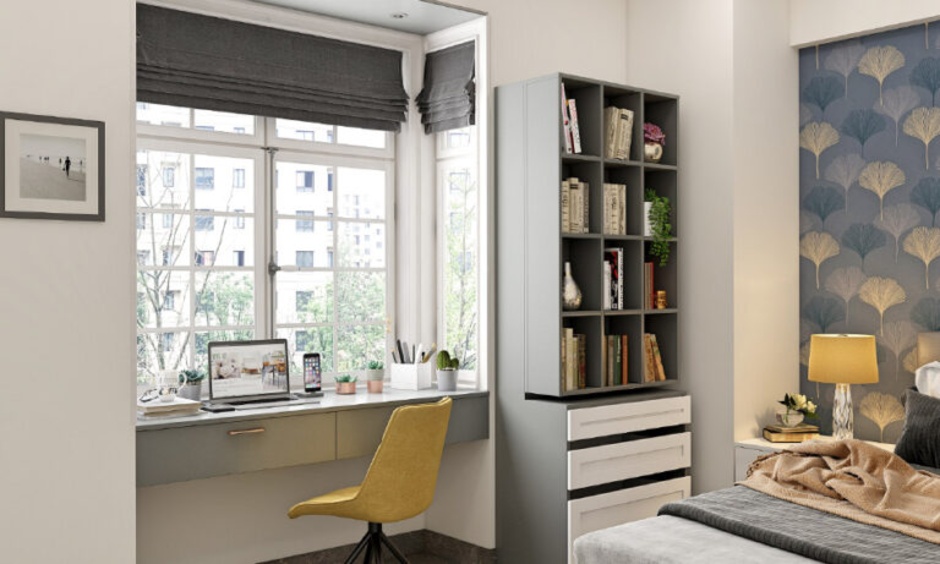
With remote work becoming more common, bay windows can double as a compact workspace. A bay window desk lets you work in ample daylight and enjoy a refreshing view, boosting productivity and mood.
A slim, wall-to-wall desk fitted into the bay area works best. Pair it with open shelves or minimal drawers to avoid visual clutter. This setup is great for modern bay windows, especially in bedrooms or home offices where space is limited. Just ensure glare control is addressed with appropriate curtains or blinds.
Space Saving Interior Designs


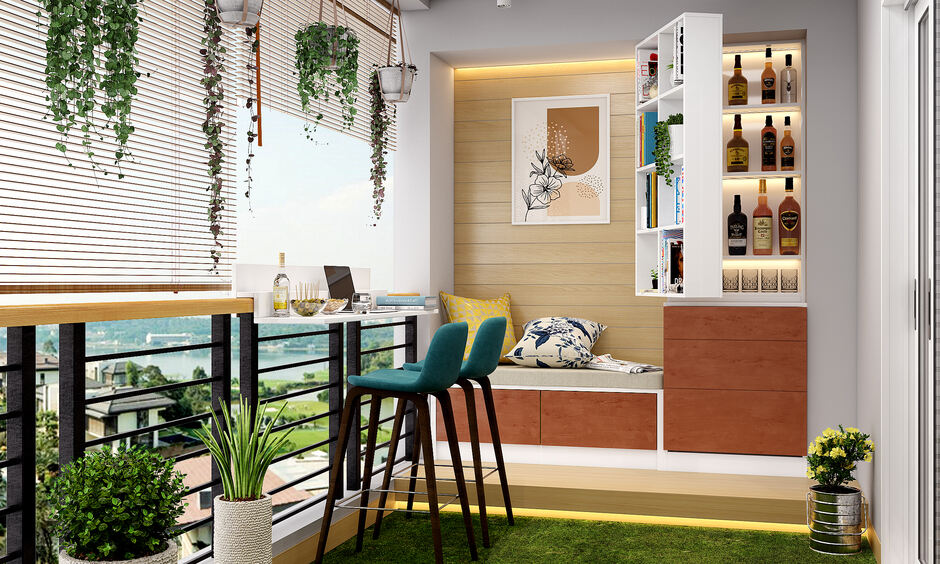
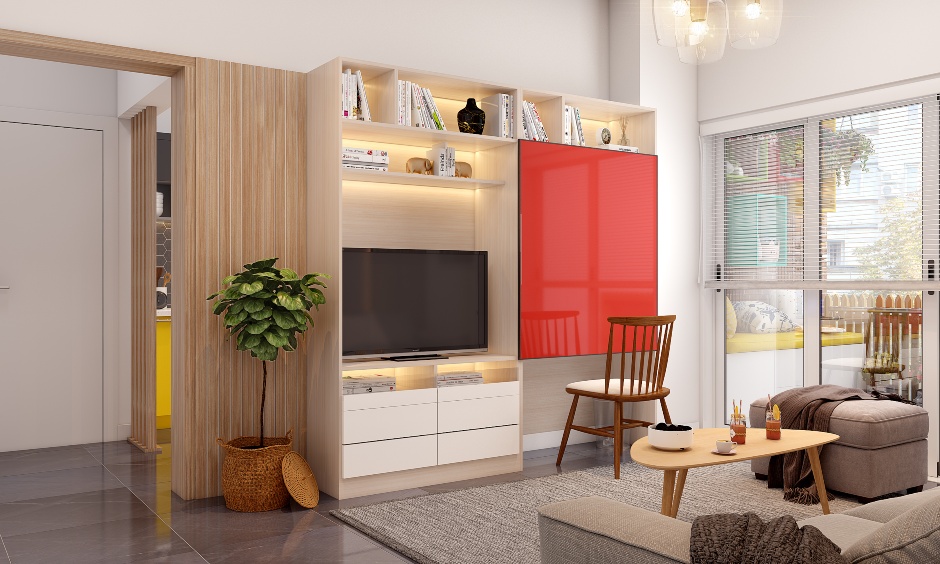
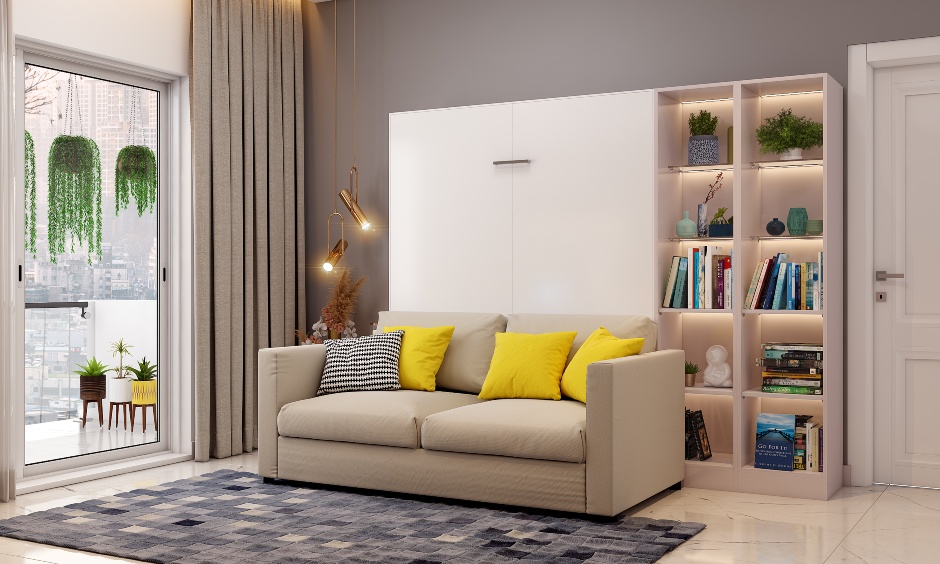

Bay Window Design That Maximises Storage with Cabinets and Shelves
If seating isn’t a priority, use your bay window area purely for storage. Floor-to-ceiling cabinets or low-height drawers can turn an awkward corner into a functional asset.
For homes that need extra storage without sacrificing design, this approach works well in dining areas, living rooms, or children’s rooms. Use closed cabinets for concealed storage and open shelves for décor items or books. This approach blends seamlessly with contemporary bay windows and keeps the space looking organised.
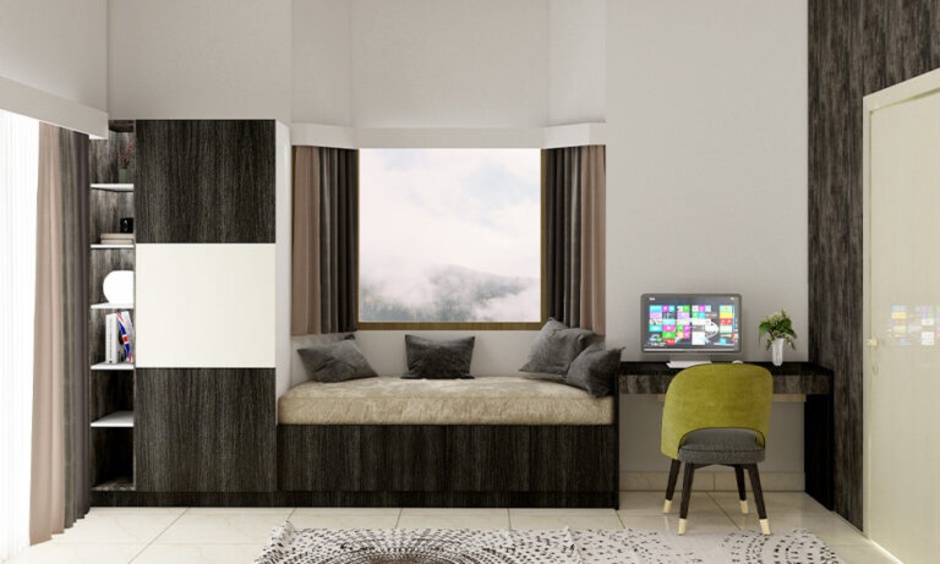
Choosing the Right Cushions and Upholstery for a Bedroom Bay Window Designs
Comfort and durability go hand in hand when designing bay window seating. Choose cushion materials that are firm enough for daily use but soft enough for lounging. For Indian climates, breathable fabrics like cotton blends or performance upholstery are ideal. If the window receives direct sunlight, opt for fade-resistant fabrics to maintain their appearance over time.
Neutral tones offer most versatility, while textured or patterned cushions can add character without overwhelming the space.
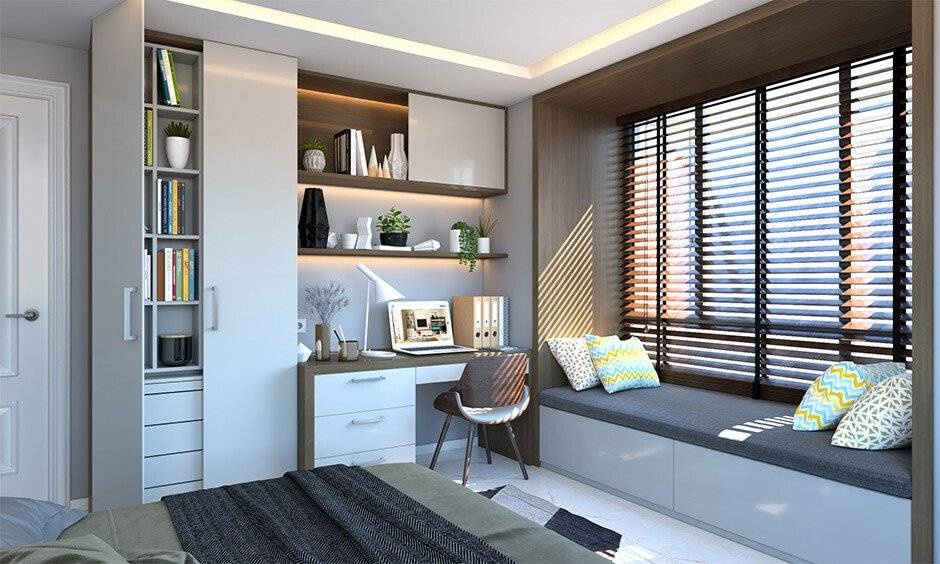

Lighting and Curtain Solutions for Utility: Bay Window Curtain Designs are Essential
Beyond aesthetics, curtains serve a functional role in bay windows. The right curtain designs can control light, enhance privacy, and define the space.
For seating or work areas, consider layered solutions: sheer curtains for daytime softness and heavier drapes or blinds for evenings. Pelmet designs help conceal curtain tracks and give a polished look, especially in bay window pelmet designs used in Indian homes. Add task lighting or warm accent lights if the bay window is used after sunset.
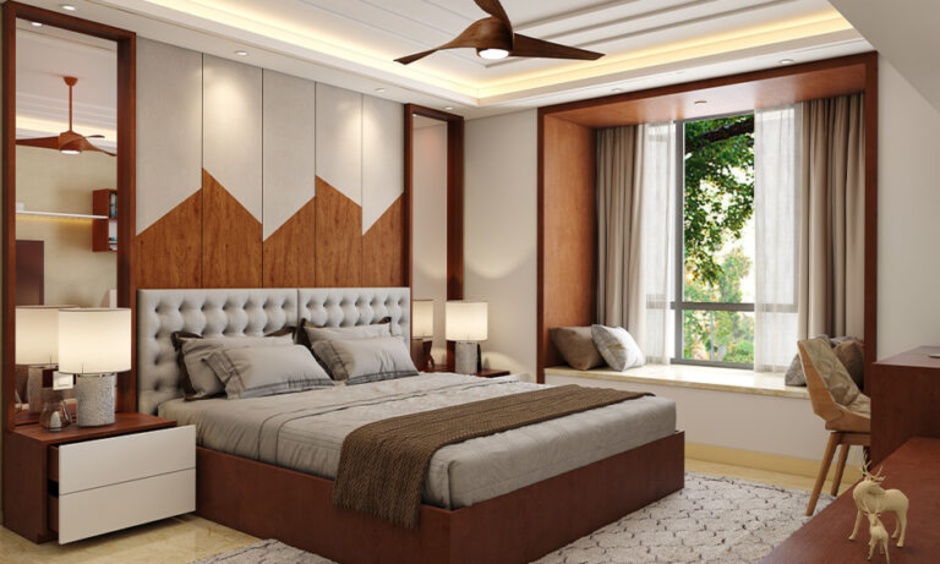
Styling and Decor to Enhance Your Bay Window Design
Once the functional elements are in place, styling brings everything together. Keep decor minimal to avoid clutter, especially in smaller bay windows. Indoor plants, textured cushions, small rugs, or wall art can elevate the look without overwhelming the space. For exterior bay window designs, consider how the interior styling complements the exterior appearance.
The goal is balance: functional enough for daily use, but styled enough to feel intentional.
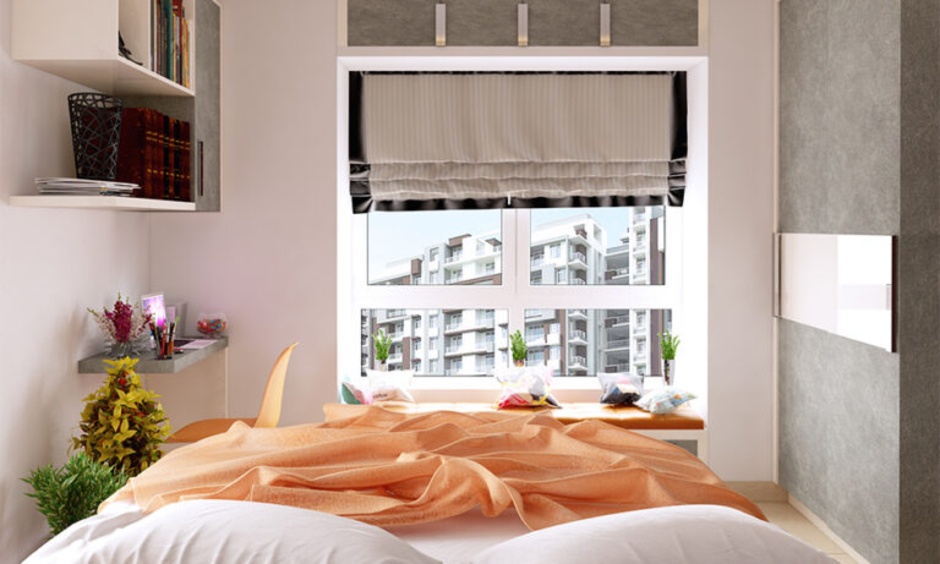
With the right planning, a bay window can serve as seating, storage, a workspace, or a relaxing retreat, adding real value to your home. By understanding the window’s size, choosing practical designs, and focusing on comfort and utility, you can transform this often-overlooked area into one of your home’s most-loved spaces. Book A Free Appointment Today!
FAQs
1. How can I add storage to a bay window seat?
You can add hinged lids, pull-out drawers, or lift-up benches beneath the seating. Custom carpentry ensures the storage fits seamlessly within the bay window structure.
2. What is the best cushion material for bay window seating?
Firm foam cushions with breathable, fade-resistant upholstery work best, especially in areas with direct sunlight or daily use.
3. Can a bay window be converted into a desk?
Yes. A slim built-in desk works well in deeper bay windows and is ideal for home offices, bedrooms, or study areas.
4. How do I handle curtains for a bay window seat?
Layer sheer curtains with blinds or drapes. Pelmet designs help keep curtain rods neatly in place and enhance the overall finish.
5. Are built-in bay window seats expensive to install?
Costs vary based on materials and customisation, but they often offer great value by combining seating and storage in one design.