Select Category


AI Summary
5 key insights · 1 expert tipChoosing between a wall-mounted vs freestanding bathroom cabinet isn’t just about looks—it directly affects how spacious, organised, and easy your bathroom feels every day. This guide helps you cut through the confusion and pick the right option based on your space, storage needs, and daily habits—so your bathroom works better without unnecessary upgrades.
KEY INSIGHTS
What You’ll Read Here
- What a wall-mounted bathroom cabinet and a freestanding bathroom cabinet actually mean in real use
- The pros and cons of each, beyond just aesthetics
- How to decide based on bathroom size, storage needs, and plumbing
- Smart design tips to make your bathroom feel bigger and more put-together
- Practical advice on maintenance, durability, and long-term use
Best For: Homeowners and renters planning a bathroom upgrade who want a cabinet that looks good, saves space, and works for everyday use without overcomplicating things.
 DESIGNCAFE EXPERT TIP
By our design team
DESIGNCAFE EXPERT TIP
By our design team
Eypsita Dasgupta, Studio Manager of Kolkata DC, suggested, “Wall-mounted vanities work best when they keep the floor line uninterrupted. When the space under the cabinet is visible, the bathroom feels more open and less crowded, especially in compact layouts.”
Wall-mounted vs freestanding bathroom cabinet —Small choice, big impact!
In 90% of Indian homes, the bathroom is the least-planned space when it comes to storage.
Most people just add a few round corner shelves or store-bought plastic cabinets that barely fit shampoo or conditioner bottles, let alone other self-care accessories. This is why you need a proper bathroom cabinet that can store all your haircare, skincare, self-care, linens, and bathroom-cleaning items.
But what type should you choose–wall-mounted vs freestanding bathroom cabinet? It all comes down to your floor space, your wall structure, and how you actually use your space.
In this guide, we break it down in simple terms. This way, you can avoid expensive mistakes, plan smartly, and pick the right cabinet that suits your lifestyle, not just your Pinterest board.

Understanding Wall-Hanging Bathroom Cabinet & Freestanding Bathroom Cabinet
Before you make any permanent decision, understanding what sets these two cabinet styles apart is immensely helpful.
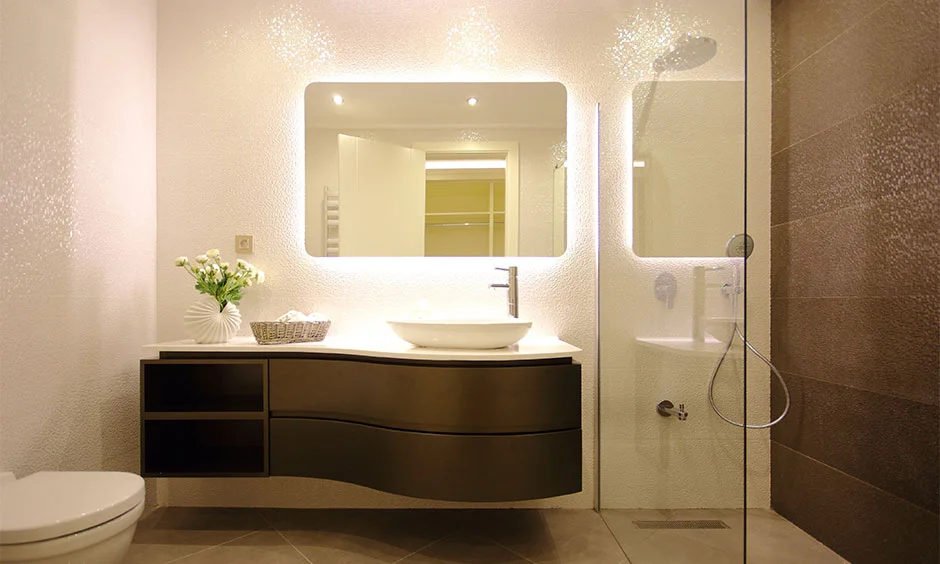
1. Floating Bathroom Cabinet Opens Up Your Space
In simple terms, these types of bathroom cabinets are drilled into the wall, leaving a visible gap between the cabinet base and the floor. As a result, the space looks neater and more open. These cabinets suit modern, minimalist bathrooms with compact square footage the best, where every visual trick counts.
2. Freestanding Cabinets That Can Be Moved Anywhere
A freestanding cabinet sits on the floor like any other piece of furniture. These come in a wide range of styles, including narrow, corner, and even freestanding countertop cabinets. They are practical, easy to move, and repair.
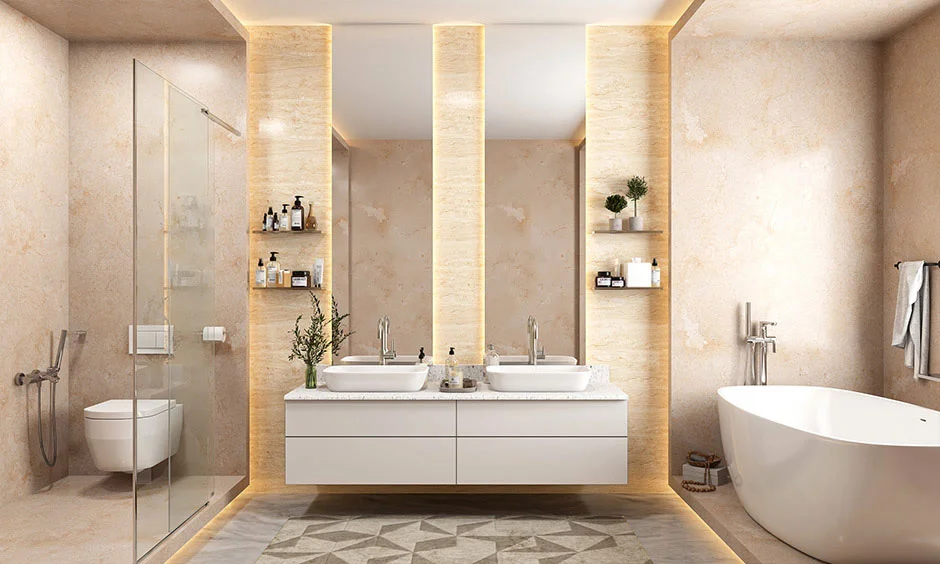
Pros and Cons of Wall-Mounted vs Freestanding Bathroom Cabinet
| Feature | Wall Mount Cabinet | Freestanding Cabinet |
| Visual Space | Opens up the room; floor stays visible | Heavier presence; can feel more enclosed |
| Storage Capacity | Typically shallower depth | Larger, deeper drawers and cupboards |
| Installation | Requires wall support and proper fixing | Simple; position and connect plumbing |
| Cleaning the Floor | Easy to clean underneath; no hidden dust zones | Trickier around legs or base |
| Height Customisation | Fully adjustable | Fixed floor height |
| Flexibility/Relocation | Difficult to move once installed | Easy to reposition or replace |
| Best Style Match | Modern, minimalist | Traditional, classic, practical |
| Typical Cost | Higher installation cost | More budget-friendly to install |
| Durability | Less exposure to floor moisture | The base can be prone to water damage |
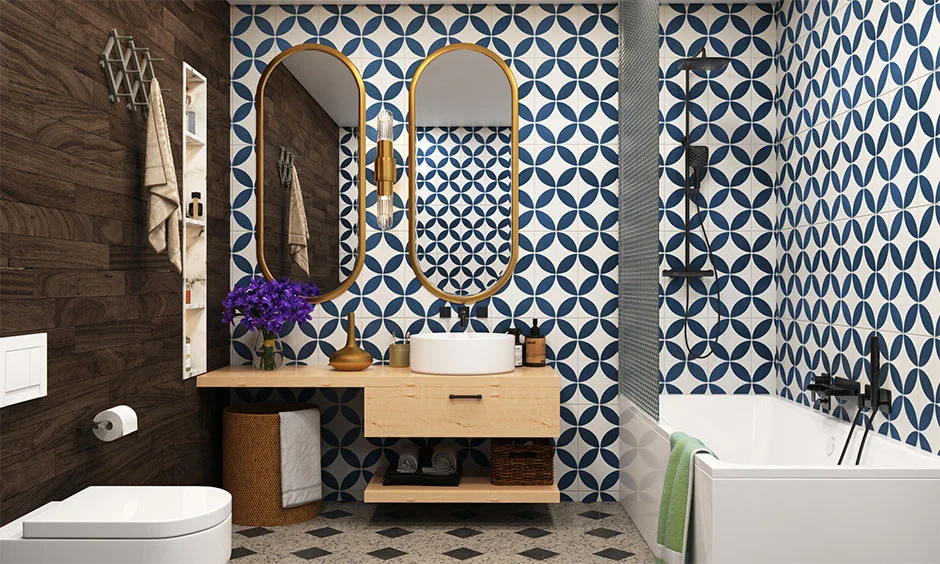
Factors You Should Consider Before Choosing: Wall-Mounted vs Freestanding Bathroom Cabinet
The right choice comes down to answering a few honest questions.
1. How big is your bathroom?
In compact spaces, a wall-hanging bathroom cabinet helps open up the floor. It makes the room feel less claustrophobic. Larger bathrooms can easily accommodate a freestanding cabinet without feeling bulky and cramped.
2. How much storage do you actually need?
If your daily routine involves multiple steps and products, towels, and more than a few cleaning supplies, freestanding options offer more practical storage. If you prefer a clutter-free look, a floating cabinet keeps things minimal and manageable.
3. Will your existing plumbing work with your choice?
Wall-mounted designs may need minor plumbing adjustments to align pipes inside the wall. Whereas a freestanding cabinet can fit around existing plumbing without major changes.
Fabulous Bathroom Interior Designs


4. Can your wall support a mounted unit?
Not every wall can support the weight of a mounted wall vanity. You may need additional internal support, called blocking, to ensure it’s secure and long-lasting.
5. How easy do you want cleaning to be?
If you want low-effort cleaning, wall-mounted cabinets are easier to maintain. Freestanding units, especially those with legs, may need to be manoeuvred while cleaning underneath.
6. Do you want flexibility for future changes?
Freestanding cabinets are easier to replace or upgrade later. Wall-mounted units are more permanent, so changing them involves more work.
7. Are you renting or renovating?
Freestanding storage cabinets are renter-friendly. They require no drilling or permanent changes and are easy to take when you move. If you are a homeowner, you can invest in the structural work a wall-mounted cabinet requires.
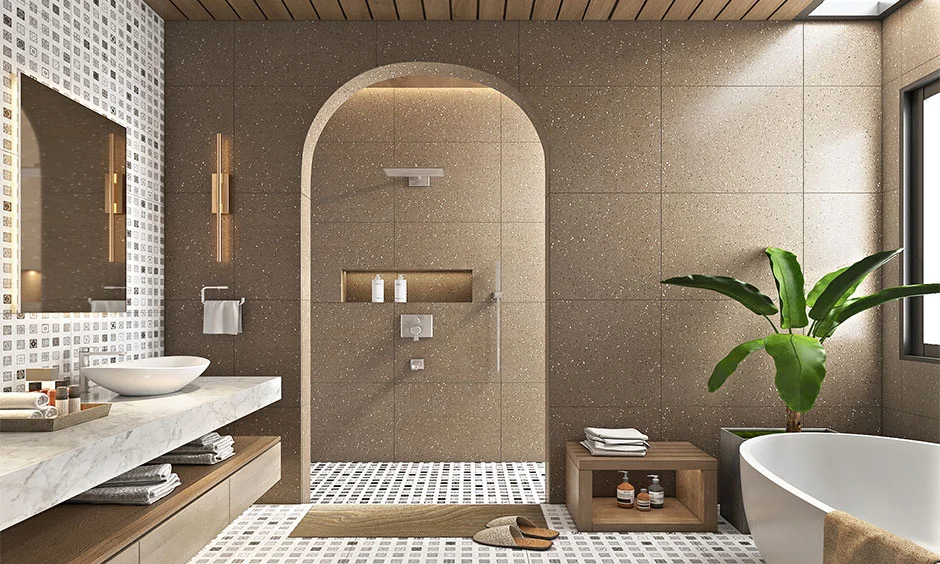
Design Tips for Wall-Hanging Bathroom Cabinet & Freestanding Bathroom Countertop Cabinet
Designer Tip 1: In a small bathroom, use large, same-coloured tiles as your floating bathroom cabinet. Since the floor is visible under the cabinet, the space feels more open and naturally bigger, without increasing a single dimension.
Designer Tip 2: If your bathroom feels tight, don’t rush to add more storage. A smaller, well-planned floating unit often works better than a bulky cabinet that visually shrinks the space.
Designer Tip 3: Pair your bathroom cabinet light tiles and soft lighting to create a spa-like atmosphere. Opt for neutral tones like beige, white, or muted grey with a pop of colour for a sleek look.

Designer Tip 4: A corner cabinet is a great choice to use awkward spaces efficiently. You can also use a bold colour here to add character without overwhelming the room.
Designer Tip 5: Mix textures carefully. A matte cabinet with a glossy countertop creates a subtle contrast without making the space feel busy.
Designer Tip 6: If you want your bathroom to feel expensive on a budget, focus on alignment. Keep your cabinet, mirror, and lighting centred. It instantly looks more intentional.
Designer Tip 7: For a freestanding unit in a traditional bathroom, choose warm wood tones with brushed brass handles.
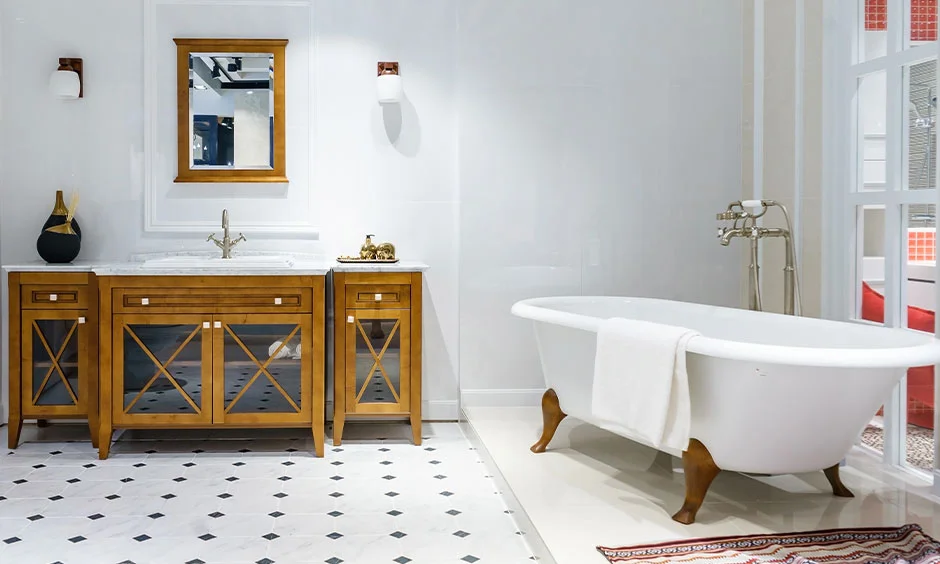
Wall-Mounted vs Freestanding Bathroom Cabinet: Maintenance and Durability
- Choose moisture-resistant finishes, such as laminates, to prevent water damage and extend lifespan.
- Seal edges properly. This is where water damage usually starts.
- Wipe spills quickly, especially around the base and joints.
- For a wall-mounted bathroom cabinet, check fittings once a year to ensure it stays secure and rust-free.
- For a freestanding bathroom cabinet, keep the base dry to avoid swelling or warping.
- Avoid harsh cleaners. They can damage the surface finish over time.
- If your cabinet has legs, clean underneath regularly to prevent dirt buildup.
- Ensure proper ventilation in the bathroom to reduce long-term moisture damage.
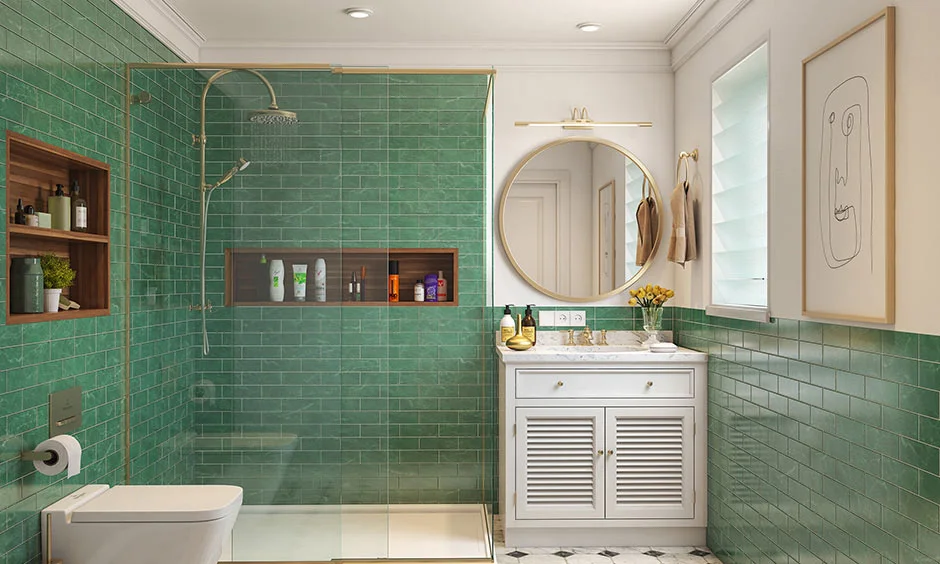
Parting Thoughts
When it comes to choosing between a wall-mounted vs freestanding bathroom cabinet, don’t fall for trends. It doesn’t need to be complicated. Factor in the above-mentioned questions before making your decision. Browse our bathroom design ideas to create a space that suits your home and taste. If you are still confused and need a nudge, book a custom design appointment with our interior designers.
FAQs
1. How much floor space do I actually save with a wall-mounted vanity?
You don’t just save physical space—you create visual space. A wall-mounted bathroom cabinet keeps the floor visible, making even small bathrooms feel larger and less cluttered.
2. Do freestanding cabinets offer significantly more storage than floating ones?
Yes, most freestanding storage cabinets offer deeper drawers and more compartments. If storage is your top priority, they’re usually the better option.
3. Is it harder to clean under a freestanding cabinet with legs?
It can be. Dust and water tend to collect underneath, especially with narrow gaps. A freestanding bathroom cabinet with a flush base is easier to maintain than one with legs.
4. Can any bathroom wall support a heavy floating vanity, or do I need extra blocking?
Not all walls are strong enough. Heavier mounted wall vanity units often need extra support inside the wall to hold the weight safely.
5. Do floating vanities eventually sag or pull away from the wall?
Only if installed poorly. A properly fixed floating bathroom cabinet with the right hardware and wall support will stay secure for years.