Select Category

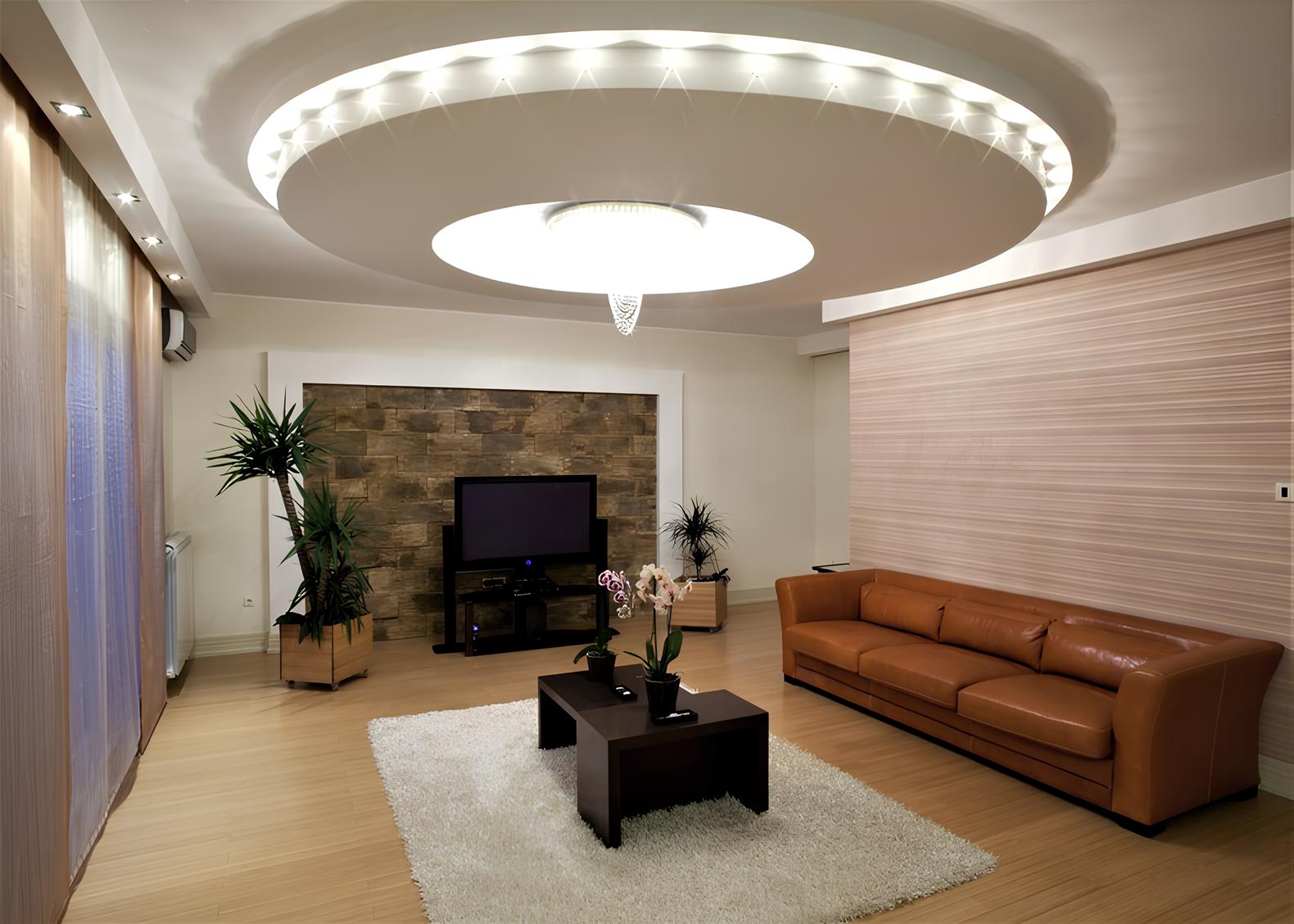
Many people assume a false ceiling is only about looks. But it actually does much more than that. A false ceiling is an extra layer added below the original concrete ceiling. This creates a small gap between the two. That hidden space is useful. It helps conceal electrical wiring, AC ducts, pipes, and also allows you to add different types of lighting neatly. It can even help with reducing heat and softening noise inside the room. In simple words, instead of staring at a plain concrete slab, you get a ceiling that looks better and works smarter for your home.
What Is a False Ceiling?
At its core, a false ceiling is a framework made of metal channels, boards or panels that sits slightly below your original roof slab. But functionally, it does much more than “look good”.
Key Benefits of False Ceiling Design
• Conceals electrical wiring, AC ducts and uneven slabs.
• Improves lighting design flexibility (cove lights, spotlights, profile lights).
• Enhances acoustics in larger rooms.
• Helps regulate temperature in hot climates.
• Adds visual depth and zoning in open layouts.
• Makes lighting look layered instead of harsh.
In Indian homes, especially, where living rooms double up as dining spaces, a well-planned false ceiling design for the home helps define zones without adding walls.

Choosing the Right False Ceiling Material
Material choice determines durability, cost, maintenance and design flexibility. The question isn’t “Which looks good?” It’s “Which performs well in this room?” Here’s a simplified material comparison to help you with early decisions:
| Material | Best For | Key Advantages | Watch Out For |
| Gypsum | Living rooms, bedrooms | Smooth finish, easy installation, and modern false ceiling design. | Not ideal for high-moisture zones |
| POP (Plaster of Paris) | Custom curves & detailing | Flexible for intricate shapes | Longer drying time |
| PVC | Bathrooms, kitchens, balcony, and false ceiling | Waterproof, low maintenance | Slightly less premium finish |
| Wood / Veneer Finish | Living rooms, premium bedrooms | Warm aesthetic false ceiling design | Needs moisture protection |
| Calcium Silicate | High-moisture areas | Stronger and more durable than gypsum | Slightly higher cost |
Understanding False Ceiling Costs in India
Let’s get practical. The cost of a false ceiling depends on some of the following factors:
• Material selected
• Ceiling design complexity
• Lighting integration
• Room size (square footage)
• City labour rates
• Type of finish (paint, laminate, veneer, wallpaper)
Most homeowners search for false ceiling cost per sq ft, and that’s a fair starting metric. Basic gypsum false ceiling costs ₹80- ₹120 per square foot. The range varies by city and design complexity. A simple single-layer false ceiling design costs far less than a layered cove light ceiling with profile lights and spotlights. Also remember: lighting fixtures are usually cost separately. A 12×12 bedroom (144 sq ft) with a simple gypsum false ceiling falls in a moderate range, while a living room with dual layers and integrated ceiling profile light design increases cost significantly. False ceiling design cost is rarely just about material. It’s about integration also.
When Should You Install a False Ceiling?
A false ceiling makes sense if:
• You want layered lighting instead of a single tube light
• Your slab has visible beams or uneven surfaces
• You’re installing central AC or concealed wiring
• You want a modern ceiling design that adds depth
It may not be necessary if:
• The ceiling height is too low (below 8 feet needs careful planning.
• You prefer raw slab aesthetics
• Budget allocation is better used elsewhere.
Quick Decision Framework Before Moving Ahead
Before choosing a false ceiling design, ask:
- What is the ceiling height after installation?
- Is moisture a concern in this room?
- Do I need concealed lighting?
- Am I prioritising cost or long-term durability?
- Is this ceiling decorative, functional, or both?
A false ceiling is not mandatory in every home. But when designed thoughtfully, it transforms how a space feels brighter, softer, and more structured. Next, we’ll go deeper into materials, technical differences, and how gypsum compares with POP, PVC, fibre, wood, and specialised options, because once the fundamentals are clear, the design vocabulary becomes far more powerful.
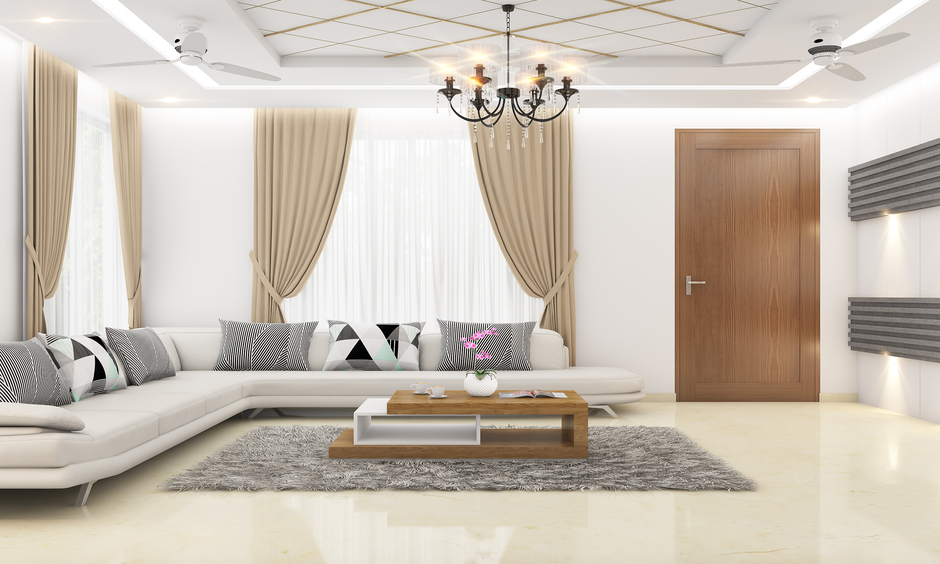
False Ceiling Design Types: Materials Compared & What Works Best
Choosing the right material is where your false ceiling design either becomes practical or problematic. Each material looks different. Each behaves differently. And each comes with its own strengths and limitations. Below is a simple, clear comparison to help you decide wisely.
1. POP and Gypsum: The Most Common Choices
POP (Plaster of Paris) is applied on-site in a paste form and shaped manually. Now question arises: Why do people choose POP?
- Smooth finish.
- Easy to create curves and detailed mouldings.
- Works well for traditional and decorative designs
Things to keep in mind:
- Takes longer to install.
- Requires skilled labour.
- Can crack over time if not done properly
This type of ceiling is often chosen for a decorative pop false ceiling design, especially in living rooms and bedrooms, where curves and layered borders are preferred.
2. Gypsum Board
Gypsum boards come in ready-made panels that are fixed onto a metal framework. Why do people choose gypsum?
- Faster installation.
- Cleaner finish.
- Less mess during work.
- Good for straight, modern layouts
Things to consider:
- Not ideal for very intricate shapes.
- Needs proper joint finishing to avoid visible seams
3. Quick Comparison: POP vs Gypsum False Ceiling Design
| Feature | POP | Gypsum Board |
| Installation | On-site application | Pre-made boards |
| Design Flexibility | High (curves & detailing) | Moderate (straight lines) |
| Installation Time | Slower | Faster |
| Finish | Seamless if done well | Smooth and uniform |
| Maintenance | May crack over time | More stable if installed properly |
Best for:
- POP → Decorative ceilings
- Gypsum → Modern, clean ceiling styles
4. PVC and Fibre: Practical & Moisture-Friendly
PVC Ceilings – PVC ceilings are a practical option when you need durability more than decorative detailing. PVC panels are lightweight, water-resistant and easy to install, which makes them suitable for areas exposed to moisture. They work especially well in:
- Bathrooms
- Kitchens
- Utility areas
- Balconies
Unlike POP or gypsum, PVC handles humidity much better and does not absorb moisture easily. That means less risk of sagging, cracking or staining over time. They are also easy to clean, which makes maintenance simple.
Fibre Ceilings – Fibre ceilings are commonly used in commercial spaces, but can work in certain residential areas too. Why are they used:
- Good acoustic control
- Lightweight
- Easy replacement of panels
5. Wooden False Ceilings: Warm and Premium
Wood adds warmth instantly. It makes a room feel richer and more inviting. Where wooden ceilings shine:
- Living rooms
- Master bedrooms
- Home theatres
But wood comes with conditions:
- Higher cost.
- Needs termite protection.
- May react to humidity if not treated well
6. Specialised Materials and Structures
| Material Type | Key Features | Best Used For | Important Considerations |
| Calcium Silicate Boards | Moisture-resistant, fire-resistant | Homes in humid cities | Durable option for long-term performance. |
| Cement-Based Ceilings | Industrial, raw finish look | Contemporary and modern interiors | Heavier material requires proper structural support |
| Glass Ceilings | Creates dramatic lighting effects | Feature areas in premium homes | Needs strong framing and careful installation |
Luxury 2BHK Interior Designs


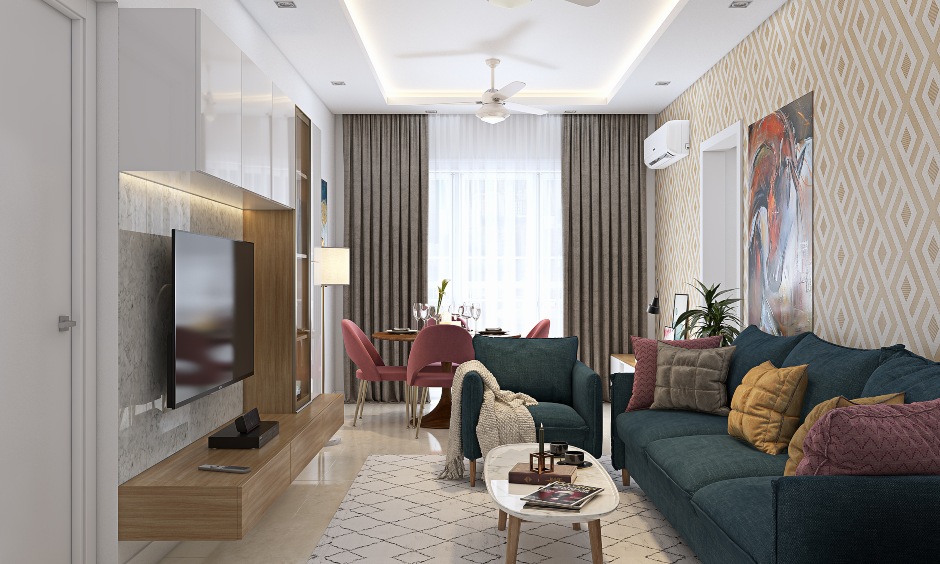


How to Choose the Best Material for False Ceiling
Instead of asking “Which material is best?”, ask:
- Is the room humid?
- Do I want curves or straight lines?
- Is the speed of installation important?
- Am I designing for luxury or practicality?
- What is my long-term maintenance comfort?
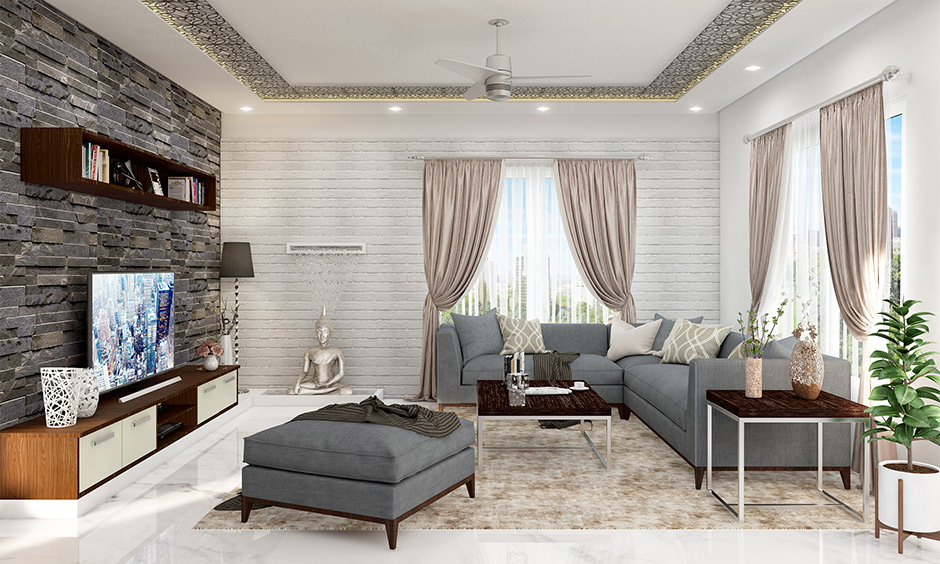
From Simple to Statement: False Ceiling Design Types You’ll Love
A ceiling quietly controls how a room feels. It can make a space look taller, wider, warmer or more dramatic. That is why choosing the right false ceiling design is not only about decoration. It is about proportion, balance and mood. This section breaks down styles, shapes and finishes so you can understand what actually works in real homes, not just in catalogue pictures.
1. False ceiling design types defining today’s modern homes
When people search for the latest false ceiling designs, they are usually looking for something that feels current but not overdone. In most Indian homes today, ceilings fall into three broad style directions.
Minimal and Clean – This style focuses on straight lines and subtle detailing.
- Plain recessed borders
- Soft cove lighting
- Neutral colours
- Minimal layers
This works well in compact apartments and contemporary homes. It keeps the space calm and uncluttered.
Layered and Decorative – This approach adds depth and dimension.
- Multiple levels
- Drop sections
- Highlighted panels
- Integrated lighting patterns
Statement and Luxury – This is where ceilings become focal points.
- Coffered patterns
- Wooden panels
- Metallic trims
- Symmetrical geometric layouts
These designs are often seen in luxury homes and large halls where height allows for visual experimentation. The key is proportion. A dramatic ceiling in a small room can feel heavy. A very plain ceiling in a large hall can feel incomplete.
2. Ceiling Shapes That Change the Entire Mood of a Room
Shape plays a bigger role than most people realise. It directs the eye and changes how spacious a room feels. Here is a practical comparison:
| Ceiling Shape | Visual Effect | Best Suited For | Design Impact |
| Rectangular | Structured and balanced | Living rooms, halls | Clean, modern look |
| L-Shaped | Zoning effect | Open-plan spaces | Defines areas subtly |
| Round / Circular | Soft and focal | Bedrooms, dining areas | Creates warm focal point |
| Grid / Coffered | Grand and classic | Large halls | Adds depth and luxury |
| Plus-Minus (Layered Cutouts) | Contemporary | Modern apartments | Adds visual movement |
3. Ceiling Colours, Paint & Surface Treatments
For years, ceilings were painted white without question. That trend is changing. Colour and surface finish now play an important role in a modern false ceiling design.
Colour Strategy
- Light shades make ceilings appear higher.
- Slightly darker tones create warmth in large rooms.
- Matching ceiling colour with wall accents creates visual harmony.
Paint Finishes
- Matte finishes hide minor imperfections.
- Satin finishes reflect a little light and feel polished.
- Textured finishes add depth but should be used carefully in smaller rooms.
Wallpaper and Decorative Panels
Ceiling wallpaper or printed panels are now used selectively. They work best:
- Above dining tables
- In kids’ rooms
- In themed bedrooms
How to Choose the Right Design Direction
Instead of copying a design from the internet, ask three practical questions:
- How high is the ceiling?
- Is this room meant for relaxation or entertaining?
- Do you want the ceiling to stand out or blend in?
A low-height room needs subtle detailing. A large hall can handle layered designs. A master bedroom may benefit from soft lighting and gentle curves. The smartest approach is balance. Good ceiling design feels intentional but never heavy. It supports lighting, improves proportion and quietly enhances the space. When done well, a false ceiling does not shout for attention. It simply makes the entire room feel complete.
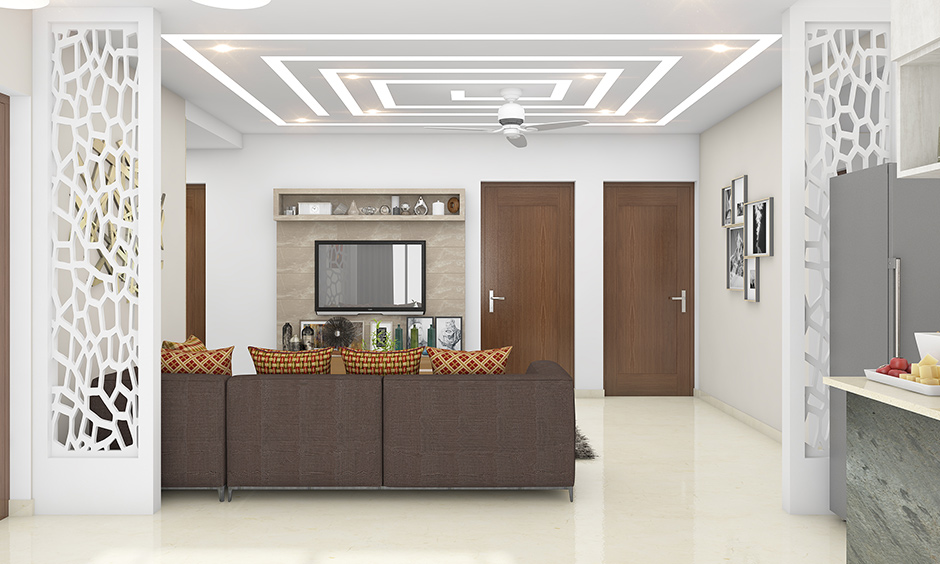
False Ceiling Lights Design: How to Layer Lighting the Right Way
For many Indian homeowners, lighting is the real reason they install a ceiling. A well-planned false ceiling lights design does more than brighten a room. It shapes mood, highlights features and makes the space feel finished. The biggest mistake people make is choosing lights first and planning the ceiling later. The smarter approach is the opposite. The ceiling layout should support the lighting plan.
A. Understand the Three Layers of Lighting – Every good ceiling lighting plan follows three simple layers.
1. Ambient lighting
This is one of the main sources of light in the room. Examples include recessed LED lights or concealed cove lighting.
2. Task lighting
This focuses on specific activities. Examples include lights above a kitchen counter or near a study desk.
3. Accent lighting
This highlights design elements. Examples include spotlights on artwork or textured walls. When these three layers work together, the room feels balanced instead of flat.
B. Common False Ceiling Light Types
Here is a simple breakdown of widely used false ceiling light types and where they work best.
| Light Type | Best For | Why it Works |
| Recessed LED Lights | Living rooms, bedrooms | Clean look, even light distribution |
| Cove Lighting | Bedrooms, TV areas | Soft indirect glow |
| Pendant Lights | Dining areas | Creates a visual focal point |
| Spotlights | Artwork, feature walls | Highlights specific areas |
| Panel Lights | Kitchens, offices | Bright and uniform lighting |
Recessed lights are the most common because they sit flush with the ceiling and do not take up visual space. Cove lighting adds warmth and depth, especially in bedrooms. Pendant lights can be used above dining tables to create focus.
C. Lighting for Low Ceilings – Low ceiling height needs careful planning. Heavy fixtures can make the room feel cramped.
What works better:
- Slim recessed lights instead of hanging fixtures.
- Indirect cove lighting to avoid glare
- Light colours on the ceiling surface
D. Room-Specific Lighting Ideas – Lighting should match the room’s function.
- Living Room – Use a mix of recessed lights and soft cove lighting. Add spotlights to highlight TV panels or artwork.
- Kitchen – Bright task lighting is important. Recessed lights above work areas improve visibility and safety.
- Dining Area – Pendant lights or cluster fixtures create focus over the table. The rest of the ceiling lighting can stay subtle.
- Bedroom – Soft cove lighting combined with dimmable recessed lights creates a relaxed atmosphere.

E. Planning Tips That Actually Matter
Before finalising your false ceiling lights design, consider:
- Ceiling height
- Room size
- Furniture layout
- Natural light availability
- Placement of fans or air-conditioning vents
A well-designed ceiling lighting plan does three things clearly:
- Provides enough brightness
- Creates depth and shadow
- Supports the overall design style
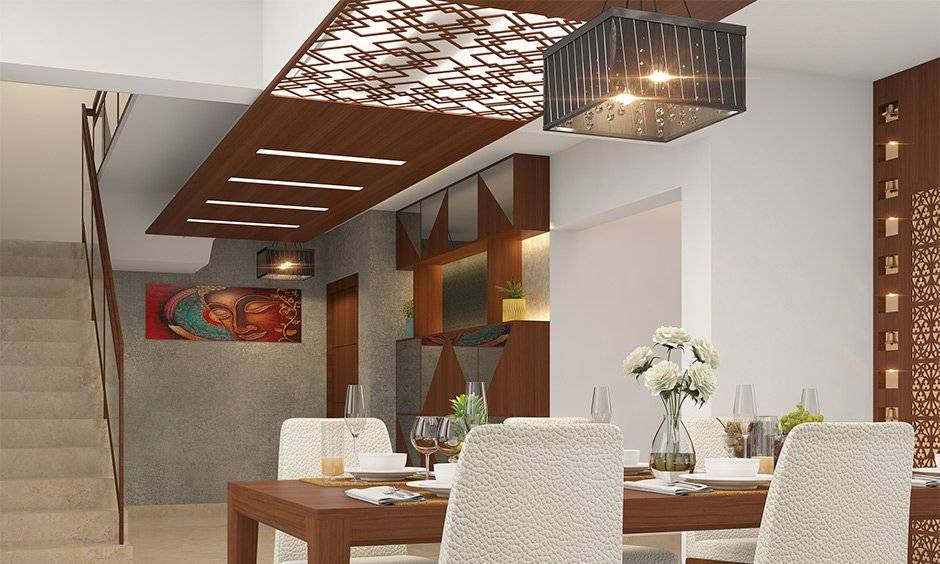
Best False Ceiling Designs for Every Room in Your Home
The right false ceiling design for the home depends on how each room is used. A living room needs presence. A bedroom needs comfort. A kitchen needs practicality. Instead of copying one design across the house, it helps to understand what works room by room.
A. Living Room & Hall: Where Design Makes the First Impression
The living room usually has the largest open area. This is where ceilings can make a visible impact. Some of the popular choices include:
- Layered borders with cove lighting.
- Geometric layouts for a modern look.
- Wooden inserts for warmth.
- Subtle POP detailing for texture
A well-planned false ceiling design for a living room should balance lighting and proportion. If the hall is large, you can experiment with layered or coffered styles. If the ceiling height is moderate, keep the layers minimal so the room does not feel heavy.
B. Bedroom: Comfort Comes First
Bedrooms are private spaces. The ceiling should feel calm, not dramatic. Some of the common approaches include:
- Soft cove lighting around the perimeter.
- Circular or centred drop ceilings above the bed.
- Minimal layered designs with dimmable lights
A practical false ceiling design for a bedroom avoids harsh spotlights directly above the sleeping area. Instead, indirect lighting creates a relaxed mood. For smaller rooms, clean and flat surfaces with hidden lighting work better than heavy detailing. In master bedrooms, slightly deeper layers can add character without overwhelming the space.
C. Kitchen & Dining Area: Function Over Decoration
In kitchens, lighting matters more than design complexity. A smart kitchen false ceiling design should:
- Allow bright recessed lights above work areas.
- Hide wiring and exhaust ducts.
- Avoid too many layers that trap heat
PVC or moisture-resistant boards are often preferred in kitchens because they handle humidity better. In dining areas, the ceiling can frame the table. A simple drop section with a pendant light in the centre creates visual focus without excess detailing.
D. Pooja Room, Kids’ Room & Home Theatre: Purpose-Led Design
- Pooja Room – Designs are usually subtle and symmetrical. Soft lighting and clean lines work best.
- Kids’ Bedroom – Playful shapes and gentle colour accents can be added, but lighting should remain practical and safe.
- Home Theatre – Darker ceiling tones and focused lighting help reduce glare. Acoustic-friendly materials can also improve sound quality.
E. Bathroom, Balcony & Lobby: Keep It Practical
These areas need durable and simple solutions.
Bathroom False Ceiling Designs – Moisture-resistant materials such as PVC or treated gypsum are safer choices. Lighting should be sealed and safe for wet areas.
Balcony False Ceiling Design – If the balcony is covered, lightweight and weather-resistant materials are recommended.
False Ceiling Design for Lobby – Keep it clean and structured. Too much detailing in narrow passages can make the space feel smaller.
Common Mistakes to Avoid – Even the best materials fail if planning is poor. Avoid these errors:
- Over-designing small rooms.
- Using heavy patterns in low-height spaces.
- Ignoring the lighting layout while planning the ceiling.
- Choosing materials without considering moisture or ventilation
What Actually Works
- The most successful ceilings follow three simple rules:
- Match the ceiling style to the room size.
- Choose lighting before finalising the layout.
- Keep design consistent across the home.
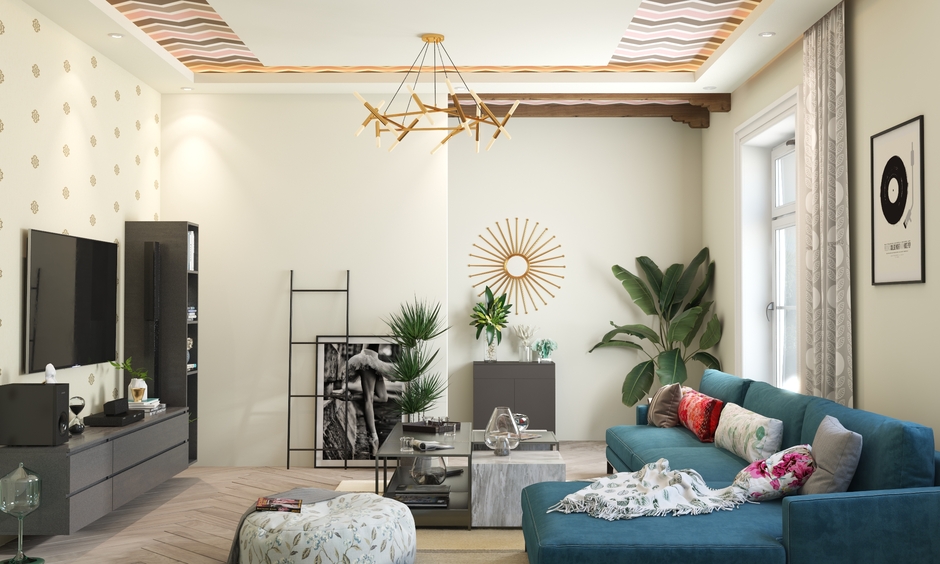
False Ceiling Installation Guide: Planning, Process & Precautions
Design is only half the story. Even the best ceiling can fail if the false ceiling installation is not done correctly. This stage decides durability, safety and long-term performance. Before work begins, there are a few practical things every homeowner should understand.
Step 1: Pre-Installation Planning
Installation should never start without clear drawings. What needs to be finalised first:
- Ceiling layout and levels.
- Light points and fan positions.
- AC duct routes.
- Electrical wiring plan.
- Material type
Step 2: Framework and Support
Every false ceiling needs a strong support grid.
For gypsum and POP ceilings:
- A metal framework is fixed to the slab.
- The boards are then attached to this frame.
- Proper spacing between channels ensures stability.
For PVC panels:
- Lightweight framing is used.
- Panels are interlocked and fixed securely.
Step 3: Electrical and Lighting Integration
Before closing the panels, all wiring must be properly insulated and secured. Here are some important checks:
- No loose wires inside the cavity.
- Heat from lights considered.
- Access panels provided for maintenance
This is especially important when installing recessed lights as part of a false ceiling lights design. LED lights are preferred because they produce less heat compared to older halogen options.
Step 4: Finishing and Surface Treatment
Once boards are fixed:
- Joints are sealed
- Surfaces are sanded
- Primer and paint are applied
Maintenance Tips for Long-Term Durability
A well-installed ceiling does not require heavy maintenance, but small checks help. The regular care includes:
- Cleaning surface dust gently.
- Checking for cracks near joints.
- Inspecting for water leakage marks.
- Repainting after a few years if required
Common Installation Mistakes to Avoid
- Skipping proper measurement before fixing the frame.
- Ignoring ceiling height while adding multiple layers.
- Using non-certified electrical fittings.
- Not providing access panels for maintenance
FAQs
1. Which false ceiling design is best for modern homes?
A simple design with straight lines and soft lighting works best for modern homes. Most people prefer subtle layers instead of heavy patterns.
2. What are some of the advantages of installing a false ceiling?
A false ceiling hides wires and ducts and makes lighting look neat and organised. It also helps improve the overall finish of a room.
3. Which material is best for false ceiling design?
Gypsum is a popular choice because it gives a smooth finish and is easy to work with. For areas with moisture, like bathrooms, PVC is usually safer.
4. Is a false ceiling suitable for all room sizes?
Yes, but the design should match the height of the room. Small rooms need simple designs so they do not feel smaller.
5. Which false ceiling design works best for living rooms?
Layered designs with soft lighting work well in living rooms. They add depth without making the space look crowded.
6. Is a false ceiling suitable for low-height rooms?
Yes, as long as the design is simple and does not drop too much. Slim lights and light colours help keep the room feeling open.
7. Which false ceiling design makes small rooms look bigger?
A plain ceiling with hidden lighting around the edges can make a small room feel larger. Avoid deep layers or heavy detailing in compact spaces.
8. What is the cost of a false ceiling design in India?
The cost depends on the material and design, but a basic gypsum ceiling usually starts from around ₹80 to ₹150 per square foot. More detailed designs or premium materials will cost more.