Select Category

One of the most common dilemmas homeowners and designers face is deciding between PVC vs WPC for walls, ceilings, doors, and panels.
At first glance, PVC vs WPC may appear similar; both are modern, low-maintenance materials widely used in contemporary interiors. However, when you look deeper, the differences between the two become clear in terms of strength, finish, lifespan, and ideal use.
Choosing the wrong material can lead to premature wear, design compromise, or unnecessary expenses. Understanding how each material performs in real-life interior conditions helps you make a choice that looks good today—and lasts for years.
Let’s explore the difference between WPC and PVC, compare their features, applications, pros, and cons. We want to help you confidently choose the right material for your interior design project.

What are PVC Designs?
PVC, or Polyvinyl Chloride, is a synthetic plastic polymer widely used in interior spaces due to its affordability, moisture resistance, and ease of installation.
Types of PVC Products Used in Interiors
- PVC panels for bathroom and kitchen walls
- PVC ceiling panels for moisture-prone areas
- PVC doors for utility spaces
- Decorative PVC design panels for budget interiors
Key Features of PVC
- Lightweight material that’s easy to handle and install.
- Completely waterproof, ideal for humid and wet areas.
- Termite- and pest-resistant for long-term use.
- Smooth surface that resists stains and moisture absorption.
- Easy to clean and maintain with minimal effort.
Common Applications
PVC panels are commonly used in:
- Bathrooms and wash areas
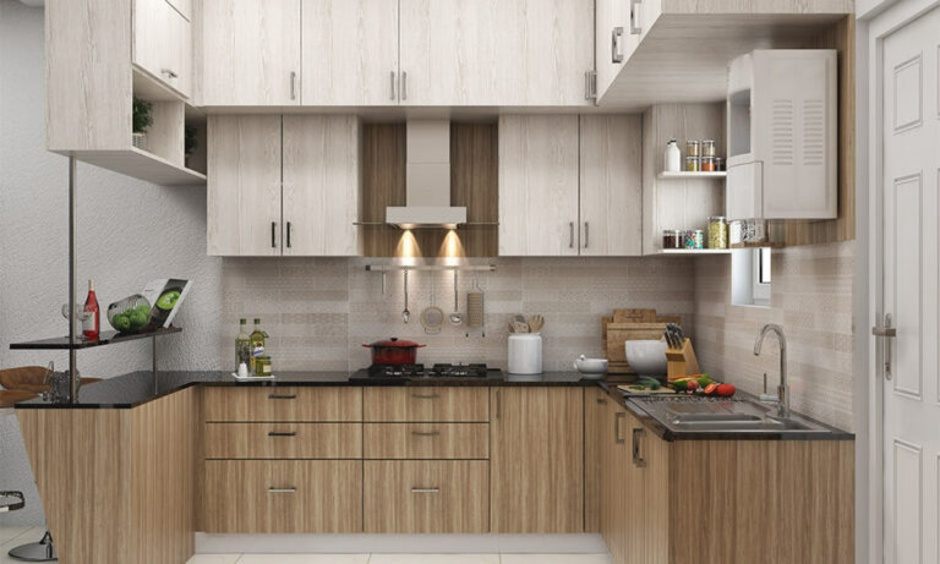
- Modular kitchens
- Basements and utility rooms
- Rental or short-term interior projects
What are WPC Designs?
WPC, or Wood Plastic Composite, is made by combining wood fibres with thermoplastic polymers. This mixture results in a material that looks like wood but performs better in terms of durability and moisture resistance.
Types of WPC Products Used in Interiors
- WPC boards for partitions and furniture bases
- WPC for feature walls
- WPC ceiling panels
- WPC doors
- Premium WPC design panels
Key Features of WPC
- Denser and stronger than PVC for improved durability.
- Excellent screw-holding capacity, suitable for furniture and fixtures.
- Better sound insulation compared to PVC panels.
- Natural, wood-like finish that enhances interior aesthetics.
- More stable structure for long-term interior applications.
Common Applications
WPC is commonly used in:
- Living rooms and bedrooms
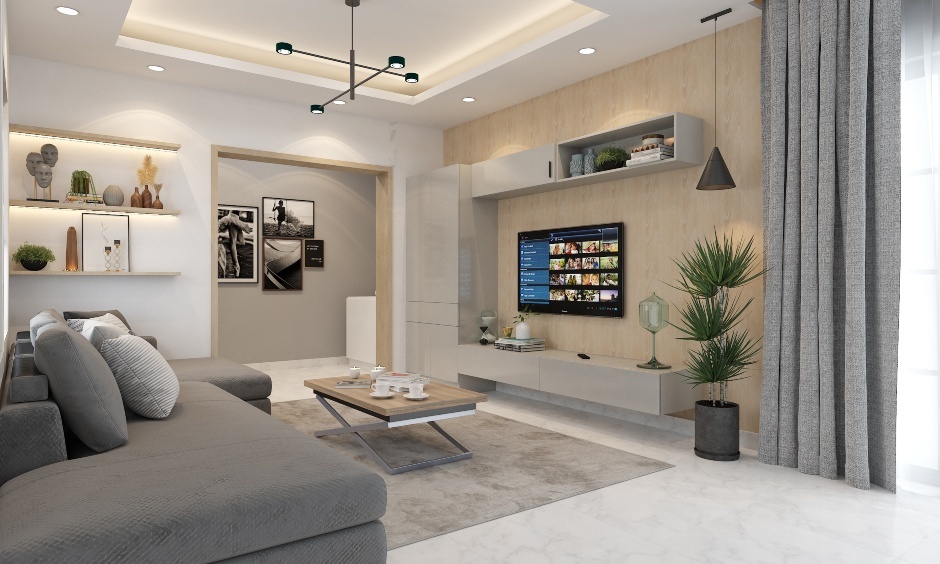
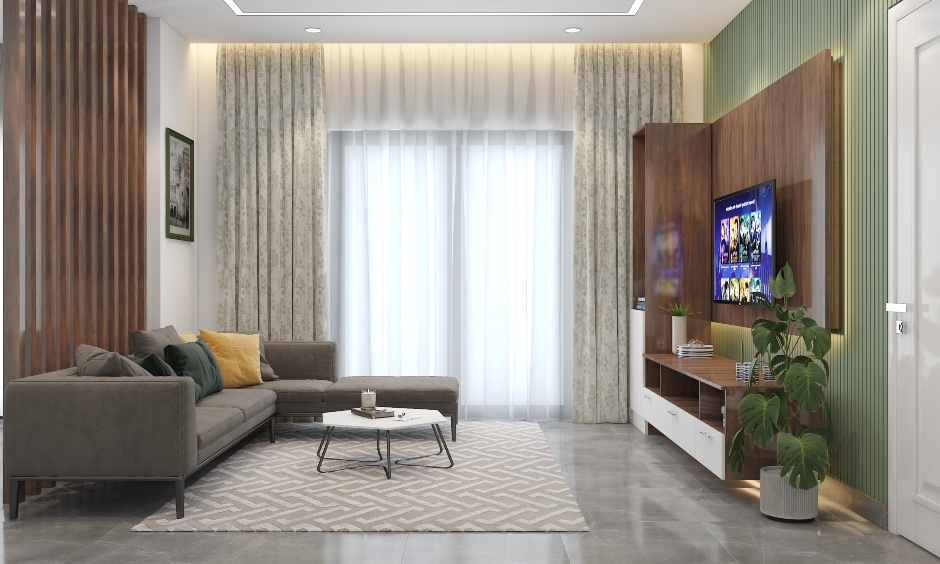
- Accent and TV unit walls
- Office interiors
- High-end residential and commercial projects
Key Differences Between PVC and WPC in Interior Applications
Understanding the differences between WPC and PVC boards helps select the right material for different spaces.
| Features | PVC | WPC |
| Composition | 100% plastic | Wood fibre + plastic |
| Strength | Moderate | High |
| Finish | Plain or glossy | Natural, wood-like |
| Weight | Lightweight | Heavier |
| Cost | Budget-friendly | Premium |
| Durability | Good | Excellent |
Best Uses of PVC vs WPC in Interior Design
The choice between PVC vs WPC wall panel depends mainly on the location and purpose of the space.
Best Uses of PVC
- Bathroom wall panels
- Kitchen ceilings
- Storage rooms
- Cost-sensitive renovations
Best Uses of WPC
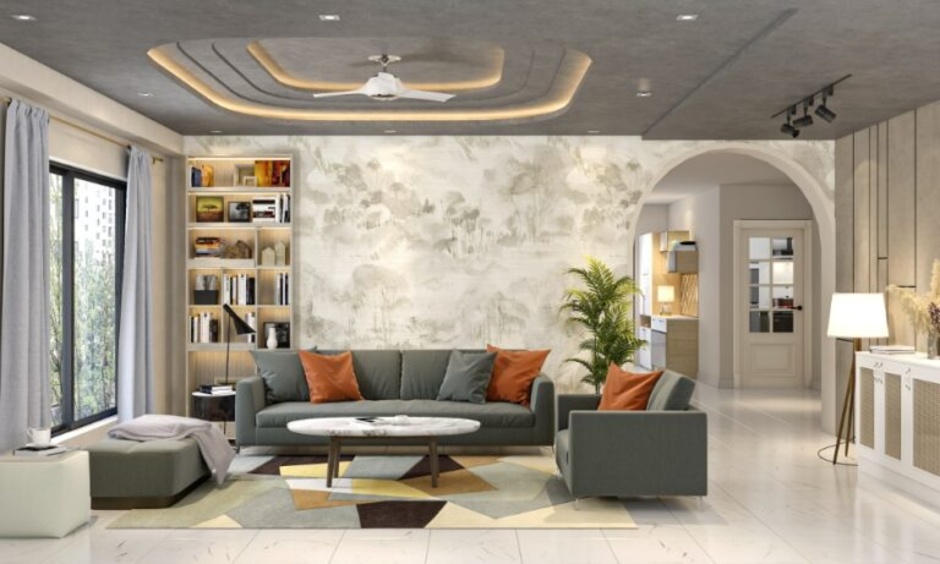
- Living room feature walls
- Bedroom paneling
- WPC ceiling designs
- Office cabins and reception areas
WPC adds visual warmth and structural reliability where design impact matters.
Premium 3BHK Interior Designs


Advantages and Disadvantages: PVC vs WPC in Interior Design
PVC: Pros and Cons
Advantages
- Affordable material cost
- Quick and easy installation
- Highly moisture-resistant
Disadvantages
- Lower impact resistance
- Limited premium design appeal
WPC: Pros and Cons
Advantages
- High strength and durability
- Rich, wood-like appearance
- Better insulation properties
Disadvantages
- Higher upfront cost
- Heavier than PVC
How to Choose Between PVC and WPC for Your Interior Design Project?
To decide between PVC vs WPC, consider these key factors:
Budget Constraints
PVC is a practical choice for cost-sensitive projects, such as rental homes or secondary spaces, where functionality matters more than long-term durability. WPC, while more expensive upfront, is better suited for homeowners looking to make a long-term investment in quality and performance.
Design Expectations
If your goal is a refined, premium interior with a natural wood-like finish, WPC design panels offer superior visual appeal. PVC, on the other hand, works well for clean, minimal interiors where design requirements are simple and budget-focused.
Space Usage
For moisture-prone areas like bathrooms, kitchens, and utility rooms, PVC performs exceptionally well due to its waterproof nature. WPC is better suited for living rooms, bedrooms, and office spaces where aesthetics and comfort play a larger role.
Durability Needs
In high-traffic zones or areas requiring strong load-bearing capacity, WPC board vs. PVC board comparisons clearly favour WPC. Its higher density and strength make it more reliable for long-term use.
PVC vs WPC in Doors, Panels, and Boards
- Difference Between PVC and WPC Doors: WPC doors are sturdier and feel more solid.
- Panels: WPC panels offer a better finish and greater impact resistance.
- Wall Panels: PVC is functional; WPC enhances aesthetics.
Choosing between PVC vs WPC is about selecting what works best for your space, budget, and design goals. PVC delivers affordability and moisture resistance, while WPC offers superior strength, longevity, and visual appeal.
By clearly understanding the difference between PVC and WPC, you can avoid common mistakes and invest in interior solutions that remain functional and stylish over time.
Confused about where to start? Talk to the experts at DesignCafe for more.
FAQs
1. What is the main difference between PVC and WPC wall panels?
PVC is a plastic-based material, while WPC combines wood and plastic for improved strength and aesthetics.
2. Are WPC wall panels waterproof?
Yes, WPC panels are moisture-resistant and suitable for indoor environments.
3. Can PVC or WPC panels be used outdoors?
PVC is not recommended for outdoor use; select WPC variants may be suitable.
4. Which wall panel lasts longer?
WPC generally lasts longer due to higher density.
5. Which is better for a bathroom — PVC or WPC?
PVC is more cost-effective for bathrooms.
6. Which is better: WPC or PVC?
Both are good—your choice depends on the application and budget.
7. Which is better for flooring: PVC or WPC?
WPC offers better strength and stability for flooring.
8. Is WPC more eco-friendly than PVC?
Yes, WPC uses recycled wood fibres, making it more sustainable.