Select Category


AI Summary
5 key insights · 1 expert tipWarm lighting instantly makes a dining space feel more inviting. A well-designed ceiling can do more than hide wiring. It can define the dining zone, add depth and set the mood. From recessed forms and cove lighting to wooden details and tray ceilings, these dining room false ceiling designs bring lighting, furniture and ambience together without making the room feel too much.
KEY INSIGHTS
- Match the ceiling design to the room’s size and height.
- Plan lighting and dining table placement together.
- Choose gypsum, POP, or wood based on the desired finish.
- Use ceilings to define dining zones in open layouts.
- Keep compact dining areas simple and uncluttered.
 DESIGNCAFE EXPERT TIP
By our design team
Yeshwanth Bothra, Interior Designer, DesignCafe, Chennai, suggests, “Plan the dining table and lighting along with the ceiling. The ceiling should frame the dining zone rather than compete with the pendant, chandelier, or furniture.”
These dining room false ceiling designs can make your dining area feel stylish, balanced and well-lit.
A false ceiling can do more than conceal wiring and lighting. In a dining area, it adds definition and depth to the space, and complements the furniture and overall interior style. A ceiling design directly impacts visual room proportion and ambient lighting in Indian dining spaces
Simple borders and recessed sections suit understated interiors, while wood, geometric patterns, and layered forms create a stronger visual feature. Lighting also plays an important role. Cove lights provide ambient illumination, while pendant lights and spotlights can focus attention on the dining table.
The right dining room false ceiling designs combine these elements while keeping the room proportionate and functional.

15 Dining Room False Ceiling Designs
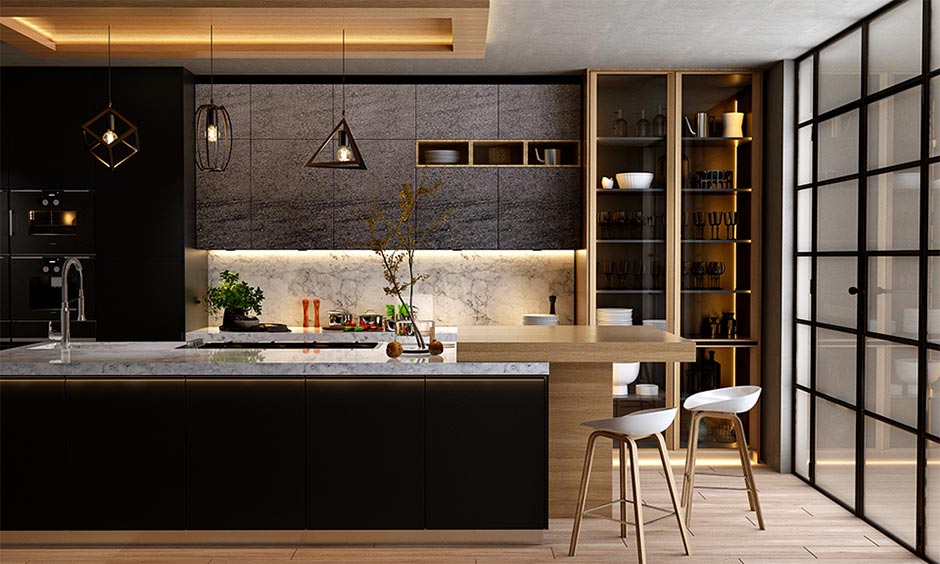
1. Simple False Ceiling Designs
Minimal borders, single-level designs, and subtle recessed sections can frame the dining area without making the ceiling feel heavy. Cove lighting can add a soft glow.
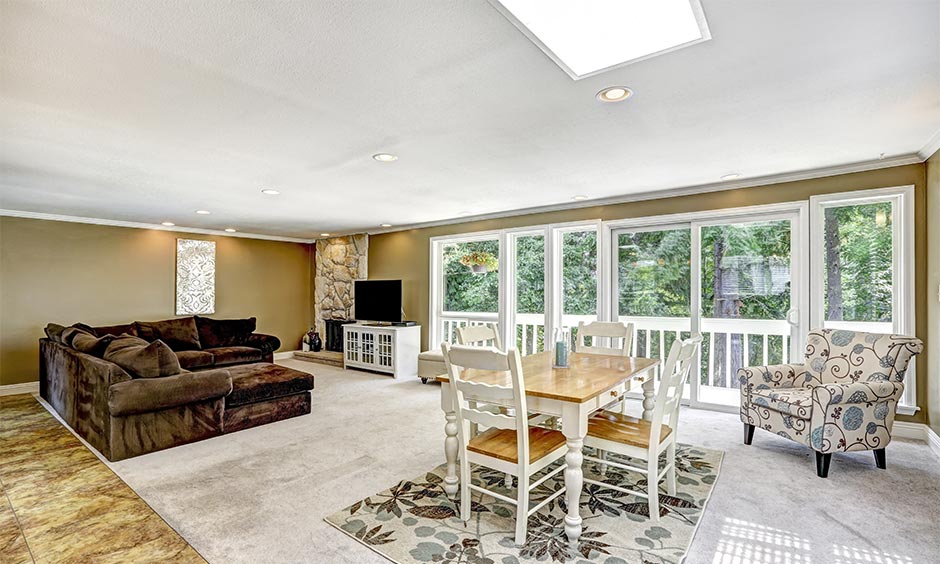
2. Modern False Ceiling Design For Dining Room
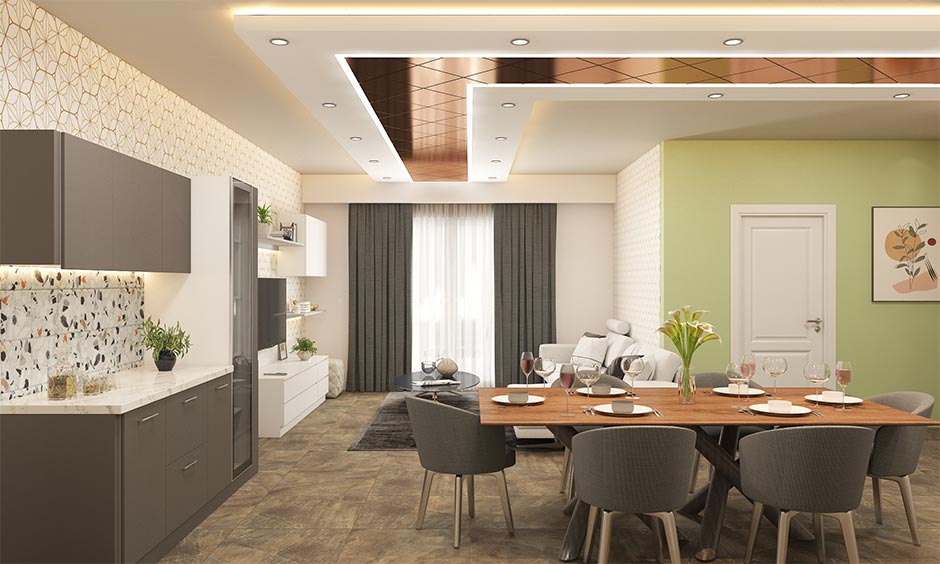
Geometric forms, layered planes, and recessed lights can give a dining area a contemporary look. A central ceiling detail can also anchor the dining table visually.
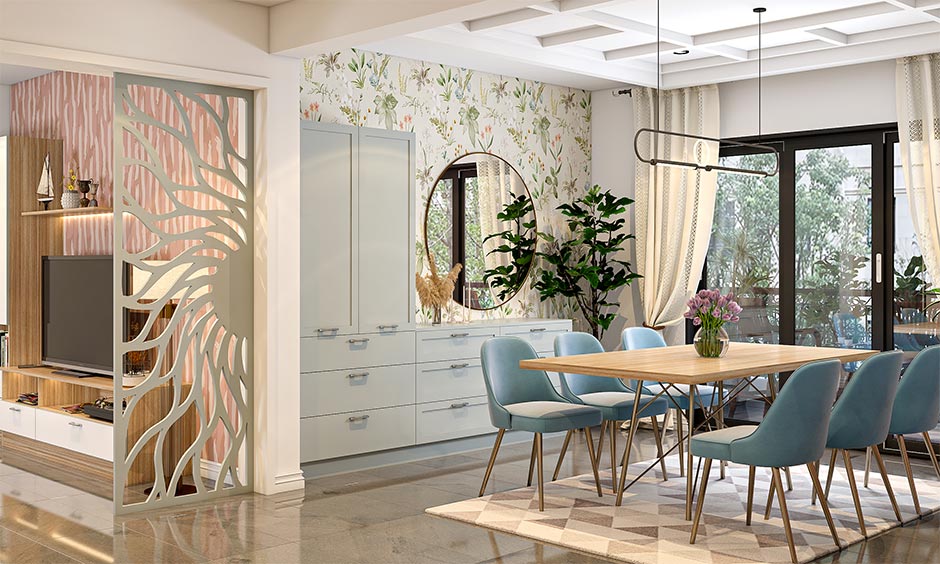
3. Wooden False Ceiling Designs
Wooden beams and wood-finish panels add warmth and texture. They can be used as a feature or combined with gypsum for a balanced finish.
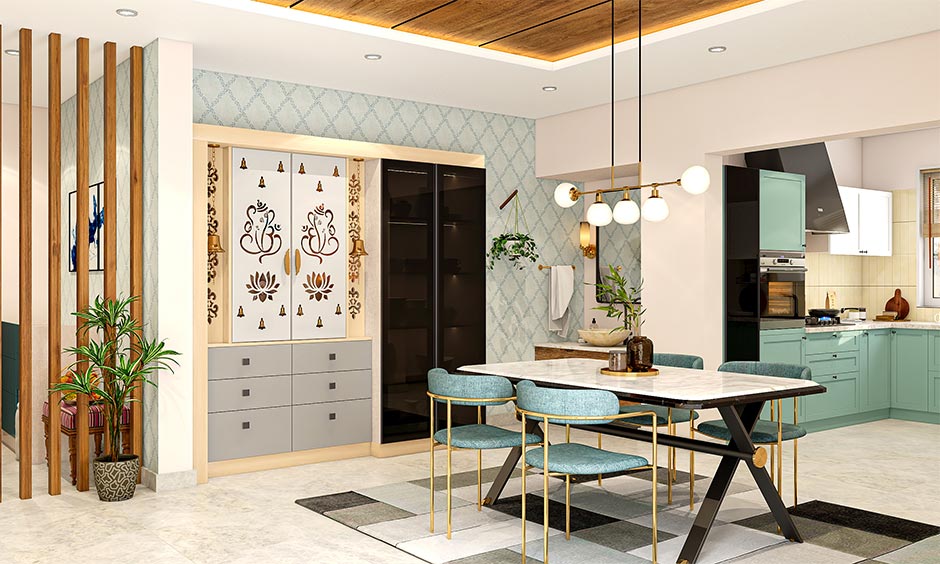
4. POP False Ceiling Designs
POP can be shaped into decorative borders, curves, and geometric patterns. Concealed lighting can highlight these details without adding extra fixtures.
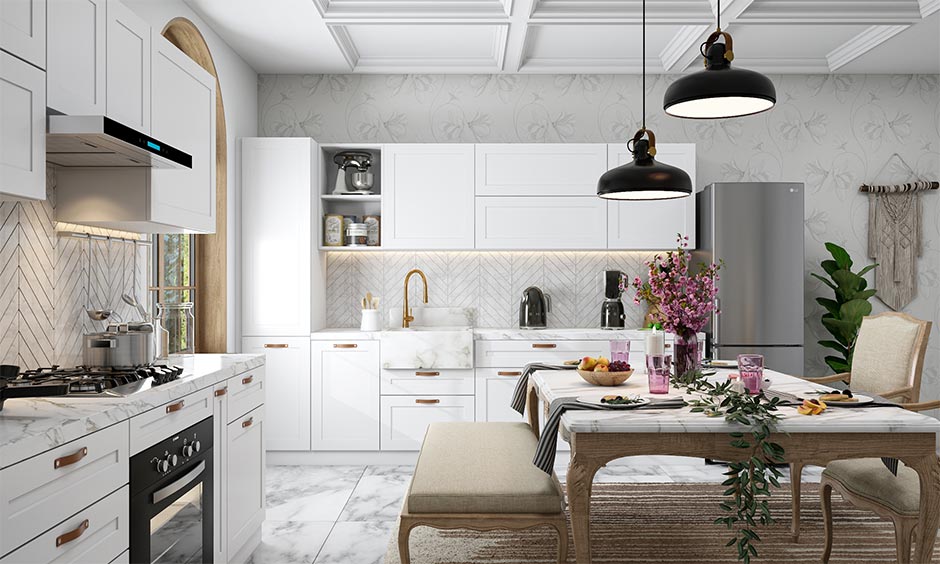
5. Gypsum False Ceiling For Dining Room
Gypsum suits clean, lightweight forms, recessed sections, and integrated lighting. It works well with contemporary interiors.
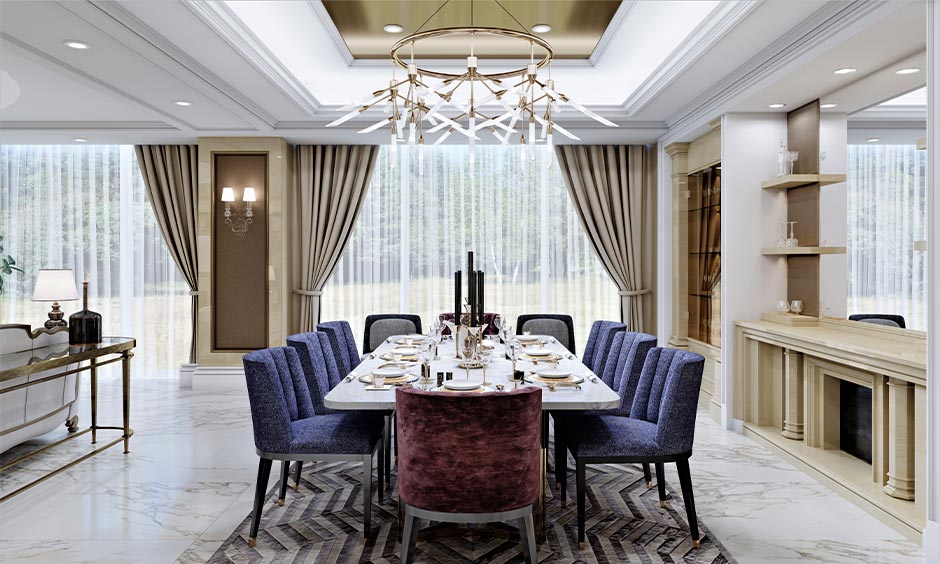
6. False Ceiling Designs For Dining Room With Fan
Consider fan placement alongside ceiling height, pendant lights, and other fixtures. Adequate clearance helps keep the arrangement practical and balanced.
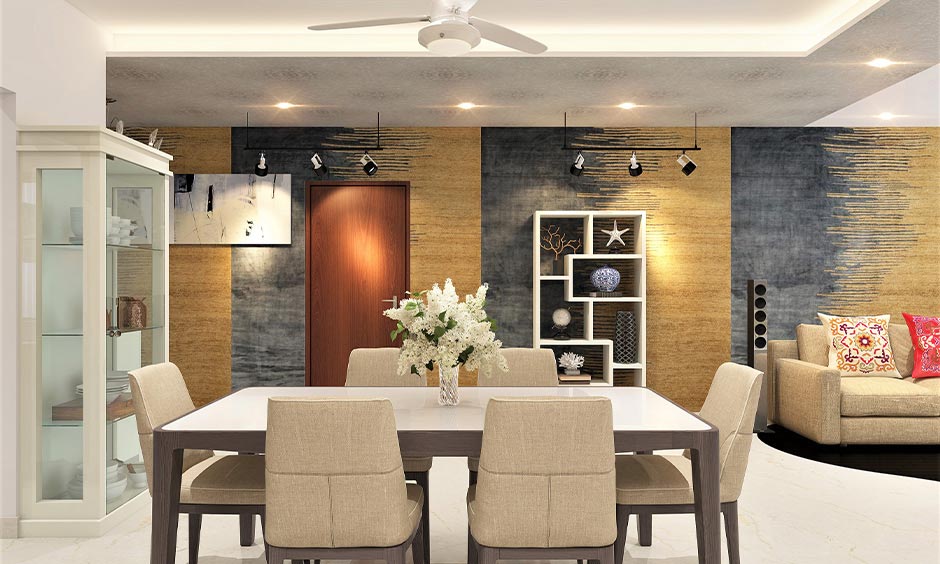
7. False Ceiling Designs for Small Dining Room
Small dining areas benefit from shallow detailing, light colours and integrated lighting. Avoiding heavy layers can help the space feel more open.
Trending Dining Room Interior Design Ideas


8. False Ceiling Design For Living And Dining Room
In an open-plan home, a false ceiling can visually define the dining area without separating it from the living room. Continuous ceiling elements can keep the look cohesive.
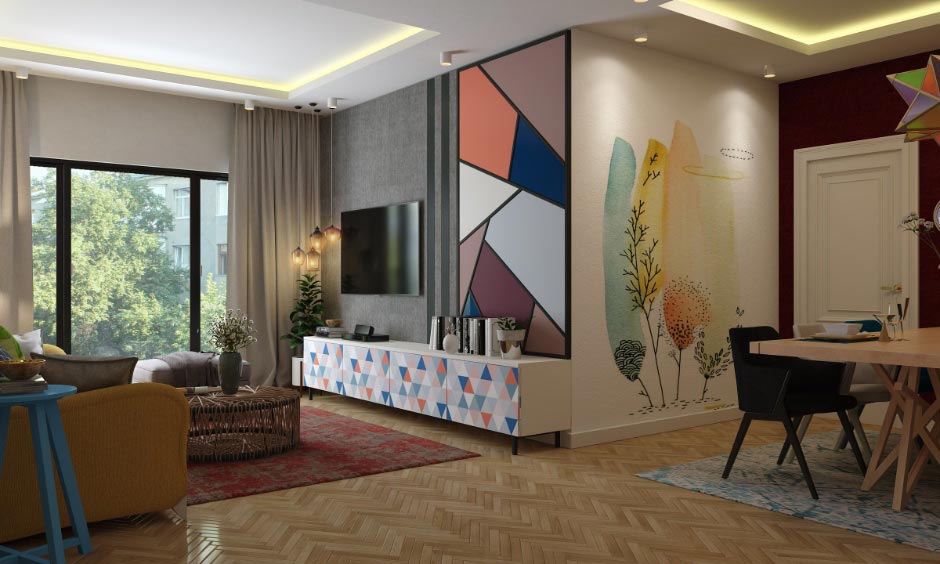
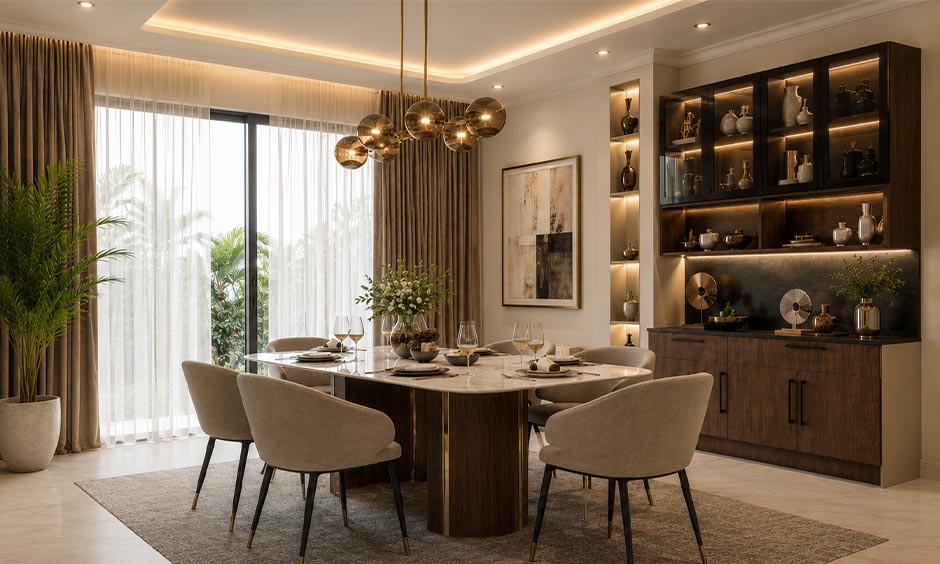
9. Cove Lighting False Ceiling
Cove lighting provides indirect illumination around the ceiling perimeter. Warm lighting creates a softer ambience, especially when paired with a central pendant.
10. Tray False Ceiling Designs
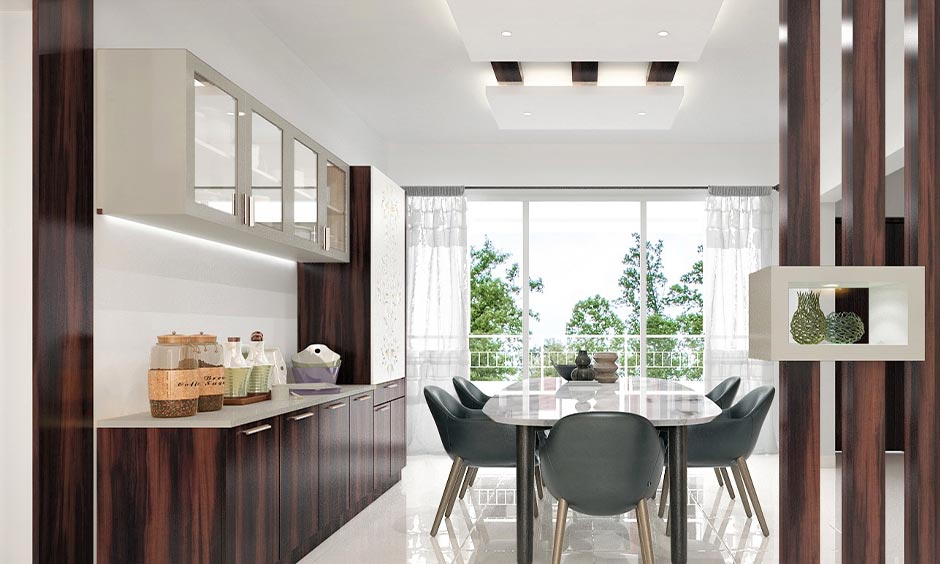
A tray ceiling features a recessed central section surrounded by a raised border. The centre can accommodate a pendant or chandelier, with additional lighting around the edges.
11. Geometric False Ceiling Designs For Dining Room
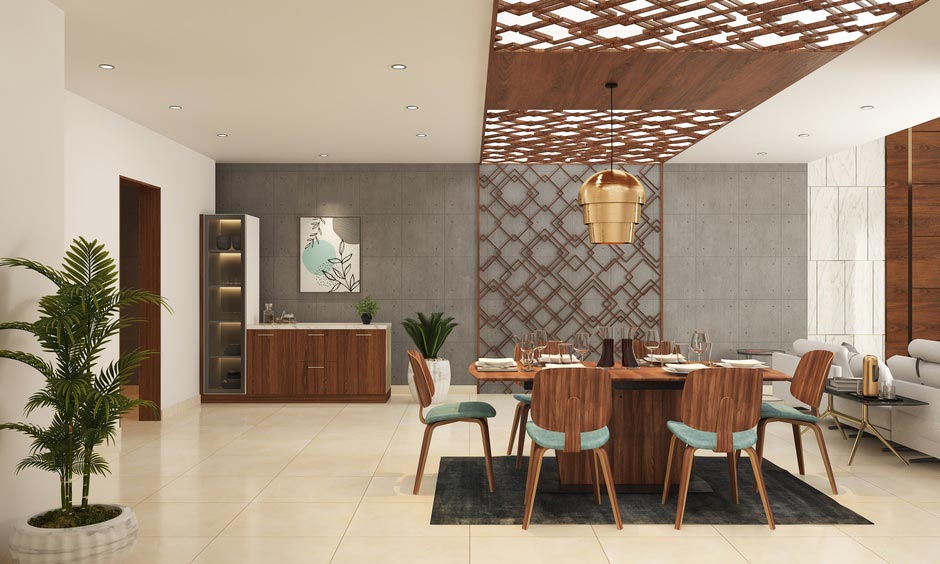
Squares, rectangles, and linear patterns can introduce structure to the ceiling. These designs work well with contemporary furniture and clean-lined interiors. Geometric overhead lines interact with table shapes and spatial symmetry to influence the interior design of the space.
12. False Ceiling With Pendant Lights
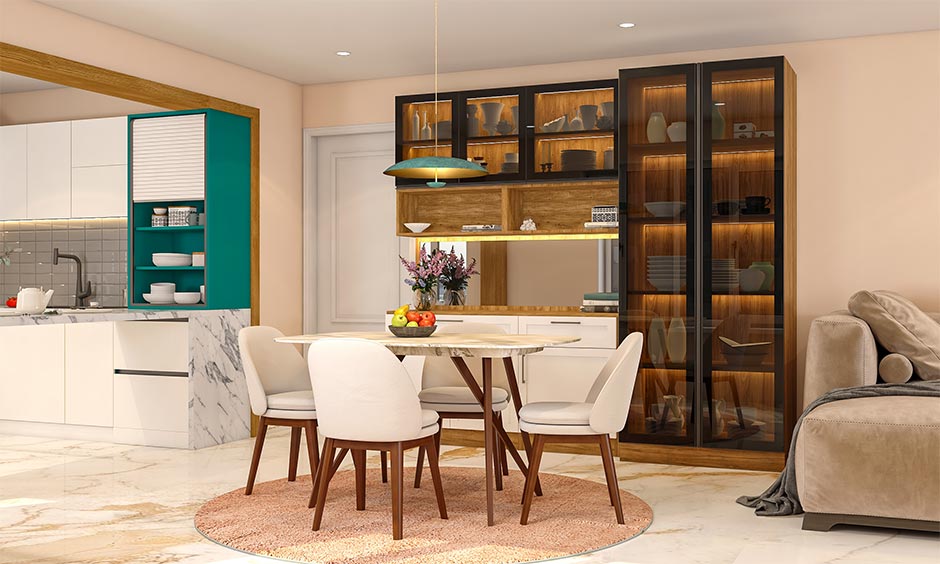
Pendant lights positioned above the dining table can create a clear focal point. A single fixture suits a compact table, while multiple pendants work over larger tables.
13. Two-Tone False Ceiling Designs For Dining Room
Contrasting colours or materials such as wood and white can add depth. Limiting the accent to a specific section keeps the ceiling balanced.
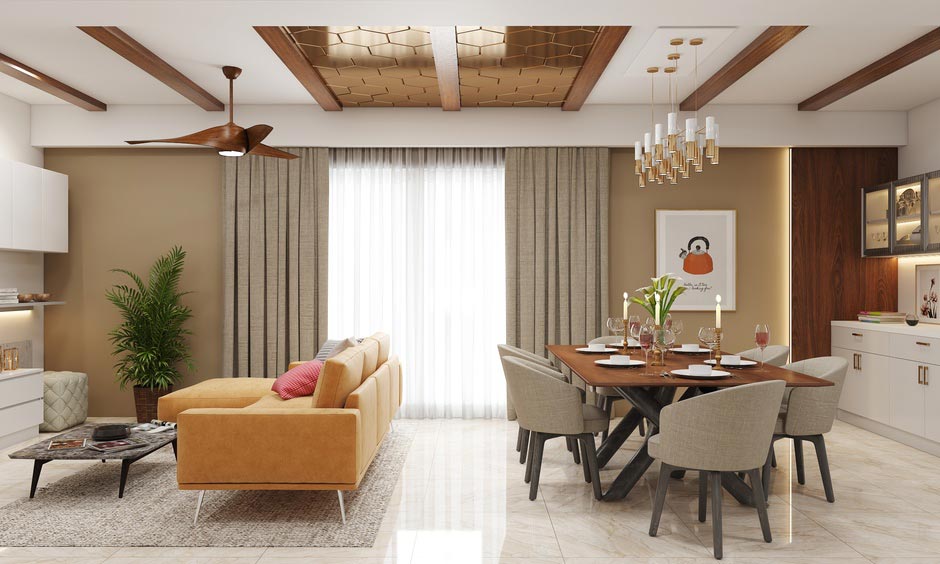
14. False Ceiling Designs For Compact Dining Areas
Compact spaces benefit from minimal layers and integrated lighting. A defined central section can add character without overwhelming the furniture.
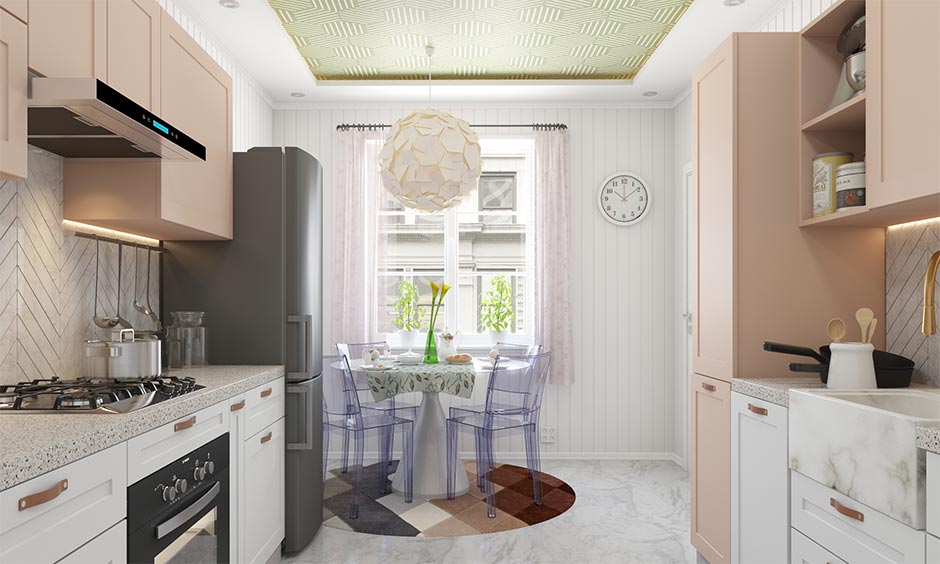
15. Statement False Ceiling Designs For Dining Room
Bold patterns, layered forms, and designer lighting can make the ceiling a feature. A high-impact ceiling complements minimalist furniture silhouettes or subtle wall finishes. Keeping the surrounding décor simple helps maintain balance.
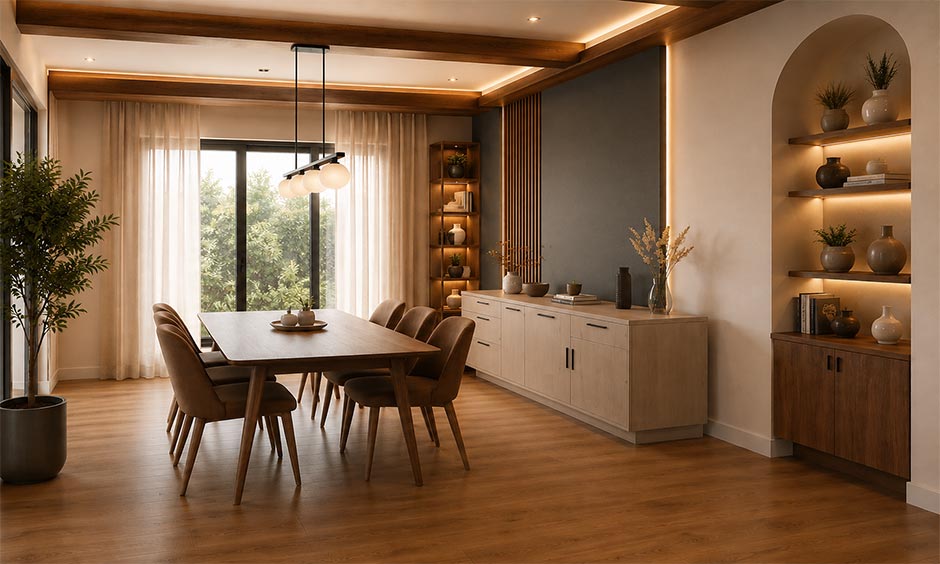
How To Choose The Right False Ceiling Design For Your Dining Room?
Consider The Size And Height Of The Dining Room: Small or low-ceiling spaces benefit from simpler layouts. Larger rooms can accommodate deeper layers and more elaborate detailing. Keep a minimum floor-to-ceiling height of 8.5 feet before choosing dropped tray layers.
Match the Ceiling With Your Dining Table And Furniture: Use the dining table as a visual anchor. Wood-finish details can complement wooden furniture, while geometric forms suit contemporary interiors.
Plan the Lighting Before Finalising The Ceiling: Decide the position of pendants, spotlights, cove lights, and chandeliers before construction so wiring and recesses can be integrated properly.
Choose the Right Material And Finish: Gypsum, POP and wood offer different finishes and design possibilities. The choice should complement the home’s interior.
| Material | Typical Design Direction |
| Gypsum | Clean, contemporary forms |
| POP | Decorative and detailed designs |
| Wood | Warm, feature-led ceilings |
| Combination | Contrasting materials and finishes |
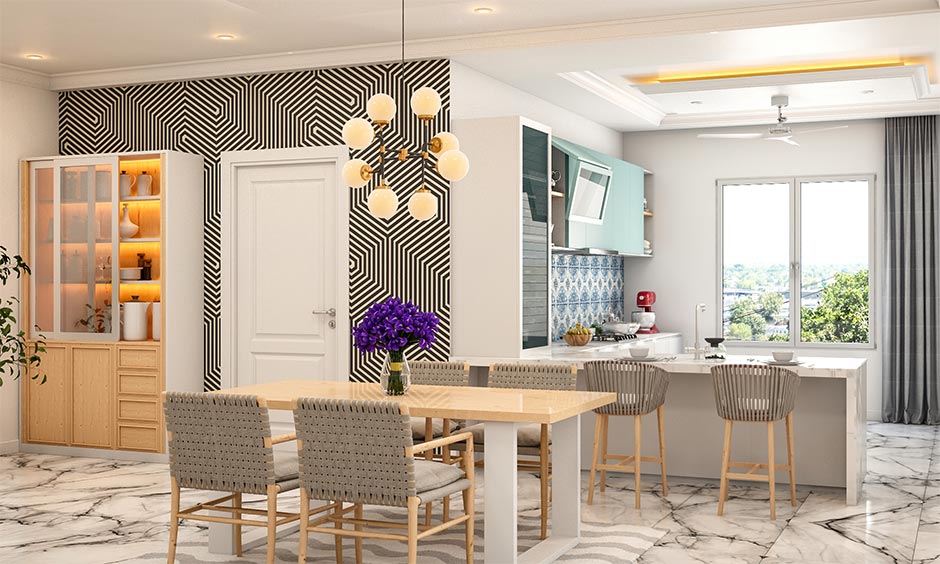
False Ceiling Cost For Dining Room
False ceiling cost depends on the material, ceiling size, design complexity, lighting, and labour. More layers and integrated lighting often require additional work.
What Determines Dining Room False Ceiling Cost?
| Cost Factor | Why It Matters |
| Material | Influences finish and construction |
| Design complexity | More detailing requires more work |
| Ceiling size | Larger areas require more material |
| Lighting | Adds fittings and electrical work |
| Labour | Varies with installation requirements |
POP vs Gypsum vs Wooden False Ceiling Cost
POP supports decorative detailing, while gypsum suits clean contemporary forms. Wood can create a warmer feature ceiling. Compare the full quotation, including lighting and installation, not just material cost.
Here’s a detailed picture of false ceiling costs:
| Material | Cost | Best For |
| POP | ₹75 to ₹120 + GST | Curves and intricate details |
| Gypsum | ₹110 to ₹145 + GST | Room with high ceiling |
| Veneer | ₹500 to ₹1,200 + GST | Selective ceiling panels, slats and premium accents |
*The prices mentioned above are an estimate of false ceiling design costs based on the scope of work. Your overall price varies by city, labour charges, materials and finishes, design, and your home’s size.
Common Mistakes To Avoid With Dining Room False Ceilings
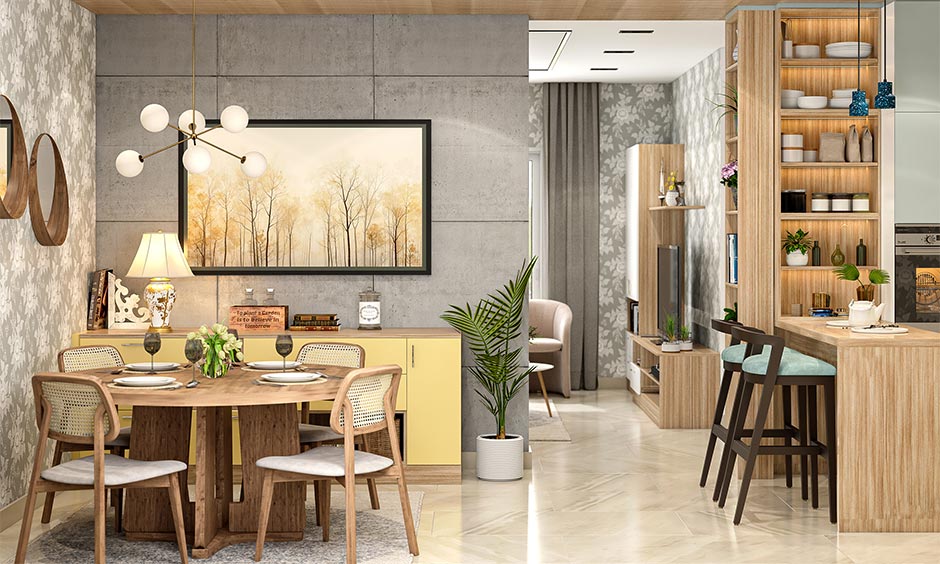
- Heavy designs: Avoid too many layers in compact spaces.
- Poor placement: Align the ceiling, dining table, and lights.
- Too much detailing: Keep decorative elements minimal.
- Difficult maintenance: Keep lights and fixtures accessible.
- Wrong lighting: Choose a suitable colour and intensity.
Tips To Make Your Dining Room False Ceiling Look More Elegant
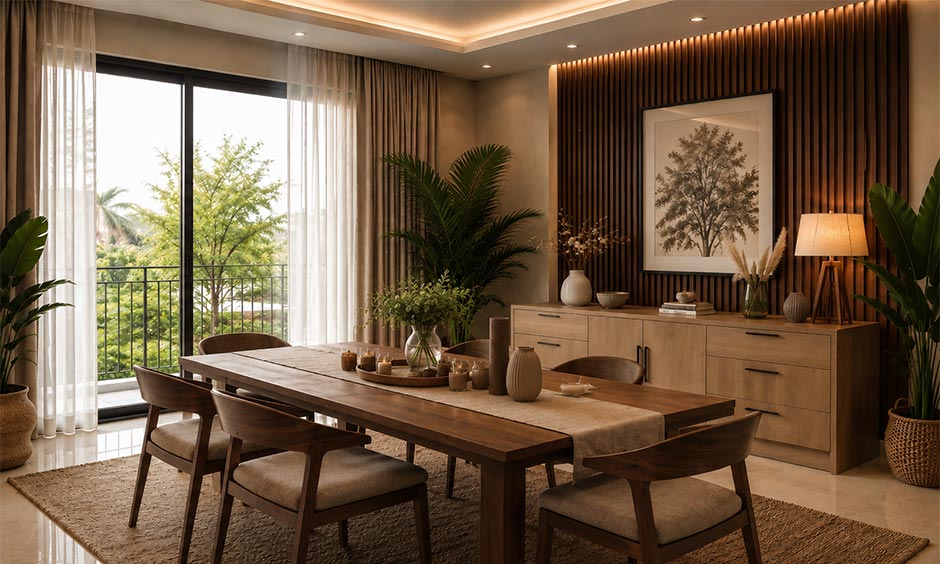
- Use warm lighting: Create a cosy ambience with cove or pendant lights.
- Keep it proportionate: Match the design to the room size.
- Coordinate colours: Connect the ceiling with furniture and walls.
- Highlight the dining table: Use pendants, chandeliers or recessed lights.
Conclusion
Your ceiling is the one surface nobody plans, and everybody notices. Get the height, lighting and dining table talking to each other, and the rest is just picking a vibe – simple, wooden, tray or full statement.
Want more ideas? Check out our blog section.
Curious how much it would cost? Explore our cost calculator.
Ready to build yours? Book a free consultation with a DesignCafe designer.

FAQs
1. What is the best false ceiling design for a dining room?
It depends on the room size, ceiling height, furniture and lighting. Simple, cove, tray and wooden designs are popular choices.
2. Which false ceiling is best for a small dining room?
Simple designs with light colours, minimal detailing and integrated lighting work well.
3. What are the latest dining room false ceiling design trends?
Geometric patterns, cove lighting, wood finishes, layered designs and pendant lights are popular options.
4. Can a false ceiling be used in a combined living and dining room?
Yes. It can define the dining area while keeping the living and dining spaces connected.
5. What lighting works best with a dining room false ceiling?
Pendant lights, recessed lights, cove lighting and chandeliers can work well, depending on the layout.
6. Are wooden false ceilings suitable for dining rooms?
Yes. Wood-finish details add warmth and pair well with wooden dining furniture.