Select Category

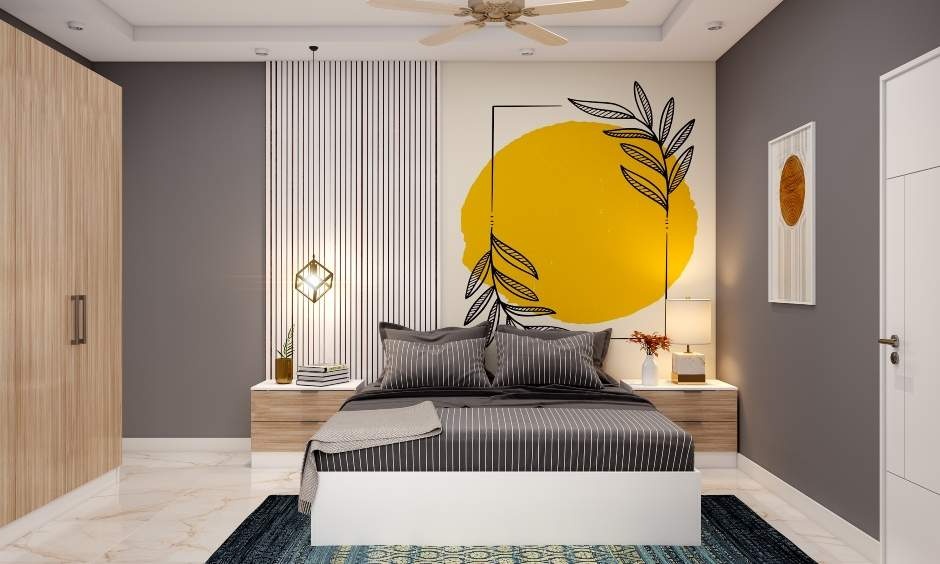
Right colours, right textures, right proportions—design bedroom walls that make your space feel just right.
Bedroom wall design can instantly change how big, cosy, or balanced a room feels. This guide explains how to choose colours, textures, materials, lighting, and storage based on your room size. Small bedrooms benefit from light shades, subtle textures, mirrors, vertical storage, and soft lighting to create a sense of openness. Larger bedrooms can handle bold colours, dramatic textures, layered lighting, and expansive wall features without feeling cluttered. With practical, India-friendly ideas—from PVC panels to accent walls—you’ll learn how to design bedroom walls that look proportional, stylish, and perfectly suited to your space.
Have you ever walked into a bedroom and instantly felt calm, or oddly uncomfortable, without knowing why? More often than not, the answer lies in the bedroom wall design. Walls quietly shape how big or balanced a bedroom feels.
What works beautifully in a spacious master bedroom can feel overwhelming in a compact one. From modern PVC wall panel designs to wall colour choices, textures, and storage ideas, the size of your room should guide every wall design decision.
Let’s explore how to choose the right bedroom wall design for small vs large rooms, so your space looks proportional, stylish, and truly comfortable.

Bedroom Wall Design & Colour Psychology for Space Perception
Colour is the most powerful tool in a wall design, especially when working with size limitations.
For small bedrooms, lighter shades such as soft whites, beige, pale greys, and pastels reflect light and visually expand the room. These colours are a good option for simple bedroom wall designs and help reduce visual clutter.
In large bedrooms, deeper tones such as charcoal, navy, olive green, or muted browns add an air of intimacy. These shades work well for romantic bedroom designs, helping large spaces feel more grounded and cosy rather than empty. If you are unsure, use light colours on most walls and introduce depth through one accent wall.
Clever Bedroom Wall Design: Strategic Use of Patterns & Textures
Patterns and textures add character—but scale matters.
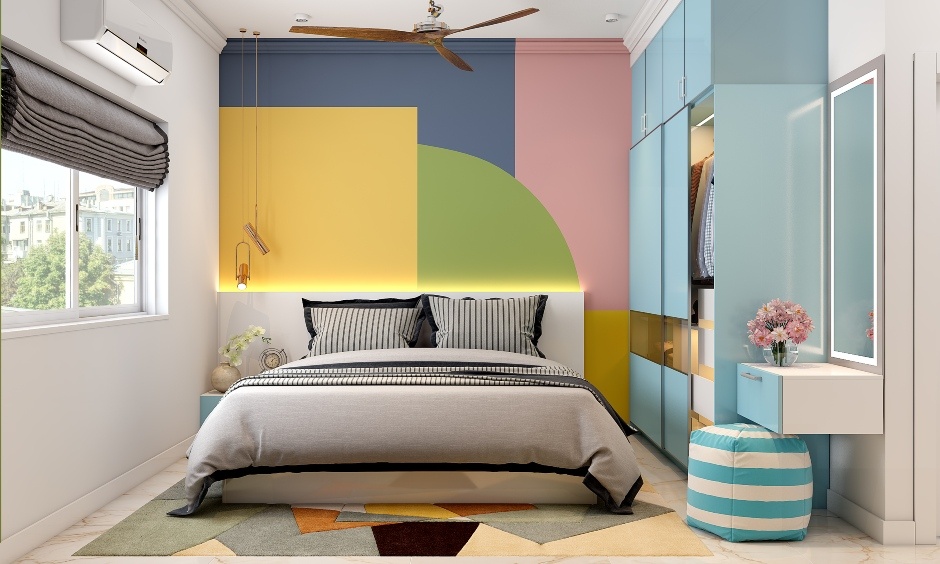
In small bedrooms, subtle textures such as light wall stencil designs for bedrooms or fine-line patterns create depth without overwhelming the space. Avoid large, busy motifs that make walls feel closer.
In large bedrooms, you can experiment freely. Tiles, textured finishes, or PVC wall panel designs work beautifully to add interest and structure. Vertical textures visually increase height, while horizontal textures help balance wide rooms.
Modern Bedroom Designs

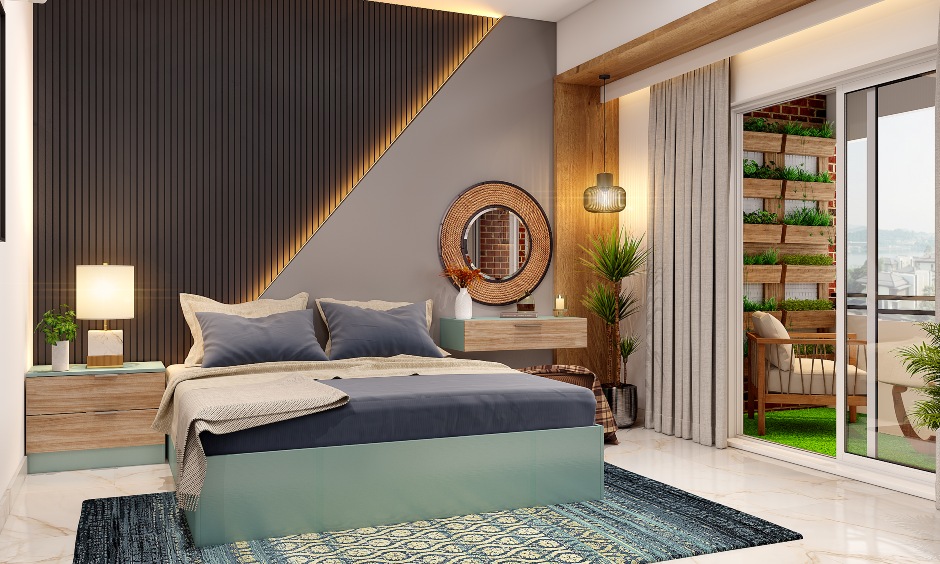


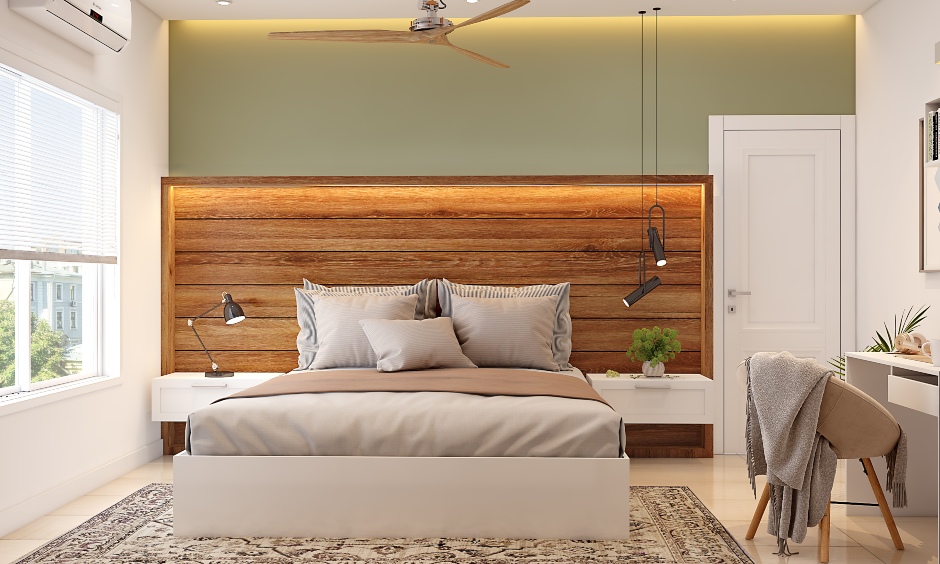
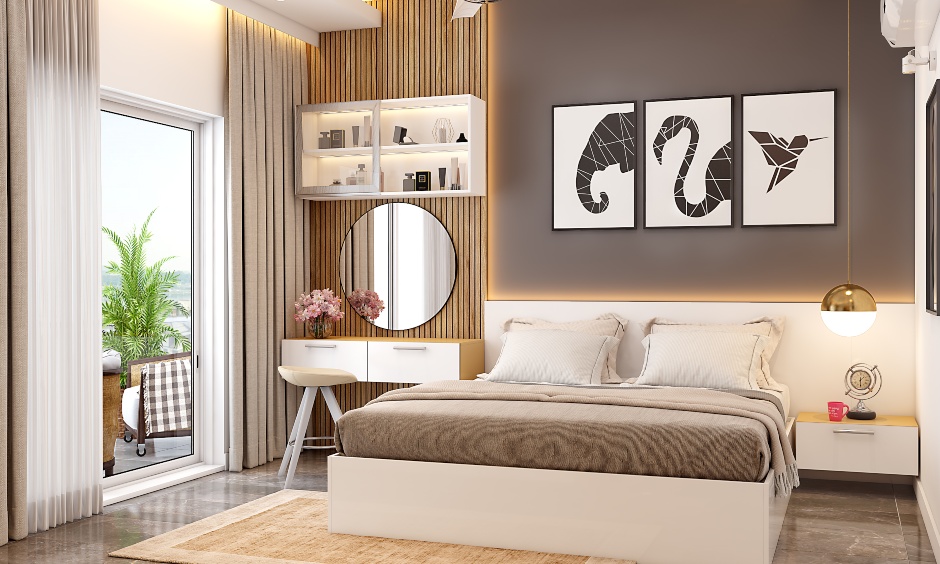
Bedroom Back Wall Design Featuring Focal Point Creation
For small bedrooms, the focal point should be minimal. A clean bedroom back wall design in a soft accent colour, a slim PVC wall design, or a subtle texture works best.
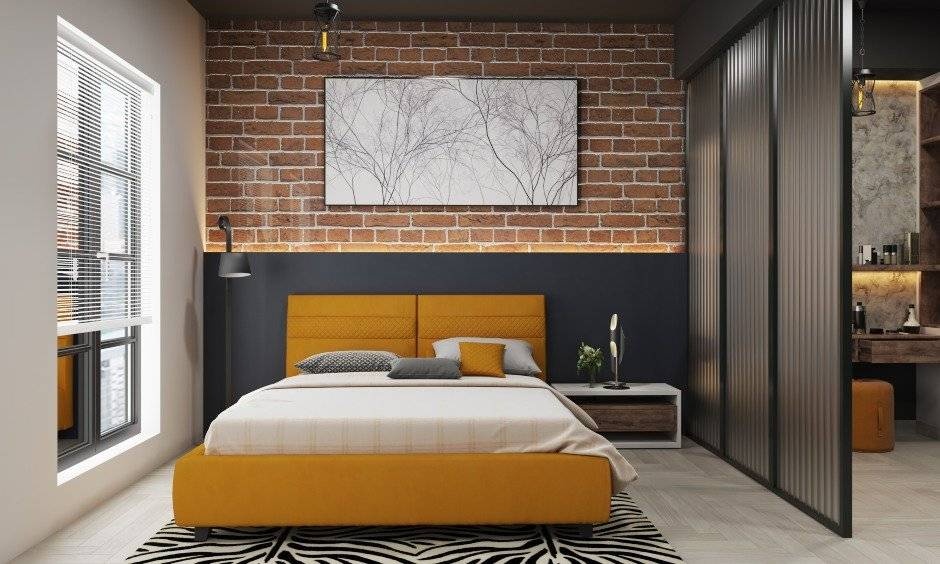
For large bedrooms, go bolder. A modern design using upholstered panels, layered textures, or statement tiles behind the bed creates a strong visual identity without overpowering the room.
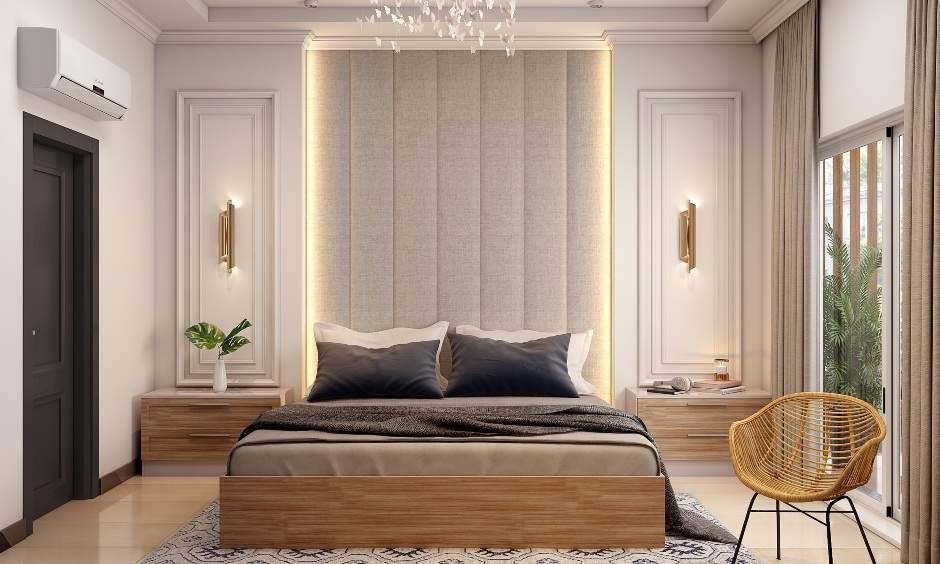
Mirror and Reflective Surface Applications for Simple Bedroom Wall Design
Mirrors are a classic trick for creating spatial illusions—but their role varies by room size.
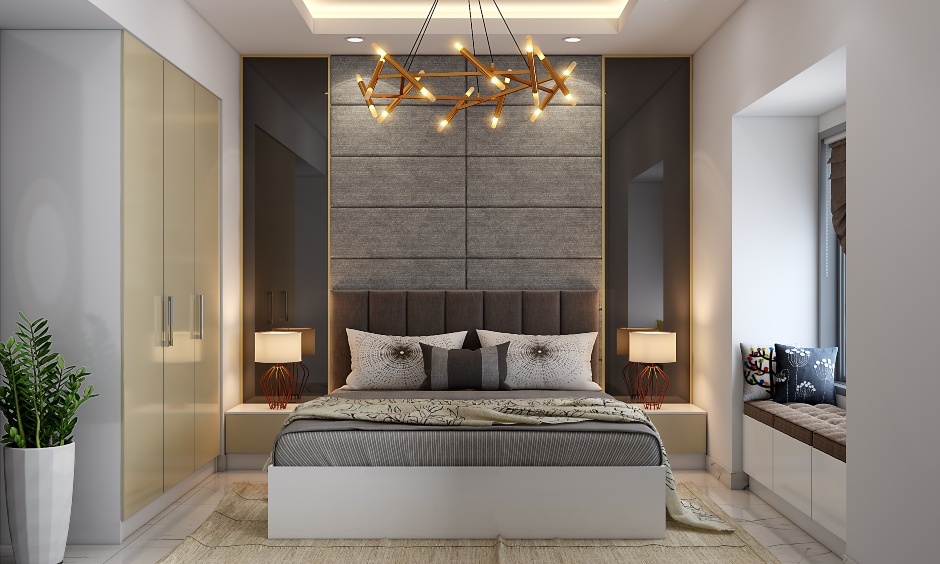
In small bedrooms, placing mirrors opposite windows to bounce natural light and make the room feel larger. Integrated mirrors in the bedroom wall almirah designs are especially effective and practical.
In large bedrooms, mirrors serve more as decorative elements. Statement mirrors or reflective panels add elegance rather than illusion.

Bedroom Wall Almirah Design: Storage Solutions for Different Sizes
Storage is where design meets daily living.
For small bedrooms, vertical solutions work best. Wall-mounted shelves, recessed niches, and smart panels help keep the floor uncluttered. Integrated PVC wall designs are lightweight and visually clean. In large bedrooms, storage can become part of the design. Full-wall wardrobes, layered shelving, or a combined wall-ceiling design as a storage solution adds function without feeling bulky.
Latest Wall Design for Bedroom: Lighting Integration and Illusion Techniques
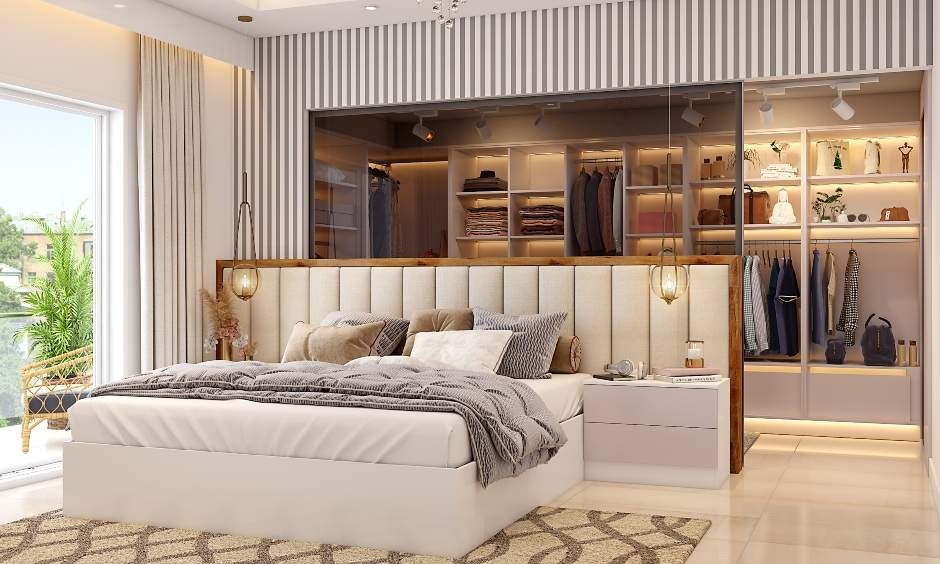
In small bedrooms, indirect lighting works best. LED strip lights behind panels or soft wall-mounted lights enhance the latest bedroom wall design without crowding the space.
In large bedrooms, layered lighting works best. Combine ambient lighting with accent lights to highlight textures, panels, or wall stencils, so the space feels intentional and well-balanced.
Bedroom Wall Design: Material Selection and Visual Impact
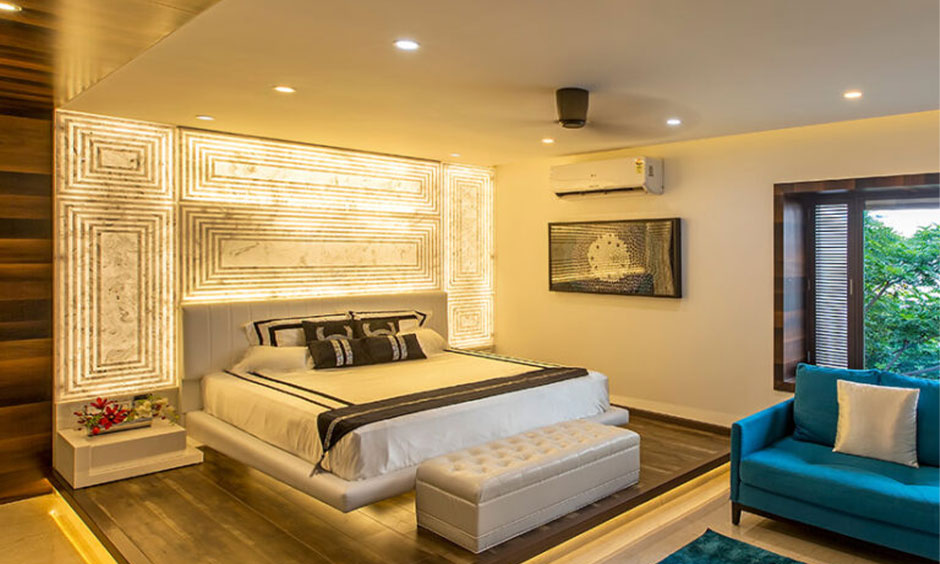
Small bedrooms benefit from smooth finishes, glossy or matte PVC wall designs, and minimal textures that reflect light.
Large bedrooms can handle heavier materials—stone-finish tiles, fabric panels, or dramatic textures. These materials work well in modern bedrooms where space allows visual richness.

Bedroom Wall Design Personalisation While Maintaining Balance
Personal touches make a bedroom feel lived-in—but moderation is essential.
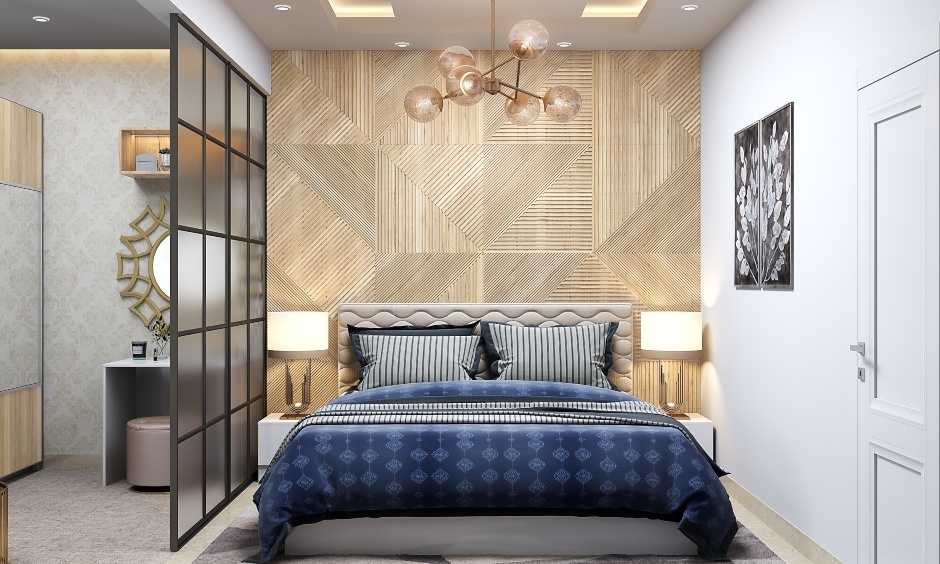
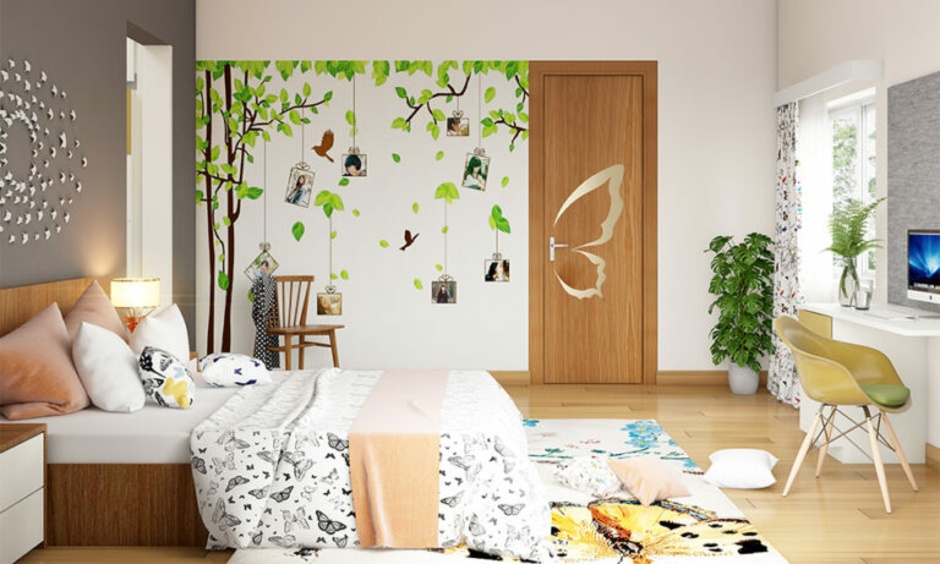
In small bedrooms, limit personalisation to one standout element: artwork, a stencil wall, or a soft accent colour. Too many features can feel visually noisy.
In large bedrooms, you can layer design elements more freely. Gallery walls, textured panels, or mixed materials work well as long as there’s a cohesive colour palette.
Conclusion
The best bedroom wall design is all about proportion. Small bedrooms thrive on light colours, minimal textures, and smart storage. Large bedrooms need warmth, structure, and thoughtful focal points. By choosing the right colours, materials, patterns, and lighting for your room size, you can create a bedroom that feels balanced and visually appealing, no matter how big or small the space is.
Our designers can help you achieve your dream bedroom within your budget.
FAQs
1. What colours make a small bedroom look bigger?
Light shades like white, beige, pastel blue, and soft grey reflect light and create an open feel.
2. How can I create a focal wall in a large bedroom?
Use textured panels, PVC wall panel designs for bedrooms, bold colours, or bedroom wall tiles design behind the bed.
3. Are dark walls suitable for small rooms?
Yes, when used sparingly, such as one accent wall, with good lighting and lighter surrounding walls.
4. What are the best wall storage ideas for small bedrooms?
Vertical shelves, integrated bedroom wall almirah designs, and wall-mounted cabinets save space effectively.
5. Can I use wallpaper in a small bedroom?
Yes, but choose subtle patterns or textures to avoid overwhelming the room.